If you want a compact emergency radio that does more than pull in weather alerts, this NOAA Weather Radio is built around redundancy.
It combines AM/FM/shortwave tuning, a 5000mAh battery, and multiple charging methods in one go-bag-friendly package.
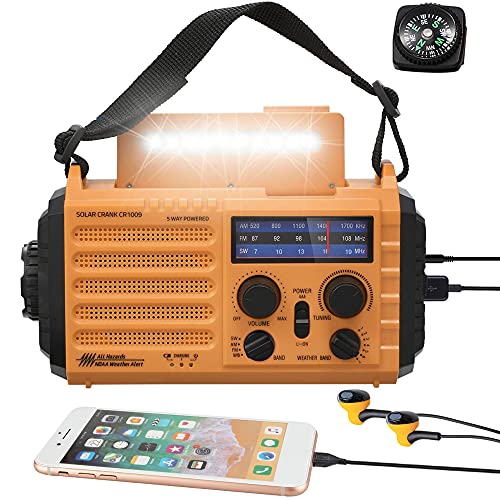
NOAA Weather Radio Review Summary
This NOAA Weather Radio makes sense for buyers who want one device that can serve as an emergency alert radio, a backup phone charger, and a basic light source.
The strongest case for it is resilience: the listing emphasizes NOAA weather alert support, multiple radio bands, and several ways to recharge or power the unit when normal electricity is unavailable.
It is especially relevant for households in storm-prone areas, campers, and anyone building a car or home emergency kit.
The tradeoff is that this is a preparedness tool first, not a premium entertainment radio or a feature-heavy modern gadget. If you want a simple analog-style device that prioritizes survival use cases, the design is coherent.
Review Scorecard
| Category | Score | Rationale |
|---|---|---|
| Emergency readiness | 9/10 | NOAA alert support, SOS siren, flashlight, and multiple power sources fit real outage planning. |
| Power flexibility | 9/10 | Solar, hand crank, USB-C, AAA batteries, and an internal 5000mAh battery give it broad backup options. |
| Radio versatility | 8/10 | AM, FM, shortwave, and weather band coverage make it more useful than a single-band alert radio. |
| Portability | 8/10 | The compact size, strap, carabiner, and under-1-pound weight support grab-and-go storage. |
| Lighting utility | 8/10 | The 3W flashlight and warm reading lamp are practical extras for blackouts and campsites. |
| Everyday usability | 7/10 | Analog tuning keeps it simple, but it is clearly built for utility over polished daily listening. |
| Value for preparedness | 8/10 | The feature mix is broad enough to justify a spot in a serious emergency kit. |
Key Features and Specifications of NOAA Weather Radio
The core appeal of this NOAA Weather Radio is how many failure modes it tries to cover.
The listing describes it as an officially approved NOAA weather radio with seven preset weather channels, so the main job is to keep users informed when storms, floods, or tornadoes threaten normal routines.
It also goes beyond alert duty.
The radio supports AM, FM, and shortwave tuning, which matters if you want local news, music, or broader emergency information from outside your immediate area.
The analog control approach is a practical choice here: there is no screen-heavy interface to learn in a panic.
Key listing details include:
- 5000mAh internal Li-ion battery
- Up to 13 hours of listening at 50% volume, per listing
- Solar panel charging
- Hand crank charging
- USB-C charging
- 3 AAA battery backup
- AM/FM/shortwave and weather-band support
- 3W flashlight with dual brightness settings
- 2.5W warm reading lamp with dual brightness settings
- SOS siren rated at 116dB, plus flashing red beacon
- Strap, carabiner, and compass included
- Compact size: 6.8 x 3.7 x 2.9 inches
- Weight: 0.93 lb
The practical takeaway is that this radio is built around layered backup.
When one source of power or one way of getting information fails, another remains available.
That is the right design logic for an emergency kit.
Pros and Cons of NOAA Weather Radio
Pros
- Strong emergency-first feature set with weather alerts, SOS alarm, flashlight, and reading lamp
- Multiple charging paths reduce dependence on a wall outlet
- 5000mAh battery is a meaningful reserve for this product class
- AM/FM/shortwave support adds flexibility beyond weather alerts alone
- Portable size and carry accessories suit grab-and-go use
Cons
- The analog interface is intentionally basic, which may feel old-fashioned to some buyers
- It is optimized for preparedness, so it will not satisfy buyers looking for a premium radio experience
- The many emergency features may be more than casual listeners need
- Real-world usefulness depends on whether buyers actually keep it charged and accessible
The pros and cons are unusually clear here.
If your main need is emergency resilience, the strengths line up well with the product purpose. If you only want a simple FM radio for everyday use, much of the package becomes unnecessary.
Who Should Buy NOAA Weather Radio?
This NOAA Weather Radio is a good fit for people who treat emergency gear as part of ordinary household planning.
That includes homeowners in hurricane or tornado regions, renters who want a small backup kit, RV travelers, campers, and drivers who keep a car emergency bag.
It is also a sensible pick for older relatives or anyone who benefits from simple controls.
The analog style and dedicated band switch reduce the chance of getting lost in menus at the wrong moment.
You should probably skip it if you want a compact radio mainly for music listening or if you prefer modern digital features over rugged utility.
It is also less compelling for buyers who already own multiple charging devices and only need weather alerts in a very minimal form.
Power and Emergency Readiness Analysis
Battery Capacity and Backup Logic
The stated 5000mAh battery is one of the biggest reasons this radio stands out.
For an emergency product, capacity is not just a spec sheet number; it affects how calmly you can rely on the device when the grid is unstable.
The listing also says it can provide up to 13 hours of listening at moderate volume, which suggests the battery is intended to support real outage use rather than brief novelty charging.
Charging Methods in a Real Outage
Solar, hand crank, USB-C, and AAA battery support create a layered recovery plan.
That matters because no single backup method is perfect.
Solar is slow but renewable, the crank is immediate but effort-based, USB-C is convenient when power is available, and AAA batteries add a final fallback if rechargeable options are exhausted.
Lighting and SOS Functions
The lighting package is better thought through than on many basic emergency radios.
The 3W flashlight should cover walking, checking a breaker panel, or moving around a campsite, while the warm reading lamp is useful for softer indoor use.
The SOS siren and flashing red beacon add another layer for signaling, which is more relevant in travel or remote outdoor situations than in day-to-day home use.
Portability and Kit Integration
At 0.93 lb and under seven inches long, the radio is easy to store in a drawer, glovebox, or backpack.
The strap, carabiner, and compass reinforce the same idea: this is not meant to sit on a shelf as decoration.
It is built to travel with the rest of your emergency gear.
Alternatives to NOAA Weather Radio
If you are comparison shopping, look at other established emergency-radio lines before deciding.
- Midland ER310 emergency radio
- Kaito emergency weather radio
- RunningSnail emergency radio
- Eton emergency radio
Midland is often a solid benchmark if you want a well-known emergency-radio brand.
Kaito and RunningSnail are common Amazon searches for buyers who want a similar solar-and-crank formula.
Eton is worth checking if you prefer a more established weather-radio lineup.
Is NOAA Weather Radio Worth It?
Yes, if your goal is preparedness and not just casual listening.
The mix of NOAA alerts, multiple radio bands, 5000mAh storage, solar and crank charging, lighting, and SOS signaling makes this a genuinely practical emergency companion.
Buy it if you want a compact all-in-one radio for storms, outages, camping, or a go-bag. Skip it if you want a refined everyday radio or if you do not plan to keep an emergency device charged and ready.
For buyers who value redundancy, this NOAA Weather Radio looks like a sensible, purpose-built choice.