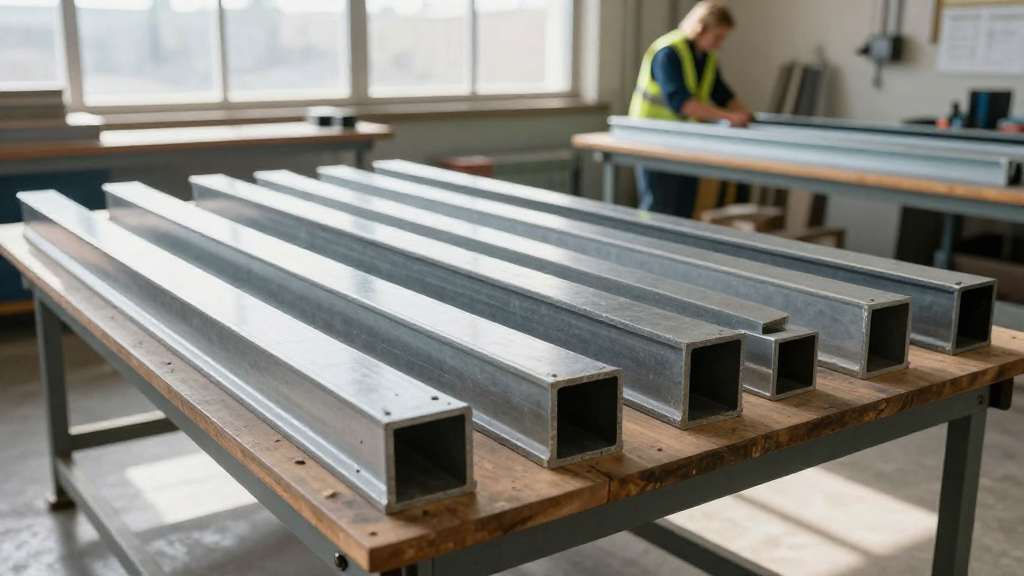
Beam classification is essential in understanding the various types of beams used in engineering and construction.
What is Beam Classification?
Beam classification refers to the grouping of beams based on various criteria such as shape, material, support conditions, and loading conditions.
This systematic categorization helps engineers, architects, and builders in selecting the appropriate beam types for specific applications.
By recognizing how beams are classified, one can make informed decisions about structural designs, material choices, and architectural aesthetics.
What Are the Types of Beams Based on Shape?
One of the most common ways of beam classification is by their shape. Here are the main categories based on shape:
-
Rectangular Beams:
Widely used in construction, these beams offer a simple design that effectively bears loads. -
I-Beams (or H-Beams):
Known for their strength, these beams have a cross-section that resembles the letter “I”. -
T-Beams:
These beams have a T-shaped cross-section and are commonly used in concrete structures. -
Circular Beams:
These are often used for arches and bridges, providing aesthetic qualities along with structural integrity. -
Composite Beams:
Made from two or more different materials, composite beams offer flexibility and enhanced strength characteristics.
How Are Beams Classified by Material?
Another crucial aspect of beam classification is the material used for construction. The primary materials include:
-
Steel Beams:
Known for their high strength-to-weight ratio, steel beams are incredibly durable and are often used in high-rise buildings. -
Concrete Beams:
These are made of reinforced concrete and are known for their compressive strength. -
Wood Beams:
A traditional choice, wood beams are aesthetically pleasing and are lightweight but generally have lower strength compared to steel and concrete. -
Aluminum Beams:
Lightweight and resistant to corrosion, aluminum beams are a good choice for applications where weight is a concern.
What is Beam Classification by Support Conditions?
Beam classification can also be determined by how they are supported. Understanding these conditions is vital for engineers to design safe and robust structures. The primary support conditions include:
-
Simply Supported Beams:
These beams are supported at both ends and can freely rotate. They are often used in bridges and short spans. -
Fixed Beams:
Fixed beams are secured at both ends, preventing any rotation. They provide greater stability and are suitable for bridges and buildings subjected to heavy loads. -
Cantilever Beams:
Supported only at one end, cantilever beams are ideal for balconies, overhangs, and roofs that extend without support. -
Continuous Beams:
These spans extend over more than two supports. Continuous beams can carry greater loads and are more efficient than simply supported beams.
How Are Beams Classified by Loading Conditions?
Loading conditions also play a vital role in beam classification. Here are the types based on loading conditions:
-
Point Load Beams:
A single load is applied at a specific point. Common in structures where concentrated loads are expected. -
Distributed Load Beams:
Loads that are spread uniformly over the beam’s length, commonly found in floor systems and roofs. -
Varying Load Beams:
In these cases, loads change at different points along the beam, requiring more complex calculations for design.
Why Is Beam Classification Important?
Understanding beam classification is crucial for several reasons:
-
Safety:
Selecting the appropriate beam type ensures the structure can safely support expected loads. -
Cost-Effectiveness:
Choosing the right material and type can minimize costs without compromising safety. -
Efficiency:
Proper beam classification facilitates design efficiency, resulting in structures that require less material and are easier to construct. -
Aesthetic Value:
Different beam types contribute to the architectural appeal of a building, enhancing its visual impact.
Conclusion: How Does Beam Classification Affect Your Projects?
In conclusion, beam classification is a versatile and critical aspect of structural engineering and construction.
By understanding the different categories based on shape, material, support conditions, and loading conditions, engineers and architects can make informed decisions about their designs.
This knowledge not only drives the safety of structures but can also streamline costs and enhance aesthetic values.
When undertaking construction projects, always consider beam classification to ensure optimal performance and integrity of your designs.
FAQs About Beam Classification
What are the most common types of beams used in construction?
The most common types include I-beams, rectangular beams, and T-beams. These shapes are popular due to their strength and versatility for various applications.
How does material impact beam performance?
Different materials offer varying levels of strength, weight, and durability. Steel beams provide high strength but are heavier, while concrete beams excel in compressive strength.
Can beams be modified after construction?
While it is possible to modify beams post-construction, it can be complex and costly. It’s crucial to evaluate structural integrity before making changes.
Are there environmental considerations in choosing beam materials?
Yes, sustainability is becoming increasingly important. Using renewable materials like wood or recycled materials for steel and concrete can minimize environmental impacts.
By becoming familiar with beam classification, you take a significant step towards mastering construction and engineering practices. Enhancing structural integrity and optimizing performance are key to successful buildings and infrastructures.