The KAMRUI Pinova P2 review below focuses on what this mini PC is built to do well: compact productivity, multi-display work, and quiet everyday computing.
If you are comparing a KAMRUI Pinova P2 review against other small desktops, the key question is whether its Ryzen 7330U, 16GB RAM, and triple 4K output match your actual workload.
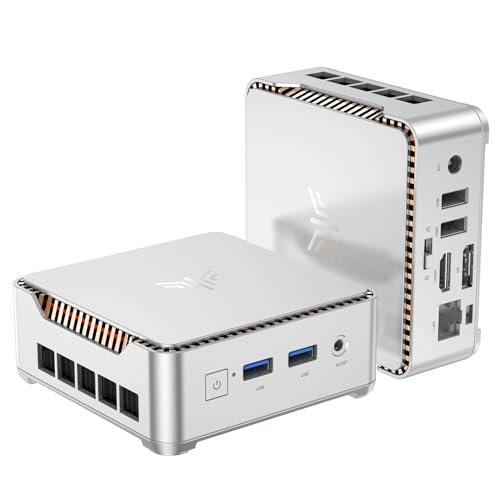
Pinova P2 Review Summary
The KAMRUI Pinova P2 makes sense for buyers who want a small desktop that can sit behind a monitor, drive several displays, and handle ordinary office or home tasks without feeling underpowered.
Based on the listing, this is a practical, efficiency-first mini PC rather than a flashy gaming box, and that is exactly where its value is most obvious.
It is best suited to remote workers, home office users, light creators, and anyone who needs a compact machine with strong connectivity and expansion options.
The Ryzen 7330U, 16GB LPDDR4X memory, 256GB SSD, and support for triple 4K@60Hz output make it a strong fit for desk setups where space and screen flexibility matter more than raw gaming muscle.
Review Scorecard
| Category | Score | Editorial rationale |
|---|---|---|
| Everyday productivity | 9/10 | Ryzen 7330U, 16GB RAM, and SSD storage are a solid match for multitasking and office work. |
| Multi-display usefulness | 10/10 | HDMI 2.0, DP 1.4, and USB-C with DP Alt Mode support triple 4K@60Hz output. |
| Compactness and placement | 9/10 | The small silver chassis and included VESA mount make it easy to hide behind a monitor. |
| Expandability | 8/10 | Two M.2 2280 slots and up to 4TB total support give it room to grow. |
| Connectivity | 9/10 | Gigabit LAN, Wi-Fi, Bluetooth, USB 3.2 Gen2, and USB-C cover modern desk needs. |
| Noise and office comfort | 8/10 | The improved cooling system is described as quiet or nearly silent under light use. |
| Best-fit value | 8/10 | The feature set is well aligned with compact productivity buyers, not performance hobbyists. |
Bottom line: the Pinova P2 is a sensible choice if you want a small, flexible desktop for work and media, especially with multiple 4K monitors.
Key Features and Specifications of Pinova P2
The KAMRUI Pinova P2 centers on an AMD Ryzen 7330U processor with 4 cores, 8 threads, and up to 4.3GHz boost clock.
The listing frames it as a 15W efficiency-tuned chip, which helps explain the product’s emphasis on everyday responsiveness rather than high-wattage performance.
Other core specs from the product record are straightforward and useful:
- Processor: AMD Ryzen 7330U
- Cores/threads: 4C/8T
- Cache: 8MB L3
- Memory: 16GB LPDDR4X
- Storage: 256GB M.2 SSD
- Display support: HDMI 2.0, DP 1.4, and USB 3.2 Gen2 Type-C with DP Alt Mode
- Maximum display output: triple 4K@60Hz
- Connectivity: Gigabit LAN, Wi-Fi, Bluetooth
- USB: two USB 3.2 Gen2 Type-A ports plus USB-C
- Size: 5.05 x 5.05 x 1.73 inches
- Mounting: included VESA mount
The listing also says the machine supports two storage expansion slots, including one M.2 2280 SATA/NVMe PCIe 3.0 slot and one M.2 2280 SATA slot, for up to 4TB total.
That is a meaningful point for buyers who expect to keep files, media, or project data locally.
The integrated Radeon graphics are presented as a stronger option than older low-end integrated solutions, and the record specifically ties that to the chip’s ability to handle triple 4K output and basic photo/video work.
That does not turn it into a gaming PC, but it does reinforce that this mini desktop is designed for modern visual workloads in a small footprint.
Pros and Cons of Pinova P2
Pros
- Strong compact productivity profile. The Ryzen 7330U, 16GB RAM, and SSD storage fit everyday multitasking well.
- Triple-display flexibility. The three display outputs are a major advantage for users who want a clean multi-monitor desk.
- Good physical practicality. The small footprint and VESA mount make it easy to tuck away.
- Useful expansion story. Two storage slots and up to 4TB total are better than many bare-minimum mini PCs.
- Modern ports. USB 3.2 Gen2 and USB-C with video support improve day-to-day convenience.
Cons
- Not positioned as a performance-first system. Buyers looking for heavy gaming, rendering, or workstation-class muscle should look higher.
- Base storage is modest. 256GB is enough to start, but many users will likely want more room later.
- Integrated graphics have limits. The listing stresses improved visual capability, but this remains a small desktop with built-in graphics.
- Best value depends on screen use. If you do not need multiple displays, some of the appeal is less compelling.
Those tradeoffs are normal for this category.
The important part is that the strengths and limitations line up with the intended use case instead of pretending to be a do-everything tower.
Who Should Buy Pinova P2?
The KAMRUI Pinova P2 is a good fit for people who want a neat, quiet, small desktop for a desk, dorm room, or home office.
It is especially appealing if you plan to use two or three monitors, because the display output setup is one of its clearest advantages.
It also makes sense for buyers who value a tidy setup.
The VESA mount and compact body make it easy to clear desk space, and the port mix suggests it should handle the basics of a modern work environment without extra clutter.
This is also a reasonable choice for casual media use, remote collaboration, document work, browsing, and light creative tasks where storage expansion and visual flexibility matter more than raw benchmark chasing.
You should probably skip it if you want a serious gaming rig, need a high-end creator workstation, or expect to push demanding apps all day.
The listing points to a capable efficiency chip, not a desktop replacement for heavier professional workloads.
Multi-Monitor Workflows and Daily Use
Triple 4K Output Matters More Than It Sounds
The most distinctive feature here is not just that the Pinova P2 supports 4K, but that it supports three 4K@60Hz displays at once through HDMI 2.0, DP 1.4, and USB-C with DP Alt Mode.
For spreadsheet users, traders, operations staff, or anyone who keeps reference windows open all day, that is a real workflow advantage.
Why the Ryzen 7330U Fits This Class
The product record positions the Ryzen 7330U as an efficiency-focused 4C/8T processor with 8MB of L3 cache and up to 4.3GHz boost.
That profile suits fast app switching, browser-heavy work, document editing, and similar tasks where responsiveness matters more than brute force.
Expansion Helps It Age Better
Mini PCs can become frustrating when storage is fixed and tiny.
The Pinova P2 is more flexible because it adds two storage expansion slots and a stated ceiling of up to 4TB total.
That makes it easier to grow from a starter configuration into a longer-term desktop without replacing the whole unit.
Quiet Placement Is Part of the Appeal
The listing emphasizes improved cooling and very low noise during light use.
For buyers who want a machine sitting close to where they work or stream, that matters.
A quiet mini PC can disappear into the setup instead of becoming the thing you notice all day.
Alternatives to Pinova P2
If you are comparing options, the most logical alternatives are other small-form-factor mini PCs from brands that frequently compete in this space:
These are worth checking if you want a different balance of processor family, port layout, size, or storage flexibility.
The right comparison point is not just raw speed; it is whether the machine gives you the right display support and expansion for your desk.
Is Pinova P2 Worth It?
The KAMRUI Pinova P2 is worth it if you want a compact, efficient mini PC for productivity, media, and multi-monitor use.
Its strongest case is not absolute performance; it is the combination of Ryzen 7330U efficiency, 16GB memory, triple 4K support, and practical expansion in a very small chassis.
If your shopping priorities are a tidy desk, flexible connectivity, and a mini desktop that can handle serious everyday use without taking over the room, this looks like a sensible buy.
If you need gaming horsepower or heavier creative performance, keep shopping.