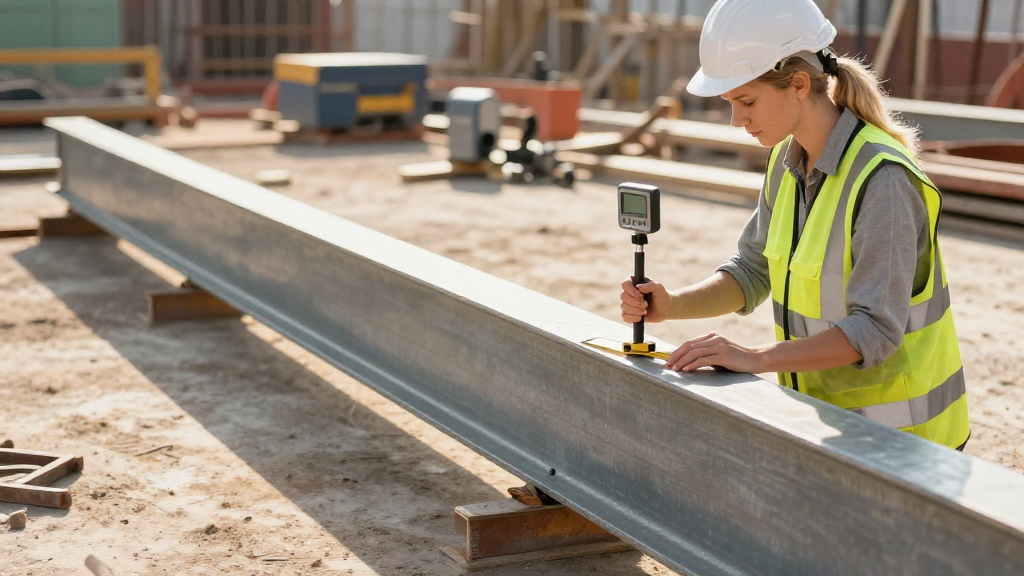
When it comes to construction and engineering projects, beam weight calculation plays a crucial role in ensuring the structural integrity and safety of a building. Understanding how to calculate the weight of a beam can help engineers and builders select the right materials and designs for their projects.
Why is Beam Weight Calculation Important?
Having accurate information about a beam’s weight is essential for several reasons:
- Structural Integrity: Knowing the weight helps in assessing the load a structure can bear.
- Material Selection: It aids in choosing the right materials to minimize excess weight while maintaining strength.
- Cost Efficiency: Accurate calculations can lead to cost savings by avoiding over or under-engineering.
- Safety: Ensures that the beam meets the necessary safety standards and regulations.
What Factors Influence Beam Weight?
To perform an accurate beam weight calculation, several factors need to be considered:
-
Material Type: The density of the material influences the weight significantly. Common materials include:
– Wood: Varies based on species (e.g., pine, oak).
– Steel: Commonly used in construction, with predefined weight per volume.
– Concrete: Heavier than wood and often used for its compressive strength. -
Beam Dimensions: The dimensions of the beam are crucial for calculating its volume.
– Length: Total span of the beam.
– Width: Depth and width contribute to beam cross-section area.
– Height: Height adds to the overall size and weight. -
Beam Profile: Different beam profiles (e.g., I-beams, C-channels) have varying weight distributions.
How Do You Calculate the Weight of a Beam?
Beam weight calculation can be broken down into several simple steps:
Step 1: Determine the Volume of the Beam
The first step in beam weight calculation is finding the beam’s volume.
For most shapes, the volume can be calculated using the formula:
[ Volume = Length \times Width \times Height ]
- For a rectangular beam:
[ V = L \times W \times H ]
- For an I-beam:
[ V = (Area_{web} \times Height) + (Area_{flanges} \times 2) ]
Step 2: Find the Material Density
Each material has a specific density, which can typically be found in reference tables. Here are some common densities:
- Wood:
- Pine: 0.35 g/cm³
- Oak: 0.75 g/cm³
- Steel: 7.85 g/cm³
- Concrete: 2.4 g/cm³
Step 3: Calculate the Weight
The weight of the beam can be found using the formula:
[ Weight = Volume \times Density ]
Example Calculation
Let’s say you are working with a steel I-beam that measures 2 meters in length, 0.2 meters in width, and 0.1 meters in height. The density of steel is 7.85 g/cm³ (or 7850 kg/m³).
- Calculate Volume:
For I-beams, calculate the web and flanges.
- Assuming the website area is 0.02 m² and height is 2 m, add flanges.
Volume of I-beam = (0.1 m × 0.2 m × 2 m) + 2 × (0.05 m × 0.1 m × 0.2 m)
= 0.04 m³ + 0.02 m³
= 0.06 m³
- Calculate Weight:
Weight = Volume × Density
= 0.06 m³ × 7850 kg/m³
= 471 kg
Thus, the calculated weight of the beam is 471 kg.
What Tools Can Help in Beam Weight Calculation?
To make beam weight calculation easier and more accurate, consider using the following tools:
- Beam Calculators: Online tools designed to handle various shapes and materials.
- Spreadsheet Software: Use Excel to automate calculations for multiple beams.
- Engineering Software: Applications like AutoCAD or SAP2000 offer sophisticated modeling and calculation features.
- Reference Manuals: Books and online resources with standardized weight and material density.
Are There Any Common Mistakes in Beam Weight Calculation?
When performing beam weight calculation, it’s essential to avoid common pitfalls:
- Ignoring Material Variability: Not considering the density variations based on beam treatment or moisture content, especially in wood.
- Rounding Errors: It’s crucial to keep significant figures until the end of calculations to avoid propagation of errors.
- On-site Adjustments: Changes made to beam dimensions on-site should always prompt recalculation for accurate weight assessments.
Conclusion
In summary, beam weight calculation is a foundational element in engineering and construction.
By accurately calculating the weight of a beam based on material, dimensions, and shape, projects can maintain safety, cost-effectiveness, and structural integrity.
Moving forward, always consult relevant engineering standards and guidelines to ensure compliance and safety in building practices.
By following the outlined steps and utilizing the proper tools, anyone can effectively determine beam weight and apply this knowledge to real-world applications.
Whether you are a professional engineer, a builder, or a DIY enthusiast, understanding how to compute beam weight will undoubtedly enhance your project’s success.