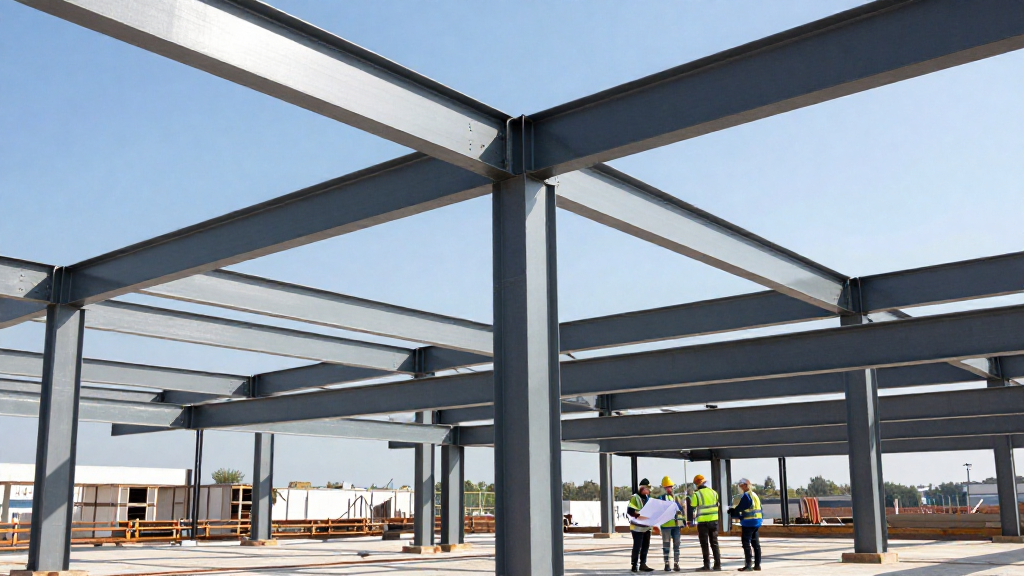
A beam in steel structure plays a critical role in the overall design and functionality.
These structural elements are essential for supporting loads and sustaining the integrity of various constructions. In this article, we’ll explore how beams are used in steel structures and their significance across different applications.
What is a Beam in Steel Structure?
A beam in a steel structure refers to a long, horizontal element that supports loads, transferring them to vertical supports like columns or walls.
Key Functions of Beams:
- Load Distribution: They distribute loads from the roof, floors, and other structural components.
- Structural Integrity: Beams maintain the stability and strength of a building.
- Span Unsupported Spaces: They allow for large open spaces by eliminating the need for numerous supporting walls.
What Are the Types of Beams Used in Steel Structures?
Understanding the different types of beams in steel structures can help in choosing the appropriate one for specific applications.
Common Types of Beams:
-
I-Beam (or W-Beam):
– The most widely used beam design.
– Known for its excellent load-carrying capacity. -
T-Beam:
– Offers support beneath slabs and is often used in flooring systems. -
C-Beam (Channel Beam):
– Typically used for lighter construction, often in supports or frames. -
H-Beam:
– Characterized by its wide flanges that enhance load-bearing capabilities. -
Box Beam:
– A hollow rectangular or square beam that is used when higher strength is required.
Beams can also be classified based on their support conditions: simply supported, fixed, or cantilevered.
How Are Beams Fabricated for Steel Structures?
The fabrication process of a beam in a steel structure is a meticulous job that requires precise engineering and material selection.
Fabrication Steps:
-
Material Selection:
– High-strength steel is typically selected for its durability and resilience. -
Cutting:
– Steel sections are cut to the specified lengths using saws or lasers. -
Welding:
– Intersections and joints are permanently joined through welding, ensuring structural integrity. -
Painting/Coating:
– A protective layer is applied to prevent corrosion, especially in outdoor settings. -
Quality Control:
– Rigorous testing is done to ensure the beam meets applicable standards and specifications.
What Are the Advantages of Using Steel Beams?
When considering a beam in steel structure, there are numerous advantages that make steel a preferred choice in construction.
Benefits of Steel Beams:
- Strength-to-Weight Ratio:
-
Steel beams are lightweight yet strong, making them easier to transport and install.
-
Durability:
-
Steel structures are resistant to environmental factors, including moisture and seismic forces.
-
Design Flexibility:
-
Various sizes and dimensions allow architects and engineers to create innovative designs.
-
Cost-Effectiveness:
- While steel can be more expensive upfront, its longevity and low maintenance costs often lead to greater savings over time.
Where Are Beams Used in Steel Structures?
Understanding the diverse applications of a beam in a steel structure is essential for effective planning and design.
Major Applications:
- Residential Buildings:
-
Supporting floors and roofs, allowing for open-concept designs.
-
Commercial Buildings:
-
Used in large parking garages, shopping centers, and office buildings to create wide open spaces.
-
Industrial Facilities:
-
Supporting heavy machinery and extensive systems in power plants and warehouses.
-
Bridges:
-
Steel beams provide the necessary strength to carry heavy loads over long spans.
-
Towers and Frames:
- Structural frames in telecommunications and other infrastructural elements utilize steel beams for stability.
How Do Engineers Determine Beam Size in Steel Structures?
Choosing the proper beam size is crucial for ensuring safety and efficiency.
Factors to Consider:
- Load Requirements:
-
Understanding the loads the beam will carry, including dead weight and live loads, is essential.
-
Span Length:
-
The distance between supports affects the type and size of the beam required.
-
Deflection Limits:
-
Engineers consider how much deflection (bending) is acceptable during service.
-
Material Strength:
- Steel’s yield strength and the specific grade of steel influence the dimensions of the beam.
What Is the Role of Beams in Sustainable Steel Structures?
In recent years, sustainable design and construction have become focal points in architecture and engineering.
A beam in a steel structure can contribute to sustainability in various ways:
Sustainable Benefits:
- Recyclability:
-
Steel is 100% recyclable, reducing waste and minimizing environmental impact.
-
Energy Efficiency:
-
The strength of steel beams allows for better energy distribution, leading to reduced energy consumption in buildings.
-
Long Lifespan:
-
Durable and resistant to environmental factors, steel beams reduce the need for replacements.
-
Innovative Designs:
- Steel enables the construction of intricate designs that maximize natural lighting and air flow, contributing to energy efficiency.
Conclusion: The Indispensable Role of Beams in Steel Structures
A beam in a steel structure is an indispensable component that supports construction projects across various sectors.
From facilitating vast open spaces in buildings to providing strength in bridges and towers, steel beams are versatile and robust.
Their fabrication process, types, and advantages illustrate why they remain a favorite choice among engineers and architects.
Emphasizing their role in sustainable designs further enhances their importance in contemporary structures.
In the world of construction, the beam in steel structures continues to be a cornerstone of safety, functionality, and innovation.