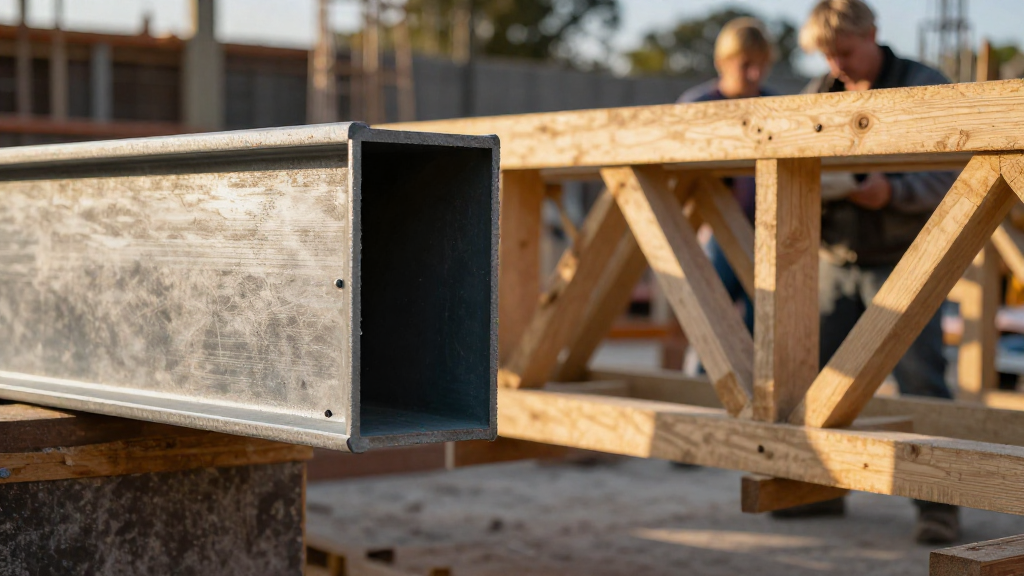
When considering structural engineering, understanding the beam and truss difference is essential for architecture, construction, and design projects.
What Is a Beam?
A beam is a key structural element used to support loads and provide stability in buildings and various constructions.
How Do Beams Function?
Beams primarily serve to:
- Support Loads: They carry weight from floors, roofs, or other structures.
- Distribute Forces: Beams transfer loads to vertical supports like columns or walls.
- Maintain Structural Integrity: They help maintain the stability of the structure, preventing collapse.
Generally, beams are solid pieces of material, often made of wood, steel, or concrete. They come in various shapes and sizes, depending on the requirements of the project.
What Is a Truss?
In contrast, a truss is a framework structure that utilizes many small elements to create a more complex design.
How Do Trusses Work?
Trusses are designed to:
- Enhance Stability: The triangular design of trusses provides excellent structural integrity.
- Use Less Material: Because of their design, trusses can be made with less material while still being strong.
- Support Large Spans: Trusses can cover larger distances without the need for intermediate supports.
Trusses are commonly used in roofs, bridges, and towers, where high strength and lightweight structures are necessary.
What’s the Key Difference Between Beams and Trusses?
Understanding the beam and truss difference lies in their structure, design, and application.
Design Differences
- Shape:
- Beams are often straight and singular elements.
-
Trusses are composed of interconnected triangles.
-
Material Use:
- Beams generally require more material; they need a solid, rigid structure.
- Trusses efficiently use materials due to their geometric design.
Load Distribution
- Beams:
- Beams absorb and distribute loads directly along their length to the supports below.
- Trusses:
- Trusses distribute loads throughout the entire structure, with different members absorbing and transferring loads to avoid concentration.
Span Capabilities
- Beams:
- Typically have limited spans, depending on the material used and the load to be carried.
- Trusses:
- Designed to span longer distances without the need for additional support.
What Are the Common Applications of Beams?
Beams are widely utilized in various construction projects:
- Building Foundations: Support for walls or roofs in residential and commercial buildings.
- Bridges: Used in bridge designs for their load-bearing capabilities.
- Platforms: Provide support for overhead structures and walkways.
What Are the Common Applications of Trusses?
Trusses find applications in several areas for their unique properties:
- Roof Structures: Commonly used in building roofs due to their ability to support large spans.
- Bridges: Ideal for long-lasting and lightweight structures while maximizing space.
- Towers: Used in telecommunications and observation towers for enhanced strength to weight ratio.
Which Is More Cost-Effective: Beams or Trusses?
When comparing cost-effectiveness between beams and trusses, various factors come into play:
Material Costs
- Beams generally require more material for strength and support.
- Trusses provide a lighter structure, which can reduce material costs.
Labor Costs
- Beams are often easier to install, leading to potentially lower labor costs.
- Trusses, while efficient, may require specialized labor for assembly.
Long-Term Savings
- Trusses can result in long-term savings due to their efficient material use and durability, resulting in lower maintenance.
How Do Beams and Trusses Compare in Terms of Strength?
The beam and truss difference extends to strength and load capabilities:
Beams
- Strength: Strong in bending and compressive strength.
- Limitations: Prone to sagging if spans are too long without sufficient support.
Trusses
- Strength: Stronger per unit of weight due to triangular configuration, which minimizes bending forces.
- Limitations: May require purely vertical load input to maintain integrity.
What Should You Consider When Choosing Between a Beam and a Truss?
When selecting between a beam and a truss for a construction project, consider the following factors:
- Load Requirements: Analyze the type and amount of load the structure will support.
- Span Length: Determine the distance between supports and the overall height of the structure.
- Material Availability: Choose materials that are readily available and suitable for your project.
- Aesthetic Appeal: Consider how your choice integrates within the overall design.
Conclusion
In summary, recognizing the beam and truss difference is crucial for effective structural design.
By understanding the unique characteristics and applications of beams and trusses, architects and engineers can make informed decisions that balance functionality, aesthetics, and cost.
Whether to use a beam or a truss will depend on specific project requirements, load types, and environmental conditions.
Ultimately, knowing when to choose either structural element can lead to the successful execution of diverse architectural and engineering projects.