When desk space is tight, a good screen extender can make a laptop feel much more usable without forcing you into a full multi-monitor setup.
This roundup focuses on laptop screen extenders for small desks that balance portability, display size, and easy setup for everyday work, travel, and hybrid offices.
Best 10 Laptop Screen Extenders for Small Desks Picks for 2026
Vertical-Ready Dual Display
Detachable 15.6-inch Screen Extender

- 15.6-inch 1080p IPS panel gives more working space.
- Detachable screen supports vertical mounting for flexible tasks.
- Type-C plug-and-play, with USB-A and HDMI fallback options.
Best For: Coding, long documents, and flexible desktop layouts
Ultra-Light Travel Dual
14.2-inch Portable Monitor Extender

- Only 1.87 lb and 0.27 inches thin for easy carrying.
- 14.2-inch 1080p IPS panel suits compact work setups.
- Extend, mirror, and portrait modes support different tasks.
Best For: Travelers and remote workers who prioritize portability
Triple-Screen Mobility
Vixtan 14" Triple Laptop Screen Extender

- 3-screen modes for multitasking
- 0.3-inch thin, 3.0 lbs lightweight build
- 14-inch FHD IPS with 100% sRGB
Best For: Traveling professionals and remote workers who want triple-screen productivity
Compact Dual-Mode Pick
Laptop Screen Extender 15.6" FHD 1080P

- Detachable dual-screen design
- 100W PD reverse charging support
- 15.6-inch IPS panel with 100% sRGB
Best For: Small-desk users who want a flexible dual-screen workflow
Clean-Desk Triple Setup
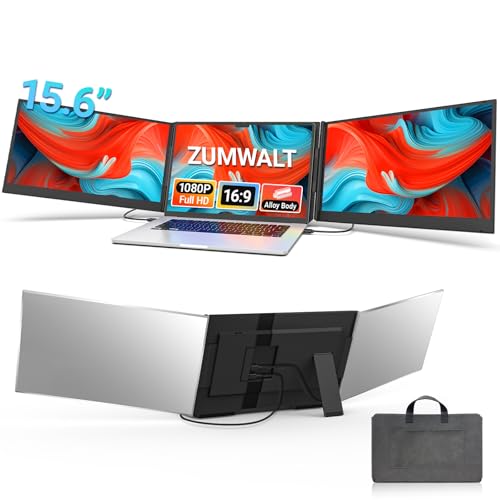
- Triple-screen workflow with fewer cables
- Ultra-slim aluminum shell and carry bag
- 15.6-inch FHD displays with 280 nits
Best For: Users who want a cleaner, more streamlined triple-monitor setup
Best Dual-Screen Value
CIDETTY 14" Dual Monitor Extender

- Two 14-inch FHD IPS screens
- Matte anti-glare with 300-nit brightness
- Telescopic stand with plug-and-play setup
Best For: A compact dual-screen boost for tighter workspaces
Desk-Saver 14-inch Expandable – 14-inch Portable Monitor for Compact Workspaces
If you’re shopping for laptop screen extenders for small desks, this 14-inch model keeps the footprint relatively manageable while still adding a full second display. It works with 13″ to 17″ laptops up to 15.35″ wide, and the 1080p IPS panel gives you a practical boost for email, documents, and side-by-side multitasking.
Best For: Users who want a compact, travel-friendly dual-screen setup for everyday productivity.
Pros:
- 14-inch 1080p FHD IPS screen with matte finish for clear everyday work.
- Supports extended, mirrored, and portrait modes for flexible layouts.
- Plug-and-play connection via Type-C, HDMI, or USB-A with included cables.
- Thin folded profile and 2.34 lb weight make it easy to move between spaces.
Cons:
- Works best only if your laptop fits the 15.35-inch maximum width limit.
- Requires the right port setup for HDMI use, including extra power connection.
Overall, this is a sensible pick when desk space is tight and you want a lighter, simpler way to add screen real estate without going oversized.
Triple-Screen Travel Rig – 15.6-inch Triple Monitor Extender
For laptop screen extenders for small desks, this 15.6-inch triple-display design is best when you want maximum workspace in a compact foldable unit. It adds two extra 1080p IPS panels, and the clip-free design avoids pressure on your laptop screen while still giving you a full multi-monitor layout.
Best For: Power users who need a portable triple-screen setup for spreadsheets, coding, and travel work.
Pros:
- Triple 15.6-inch FHD IPS displays create a large multitasking area.
- Clip-free design is compatible with more laptop sizes and avoids screen pressure.
- USB-C or HDMI connectivity with plug-and-play support on Windows, macOS, Linux, and more.
- Matte panels, 300 nits brightness, and 178° viewing angles help in bright workspaces.
Cons:
- The 15.6-inch triple setup will take more physical space than smaller single-panel extenders.
- At 4 lbs, it is less light than the most compact travel options.
This is the strongest productivity-first option in the group, but it makes the most sense if you can dedicate enough desk area to support a wider setup.
Vertical-Ready Dual Display – Detachable 15.6-inch Screen Extender
If you need laptop screen extenders for small desks but still want a large, flexible display, this 15.6-inch detachable model is built to adapt. Its vertical-mount support makes it especially useful for coding, long documents, and social feeds, while the telescoping bracket is designed for 13″ to 17.3″ laptops.
Best For: Users who want a larger monitor extender with vertical-mode flexibility for work and content tasks.
Pros:
- 15.6-inch 1080p IPS display offers more visible space than common 14-inch options.
- Detachable screen and vertical mounting support add workflow flexibility.
- Telescoping design fits 13″ to 17.3″ laptops with two-level mounting positions.
- Plug-and-play connection via Type-C, or USB-A plus HDMI if needed.
Cons:
- The larger 15.6-inch screen is less compact than smaller desk-friendly models.
- It is still a laptop-attached extender, so physical width matters on very tight setups.
For buyers who can spare a little more desk space, this model stands out for its detachable screen and vertical-use options without adding setup complexity.
Ultra-Light Travel Dual – 14.2-inch Portable Monitor Extender
Among laptop screen extenders for small desks, this 14.2-inch model is one of the easiest to live with when space is limited. Its ultra-thin, 1.87 lb build makes it simple to set up, move, and store, while still giving you a full 1080p IPS second screen for multitasking.
Best For: Remote workers, students, and travelers who want a very light dual-monitor add-on.
Pros:
- Extremely light at 1.87 lb and only 0.27 inches thin.
- 14.2-inch FHD IPS display with 300 nits brightness for clear everyday use.
- Supports extend, mirror, and portrait modes for different workflows.
- Plug-and-play setup with USB-C, or HDMI plus USB-A when needed.
Cons:
- The 14.2-inch size is practical, but not as expansive as 15.6-inch options.
- Best suited to users who value portability more than maximum screen area.
This is a strong pick if you want to keep your workspace light and uncluttered, especially for commuting or moving between home, office, and travel settings.
Triple-Screen Mobility – Vixtan 14" Triple Laptop Screen Extender
If you want laptop screen extenders for small desks, this Vixtan triple-screen model is built to add workspace without taking over your setup. At just 0.3 inches thin and 3.0 lbs, it stays relatively compact while giving you three-screen multitasking on a 14-inch FHD IPS display.
Best For: Remote workers, students, traders, and travelers who need triple-screen productivity in a portable format.
Pros:
- Triple-screen setup for extended, mirrored, and portrait modes
- Lightweight 3.0 lb body and slim 0.3-inch profile
- 14-inch 1920 x 1080 IPS panel with 300-nit brightness and 100% sRGB
- Includes USB-C and HDMI cables for plug-and-play use
Cons:
- MacBook M1/M2/M3 support is limited to single-screen use unless you add a DisplayLink adapter
- May need a 5V/3A or higher power adapter if brightness is low or flickering appears
- Triple-screen width can still feel sizable on very cramped desks
Overall, this is a strong pick if your priority is maximum screen expansion in a portable package. The adjustable stand, wide compatibility, and lightweight build make it a practical fit for small workspaces that still need serious multitasking.
Compact Dual-Mode Pick – Laptop Screen Extender 15.6" FHD 1080P
For laptop screen extenders for small desks, this 15.6-inch dual-monitor extender focuses on giving you more room while staying easy to position and store. Its detachable screen, 2-level height slots, and 15.6-inch FHD IPS panel make it a flexible option for tighter workspaces.
Best For: People who want a space-saving dual-screen setup with ergonomic adjustment and charging support.
Pros:
- Dual-screen setup with extend, mirror, and portrait modes
- Detachable screen for more flexible use on limited desk space
- 15.6-inch 1080p IPS display with 280 nits and 100% sRGB
- 100W PD reverse charging can power the laptop while in use
Cons:
- Requires the right USB-C or HDMI setup for best results
- “No Signal” issues can happen if external power is insufficient
- Heavier than some ultra-light options at 2.75 lbs
This model is a solid fit if you want a practical second-screen solution without moving to a bulkier triple setup. The combination of adjustable height, detachable design, and charging support makes it especially useful for compact desks and long work sessions.
Clean-Desk Triple Setup – 15.6" Laptop Screen Extender
If you are shopping for laptop screen extenders for small desks, this triple portable monitor stands out for its cable-light setup and clean footprint. It uses two USB-C to USB-C cables when your device supports full functionality, which helps simplify connections and keep clutter down.
Best For: Users who want a larger triple-screen workspace with a streamlined, low-clutter setup.
Pros:
- Triple-screen expansion designed to reduce tab switching and improve multitasking
- Upgraded internals help minimize cables and simplify setup
- Ultra-slim aluminum shell with included leather carry bag
- 15.6-inch FHD 1080p displays with 280 nits and 178° viewing angle
Cons:
- M1/M2/M3 MacBooks need an additional H5-T cable
- Non-full-featured USB-C laptops may require extra cabling and driver installation
- At 4 lbs, it is the heaviest of these options
This is a strong option if desk clutter is your main concern but you still want the benefits of a triple-screen layout. The aluminum build and simplified cabling make it appealing for portable productivity, though compatibility checks are important before buying.
Ultra-Thin Triple-Screen Pick – KEFEYA 15.6" FHD Triple Monitor
If you need laptop screen extenders for small desks, this KEFEYA setup is a strong fit because it adds two 15.6-inch displays without forcing a bulky permanent monitor arrangement. The foldable design, lightweight build, and included carrying bag make it easier to create a temporary workspace and then pack it away when you need your desk back.
Best For: Users who want a portable triple-screen workstation with full-size 15.6-inch panels.
Pros:
- Two 15.6-inch FHD 1080p IPS displays with 100% sRGB and 300-nit brightness
- Very slim 0.16-inch profile and 3.9-pound weight for portability
- Supports mirror, extension, landscape, and portrait modes with 180-degree rotation
- Plug-and-play setup with included cables for USB-C and HDMI connections
Cons:
- Not compatible with Mac M1/M2/M3 chips without a separate adapter
- Triple-screen size may feel large on very tight desks despite the portable design
Overall, this is a strong choice if your priority is maximizing screen space while still keeping the system portable. It balances image quality, flexibility, and easy setup well for mobile workstations.
Compact Travel Triple Setup – Macsecor 14" Slim Extender
For buyers comparing laptop screen extenders for small desks, this Macsecor model stands out for using 14-inch panels and a slim, clamp-on design that aims to stay stable without taking over your workspace. The smaller screen size and built-in stand make it easier to fit beside a laptop when desk space is limited.
Best For: Travelers and desk-limited users who want a lighter triple-screen extender with 14-inch panels.
Pros:
- Two 14-inch FHD 1080p IPS screens with HDR support
- Ultra-slim, 3-pound design with a zero-damage clamp-on backplate
- Built-in aluminum stand adjustable up to 90 degrees
- Supports extended, mirrored, duplicate, portrait, and landscape modes
Cons:
- M1/M2/M3 MacBook users may need an additional H5-T cable
- Glossy screen finish may be less ideal than matte options for glare-sensitive setups
This is a practical pick if you want a smaller, easier-to-carry extender that still gives you a triple-screen workflow. It emphasizes portability and straightforward setup more than oversized displays.
Best Dual-Screen Value – CIDETTY 14" Dual Monitor Extender
If you want laptop screen extenders for small desks without jumping to a triple-screen setup, this CIDETTY model keeps things simpler with two 14-inch displays and a more compact footprint. Its adjustable telescopic stand and protective padding make it a practical option for everyday workspaces where stability and desk space both matter.
Best For: Users who want a compact dual-screen extender with solid stability and broad compatibility.
Pros:
- Two 14-inch FHD IPS panels with 300-nit brightness and 178-degree viewing
- Matte anti-glare coating plus independent brightness controls for eye comfort
- Adjustable telescopic stand designed for a secure fit on 13-17.3 inch laptops
- Plug-and-play connection with USB-C or HDMI options and no driver required
Cons:
- Dual-screen design offers less workspace than triple-screen alternatives
- Some older Surface models may lack the required ports for direct use
For small desks, this is the most balanced option of the three because it adds useful screen space without the added bulk of a triple-monitor attachment. It should appeal to anyone who wants a practical productivity boost and a cleaner setup.
How We Picked the Best Laptop Screen Extenders for Small Desks
For Laptop Screen Extenders for Small Desks, we prioritized compact footprints, stable mounting, sensible weight, and straightforward plug-and-play connectivity. We also looked for models that can add usable workspace without creating cable clutter or requiring a deep desk.
Other key factors included panel quality, brightness, compatibility with common laptop sizes, and whether the extender’s layout works well in tight setups like dorms, apartments, and corner workstations.
Quick Comparison
In general, 14-inch models are the easiest fit when every inch matters, while 15.6-inch options offer a larger viewing area if your desk can handle the extra width. Dual-screen designs tend to suit lighter travel setups, while triple-screen configurations are best for users who need maximum multitasking and can spare a bit more room.
Key Buying Factors for Laptop Screen Extenders for Small Desks
Footprint and Mounting Style
Measure the depth of your desk first. A slim extender with a compact stand or direct laptop clamp usually works better than a wide base. If you use a keyboard tray or sit close to the screen, low-profile mounting can be a major advantage.
Screen Size and Aspect Fit
Smaller screens are easier to place on cramped desks, but larger panels may reduce eye strain if you work long hours. Check whether the extender matches your laptop’s width and whether it will block vents, ports, or hinges.
Connectivity and Power
Most modern models rely on USB-C for video and power, with HDMI and USB-A often included for broader compatibility. For small desks, fewer cables usually mean a cleaner setup, so look for models that support true plug-and-play use with minimal adapters.
Weight and Travel Use
If you frequently move between home, office, and café, a lighter extender is easier to pack and set up. Heavier triple-screen units can still be worthwhile, but they make the most sense when you want a semi-permanent workstation.
Who Should Buy Which Laptop Screen Extenders for Small Desks?
If you want the simplest solution for a tight workspace, choose a compact dual-screen model with a 14-inch display and USB-C connectivity. If your work involves spreadsheets, coding, trading, or content creation, a 15.6-inch or triple-screen extender may be the better fit because it gives you more room to keep multiple windows visible at once.
Travel-first buyers should favor lighter, thinner designs that fold down easily, while home-office users with a bit more desk space can benefit from larger panels and more flexible viewing angles. The best choice depends less on raw screen count and more on how much room you have to spare and how you actually work each day.