If you need to copy or sanitize flash drives in volume, the right hardware can save hours and reduce mistakes. The best USB duplicators make cloning simple, consistent, and fast without relying on a computer.
Below, we focus on the most practical options for offices, schools, event teams, and IT workflows that need dependable results.
Best 10 USB Duplicators Picks for 2026
Compact 1:2 Cloner
StarTech 1:2 Standalone USB Flash Drive Duplicator Eraser

- Standalone cloning and erasing
- Quick copy plus sector-by-sector modes
- LCD verification and drive scanning
Best For: Technicians needing a small, no-computer USB cloner and eraser
Bulk 1:15 Duplicator
Systor 1 to 15 USB Duplicator & Sanitizer

- Duplicates up to 15 drives at once
- Standalone bit-by-bit copying
- Up to 2GB per minute transfer speed
Best For: Teams that need high-capacity USB duplication with simple standalone operation
Portable 1:2 Copier
BestDuplicator UB300 1:2 Standalone USB 2.0 Flash Drive Duplicator

- Portable standalone 1:2 cloning
- Quick Copy and Whole Media Copy
- Built-in erase and media test tools
Best For: Users who need a lightweight portable USB duplicator for small batches
Balanced 1:7 Duplicator
Systor 1 to 7 USB Duplicator & Sanitizer

- Copies to 7 drives at once
- Standalone synchronous and asynchronous modes
- Supports USB 1.1/2.0/3.0 flash drives
Best For: Teams wanting a mid-size standalone USB duplicator with flexible modes
Compact 7-Bay Copier
EZ Dupe 1 to 7 Mini USB Plus MK III

- Copies up to 7 USB drives at once
- Standalone use, no computer required
- Updated model claims 2.5GB/min speed
Best For: Small-batch USB duplication with a compact standalone unit
High-Volume 31-Bay System
Systor 1 to 31 USB Duplicator & Sanitizer

- Copies up to 31 USB drives
- Standalone duplicator and sanitizer
- Supports synchronous and asynchronous modes
Best For: High-volume business duplication and sanitizing
Portable 4-Bay Copier
EZ Dupe 1 to 4 Mini USB Plus MK II
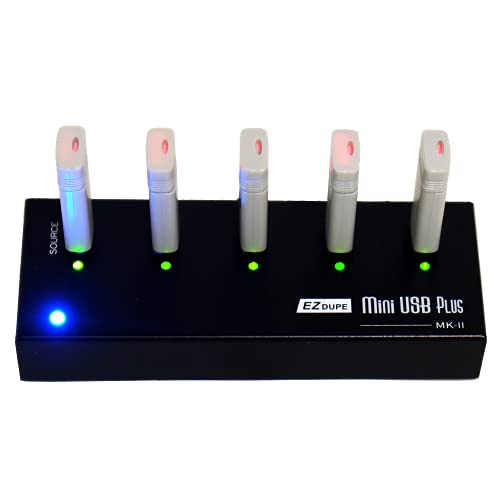
- Copies up to 4 USB drives at once
- Standalone operation with no computer
- Updated model claims 2.5GB/min speed
Best For: Compact USB copying in small batches
Standalone USB Duplicator & Eraser

- No computer required for duplication or erasing
- Copies and wipes USB 3.0/2.0 flash media
- LCD menu with compare and drive error scanning
Best For: IT teams needing a standalone 1-to-15 duplicator
Computer-Connected Mini USB Duplicator

- Copies up to 10 USB drives at once
- Works with Windows and Mac software
- Can duplicate from images, drives, or folders
Best For: Mac and Windows users who want software-based duplication
Touchscreen USB Duplicator
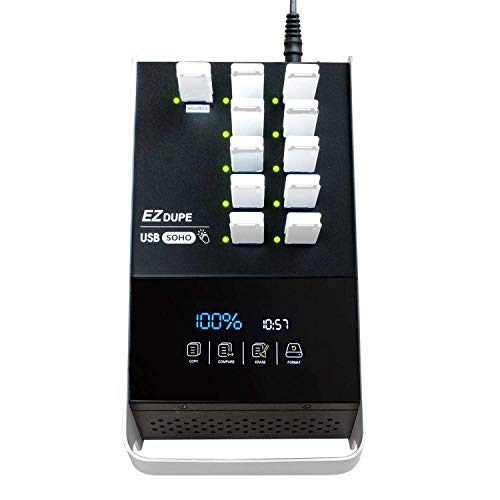
- Touchscreen controls for copy, compare, format, and erase
- Supports all file formats and USB drive capacities
- Built for daily use with lightweight construction
Best For: Small offices needing simple daily USB duplication
Compact 1:2 Cloner – StarTech 1:2 Standalone USB Flash Drive Duplicator Eraser
If you need usb duplicators for small-batch cloning and secure wipe tasks, this StarTech model is built for straightforward stand-alone use. It can duplicate or erase USB flash drives without a computer, and it adds verification, bad-sector scanning, and multiple erase modes for more controlled media handling.
Best For: IT teams, technicians, and small offices that need a compact standalone duplicator for cloning or sanitizing a few USB drives at a time.
Pros:
- Standalone 1:2 duplicator and eraser with no computer required
- Supports quick copy, whole-drive sector copy, and multiple erase modes
- LCD menu, copy-and-compare verification, and drive error scanning
- Asynchronous mode with 64 MB memory helps streamline sequential copying
Cons:
- Asynchronous copying only works when source content is under 64 MB
- Designed for just two targets per run, so it is not ideal for large-volume duplication
- Best compatibility is with USB flash media and USB external storage that can supply its own power
Overall, this is a practical pick if you want a simple, no-PC duplicator that also handles sanitizing and basic media checks. Its strength is controlled, small-scale USB drive management rather than high-output production work.
Bulk 1:15 Duplicator – Systor 1 to 15 USB Duplicator & Sanitizer
Among usb duplicators, this Systor unit stands out for its 1-to-15 capacity and stand-alone operation. It is designed for fast bit-by-bit copying without software, making it a strong fit when you need to prepare multiple identical USB drives in one run.
Best For: Businesses and IT departments that need to duplicate one source drive to many targets with minimal setup.
Pros:
- Copies to up to 15 drives at once without a computer
- Bit-by-bit duplication with synchronous and asynchronous copy modes
- Rated up to 2GB per minute transfer speed
- Includes 1 year parts, 3 years labor, and lifetime technical support
Cons:
- Only supports USB 2.0 interface according to the supplied details
- Large-capacity target count may be more than some small offices need
- Best suited to duplication tasks rather than advanced media testing features
This is a sensible choice when volume matters more than portability. If your workflow is centered on repeatable USB drive cloning and sanitizing, the 1:15 design offers a lot of throughput in a single standalone machine.
Portable 1:2 Copier – BestDuplicator UB300 1:2 Standalone USB 2.0 Flash Drive Duplicator
If you want usb duplicators that are easy to carry and simple to run, this BestDuplicator UB300 is built around portable 1-to-2 cloning. It handles quick copy or whole-media copy, and it also adds erase tools plus basic media tests for checking flash drive quality before deployment.
Best For: IT staff, schools, and field users who need a lightweight standalone USB cloning tool for small batches.
Pros:
- Standalone 1-to-2 duplication without a computer
- Quick Copy and Whole Media Copy options
- Includes capacity check, device info, read/write speed tests, and erase functions
- Portable design with LCD display and LED port indicators
Cons:
- Targets USB 1.1 and USB 2.0 media, so it is not focused on newer interfaces
- Only duplicates to two targets at a time
- Some card formats require a separate compatible USB card reader
This model is a good fit when you need a compact copier that can also help validate and sanitize drives. It is geared toward convenience and portability, not large-scale duplication jobs.
Balanced 1:7 Duplicator – Systor 1 to 7 USB Duplicator & Sanitizer
This Systor unit fits well in the usb duplicators category when you need more capacity than a 1:2 device but do not need a full production system. It runs standalone, supports synchronous and asynchronous copying, and is rated for USB flash drives across multiple USB generations, with optional support for 2.5-inch external hard drives.
Best For: Offices and IT teams that want a balance of target count, speed, and standalone simplicity.
Pros:
- Copies to up to 7 drives at once without software
- Supports synchronous and asynchronous copy modes
- Rated up to 2GB per minute transfer speed
- Compatible with USB 1.1, 2.0, and 3.0 flash drives
Cons:
- Heavier desktop form factor than the smaller portable options
- Optional support for 2.5-inch external hard drives may require extra setup
- Like most duplicators, it is focused on cloning and sanitizing rather than broader workstation features
For users who need more output than a compact 1:2 cloner but less than a 1:15 unit, this is a practical middle ground. It keeps the workflow simple while giving you enough target ports for routine office deployment.
Compact 7-Bay Copier – EZ Dupe 1 to 7 Mini USB Plus MK III
If you need usb duplicators for compact, no-computer copying jobs, this EZ Dupe unit is built for straightforward bulk work. It can copy up to 7 USB flash drives at the same time, supports standalone plug-and-use operation, and includes asynchronous copying so you do not have to wait for one full set to finish before starting the next.
Best For: Small teams or shops that need a portable standalone duplicator for up to 7 thumb drives at once.
Pros:
- Copies up to 7 USB flash drives simultaneously
- Standalone operation with no computer required
- Updated version claims 25% faster copy speed at up to 2.5GB/min
- Supports USB 1.0/2.0/3.0 flash drives and USB external storage with its own power source
Cons:
- External USB devices need their own power source
- Maximum speed still depends on the read/write speed of the drives
Overall, this model is a practical fit when your priority is a smaller footprint and faster turnaround on medium-size duplication runs. Its asynchronous copy mode and improved compatibility make it a flexible option for routine thumb-drive production.
High-Volume 31-Bay System – Systor 1 to 31 USB Duplicator & Sanitizer
For high-volume usb duplicators use, this Systor model is aimed at larger production environments that need many copies from a single source. It is a standalone 1-to-31 duplicator and sanitizer with bit-by-bit copy mode, plus synchronous and asynchronous copy options for different workflow needs.
Best For: Business users who need to duplicate and sanitize large numbers of USB drives in a standalone workflow.
Pros:
- Copies up to 31 USB drives
- Standalone design requires no computer or software
- Supports both synchronous and asynchronous copy modes
- Includes sanitizing functionality and a 1-year parts warranty with lifetime technical support
Cons:
- Copy speed is listed at up to 2GB per minute, which may be slower than smaller-bay units on a per-drive basis
- Designed for business use, so it may be more than casual users need
This is the strongest pick in the group when the job is volume and workflow control rather than portability. Its 31-target capacity makes it well suited to repeat production runs where one source needs to be cloned many times.
Portable 4-Bay Copier – EZ Dupe 1 to 4 Mini USB Plus MK II
This EZ Dupe model is a practical choice if you want usb duplicators in a smaller, portable format. It supports copying up to 4 USB flash drives at once, runs without a computer, and offers asynchronous copying so you can keep production moving instead of waiting for each batch to finish.
Best For: Users who want a compact standalone copier for small USB batches and occasional external storage cloning.
Pros:
- Copies up to 4 USB flash drives simultaneously
- Standalone plug-and-use operation with no computer needed
- Updated version claims 25% faster copy speed at up to 2.5GB/min
- Supports USB 1.0/2.0/3.0 flash drives and USB external storage with its own power source
Cons:
- External USB devices must have their own power source
- Maximum speed depends on the read/write speed of the drives
As a smaller-capacity option, this model makes sense when portability and simple operation matter more than volume. It keeps the same standalone approach as larger duplicators, but in a more compact 4-drive format.
Standalone USB Duplicator & Eraser – StarTech 1:15 LCD Cloner
If you need usb duplicators for hands-off batch work, this StarTech unit is built for standalone cloning and secure erasing without a computer. It can duplicate or wipe USB 3.0/2.0 flash drives and external USB storage, making it practical for IT teams, technicians, and anyone managing multiple boot drives or shared thumb drives.
Best For: IT pros and technicians who want a standalone 1-to-15 duplicator with erase options and LCD controls.
Pros:
- Standalone 1-to-15 duplication and erasing with no computer required
- Supports system/file copy plus whole-drive sector-by-sector copying
- Offers quick erase, single-pass, and 3-pass overwrite options
- LCD menu with compare, drive info, and error/bad-sector scanning
Cons:
- Asynchronous mode only works when source content is under 128 MB
- External USB devices may need their own power source
- Bulkier desktop-style unit, not a compact travel copier
This is a strong fit if you want a dedicated USB duplication station with verification and sanitizing features. The tradeoff is that its most convenient fast-copy mode has a small source-size limit, so it works best for standard flash-drive tasks rather than larger image transfers.
Computer-Connected Mini USB Duplicator – DupliM 1-to-10 Mini Copier
For buyers comparing usb duplicators that plug into a PC or Mac, this DupliM model focuses on flexible workflow and compact hardware. It can duplicate up to 10 USB 3.0/2.0 drives at once and supports copying from image files, flash drives, or selected files and folders on your hard drive.
Best For: Mac and Windows users who want a compact, computer-connected duplicator with software-driven control.
Pros:
- Duplicates up to 10 drives simultaneously
- Works with both Windows and Mac through included software
- Can copy from image files, flash drives, or hard-drive folders
- Includes USB 3.0 cable, power adapter, and U.S.-based tech support
Cons:
- Requires a connected computer to operate
- Needs minimum system requirements, including 2GB RAM and a dual-core CPU
- Not a standalone unit for off-grid use
This is a practical choice if you prefer software control and cross-platform compatibility over a standalone appliance. Its compact design and included support make it appealing for smaller teams, though it is less convenient when you want a completely independent copier.
Touchscreen USB Duplicator – EZ Dupe SOHO Touch 1-to-10
This EZ Dupe model is aimed at users who want usb duplicators with a simple touchscreen workflow and broad media support. It handles copy, compare, format, and erase tasks for USB flash media, with lightweight construction intended for daily operation.
Best For: Small offices and repetitive daily duplication tasks that benefit from touchscreen controls.
Pros:
- Touchscreen interface makes copy, compare, format, and erase easier
- Supports all file formats, file sizes, and drive capacities on USB flash media
- Lightweight yet built for daily operation
- Includes smart copy and one-touch erase functions
Cons:
- Duplication speed is listed at 35MB per second, slower than some rivals
- Requires USB-compatible devices running Windows, Linux, or macOS
- No battery required, so it is not a portable standalone battery unit
If ease of use matters more than maximum throughput, this is a well-rounded office-friendly duplicator. Its touchscreen and straightforward controls should reduce setup friction, but buyers chasing the fastest possible copy speeds may want to compare alternatives.
How We Picked the Best USB Duplicators
We looked for models that balance duplication speed, supported port count, standalone operation, and sanitizing features. For most buyers, the best USB Duplicators are the ones that match real workload needs: a few drives at a time, or larger batches that need predictable throughput and easy verification.
Quick Comparison
As you compare the lineup, think first about capacity. Compact 1:2 and 1:4 units are best for small office jobs or occasional cloning, while 1:7, 1:10, 1:15, and 1:31 systems are better for production runs and training materials. Also consider whether you need erasing or sanitization in the same workflow, since that can be just as important as copying.
Key Buying Factors for USB Duplicators
Port Count and Scale
Choose a port count that fits your typical batch size, not just your biggest possible job. Smaller systems are usually more affordable and easier to store, while larger systems deliver better efficiency when you duplicate the same content repeatedly.
Speed and Media Type
Published transfer rates matter, but real-world speed also depends on the flash drives you use. Faster models help most when you copy large files or image sets, while basic units may be enough for smaller installers, documents, or media kits.
Standalone Vs. Computer-Connected
Standalone USB Duplicators are ideal when you want a simple, self-contained workflow with fewer software variables. Computer-connected systems can be useful when you want more control, but they add setup complexity.
Sanitizing and Erasing
If you reuse drives, look for sanitizer or eraser functions. These are especially valuable in managed IT environments, classrooms, and organizations handling sensitive data.
Menu, Display, and Ease of Use
An LCD or touchscreen can make a big difference in day-to-day operation. Clear status feedback reduces user error and helps teams monitor progress at a glance.
Who Should Buy Which USB Duplicators?
Buy a 1:2 or 1:4 unit if you need a compact solution for occasional copying. Choose mid-range 1:7 or 1:10 systems if you handle recurring office, event, or retail media jobs. Go with 1:15 or larger USB Duplicators if speed and batch volume matter most, especially for IT departments, distribution teams, or organizations that regularly clone and sanitize many drives at once.
In short, prioritize the port count, workflow style, and sanitizing features that match how you actually work. That will give you a more useful tool than simply choosing the biggest machine on the list.