The best field monitor for directors makes it easier to judge framing, exposure, focus, and color without crowding around a camera’s built-in screen. The right choice depends on your crew size, shooting environment, camera outputs, and need for monitoring tools.
We compare 10 strong options ranging from lightweight 5.2-inch displays to a 21.5-inch production monitor, with attention to brightness, connectivity, viewing tools, portability, and on-set practicality.
Best 10 Field Monitor for Directors Picks for 2026
Bright Camera Control

- 3000-nit touchscreen for daylight viewing
- 3G-SDI and 4K HDMI connectivity
- Camera control and touch focus on supported models
Best For: Outdoor directors using compatible cameras
OLED Production Detail
NEEWER F700U 7-inch OLED Monitor

- 1200-nit 1080p OLED touchscreen
- HDMI loop out and 3G-SDI I/O
- Includes two NP-F750 batteries
Best For: Small crews needing detailed OLED monitoring
Multi-Camera Director View
Osee Mega 22S4 Multi-View Monitor
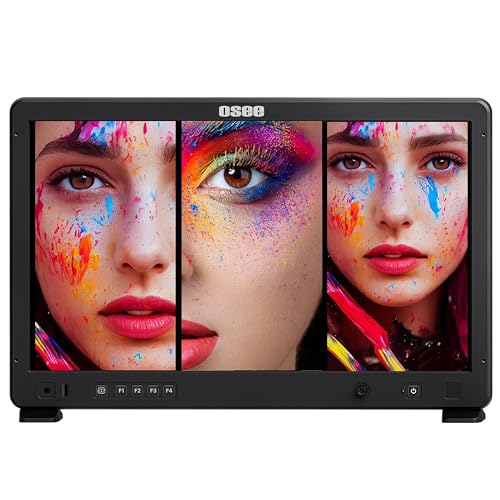
- 21.5-inch 1500-nit daylight-viewable display
- Six total HDMI and SDI inputs
- Multi-view layouts for up to four sources
Best For: Director stations on multi-camera productions
Lightweight On-Camera View
FEELWORLD F5 Prox 5.5-inch Monitor

- 1600-nit display for outdoor visibility
- Focus, waveform, histogram, and false color tools
- Lightweight mounting for rigs and gimbals
Best For: Portable camera and gimbal setups
Bright-Set Director Monitor
osee Mega 15S 15.4-inch Production Monitor
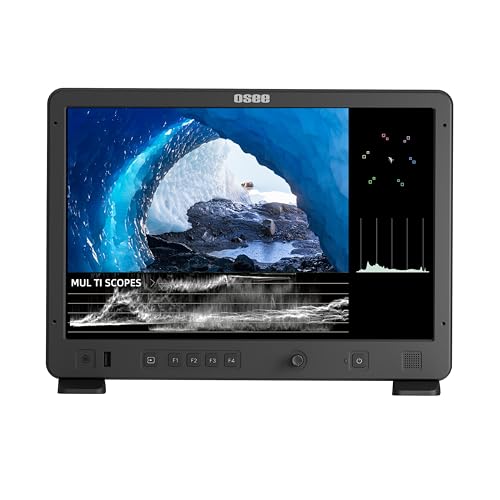
- 1500-nit 10-bit IPS display for daylight viewing
- 3G-SDI and 4K HDMI signal connectivity
- Waveform, HDR, LUT, and exposure-analysis tools
Best For: Outdoor shoots and large-screen production monitoring
Compact Touchscreen Pick
Portkeys PT6 5.2-inch Camera Field Monitor

- Lightweight 5.2-inch Full HD touchscreen
- RGB/luma waveforms, false color, and peaking
- 3D LUT output and anamorphic monitoring
Best For: Portable DSLR and mirrorless camera rigs
Studio Workflow Choice
FEELWORLD FW703 7-inch SDI Monitor
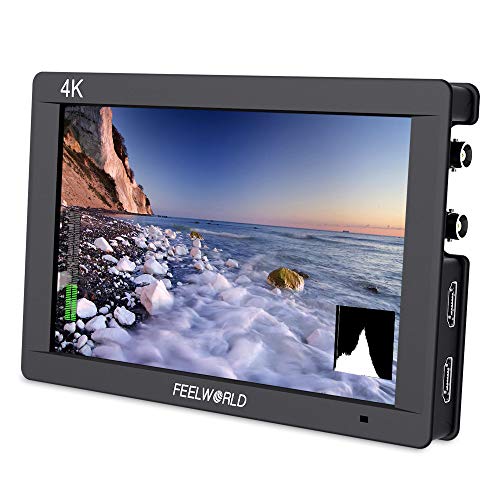
- 7-inch 1920x1200 IPS display
- HDMI 4K and 3G-SDI connectivity
- Scopes, peaking, false color, and 3D LUT support
Best For: Indoor sets, interviews, and multi-camera production
Bright Daylight Monitor

- 2000-nit 5.5-inch touchscreen
- 4K HDMI loop-in and loop-out
- Waveform, LUT, and focus tools
Best For: Outdoor directors needing a bright, compact monitoring solution
Large On-Set Display

- 3000-nit daylight-viewable screen
- 7-inch 1920x1200 display
- Scene presets and joystick control
Best For: Outdoor directors prioritizing screen size and quick operation
Mobile Production Monitor

- 6-inch 1200-nit touchscreen
- Built-in rechargeable battery
- 9:16 marker and image overlays
Best For: Mobile and vertical-video crews needing integrated power
Bright Camera Control – Osee G7 Pro
For directors seeking a field monitor for directors that can improve both visibility and camera control, the Osee G7 Pro combines a 7-inch touchscreen with a highly bright 3000-nit display. Its SDI and HDMI connectivity, analysis tools, and supported camera-control functions make it well suited to demanding location shoots.
Best For: Outdoor directors and camera teams using compatible cameras who need bright viewing, touch focus, and professional monitoring tools.
Pros:
- 3000-nit screen with reflection-reducing coating for outdoor work
- 3G-SDI and 4K HDMI input/output support
- Waveform, histogram, vectorscope, false color, and 3D-LUT support
- Touch focus and camera controls are available with supported models
Cons:
- Camera control requires a compatible camera, Type-C connection, and NP-F battery power
- Battery is not included
- HDMI input/output is limited to 4K at 30p
The G7 Pro is a versatile choice when a director needs a bright on-camera display plus hands-on control and detailed exposure analysis. Confirm camera compatibility before relying on its touch-control features.
OLED Production Detail – NEEWER F700U 7-inch OLED Monitor
The NEEWER F700U is a practical field monitor for directors who want a high-contrast OLED image and a broad set of on-set tools. Its 7-inch 1080p touchscreen supports HDMI and SDI workflows, while the loop outputs and headphone jack make it useful for collaborative production monitoring.
Best For: Directors and small crews who need OLED contrast, dual connection standards, audio monitoring, and built-in exposure and focus tools.
Pros:
- OLED display with 100000:1 contrast and 1200-nit brightness
- 4K HDMI input and loop out plus 3G-SDI input/output
- Waveform, vectorscope, histogram, false color, zebra, and audio-level tools
- Includes two 4400mAh NP-F750 batteries
Cons:
- SDI cable is not included
- DC 12V adapter is not included
- It is a 1920×1080 display rather than a 4K-resolution panel
With its OLED panel, monitoring tools, and flexible power options, the F700U offers a well-rounded setup for directors who need reliable image evaluation and signal routing without moving to a much larger production display.
Multi-Camera Director View – Osee Mega 22S4 Multi-View Monitor
For productions that need a field monitor for directors and an entire crew, the Osee Mega 22S4 provides a large 21.5-inch daylight-viewable screen with multi-view layouts. It can display up to four sources at once, accepts HDMI and SDI inputs, and supports loop outputs for clients, DIT stations, or transmitters.
Best For: Multi-camera commercial, social, and broadcast-style sets where several people need to view sources simultaneously.
Pros:
- 21.5-inch, 1500-nit screen with included sun hood
- Supports single, dual, triple, quad, and PIP/PBP viewing modes
- Three 4K HDMI and three 3G-SDI inputs
- 10-bit IPS panel with HDR, calibration, and custom 3D-LUT support
Cons:
- At 9.5 kg, it is intended for production setups rather than lightweight camera rigs
- Hard case is not included
- Native display resolution is 1920×1080
The Mega 22S4 is the strongest option here for director stations and teamwide monitoring. Its size, multi-view flexibility, professional I/O, and V-Mount and Gold Mount plates favor a dedicated production position over handheld or camera-top use.
Lightweight On-Camera View – FEELWORLD F5 Prox 5.5-inch Monitor
The FEELWORLD F5 Prox is a compact field monitor for directors, camera operators, and filmmakers who need a brighter, larger view than a camera’s built-in screen. Its 5.5-inch 1600-nit display and core focus and exposure tools are suited to outdoor shooting, handheld rigs, gimbals, and tripods.
Best For: Lightweight camera rigs, gimbal setups, travel production, weddings, interviews, and outdoor shoots.
Pros:
- 1600-nit screen designed for outdoor-visible monitoring
- Focus peaking, waveform, histogram, and false color are included
- Supports LUT preview for Log shooting
- Mounts on cameras, cages, gimbals, tripods, and handheld setups
Cons:
- Smaller 5.5-inch screen offers less viewing area than the 7-inch and 21.5-inch options
- The supplied notes do not specify SDI connectivity
- One lithium-ion battery is required and included
The F5 Prox prioritizes portability and fast rig integration. It is a sensible pick when directors or operators need essential framing, focus, and exposure assistance without adding a large or heavy monitor to the setup.
Bright-Set Director Monitor – osee Mega 15S 15.4-inch Production Monitor
For directors who need a field monitor for directors that remains usable outdoors, the osee Mega 15S combines a bright 15.4-inch display with professional exposure and color tools. Its 1500-nit IPS panel, HDR preview, and SDI/HDMI connectivity make it suited to demanding production and client-monitoring setups.
Best For: Outdoor shoots, director and client village monitoring, and multi-camera productions requiring SDI connectivity.
Pros:
- 1500-nit 10-bit IPS display with a reflection-reducing coating for daylight viewing.
- Dual 3G-SDI inputs/outputs and 4K HDMI input support flexible signal routing.
- Waveform, vectorscope, RGB histogram, false color, focus peaking, 3D LUT import, and HDR preview provide extensive monitoring tools.
- Pre-installed V-Mount plate plus light-stand, C-stand, 1/4-inch, and 3/8-inch mounting options support mobile setups.
Cons:
- The 15.4-inch form factor is less compact than a typical on-camera monitor.
- Its 18 ms response time is slower than the smaller Portkeys PT6 listed here.
The Mega 15S is the strongest choice when daylight visibility, large-screen viewing, and professional signal handling matter more than portability. Hardware calibration and detailed scopes add value for directors and cinematographers who need dependable image evaluation.
Compact Touchscreen Pick – Portkeys PT6 5.2-inch Camera Field Monitor
The Portkeys PT6 is a practical field monitor for directors who want a lightweight touchscreen with strong image-analysis features. Its Full HD IPS screen, 600-nit brightness, 3D LUT output, and waveform tools fit DSLR and mirrorless shooting where portability is important.
Best For: Mobile DSLR or mirrorless crews, handheld rigs, and directors who prefer touchscreen control in a compact monitor.
Pros:
- Light 5.2-inch Full HD display weighs about 0.37 lb and offers a 178-degree viewing angle.
- Touchscreen controls and adjustable menu transparency make on-set operation convenient.
- Includes RGB and luma waveform, histogram, false color, zebra, peaking, audio meters, and other image tools.
- Supports 3D LUT output, anamorphic viewing, image flip, zooming, and customizable guides.
Cons:
- Its 600-nit brightness is lower than the osee Mega 15S, so it may be less suitable for strong sunlight.
- The required Sony NP-F or Canon LP-E6 battery is not included.
- The 5.2-inch screen provides less viewing area than larger production monitors.
The PT6 prioritizes portability without giving up essential focus and exposure aids. It is a sensible choice for directors working close to the camera, especially when a compact touchscreen is more useful than SDI-based routing.
Studio Workflow Choice – FEELWORLD FW703 7-inch SDI Monitor
The FEELWORLD FW703 gives directors a practical field monitor for directors who need a larger on-set viewing area and dependable HDMI/SDI connectivity. Its 7-inch Full HD IPS display and built-in scopes support focus, exposure, framing, and Log-preview decisions in studio and production environments.
Best For: Indoor film sets, interviews, commercial shoots, and multi-camera workflows using HDMI or 3G-SDI.
Pros:
- 7-inch 1920×1200 IPS display provides more viewing area than compact on-camera monitors.
- Supports HDMI 4K and 3G-SDI connectivity for DSLR, mirrorless, cinema, camcorder, and switcher setups.
- Waveform, vectorscope, RGB histogram, focus peaking, false color, and custom 3D LUT support aid image evaluation.
- Designed for tripod, cage, and hot-shoe mounting workflows.
Cons:
- Its 450-nit brightness is modest for direct sunlight compared with brighter outdoor-oriented monitors.
- The supplied details do not specify battery compatibility or included battery accessories.
The FW703 is a balanced production monitor for crews that want a readable 7-inch screen without moving to a much larger director display. Its SDI support and image-analysis tools make it particularly useful for indoor and multi-camera work.
Bright Daylight Monitor – NEEWER F500 PRO
The NEEWER F500 PRO is a practical field monitor for directors who need a bright, compact display with touchscreen control and professional exposure tools. Its 5.5-inch 2000-nit screen is designed for clear viewing outdoors, while 4K HDMI loop-through supports sharing the live feed with another display.
Best For: Directors and small crews working outdoors who need strong daylight visibility, LUT support, and a broad monitoring toolkit.
Pros:
- Very bright 2000-nit IPS display with a 160-degree viewing angle
- 4K HDMI input and loop-out for monitoring and signal sharing
- Includes waveform, vectorscope, histogram, false color, zebra, and focus peaking tools
- Supports custom 3D LUT uploads and includes a 5200mAh NP-F750 battery
Cons:
- Its 5.5-inch screen is smaller than many 7-inch production monitors
- At 1.6 pounds, it may add noticeable weight to a compact camera rig
- SD card for LUT uploads and firmware updates is not included
The F500 PRO stands out when daylight readability and extensive image-analysis tools matter most. Its multiple power options and camera power output also make it flexible for longer shoots, though its larger weight and smaller display may not suit every setup.
Large On-Set Display – osee T7 7-Inch Monitor
The osee T7 is a field monitor for directors who prefer a larger viewing area for framing, focus, and exposure checks. Its 7-inch, 3000-nit display is built for strong daylight, and one-joystick operation with customizable scene presets can simplify repeated on-set adjustments.
Best For: Directors who want a large, highly visible monitor for outdoor production and fast access to repeatable monitoring setups.
Pros:
- Extremely bright 3000-nit display for daylight shooting
- 7-inch 1920×1200 screen provides more viewing area than compact monitors
- Includes waveform, false color, histogram, focus peaking, anamorphic, and LUT tools
- Comes with a ball head, AC adapter, and D-tap power cable
Cons:
- The larger 7-inch form factor takes more space on a camera rig
- Custom LUT files require an SD card, which is not listed among the included accessories
- Power flexibility depends on using NP-F batteries, DC power, or the included adapters and cable
The T7 is the strongest choice here for directors who prioritize screen size and sunlight visibility. Its scene presets and joystick control are especially useful when a crew needs to switch quickly between established monitoring configurations.
Mobile Production Monitor – FEELWORLD P6XL
The FEELWORLD P6XL is a field monitor for directors working on mobile shoots who want a built-in battery and tools for both traditional and vertical video. Its 6-inch 1200-nit screen, HDR support, waveform options, and 9:16 marker make it adaptable for varied shooting environments and delivery formats.
Best For: Mobile crews and content-focused directors who need built-in power, image comparison, and vertical-video framing assistance.
Pros:
- 6-inch Full HD IPS screen with 1200-nit brightness
- Built-in 22.2Wh rechargeable battery with Type-C charging support
- Includes waveform, vectorscope, histogram, audio displays, and HDR monitoring
- Supports screenshots, image overlays, and a dedicated 9:16 vertical-screen marker
Cons:
- The listed HDMI support is up to 2160p/30p, not 4K/60p input
- The built-in battery requires a 9V charger and has a specific full-charge indicator procedure
- Its 1200-nit brightness is lower than the NEEWER and osee monitors in this roundup
The P6XL is a versatile option for directors producing both standard and social-first video. Its built-in battery and overlay features reduce accessory needs, while the lower brightness and charging requirements are worth considering for demanding outdoor work.
How We Picked the Best Field Monitor for Directors
We focused on features that matter during real production: screen size, daylight visibility, resolution, HDMI and SDI connectivity, loop-through options, HDR and 3D LUT support, touchscreen control, monitoring tools, mounting flexibility, and portability. The lineup includes compact camera-top monitors for solo operators, brighter displays for outdoor work, and larger production screens for directors and clients.
Specifications can vary by camera, cable, battery, and shooting setup, so confirm compatibility before buying. In particular, check whether your camera outputs the required HDMI or SDI signal and whether the monitor supports your preferred frame rates and resolutions.
Quick Comparison
| Best For | Recommended Type | What to Prioritize |
|---|---|---|
| Outdoor shooting | High-brightness 7-inch monitor | 1,200 to 3,000 nits, sun hood, HDR |
| Solo operators | Compact touchscreen monitor | Low weight, touch focus, 3D LUTs |
| Director and client viewing | 15.4- to 21.5-inch monitor | Large screen, multiple inputs, mounting options |
| SDI camera systems | HDMI/SDI field monitor | Signal conversion needs, loop-through, cable length |
| Vertical production | Rotating or stretch-capable monitor | Portrait orientation support and flexible mounting |
Key Buying Factors for a Field Monitor for Directors
Brightness and Screen Size
Brightness is critical outdoors. A 1,200-nit or brighter display is generally easier to see in daylight, while 3,000-nit models offer more visibility in demanding conditions. Larger screens improve shared viewing, but they add weight and require sturdier stands, arms, or carts.
Inputs, Outputs, and Camera Compatibility
HDMI is common on mirrorless and DSLR cameras, while SDI is standard on many cinema and broadcast systems. HDMI loop-out can feed another display or recorder. If your workflow uses both formats, choose a monitor with the appropriate input and output combination rather than relying on unverified adapters.
Monitoring Tools
Waveforms, vectorscopes, false color, zebras, focus peaking, image magnification, and 3D LUT support can be more valuable than resolution alone. Touchscreen controls are convenient, but physical buttons may be easier to use while wearing gloves or working in bright light.
Power and Portability
Compact monitors suit handheld and gimbal work, whereas larger production displays are better for a controlled set. Check battery compatibility, power draw, mounting points, and whether the monitor can run for the length of your shooting day.
Who Should Buy Which Field Monitor for Directors?
Choose a compact 5- to 5.5-inch model if you need a lightweight camera-top display for focus and framing. Choose a bright 7-inch monitor for outdoor work, documentary production, or crews that need a practical balance of size and portability. Choose a 15.4- or 21.5-inch production monitor when a director, cinematographer, or clients need to view the image together from a stand or cart.
For mixed-camera environments, prioritize broad signal compatibility and loop-through outputs. For solo shooting, prioritize low weight, touchscreen access, battery life, and fast access to exposure and focus tools. The best Field Monitor for Directors is ultimately the one that fits both the camera system and the way your team reviews images on set.