Choosing a Wi-Fi router with an SFP port can simplify a high-speed network by connecting fiber, switches, and multi-gigabit devices without relying on traditional copper Ethernet alone. The right model depends on more than wireless speed: port types, WAN flexibility, VPN performance, management features, and upgrade potential all matter.
We compared 10 notable options ranging from compact wired VPN routers to premium Wi-Fi 7 systems. Use the guide below to narrow the list by network size, internet connection, technical requirements, and budget.
Best 10 Wi Fi Router with Sfp Port Picks for 2026
Best Wired Value

- Five Gigabit Ethernet ports plus a 1.25G SFP cage
- RouterOS supports advanced network configurations
- USB, microSD, PoE output, and IPsec hardware support
Best For: Advanced wired networks that do not require built-in wireless
Best Wi-Fi 7 Upgrade

- Wi-Fi 7 speeds up to 7,200 Mbps
- 10G SFP+ and 10G WAN/LAN connectivity
- AiMesh, VPN, parental controls, and security features
Best For: High-performance home, gaming, and multi-gigabit networks
Best for Business VPNs

- Gigabit SFP WAN/LAN and dual 2.5G WAN connectivity
- Supports large client and concurrent-session counts
- Centralized Omada management with extensive VPN support
Best For: Business and multi-site networks needing scalable wired routing
Best Wi-Fi 5 SFP Router
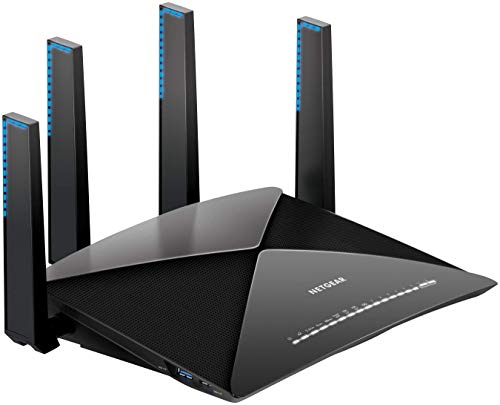
- Tri-band AD7200 wireless with a 60 GHz band
- Six Gigabit ports plus a 10G SFP+ port
- Two USB 3.0 ports for storage and printer sharing
Best For: Users needing 10G SFP+ alongside legacy tri-band Wi-Fi features
Best Multi-WAN Pick

- Gigabit SFP WAN plus three additional WAN-capable ports
- Omada SDN, cloud, and app management
- Advanced firewall and multi-protocol VPN support
Best For: Small businesses and advanced wired networks needing WAN failover or load balancing
Best Wi-Fi 7 Choice

- Wi-Fi 7 tri-band performance up to BE19000
- 10G SFP+/RJ45 combo port plus 10G RJ45
- Four 2.5G ports and EasyMesh compatibility
Best For: High-performance homes with fiber, multi-gigabit service, and Wi-Fi 7 devices
Best 10G Wired Router

- Two 10G SFP+ ports and four 2.5G ports
- Multi-WAN failover, load balancing, and VPN support
- VLAN, firewall, QoS, monitoring, and selected PoE+ features
Best For: Advanced wired networks using separate Wi-Fi access points
Best Premium Wi-Fi 6E Pick

- Quad-band Wi-Fi 6E with up to 15.6Gbps combined speed
- 10Gbps SFP+/RJ45 combo port plus another 10Gbps port
- Eight antennas and VPN support for advanced networks
Best For: Power users building a high-speed Wi-Fi 6E and multi-gigabit network
Best Business-Ready Value

- Gigabit SFP slot with five Gigabit RJ45 ports
- AX3000 Wi-Fi 6 and Omada Mesh compatibility
- Load balancing for up to five WAN ports
Best For: Small offices and multi-WAN Omada networks
Best Wi-Fi 7 Wired Expansion
- Wi-Fi 7 speeds up to 7200Mbps with MLO and 4096-QAM
- 10G SFP+ and 10G WAN/LAN ports
- Four 2.5G and four 1G ports for extensive wired capacity
Best For: Wi-Fi 7 users with demanding multi-gigabit wired networks
Best Wired Value – MikroTik hEX S RB760iGS
The MikroTik hEX S is a compact option for buyers searching for a wi fi router with sfp port when wireless connectivity is not needed. It combines five Gigabit Ethernet ports with a 1.25G SFP cage and RouterOS features for advanced wired network configuration.
Best For: Homes, offices, and network enthusiasts who need a capable wired router with SFP connectivity rather than built-in Wi-Fi.
Pros:
- Includes five Gigabit Ethernet ports and a 1.25G SFP cage.
- Dual-core 880 MHz CPU and 256 MB RAM support advanced RouterOS configurations.
- Offers USB 2.0, microSD storage, PoE output on port five, and IPsec hardware encryption support.
Cons:
- Wireless connectivity is not required or provided for its intended use.
- RouterOS may require more networking knowledge than a typical consumer interface.
- The supplied notes list no warranty.
The hEX S is a strong fit when wired performance, flexible configuration, and SFP access matter more than plug-and-play Wi-Fi. Add a separate access point if wireless coverage is needed.
Best Wi-Fi 7 Upgrade – ASUS RT-BE88U
The ASUS RT-BE88U is a modern choice for shoppers seeking a wi fi router with sfp port and high-speed wireless networking. Its Wi-Fi 7 platform pairs with a 10G SFP+ port, a 10G WAN/LAN port, four 2.5G ports, and AiMesh support.
Best For: Gaming households, demanding home networks, and users building a high-capacity wired and wireless setup.
Pros:
- Wi-Fi 7 supports throughput up to 7,200 Mbps with Multi-Link Operation and 4096-QAM.
- Provides one 10G SFP+ port and one standard 10G WAN/LAN port.
- Includes AiMesh, VPN support, parental controls, and Trend Micro-powered AiProtection Pro.
- Offers USB tethering support for 4G LTE and 5G mobile connections.
Cons:
- Its advanced features and multi-gigabit ports may be more than basic users need.
- Wireless coverage is listed at up to 3,000 square feet, but actual results vary by layout and construction.
With Wi-Fi 7, 10G connectivity, and strong network-management features, the RT-BE88U is the most future-focused option here for users who want one device to handle both wireless clients and fast SFP-based networking.
Best for Business VPNs – TP-Link Omada ER707-M2
The TP-Link Omada ER707-M2 suits buyers who need a wi fi router with sfp port as part of a broader business network, although it is primarily a wired VPN router rather than a wireless access point. It offers a Gigabit SFP WAN/LAN port, dual 2.5G WAN connectivity, Omada cloud management, and extensive VPN capacity.
Best For: Small businesses, offices, and multi-site networks requiring centralized management, load balancing, and multiple VPN connections.
Pros:
- Includes a Gigabit SFP WAN/LAN port, two 2.5G WAN options, and four Gigabit WAN/LAN ports.
- Supports up to 500,000 concurrent sessions and more than 1,000 clients.
- Handles up to 100 LAN-to-LAN IPsec, 66 OpenVPN, 60 L2TP, and 60 PPTP connections.
- Omada cloud access and app management enable centralized remote administration.
Cons:
- It is a wired router and does not provide built-in Wi-Fi coverage.
- The business-focused VPN and Omada features may be unnecessary for a simple home network.
- The SFP port is Gigabit, not 10G SFP+.
The ER707-M2 is a practical choice for structured networks where VPN scale, port flexibility, and centralized administration matter more than integrated wireless. Pair it with compatible access points for Wi-Fi.
Best Wi-Fi 5 SFP Router – NETGEAR Nighthawk X10
The NETGEAR Nighthawk X10 is an older but feature-rich option for shoppers looking for a wi fi router with sfp port. It combines tri-band wireless networking, up to 7,200 Mbps advertised wireless speed, six Gigabit Ethernet ports, and one 10G SFP+ port.
Best For: Homes with compatible 60 GHz devices, demanding wired peripherals, and users who want USB storage or printer sharing.
Pros:
- Provides tri-band Wi-Fi with a 60 GHz band and advertised AD7200 speeds.
- Includes six 1G Ethernet ports and one 10G SFP+ port.
- Two USB 3.0 ports support storage and printer sharing, including personal cloud functions.
- Features a 1.7 GHz quad-core processor, four amplified antennas, Beamforming+, MU-MIMO, and Dynamic QoS.
Cons:
- It uses Wi-Fi 5, rather than newer Wi-Fi 6 or Wi-Fi 7 standards.
- The 60 GHz band requires compatible devices and may have more limited practical range than lower-frequency Wi-Fi.
- Its listed coverage is up to 2,500 square feet, depending on the environment.
The Nighthawk X10 remains appealing if you specifically need a 10G SFP+ port, multiple Gigabit ports, and USB sharing alongside wireless service. For newer wireless standards, consider a more current model.
Best Multi-WAN Pick – TP-Link ER7206
The TP-Link ER7206 is a practical choice when you need a wired wi fi router with sfp port support, multiple WAN connections, and centralized network management. Its Gigabit SFP WAN port works alongside a Gigabit WAN port and two configurable WAN/LAN ports for load balancing or failover.
Best For: Small businesses and advanced home networks that prioritize multi-WAN flexibility, VPN support, and Omada management over built-in wireless coverage.
Pros:
- Offers one Gigabit SFP WAN port plus up to three additional WAN connections.
- Supports load balancing, advanced firewall policies, and multiple VPN protocols.
- Integrates with Omada SDN and supports remote cloud and app management.
Cons:
- It is a wired router, so a separate wireless access point is needed for Wi-Fi.
- The SFP connection is Gigabit rather than 10Gbps.
- Its business-focused features may be more than a basic home network requires.
Choose the ER7206 if reliable WAN flexibility and centralized control matter more than the newest wireless standard. It is especially compelling for networks that already use, or plan to use, Omada access points and switches.
Best Wi-Fi 7 Choice – TP-Link Archer BE800
The TP-Link Archer BE800 stands out as a wireless wi fi router with sfp port support for homes that want high-speed Wi-Fi 7 alongside flexible wired connectivity. Its 10G WAN/LAN options include an SFP+ fiber/RJ45 combo port, while four 2.5G ports support fast local devices.
Best For: High-performance homes with fiber or multi-gigabit service, Wi-Fi 7 devices, gaming systems, and demanding wired clients.
Pros:
- Combines tri-band Wi-Fi 7 with speeds rated up to BE19000.
- Provides a 10G SFP+/RJ45 combo port and a separate 10G RJ45 port.
- Includes four 2.5G ports, EasyMesh compatibility, and VPN client/server support.
Cons:
- Most internet providers require a modem, so the router may not connect directly to every service.
- Its advanced performance is difficult to fully use without multi-gigabit devices and service.
- Some HomeShield features require checking TP-Link’s premium-service terms.
The Archer BE800 is the strongest all-in-one option here for buyers who want both an SFP+ connection and built-in wireless networking. It makes the most sense when future-proofing, fast Wi-Fi, and multi-gigabit Ethernet are all priorities.
Best 10G Wired Router – Alta Labs Route10
The Alta Labs Route10 is a specialized wi fi router with sfp port alternative for networks built around wired 10Gbps infrastructure. It has two 10G SFP+ ports, four 2.5G ports, multi-WAN support, and hardware-accelerated routing, but it does not broadcast Wi-Fi.
Best For: Businesses and advanced home users building a high-speed wired network with separate access points, VLANs, VPNs, and multi-WAN failover.
Pros:
- Provides two 10G SFP+ ports and four 2.5G Ethernet ports.
- Supports VLAN tagging, QoS, firewall rules, DHCP, and network segmentation.
- Includes multi-WAN failover or load balancing, VPN support, monitoring, and selected PoE+ output.
Cons:
- It does not broadcast Wi-Fi; separate access points are required for wireless coverage.
- Its professional feature set may require more setup and network expertise.
- Wireless specifications listed in the product details do not replace a dedicated access point.
Route10 is the best fit when 10G SFP+ connectivity and wired control are the main goals. Pair it with compatible Alta Labs access points for a complete network, rather than treating it as a conventional all-in-one wireless router.
Best Premium Wi-Fi 6E Pick – TP-Link Archer AXE300
If you want a high-performance wi fi router with sfp port, the TP-Link Archer AXE300 combines a 10Gbps SFP+/RJ45 combo port with quad-band Wi-Fi 6E. Its four bands, eight antennas, and dual 10Gbps connectivity make it particularly suited to demanding home networks, gaming, and fast NAS transfers.
Best For: Power users who need Wi-Fi 6E, multi-gigabit wired networking, and flexible SFP+/RJ45 connectivity.
Pros:
- Quad-band Wi-Fi 6E offers up to 15.6Gbps combined wireless speed.
- Includes a 10Gbps SFP+/RJ45 combo WAN/LAN port and a separate 10Gbps WAN/LAN port.
- Supports VPN server and client functions, Wi-Fi 6E’s 6GHz band, and TP-Link HomeShield features.
- Eight antennas are designed to maximize coverage.
Cons:
- The two 10Gbps ports and 2.5Gbps WAN/LAN port cannot all be configured as WAN ports at once.
- A modem is required for most internet service providers.
The Archer AXE300 is the strongest all-around choice here for shoppers prioritizing wireless capacity and 10Gbps networking. It is more router than many households need, but its SFP+/RJ45 flexibility gives advanced setups room to grow.
Best Business-Ready Value – TP-Link Omada ER706W
The TP-Link Omada ER706W is a practical wi fi router with sfp port for small offices and homes that need wired flexibility without moving to an enterprise-size device. It pairs a Gigabit SFP slot with five Gigabit RJ45 ports, Wi-Fi 6, multi-WAN support, and Omada Mesh compatibility.
Best For: Small offices and advanced home users managing multiple internet connections or Omada access points.
Pros:
- Provides one Gigabit SFP slot and five Gigabit RJ45 ports.
- AX3000 Wi-Fi 6 delivers up to 2402Mbps on 5GHz and 574Mbps on 2.4GHz.
- Supports load balancing across up to five WAN ports.
- Includes SSL, IPSec, GRE, WireGuard, PPTP, L2TP, and OpenVPN support.
Cons:
- The SFP slot is Gigabit rather than 10Gbps.
- Its dual-band wireless capacity is lower than the premium Wi-Fi 6E and Wi-Fi 7 options.
Choose the ER706W when routing features, multi-WAN control, and Omada expandability matter more than headline wireless speed. Its Gigabit SFP slot is useful for compatible fiber or wired deployments, while Mesh support can extend coverage without additional cabling.
Best Wi-Fi 7 Wired Expansion – ASUS RT-BE88U Wi-Fi 7 Router
The renewed ASUS RT-BE88U is a strong wi fi router with sfp port for shoppers who want Wi-Fi 7 and extensive wired capacity. It includes a 10G SFP+ port, a separate 10G WAN/LAN port, four 2.5G ports, and four 1G ports, supporting up to 34G of wired network capacity according to the supplied specifications.
Best For: Wi-Fi 7 households, gaming setups, and small offices with multiple high-speed wired devices.
Pros:
- Wi-Fi 7 features include Multi-Link Operation and 4096-QAM, with throughput up to 7200Mbps.
- Combines a 10G SFP+ port with a standard 10G WAN/LAN port.
- Offers four 2.5G ports and four 1G ports for broad wired connectivity.
- Supports AI WAN detection, USB tethering for 4G/5G, built-in VPN, and Guest Network Pro.
Cons:
- This is a renewed product with a supplied 90-day limited warranty.
- Wi-Fi 7 benefits depend on having compatible client devices.
The RT-BE88U is the most capable wired-network option in this group, especially for users already investing in Wi-Fi 7 devices. Its renewed status and shorter warranty make condition and coverage worth checking before purchase, but the 10G SFP+ port and extensive port selection are compelling.
How We Picked the Best Wi Fi Router with Sfp Port
We selected routers and gateways that offer an SFP or SFP+ connection, either directly or as part of a flexible multi-gigabit network design. We considered port speed, WAN and LAN flexibility, wireless generation, VPN capabilities, mesh support, management tools, and suitability for home or small-business deployments. Because an SFP port alone does not guarantee compatibility with every fiber service, we also emphasized practical differences such as transceiver support, routing capacity, and ease of configuration.
Quick Comparison
- Best for compact wired networks: MikroTik hEX S.
- Best for a modern Wi-Fi 7 home network: ASUS RT-BE88U or TP-Link Archer BE800.
- Best for managed business networking: Omada ER707-M2, ER706W, or TP-Link ER7206.
- Best for high-capacity wired routing: Alta Labs Route10.
- Best for Wi-Fi 6E performance: TP-Link Archer AXE300.
- Best for legacy 60GHz wireless: NETGEAR Nighthawk X10.
Key Buying Factors for a Wi-Fi Router with SFP Port
SFP Versus SFP+
Standard SFP commonly supports connections up to 1Gbps, while SFP+ is designed for 10Gbps networking. Match the router to your fiber handoff, switch, and intended speeds. You may also need a compatible optical module, DAC cable, or provider-approved transceiver.
Router, Access Point, or Gateway?
Some products are primarily wired routers and VPN gateways, while others combine routing with Wi-Fi. A wired model can be a strong choice when you already use separate ceiling-mounted access points or a mesh system. An all-in-one Wi-Fi router is simpler, but may offer less placement flexibility.
WAN, LAN, and Multi-WAN Options
Check whether the SFP connection can serve as WAN, LAN, or either depending on configuration. Multi-WAN support is useful for failover or load balancing, while multiple 2.5Gbps, 10Gbps, or SFP+ ports help prevent bottlenecks between the router, switch, NAS, and internet service.
Wireless Capacity and Coverage
Wi-Fi 7 models offer newer features such as Multi-Link Operation and wider channel support, but client devices must also support them. Wi-Fi 6E can be a better value for compatible 6GHz devices. Consider antenna placement, building materials, and whether the router supports a wired backhaul or mesh expansion.
Management and Security
Business-focused platforms typically provide VLANs, policy routing, site-to-site VPNs, firewall controls, and centralized management. Home-oriented models generally prioritize simple setup, parental controls, automatic updates, and app-based monitoring. Choose the control level you will realistically use.
Who Should Buy Which Wi Fi Router with Sfp Port?
Choose MikroTik or TP-Link’s wired gateways if you want affordable routing behind dedicated access points. Pick an Omada model if you want centralized management across compatible switches and access points. Alta Labs is better suited to demanding multi-gigabit and VPN-heavy installations. For households wanting fast wireless coverage with minimal complexity, the ASUS and TP-Link Wi-Fi 7 options are the most natural fits. Consider the NETGEAR Nighthawk X10 only if its specialized 60GHz features match your devices, while the Archer AXE300 remains a sensible option for established Wi-Fi 6E networks.