The right desktop microphone preamp can give a quiet microphone more usable gain, preserve detail, and make recording or streaming equipment easier to configure. The options below range from compact inline boosters to feature-rich studio-style preamps.
We compare 10 models across gain, noise performance, connectivity, phantom-power support, controls, and practical desktop use so you can choose the right match for your microphone and workflow.
Best 10 Desktop Microphone Preamps Picks for 2026
Transformer Character Pick

- Single-channel mic/instrument preamp
- Ultra-high-speed input stage
- Transformer-balanced output
Best For: Dedicated desktop recording channels
Dynamic Mic Gain Booster

- Adds 29 dB of clean gain
- For dynamic and ribbon microphones
- Requires 48V phantom power
Best For: Low-output dynamic mic setups
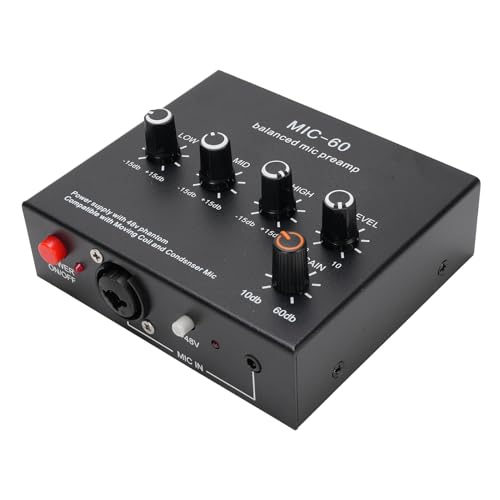
Hands-On EQ Choice

- Three-band physical EQ
- Gain and level controls
- Built-in 48V phantom power
Best For: Desktop recording and streaming with quick tone shaping
Flexible Low-Noise Preamp

- 0–72 dB adjustable gain
- -120 dBV EIN specification
- Mic, instrument, mobile, and desktop support
Best For: Versatile recording and streaming setups
Best Dual-Channel Booster

- Two channels with up to 25 dB of clean gain
- Low-noise balanced XLR signal path
- Designed for dynamic and passive ribbon microphones
Best For: Two-mic desktop and live setups using passive microphones
Best Flexible Connectivity
- Up to 60 dB of gain for low-output microphones
- Works with dynamic and condenser microphones
- XLR, 3.5mm, and 6.35mm input/output options
Best For: Multi-device recording, streaming, and live-sound routing
Best Compact Single-Channel Pick

- Adds 25 dB of gain for dynamic and passive ribbon mics
- Balanced XLR input and output
- Small metal chassis for desktop or mobile use
Best For: Single-mic recording chains with an interface or mixer
Compact Clean-Gain Pick

- Clean, transparent 20dB gain
- 48V support for dynamic and condenser microphones
- Compact metal housing for desktop or portable use
Best For: Home studios, podcasting, and live streaming
Inline Dynamic-Mic Booster

- Adds 28dB of microphone gain
- Works with 48V phantom power
- Shielded alloy case and balanced XLR connection
Best For: Low-sensitivity dynamic microphones and XLR setups
High-Gain Versatile Choice
RO03 66dB Low-Noise Mic Preamp

- Variable 19–66dB gain range
- -120dB EIN rating for low-noise operation
- XLR, TRS, and TS output options with Type-C power
Best For: Vocal and instrument recording setups needing flexible connectivity
Transformer Character Pick – Black Lion Audio Auteur DT
The Black Lion Audio Auteur DT is a focused choice for desktop microphone preamps when you want a dedicated, single-channel unit for microphone or instrument recording. Its ultra-high-speed input stage and transformer-balanced output are the key design features to consider.
Best For: Home studios and recording setups that need one dedicated mic or instrument preamp channel.
Pros:
- Provides one microphone/instrument preamp channel.
- Uses an ultra-high-speed input stage.
- Transformer-balanced output is suited to professional-style signal routing.
- Desktop-oriented unit weighing 5.1 pounds.
Cons:
- Single-channel design may be limiting for multi-microphone recording.
- The supplied notes do not specify phantom power or equalization controls.
- Its listed dimensions may require dedicated desktop space.
The Auteur DT makes the most sense when you value a dedicated, purpose-built channel over an all-in-one feature set. Confirm that its connectivity and power requirements match your existing setup before buying.
Dynamic Mic Gain Booster – StudioMan DPM1
The StudioMan DPM1 is a compact XLR booster for desktop microphone preamps and interfaces that struggle with low-output dynamic or ribbon microphones. It adds 29 dB of clean gain, but it requires 48V phantom power and is not intended for condenser microphones.
Best For: Podcasters, streamers, and vocalists using dynamic or ribbon microphones with a 48V-equipped interface or mixer.
Pros:
- Adds a substantial 29 dB of stated gain.
- Designed for low-output dynamic and ribbon microphones.
- Compact plug-and-play XLR male-to-female design.
- Metal casing helps provide durability and interference shielding.
Cons:
- Requires 48V phantom power, which is not included.
- Strictly not for condenser microphones.
- It is a gain booster rather than a full-featured preamp with onboard controls.
The DPM1 is a practical way to add gain without replacing an existing interface. Check your interface or mixer for phantom-power support, and verify that your microphone is dynamic or ribbon before using it.
Hands-On EQ Choice – MIC-60 Mic Preamp
The MIC-60 is a straightforward desktop microphone preamp for users who want physical tone controls rather than software processing. It combines gain and level controls with three-band low, mid, and high EQ, plus built-in 48V phantom power for compatible condenser microphones.
Best For: Home recording, streaming, and live audio setups that benefit from quick, hands-on microphone EQ.
Pros:
- Offers dedicated low, mid, and high EQ controls.
- Includes separate gain and level controls.
- Built-in 48V phantom power supports compatible condenser microphones.
- Solid metal enclosure with a compact desktop format.
Cons:
- The supplied connector details list 3.5mm jack and RCA rather than XLR.
- Its feature set is centered on basic gain and EQ rather than advanced routing.
- The notes do not specify the available gain range or noise performance.
Choose the MIC-60 if immediate EQ access is more important than a highly specialized studio signal path. Pay close attention to its listed 3.5mm and RCA connections when checking compatibility with your equipment.
Flexible Low-Noise Preamp – RO-04 Mic Preamp
The RO-04 stands out among desktop microphone preamps for its broad 0–72 dB gain range and stated -120 dBV EIN. It also adds mic and instrument inputs, high-pass filtering, phase control, 48V phantom power, dual output levels, and USB-C or power-bank operation for flexible studio and streaming use.
Best For: Creators and musicians needing wide gain control, low-noise operation, instrument input, and desktop or mobile output flexibility.
Pros:
- Provides adjustable gain from 0 to 72 dB.
- Lists a -120 dBV equivalent input noise specification.
- Supports microphones and instruments through separate inputs.
- Offers 48V phantom power, dual output levels, and USB-C power-bank support.
Cons:
- Its broader feature set may be more than a simple single-input setup requires.
- The unit weighs 2.42 pounds and occupies a 5.51-by-4.72-by-1.57-inch footprint.
- The supplied notes do not identify the specific connectors for its outputs.
The RO-04 is the most versatile option here for users moving between microphones, instruments, computer interfaces, and mobile streaming. Its specifications are especially attractive for low-output microphones, but confirm the output connections for your intended rig.
Best Dual-Channel Booster – StudioMan CL-200
The StudioMan CL-200 is a practical choice among desktop microphone preamps when you need clean, consistent gain for two passive microphones. It adds up to 25 dB of gain, uses balanced XLR connections, and is powered by 48V phantom power from compatible audio equipment.
Best For: Home studios, podcasts, voice-over work, live streaming, and setups using dynamic or passive ribbon microphones.
Pros:
- Dual-channel design supports two microphone signals at once.
- Provides up to 25 dB of clean gain with low reported distortion.
- Compact metal housing and balanced XLR I/O suit desktop and live setups.
- Supports long output cable runs when used with suitable balanced cables.
Cons:
- Not compatible with condenser microphones because it does not pass phantom power through.
- Requires 48V phantom power from a mixer, interface, or other compatible device.
- The microphone-to-booster cable is recommended to remain under 30 feet.
The CL-200 stands out for buyers who need two clean gain stages in a compact enclosure. Its main limitation is microphone compatibility, so confirm that your setup uses dynamic or passive ribbon microphones before buying.
Best Flexible Connectivity – VBESTLIFE 3-Input Mic Preamp
For buyers comparing desktop microphone preamps with varied connection needs, this VBESTLIFE model offers up to 60 dB of gain, three inputs, and several output formats. Its 48V power support accommodates both dynamic and condenser microphones, while XLR, 3.5mm, and 6.35mm connections broaden system compatibility.
Best For: Home recording, vocal work, podcasting, live streaming, and users connecting microphones to interfaces, mixers, consoles, speakers, or other sound equipment.
Pros:
- Up to 60 dB of gain provides substantial amplification for quieter microphone signals.
- Supports both dynamic and condenser microphones with 48V power.
- Three-channel input design and multiple output formats offer flexible routing.
- Compact metal housing is lightweight and helps reduce interference.
Cons:
- Its manufacturer warranty is listed as 90 days.
- The many connector options may require more setup decisions than a simple XLR booster.
- The supplied product information does not specify detailed frequency-response or noise-floor figures.
This is the most adaptable option of the three for users who need more than a straightforward XLR-to-XLR gain stage. Choose it for connection flexibility and microphone versatility rather than a narrowly focused desktop signal booster.
Best Compact Single-Channel Pick – StudioMan CL-100
The StudioMan CL-100 is a straightforward desktop microphone preamp for adding 25 dB of gain to a dynamic or passive ribbon microphone. Its balanced XLR input and output, compact metal chassis, and phantom-power compatibility make it easy to place between a microphone and an interface or mixer.
Best For: Single-microphone home studios, podcasts, live streaming, broadcast setups, and mobile recording rigs using dynamic or passive ribbon microphones.
Pros:
- Dedicated +25 dB gain circuit is suited to low-level dynamic microphone signals.
- Balanced XLR input and output integrate with common audio interfaces and mixers.
- Small metal enclosure provides a desk-friendly and portable design.
- 10Hz–20kHz frequency response supports full-range audio capture.
Cons:
- It is designed for dynamic and passive ribbon microphones rather than condenser models.
- Single-channel operation is less suitable for two-microphone recording.
- It requires 48V phantom power from connected equipment.
The CL-100 makes sense when you want a compact, uncomplicated gain booster for one compatible microphone. Its focused XLR design is convenient for conventional recording chains, but users needing multiple channels or broader connector options should consider another model.
Compact Clean-Gain Pick – 20dB Microphone Preamp
This compact microphone preamp is a straightforward option for desktop microphone preamps setups that need extra gain without adding much equipment. Its balanced circuitry provides 20dB of amplification, while 48V power supports both dynamic and condenser microphones.
Best For: Home studios, podcasting, live streaming, and users who want a lightweight XLR preamp with simple operation.
Pros:
- Provides clean, transparent 20dB gain.
- Supports dynamic and condenser microphones with 48V power.
- Balanced circuit and metal housing help limit noise and interference.
- Compact, lightweight design is easy to store or transport.
Cons:
- Offers less maximum gain than the other preamps in this roundup.
- Its supplied features are focused on basic microphone boosting rather than instrument connectivity.
Choose this model when you want an uncomplicated, portable gain stage for a desktop recording or streaming setup. The 20dB range is practical for modest level increases, but users with especially low-output microphones may prefer a higher-gain design.
Inline Dynamic-Mic Booster – Bolanle NK1 28dB XLR Preamp
The Bolanle NK1 is an inline choice among desktop microphone preamps, adding 28dB of gain between XLR-connected equipment. Its Class A transistor circuit is designed to raise low microphone levels while preserving a balanced signal path.
Best For: Dynamic microphones, including low-sensitivity models, used with mixers, sound cards, or audio interfaces that provide 48V phantom power.
Pros:
- Offers 28dB of gain for low-sensitivity microphones.
- Compatible with 48V phantom power and condenser microphones.
- Gold-plated copper contacts support stable XLR signal transmission.
- Shielded alloy casing helps reduce electromagnetic interference.
Cons:
- Requires a compatible 48V phantom-power source.
- Provides an inline XLR design rather than the broader connection options of a desktop unit.
- No power plug is included or required as a separate connection.
The NK1 makes sense when your main goal is adding useful gain to an XLR microphone chain with minimal setup. Its one-piece inline format is convenient, though buyers should confirm that their mixer or interface supplies 48V phantom power.
High-Gain Versatile Choice – RO03 66dB Low-Noise Mic Preamp
For desktop microphone preamps users who need more control and broader connectivity, the RO03 offers variable gain from 19 to 66dB and an EIN rated at -120dB. It also accommodates microphone or instrument sources and uses Type-C power for greater portability.
Best For: Vocal and instrument recording setups that need substantial gain, low-noise performance, and XLR, TRS, and TS output options.
Pros:
- Provides a practical 19–66dB variable gain range.
- Rated with a -120dB EIN for an extremely low noise floor.
- Offers XLR, TRS, and TS output connections.
- 1MΩ instrument input impedance supports improved DI performance.
Cons:
- Microphone and instrument inputs cannot be used simultaneously.
- The manufacturer recommends a TRS line input for the lowest noise, so connection choice matters.
- Its 400g enclosure is less lightweight than the compact preamps in this group.
The RO03 is the most flexible option here for users who may record vocals and instruments through the same preamp. Its gain range and connection choices are useful, but getting the best noise performance requires following the recommended TRS interface connection.
How We Picked These Desktop Microphone Preamps
We focused on the specifications that matter most in everyday recording: available gain, noise performance, microphone compatibility, connection types, phantom-power support, and physical design. We also considered whether each unit is best suited to a single microphone, multiple inputs, portable use, streaming, podcasting, or a more traditional studio setup.
Gain ratings are useful, but they do not tell the whole story. A preamp should provide enough clean gain for the microphone without introducing distracting hiss. Features such as high-pass filtering, phase control, EQ, Hi-Z input support, and balanced outputs can also affect how useful a unit is in a real signal chain.
Quick Comparison
| Best For | What to Look For |
|---|---|
| Dynamic microphones | At least moderate clean gain and low self-noise |
| Condenser microphones | Reliable 48V phantom power and suitable XLR connections |
| Ribbon microphones | High, quiet gain and careful phantom-power handling |
| Podcasts and streaming | Simple controls, compact size, and easy output connections |
| Multi-microphone setups | Two or more channels with independent gain controls |
| Studio recording | Balanced I/O, low EIN, filtering, phase, or instrument-input options |
Key Buying Factors for Desktop Microphone Preamps
Gain and Noise
Choose enough gain for your microphone’s output level and your interface or recorder’s input. Low-output dynamic and ribbon microphones generally need more clean gain than active condensers. A low equivalent input noise rating, often shown as EIN, is especially important when substantial gain is required.
Phantom Power and Compatibility
Condenser microphones commonly require 48V phantom power, while dynamic microphones usually do not. Ribbon microphones require extra care: passive ribbons should not receive phantom power unless the manufacturer explicitly permits it. Confirm the preamp’s input and output formats before buying, particularly if your setup uses 3.5mm, 6.35mm, USB, or balanced XLR connections.
Controls and Signal-Shaping Features
A basic gain booster may be all you need, but a high-pass filter can reduce rumble, while phase controls and EQ can help solve placement or tonal problems. Hi-Z support is useful if you also want to connect an instrument directly. More controls add flexibility but can make a compact setup less straightforward.
Channels and Desktop Design
Single-channel models suit solo creators and one-microphone rigs. Dual- and three-input units are more practical for interviews, co-hosted podcasts, or small recording sessions. Check the housing, power requirements, cable layout, and available desk space before choosing a model.
Who Should Buy Which Desktop Microphone Preamps?
Choose a compact inline preamp if your dynamic microphone is too quiet and you want the simplest possible upgrade. A single-channel desktop unit is a better fit for solo vocals, streaming, or home recording where you want dedicated gain control. Buyers using two microphones should prioritize a dual-channel model, while studio users should look for the quietest specifications, balanced connections, filtering, and broad microphone compatibility.
If you already own an audio interface with sufficient clean gain, a separate preamp may not be necessary. For everyone else, match the preamp to the microphone’s output, required connections, and intended number of channels rather than choosing solely by maximum gain.