The best network switches make it easy to connect more wired devices without replacing your router. They can reduce wireless congestion, improve consistency, and provide dependable Ethernet connections for computers, consoles, access points, cameras, and smart-home equipment.
This roundup compares 10 options ranging from compact five-port gigabit models to high-capacity 24-port switches and a faster 2.5Gbps multi-gigabit option. Use the buying guide below to match port count, speed, management features, and installation style to your network.
Best 10 Network Switches Picks for 2026
Simple Home Hub
NETGEAR GS305 5-Port Gigabit Switch

- Five 1Gbps auto-negotiating ports
- Plug-and-play, fanless operation
- Compact metal desktop or wall-mount design
Best For: Basic home and small-office wired expansion
Smart Network Control
TP-Link TL-SG108E 8-Port Easy Smart Switch
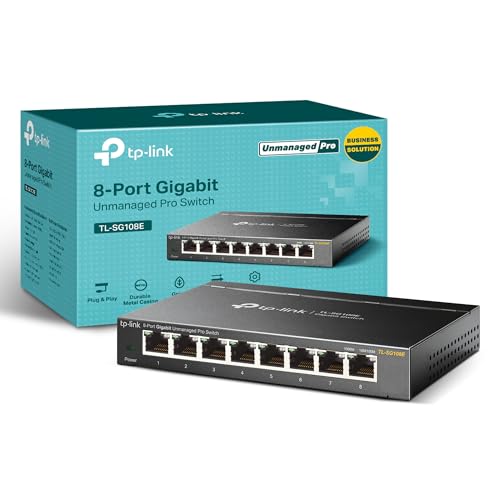
- Eight gigabit Ethernet ports
- VLAN, QoS, monitoring, and IGMP features
- Sturdy metal case with desktop or wall mounting
Best For: Small networks needing manageable traffic and segmentation
Extra-Port Essentials
NETGEAR GS308 8-Port Gigabit Switch
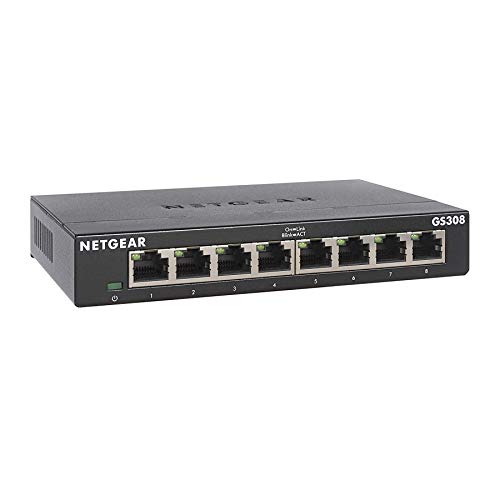
- Eight 1Gbps Ethernet ports
- No software or configuration required
- Quiet metal design supports wall mounting
Best For: Simple expansion for larger home or office networks
Compact Connection Splitter

- Five gigabit RJ45 ports
- Fanless plug-and-play operation
- Tiny, lightweight plastic housing
Best For: Space-constrained basic Ethernet expansion
High-Capacity Home and Office Pick
NETGEAR GS324 24-Port Gigabit Switch

- 24 auto-negotiating 1Gbps Ethernet ports
- Plug-and-play unmanaged setup
- Fanless desktop, wall, or rack mounting
Best For: Large wired home or small-office networks
Compact Quiet Networking Choice
TP-Link TL-SG116 16-Port Switch
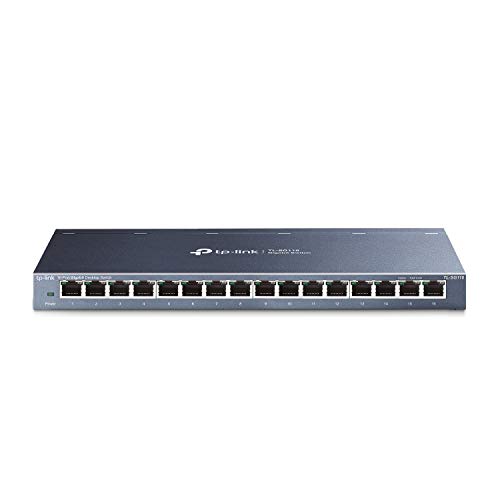
- 16 Gigabit auto-negotiating ports
- Fanless metal design for quiet use
- Includes QoS and IGMP Snooping features
Best For: Quiet home or office networks needing 16 ports
Energy-Saving 24-Port Value
TRENDnet TEG-S24DG 24-Port Gigabit Switch

- 24 Gigabit ports with 48Gbps capacity
- Fanless GREENnet energy-saving operation
- Lifetime manufacturer protection
Best For: Large quiet networks prioritizing energy efficiency
Best Multi-Gig Upgrade

- Eight 2.5Gbps ports
- Up to 40Gbps switching capacity
- Fanless plug-and-play design
Best For: Multi-gig home networks and high-speed wired devices
Best Compact Gigabit Switch

- Five gigabit Ethernet ports
- Quiet fanless metal casing
- QoS and IGMP Snooping support
Best For: Small home offices and compact wired networks
Best Eight-Port Value

- Eight gigabit Ethernet ports
- Sturdy fanless metal housing
- Automatic energy-efficient operation
Best For: Home and small-office gigabit network expansion
Simple Home Hub – NETGEAR GS305 5-Port Gigabit Switch
The NETGEAR GS305 is a straightforward choice for expanding a home or small-office wired network. Its five gigabit ports, plug-and-play setup, and compact metal housing make it a practical network switch for desktops, printers, gaming devices, and other Ethernet-connected hardware.
Best For: Users who need a quiet, compact five-port switch with no configuration required.
Pros:
- Five auto-negotiating 1Gbps Ethernet ports support existing Cat5e and Cat6 cables.
- Plug-and-play operation requires no software or network configuration.
- Fanless, energy-efficient design operates quietly and supports desktop or wall mounting.
Cons:
- Only five ports are available for wired devices.
- It is an unmanaged switch, so it does not provide VLAN or traffic-management controls.
- The supplied notes specify U.S. and Canada use.
Choose the GS305 when simplicity matters more than advanced management features. Its metal construction, quiet operation, and flexible placement suit basic wired-network expansion.
Smart Network Control – TP-Link TL-SG108E 8-Port Easy Smart Switch
The TP-Link TL-SG108E adds eight gigabit ports plus useful management tools for networks that need more than basic connectivity. Its web or software-based controls support VLANs, QoS, monitoring, IGMP snooping, and other features in a sturdy desktop or wall-mount network switch.
Best For: Homes, workspaces, and small networks that need traffic control and monitoring without a fully enterprise-class setup.
Pros:
- Eight 10/100/1000Mbps RJ45 ports provide room for multiple wired devices.
- Supports VLANs, QoS, port mirroring, loop prevention, cable diagnostics, IGMP snooping, and link aggregation.
- Metal construction, shielded ports, and desktop or wall-mount installation add flexibility.
- Includes a three-year warranty and free weekday technical support according to the supplied notes.
Cons:
- Management features require use of a web interface or free software rather than simple unmanaged operation.
- Its added controls may be unnecessary for users who only need extra Ethernet ports.
The TL-SG108E is the most feature-oriented option in this group. It is a strong fit when an eight-port network switch needs segmentation, monitoring, or traffic prioritization alongside gigabit connectivity.
Extra-Port Essentials – NETGEAR GS308 8-Port Gigabit Switch
The NETGEAR GS308 provides eight gigabit Ethernet ports for expanding a wired home, office, or equipment network. This unmanaged network switch keeps installation simple while its fanless metal design supports quiet desktop or wall-mounted use.
Best For: Users who want eight high-speed wired connections with no configuration or management software.
Pros:
- Eight auto-negotiating 1Gbps ports work with existing Cat5e and Cat6 Ethernet cables.
- Plug-and-play setup avoids software installation and manual configuration.
- Fanless operation provides quiet performance, while the compact metal case supports desktop or wall mounting.
- Includes a limited three-year NETGEAR hardware warranty according to the supplied notes.
Cons:
- As an unmanaged switch, it lacks VLAN, QoS, and other network-management controls.
- It is designed for U.S. and Canada use according to the supplied notes.
The GS308 is a sensible step up from a five-port model when you need more physical connections but still want a simple installation. It balances port capacity, quiet operation, and flexible placement.
Compact Connection Splitter – TP-Link LS1005G 5-Port Switch
The TP-Link LS1005G is a small, lightweight way to add wired connections to a router or modem. Its five 10/100/1000Mbps ports, automatic negotiation, and fanless plug-and-play design make this network switch well suited to basic desktop connectivity.
Best For: Users who need an inexpensive-feeling, space-saving way to connect several Ethernet devices in a quiet environment.
Pros:
- Five RJ45 ports support gigabit speeds with Auto-Negotiation and Auto MDI/MDIX.
- Plug-and-play setup requires no software installation or configuration.
- Fanless operation and IEEE 802.3X flow control support quiet, reliable data transfer.
- Compact plastic housing weighs about 2.8 ounces and can be tucked out of sight.
Cons:
- Plastic construction is less robust than the metal-bodied alternatives.
- It is an unmanaged switch without advanced VLAN or traffic-control features.
- The supplied specifications contain an inconsistent port-count entry, although the product bullets identify five RJ45 ports.
The LS1005G is a practical choice when size and simplicity are priorities. It offers the core gigabit features needed for everyday wired connections without taking much space.
High-Capacity Home and Office Pick – NETGEAR GS324 24-Port Gigabit Switch
For expanding a home or small-office network, this NETGEAR option provides 24 Gigabit Ethernet ports with automatic speed negotiation. It is an unmanaged network switch, so setup is simply a matter of connecting power and Ethernet cables.
Best For: Users needing many wired connections with flexible desktop, wall-mount, or rack-mount placement.
Pros:
- 24 1Gbps RJ45 ports support high-speed wired connections.
- Plug-and-play design requires no software or configuration.
- Fanless metal construction supports silent operation.
- Includes desktop, wall-mount, and rack-mount options.
Cons:
- Unmanaged design does not provide advanced network configuration.
- Listed for use in the U.S. and Canada only.
Choose the GS324 when port count and installation flexibility matter most. Its energy-efficient, fanless design makes it a practical fit for quiet workspaces and busy wired networks.
Compact Quiet Networking Choice – TP-Link TL-SG116 16-Port Switch
The TP-Link TL-SG116 is a compact network switch for adding 16 Gigabit Ethernet connections without software installation or manual configuration. Its fanless metal enclosure is suited to quiet desktop or wall-mounted installations.
Best For: Homes, offices, and media setups that need a quiet 16-port Gigabit switch with basic traffic optimization.
Pros:
- Provides 16 auto-negotiating 10/100/1000Mbps RJ45 ports.
- Fanless design offers quiet operation.
- Supports port-based 802.1p/DSCP QoS and IGMP Snooping.
- Energy-efficient technology helps reduce power consumption.
Cons:
- Unmanaged design limits broader network administration features.
- Offers fewer ports than the 24-port alternatives in this roundup.
The TL-SG116 balances useful traffic features with straightforward plug-and-play operation. It is a strong choice when 16 ports are sufficient and silent performance is a priority.
Energy-Saving 24-Port Value – TRENDnet TEG-S24DG 24-Port Gigabit Switch
The TRENDnet TEG-S24DG expands a wired network with 24 Gigabit RJ45 ports and a 48Gbps switching capacity. This unmanaged network switch is designed for simple plug-and-play use, with GREENnet technology that automatically adjusts power consumption.
Best For: Users seeking a high-port-count desktop switch with quiet operation, energy-saving features, and long-term manufacturer protection.
Pros:
- 24 Gigabit ports provide connections for numerous wired devices.
- 48Gbps switching capacity helps traffic flow smoothly.
- Fanless design operates quietly and reduces energy use.
- Includes lifetime manufacturer protection and a metal enclosure.
Cons:
- Optional rack-mount brackets are sold separately.
- Unmanaged operation does not support advanced configuration.
- Listed for use in the U.S. and Canada only.
Consider the TEG-S24DG if you want 24 Gigabit ports and a focus on power efficiency without adding management complexity. Its desktop-friendly metal design works well in quiet environments.
Best Multi-Gig Upgrade – TP-Link TL-SG108S-M2
If you want to move beyond standard gigabit networking, this 8-port network switch provides 2.5Gbps connectivity for compatible wired devices. Its unmanaged, plug-and-play design makes it a practical upgrade for home offices, gaming setups, NAS storage, and media workstations.
Best For: Multi-gig home networks, LAN parties, 2.5G Wi-Fi access points, NAS devices, and workstations.
Pros:
- Eight 2.5Gbps ports provide up to 40Gbps of switching capacity.
- Auto-negotiation supports 100Mbps, 1Gbps, and 2.5Gbps devices.
- Fanless operation keeps the switch quiet.
- Supports desktop or wall mounting and can work with existing Cat5e wiring.
Cons:
- Unmanaged design does not provide advanced configuration controls.
- Offers no slower-than-100Mbps port option according to the supplied specifications.
The TL-SG108S-M2 is the strongest choice here when your devices and internet service can take advantage of 2.5Gbps speeds. For basic gigabit expansion, a less expensive standard switch may be sufficient.
Best Compact Gigabit Switch – TP-Link TL-SG105
This five-port network switch is a straightforward way to add wired connections to a home office, entertainment area, or small workspace. It combines plug-and-play setup with a sturdy metal case, fanless operation, and traffic-management features for everyday gigabit networking.
Best For: Small networks that need a few additional gigabit Ethernet ports in a quiet, compact enclosure.
Pros:
- Five 10/100/1000Mbps RJ45 ports support auto-negotiation and Auto MDI/MDIX.
- Plug-and-play setup requires no software or configuration.
- Fanless metal design supports quiet operation and desktop or wall mounting.
- 802.1p/DSCP QoS and IGMP Snooping help prioritize video and voice traffic.
Cons:
- Only five ports are available, limiting expansion for larger setups.
- It is a standard gigabit switch rather than a multi-gig model.
The TL-SG105 is a practical choice when you need a small number of reliable wired connections and do not need 2.5Gbps speeds. Its metal construction and traffic features give it added flexibility over a basic hub-style device.
Best Eight-Port Value – TP-Link TL-SG108
For adding several wired connections without configuration work, this eight-port network switch offers standard gigabit performance in a sturdy metal enclosure. It is designed for computers, printers, consoles, and other Ethernet devices, with fanless operation and automatic energy management.
Best For: Homes and small offices that need eight quiet, dependable gigabit Ethernet connections.
Pros:
- Eight 10/100/1000Mbps RJ45 ports support common wired devices.
- Plug-and-play operation requires no setup or software.
- Fanless metal housing and shielded ports support quiet, durable operation.
- Automatically adjusts power use based on link status and cable length.
Cons:
- Unmanaged design does not offer advanced network controls.
- Gigabit ports do not provide 2.5Gbps multi-gig performance.
The TL-SG108 is a sensible all-purpose option when eight ports matter more than multi-gig speeds. Its metal construction, silent design, and traffic-optimization support make it well suited to everyday home or small-office expansion.
How We Picked the Best Network Switches
We selected these Network Switches for practical home and small-business use, considering port count, Ethernet speed, installation flexibility, build quality, and ease of setup. The list includes simple unmanaged switches for plug-and-play expansion, an easy-smart managed model for basic traffic control, larger 16- and 24-port choices, and a 2.5Gbps switch for compatible multi-gigabit devices.
We also considered features that affect everyday ownership, including fanless operation, shielded ports, metal housings, desktop or wall-mount placement, energy efficiency, and support for technologies such as VLANs and QoS where available.
Quick Comparison
| Best For | Recommended Type | Typical Port Count | Speed |
|---|---|---|---|
| Small desktop setup | Compact unmanaged switch | 5 ports | Gigabit |
| Home office or media center | Standard unmanaged switch | 8 ports | Gigabit |
| Basic network control | Easy-smart managed switch | 8 ports | Gigabit |
| Growing wired network | Higher-capacity unmanaged switch | 16–24 ports | Gigabit |
| Fast NAS or multi-gig internet | Multi-gigabit switch | 8 ports | 2.5Gbps |
Key Buying Factors for Network Switches
Port Count and Layout
Count the devices you need to connect now, then leave room for expansion. Remember that one port usually connects the switch to your router, so a five-port switch provides four additional connections in a typical setup. Larger switches are useful for offices, entertainment systems, wired access points, cameras, and smart-home hubs.
Speed Compatibility
Gigabit Ethernet is suitable for most computers, streaming devices, game consoles, and internet plans. Choose a 2.5Gbps model only when your router, network-attached storage, computers, or broadband service can use speeds above 1Gbps. A faster switch does not increase the speed of devices limited to gigabit Ethernet.
Unmanaged Versus Managed
Unmanaged switches require virtually no configuration and are the simplest choice for extending a home network. Easy-smart models add features such as VLANs, QoS, and traffic controls, which can help prioritize calls, gaming, streaming, or separate guest and IoT devices. They are worthwhile when you want more control without enterprise-level complexity.
Construction and Placement
Metal housings and shielded ports can suit busy workspaces, while fanless designs operate quietly near desks and entertainment equipment. Check whether the switch supports wall mounting if you need to keep cables organized, and allow space for ventilation around the power adapter and enclosure.
Who Should Buy Which Network Switches?
- Choose a five-port model for a small office, gaming desk, or a few nearby wired devices.
- Choose an eight-port gigabit switch for a typical home office, media center, or family network.
- Choose an easy-smart switch if you need VLAN, QoS, or basic traffic-management options.
- Choose a 16- or 24-port switch for a larger home, small business, wired security system, or network with significant room to grow.
- Choose the 2.5Gbps option for multi-gigabit internet, fast local file transfers, or a modern NAS and workstation setup.
Before buying, verify the switch’s power requirements, mounting options, and required cable lengths. For the simplest installation, connect the switch to a router LAN port, then attach wired devices using compatible Ethernet cables.