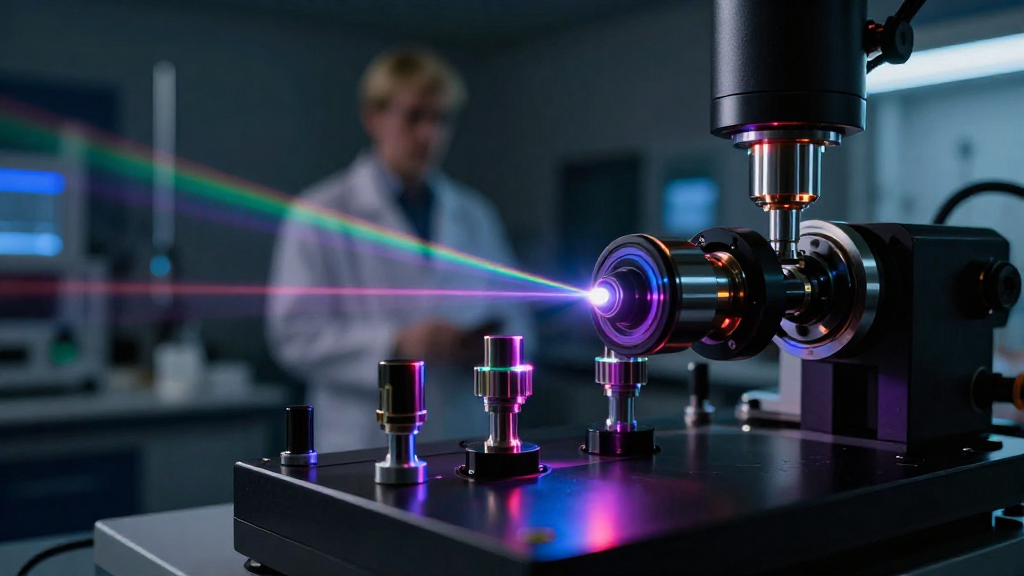
Beam focusing is a critical concept in various fields, including optics, telecommunications, and even medical applications.
Understanding how to manipulate beams effectively can lead to significant advancements in technology and science.
In this article, we’ll explore the fundamental concepts of beam focusing, its techniques, applications, and its importance in modern advancements.
What is Beam Focusing?
Beam focusing refers to the process of directing a beam of energy — whether light, radio waves, or other types of waves — towards a specific point.
This technique is integral in many applications, including:
- Lasers: For various industrial, medical, and technological uses.
- Optical Systems: Such as cameras and microscopes.
- Telecommunication: Where radio frequencies need to be precisely directed.
There are several methods used in beam focusing, each applicable in different scenarios depending on the desired outcome.
Why is Beam Focusing Important?
Beam focusing is important for several reasons:
- Precision: In many applications, like lasers in surgical procedures, precision is vital.
- Efficiency: A focused beam minimizes energy waste and enhances signal quality in telecommunications.
- Performance: It boosts the performance of optical devices by improving image clarity.
By focusing a beam, one can achieve optimal results in various technological and scientific endeavors.
How Are Beams Focused?
How exactly is beam focusing accomplished? There are several techniques employed in various disciplines to achieve a focused beam.
What Tools Are Used for Beam Focusing?
-
Lenses:
– Convex Lenses: Bulging outward and converge incoming light paths to a single focal point.
– Concave Lenses: Diverge incoming light paths but can be used in combination with convex lenses for certain applications. -
Mirrors:
– Concave Mirrors: Focus incoming parallel rays to a focal point, commonly used in telescopes and satellite dishes.
– Flat Mirrors: Redirect beams without changing their focal point but are often used in conjunction with concave mirrors. -
Fiber Optics:
– Utilizes thin strands of glass or plastic to transmit light; often involves refraction and total internal reflection to focus and guide light beams. -
Waveguides:
– Structures that guide waves, particularly in telecommunications, ensuring that they follow a specific path.
What are the Methods of Beam Focusing?
Several beam focusing methods cater to different types of waves, including light and radio frequencies.
-
Geometrical Optics:
– Utilizes the basic principles of light behavior (reflection and refraction) to focus beams effectively. -
Fresnel Zones:
– Divides the area around a focal point into zones to manage diffraction and enhance the performance of antennas. -
Aperture Synthesis:
– Employs multiple antennas to combine signals, creating a focused beam with increased resolution. -
Phase Arrays:
– Utilizes a series of small antennas where the phase of the signal is adjusted to create a directionally focused beam. -
Diffraction Gratings:
– Optical components that separate light into its constituent wavelengths, allowing for precise focusing in spectroscopy.
How Do Different Materials Impact Beam Focusing?
The material through which the beam passes plays a crucial role in the effectiveness of beam focusing.
Key factors concerning material choice include:
- Refractive Index: Determines how much light bends when entering a new material. Higher refractive indices lead to more significant bending, enhancing focus.
- Absorption Coefficient: High absorption materials can cause loss of energy, adversely affecting focus.
- Surface Quality: Smooth surfaces reduce scattering and improve the directionality of the beam.
Choosing the right materials is essential for optimizing beam performance in any application.
Where is Beam Focusing Applied?
Beam focusing has a wide range of applications across various fields:
How Is Beam Focusing Used in Everyday Technology?
-
Cameras:
– Beam focusing in cameras is critical to achieving sharp images.
– Lenses manipulate incoming light beams to focus on the sensor. -
Telecommunication:
– Focused radio waves enhance the quality and reliability of communication networks.
– Beamforming techniques direct signals to specific user locations, improving internet speeds. -
Medical Equipment:
– Lasers used in surgery rely on precise beam focusing to target specific tissues without damaging surrounding areas. -
Scientific Research:
– Beam focusing is essential in laser spectroscopy to analyze materials.
– Microscopes use focused beams of light to illuminate and magnify tiny objects.
What Is the Future of Beam Focusing Technology?
The future of beam focusing technology is promising, with ongoing developments in several areas:
-
Adaptive Optics:
– Systems that automatically adjust the focus of beams, crucial for astronomical applications to counteract atmospheric distortion. -
Metamaterials:
– Engineered materials that can manipulate electromagnetic waves in novel ways, leading to advanced focusing techniques. -
Quantum Computing:
– Beam focusing is integral in quantum information processing, where precise control over light and signals is necessary. -
Nanotechnology:
– Focused beams are used for manipulating materials at the nanoscale, enabling breakthroughs in material science and engineering.
Conclusion
Understanding how beams are focused has significant implications across various fields.
From telecommunications to medical applications, beam focusing enhances efficiency and precision, leading to better performance and outcomes.
With advancements in technology, techniques in beam focusing will continue to evolve, opening new frontiers in both science and daily life.
Whether at the smallest quantum scale or in expansive communication networks, mastering beam focusing enables us to push the boundaries of innovation and technology.
As research progresses, we can only expect more applications and improved techniques to be developed, making beam focusing an ever-relevant topic in our increasingly technological world.