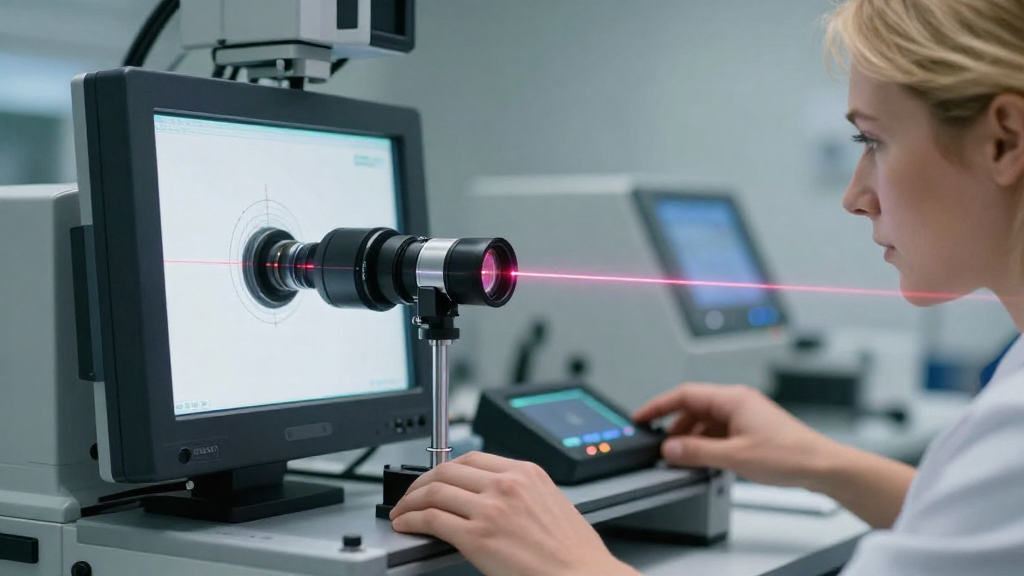
Measuring a beam profile is crucial for understanding the behavior of laser beams in various applications.
In this article, we will delve into the significance of beam profile measurement, the methods to perform it accurately, and the equipment involved.
What is a Beam Profile?
A beam profile refers to the spatial distribution of intensity across a laser beam.
Understanding the beam profile provides insights into how the laser will interact with a medium, determining its effectiveness in various applications like cutting, welding, and medical treatments.
Essentially, measuring a beam profile helps us optimize laser performance, enhance safety, and improve efficiency.
Why is Beam Profile Measurement Important?
Beam profile measurement holds substantial importance for several reasons:
-
Quality Control:
– Ensures that the lasers meet specified intensity requirements.
– Identifies defects or inconsistencies in laser output. -
Application Optimization:
– Tailors laser beams for specific applications.
– Enhances the efficiency of laser-driven processes like machining or medical therapies. -
Safety Considerations:
– Helps avoid accidents related to unpredictable laser behavior.
– Ensures compliance with safety standards in various environments.
What Equipment is Required for Beam Profile Measurement?
To perform accurate beam profile measurements, you will need specific equipment, including:
- Beam Profilers:
- Devices that capture and analyze the intensity of laser beams.
-
Can be either 1D or 2D, depending on the measurement complexity you require.
-
Camera Systems:
- CCD/CMOS cameras that can visualize the beam intensity.
-
Helpful in creating a detailed representation of the beam profile.
-
Power Meters:
- Used to measure the total energy output of the laser.
-
Provides baseline data alongside the beam profile measurements.
-
Optical Components:
- Lenses, apertures, and filters that may be necessary to manage the light before measurement.
- Ensures that the system operates within optimal parameters by controlling variables.
How to Measure a Beam Profile?
Measuring a beam profile involves several steps. Here is a breakdown of the process for effective beam profile measurement:
1. Prepare the Setup
- Select the Measurement System:
-
Choose the appropriate beam profiler based on your needs—1D or 2D.
-
Assemble Equipment:
- Position the laser source and beam profiler at the desired distance.
- Use optical components to shape the beam if necessary.
2. Adjust the Settings
- Calibrate the Equipment:
-
Ensure that your beam profiler and camera are calibrated to accurately capture the beam profile.
-
Set the Measurement Parameters:
- Define the exposure time, sensitivity, and resolution needed for your measurements.
3. Capture Data
- Activate the Laser:
-
Turn on the laser, ensuring that safety precautions are followed.
-
Collect Data:
- Allow the beam profiler to take measurements.
- Depending on the setup, automatic data collection software may enhance accuracy.
4. Analyze the Data
- Visualize the Profile:
- Use analysis software to create graphical representations of the laser beam.
-
Pay attention to intensity distribution, spot size, and shape.
-
Interpret the Results:
- Compare with the expected outcomes or standards to determine whether the beam meets quality requirements.
- Identify any anomalies or deviations that require further investigation.
5. Document Your Findings
- Record the Measurements:
-
Maintain detailed records of results and parameters used during measurement.
-
Draw Conclusions:
- Summarize what was learned from the beam profile measurement and how it impacts your application.
What are the Common Mistakes to Avoid?
When conducting beam profile measurements, it is essential to avoid these common pitfalls:
- Neglecting Calibration:
-
Ensure that all devices are well-calibrated to guarantee accurate results.
-
Ignoring Environmental Factors:
-
Monitor external conditions, such as ambient light and temperature, as they can affect measurements.
-
Failing to Document:
- Always record settings and results for future reference and validation.
How to Improve Beam Profile Measurement Accuracy?
To enhance the accuracy of your beam profile measurement, consider the following tips:
- Use High-Resolution Cameras:
-
Deploy cameras with higher resolution for more precise imaging.
-
Regular Maintenance:
-
Keep all equipment in good working condition, performing regular maintenance checks.
-
Control the Beam Path:
- Eliminate unnecessary obstructions and ensure a clear path for the laser beam to follow.
What are the Applications of Beam Profile Measurement?
Beam profile measurement is widely used across various industries and fields:
- Manufacturing:
-
Laser cutting and welding applications significantly benefit from optimal beam profiles.
-
Medical Treatments:
-
In surgery and dermatology, the accuracy of lasers can hinge on precise beam profiles.
-
Research Labs:
-
Academic and industrial researchers often perform these measurements to develop new technologies.
-
Telecommunications:
- Evaluating the performance of fiber optics and laser communications systems relies on precise beam profiling.
Conclusion
Mastering beam profile measurement is key to leveraging the full potential of laser technology in multiple fields.
Arming yourself with the right equipment and following systematic procedures can lead to improved quality control, optimized applications, and enhanced safety measures.
By retracing the critical steps outlined above, you can ensure that your laser systems operate effectively and efficiently, maintaining high standards across the board.
Are you ready to refine your beam profile measurement techniques and elevate your applications?