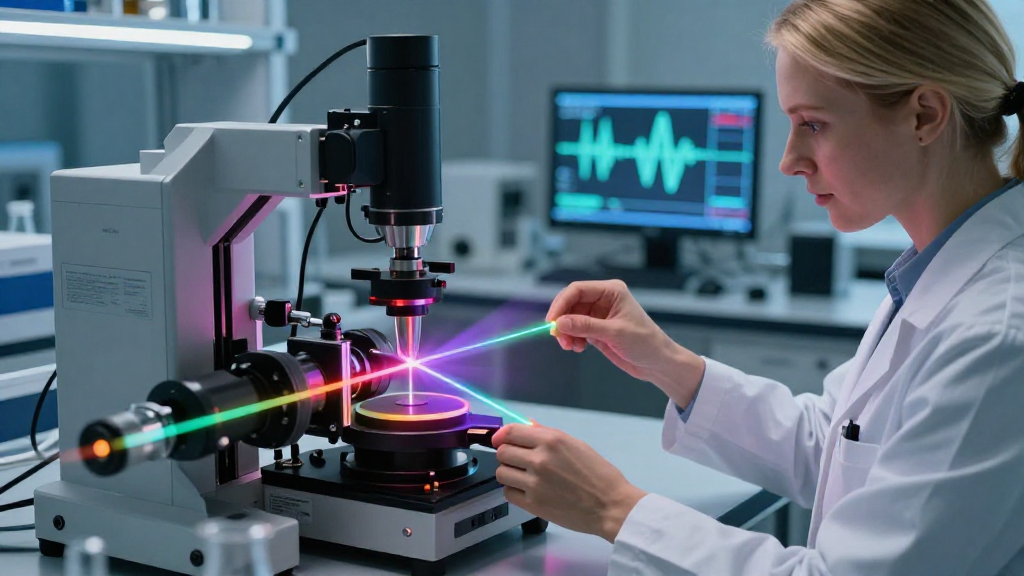
Learning beam steering techniques can significantly enhance a variety of applications ranging from telecommunications to imaging systems.
In this article, we will explore several effective beam steering techniques that can be utilized in diverse fields.
What are Beam Steering Techniques?
Beam steering techniques refer to methods used to direct light beams toward specific targets or areas.
These techniques play a crucial role in:
- Laser communications
- Lidar systems
- Optical sensors
- Display technologies
Proper understanding of these methods can lead to improved performance in optical systems and devices.
Why is Beam Steering Important?
The ability to control the direction of a light beam is essential for several reasons:
-
Precision: Accurate beam directing ensures that light reaches its intended target without dispersion.
-
Efficiency: Steering beams can minimize power loss, making systems more efficient.
-
Safety: In applications such as lasers, precise steering can reduce risk by preventing stray beams from causing damage.
-
Versatility: Many systems can benefit from the ability to dynamically adjust the beam’s direction.
Given these advantages, implementing effective beam steering techniques can lead to significant advancements in technology.
How Can Light Beams Be Steered?
There are various techniques to achieve effective beam steering. Here are some of the most common methods:
1. Mechanical Steering
Mechanical steering involves physically moving the light source or the optical components to direct the beam.
Advantages:
- Simple and straightforward
- Low-cost solution for small systems
Disadvantages:
- Slower response times
- Mechanical wear and tear over time
2. Optical Elements
Employing optical elements like lenses, mirrors, and prisms can assist in redirecting light beams.
-
Lenses: Can focus or spread beams based on their shape and curvature.
-
Mirrors: By changing angles, mirrors can reflect beams towards desired directions.
-
Prisms: Useful for creating specific angles in beam direction.
This method is often employed in telescopes, projectors, and other optical devices.
3. Digital Beam Steering
Digital beam steering utilizes electronic controls and software algorithms to adjust the path of light beams.
- Challenge: Requires sophisticated electronics and often substantial computational power.
This technique is advantageous for systems needing rapid adjustments, such as in phased array systems.
4. Acousto-Optic Beam Steering
Acousto-optic devices use sound waves to manipulate the path of light beams.
- By creating a gradient, these systems can redirect light in real-time.
Applications: Commonly used in laser scanning systems and wavelength tuning.
5. Liquid Crystal Devices
Liquid crystal displays (LCDs) and liquid crystal optical devices offer another technique for beam steering.
- These devices can change their optical properties through electrical signals, effectively allowing the beam to be steered without any moving parts.
6. Micro-Electro-Mechanical Systems (MEMS)
MEMS technology integrates mechanical and electronic components at a microscale.
-
Benefits: Lightweight and capable of rapid adjustment.
-
Applications: Used in communication systems, digital light processing, and advancing imaging technologies.
What Are the Applications of Beam Steering Techniques?
There is a wide array of applications for beam steering techniques:
-
Telecommunications: Used in fiber optics to maintain signal quality and strength.
-
Lidar: Important for autonomous vehicles to ensure accurate mapping and navigation.
-
Medical Imaging: Techniques like ultrasound depend on precise beam steering for effective diagnosis.
-
Aerospace: Used for satellite communication and guidance systems.
Applications in Emerging Technologies
With the expansion of 5G and beyond, the demand for effective beam steering techniques is more significant than ever.
This includes areas like:
-
Smart cities: Using sensors that require accurate light beam directing.
-
Augmented and Virtual Reality: Requires precise light manipulation for optimal performance.
What Future Takes Beam Steering Techniques?
The future of beam steering techniques looks promising:
-
Integration with AI: Machine learning algorithms can enhance precision in directing light beams, improving efficiency.
-
Miniaturization: Innovations reduce the size of beam steering mechanisms, enabling their integration into small devices which can lead to new applications.
-
Material Science Advancements: New materials, such as ultrathin coatings and nanostructures, can pave the way for novel steering techniques.
Conclusion: Mastering Beam Steering Techniques
Understanding and mastering beam steering techniques can lead to substantial improvements in various fields.
The combination of mechanical movements, optical elements, and digital innovations creates a rich toolkit for anyone working with light-directed technologies.
Whether implementing these techniques in telecommunications, imaging, or future technologies, having a comprehensive knowledge can open doors to new possibilities and applications.
This means that professionals looking to enhance their skills in optics should focus on staying updated with the latest advancements in beam steering techniques and their applications.
By leveraging these methods effectively, you can ensure precision, efficiency, and innovation in your work.