Understanding beam reflection and refraction is fundamental in various fields, including physics, engineering, and optics.
What Is Beam Reflection and Refraction?
To delve into the subject, we first need to understand what beam reflection and refraction are.
Beam Reflection
Reflection occurs when light beams strike a surface and bounce back. This process can happen in several ways:
- Specular Reflection: This is when light hits a smooth surface, such as a mirror, and reflects evenly.
- Diffuse Reflection: This occurs when light hits a rough surface, scattering in multiple directions.
Beam Refraction
Refraction, on the other hand, is the bending of light as it passes from one medium to another. The amount of bending depends on the angle at which the light enters the new medium and the refractive indices of both media.
Why Do Light Beams Reflect and Refract?
The principles behind beam reflection and refraction are closely tied to the wave properties of light. When light waves hit a barrier or a new medium, their speed changes, which can lead to changes in direction.
What Determines the Angle of Reflection?
According to the law of reflection, the angle at which a beam strikes a surface is equal to the angle at which it reflects. This can be expressed mathematically as:
- Angle of Incidence = Angle of Reflection
This law holds true for both specular and diffuse reflections.
How Is Refraction Measured?
Refraction is typically measured using Snell’s Law, which states:
- n1 * sin(θ1) = n2 * sin(θ2)
Where:
– n1 and n2 are the refractive indices of the two media
– θ1 is the angle of incidence
– θ2 is the angle of refraction
This law is crucial in understanding how various materials interact with light beams.
Where Can You Observe Beam Reflection and Refraction in Real Life?
Everyday Examples of Beam Reflection
- Mirrors: The simplest example is a mirror, where most light beams undergo specular reflection.
- Water Surfaces: When you look at yourself in a calm lake, beam reflection occurs at the surface, offering a blurred yet intriguing image.
Everyday Examples of Beam Refraction
- Lenses: Glasses and camera lenses utilize beam reflection and refraction to focus light.
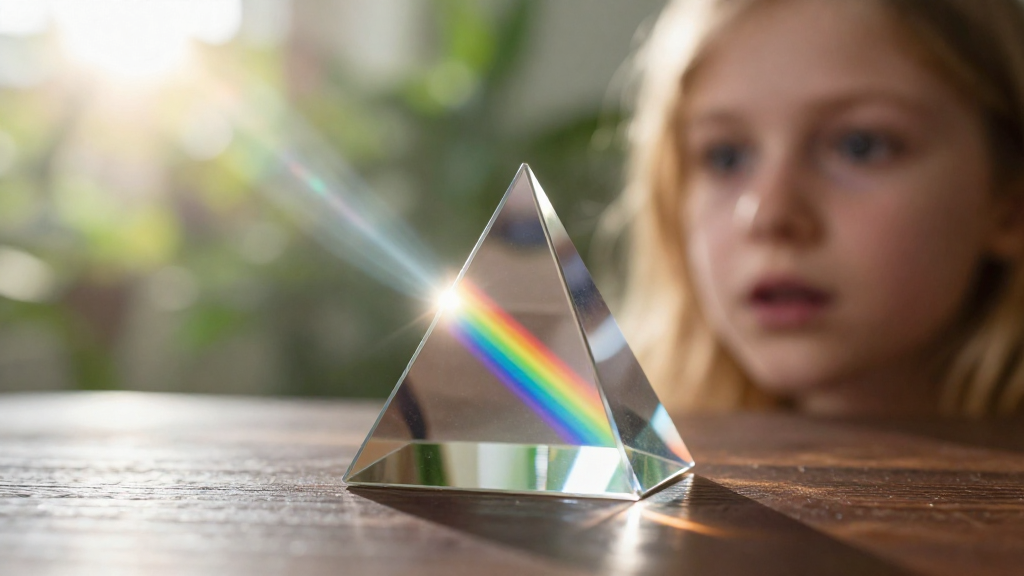
- Prisms: When light passes through a prism, it bends, resulting in a spectrum of colors—a classic example of refraction.
How Do Beam Reflection and Refraction Affect Technology?
Beam reflection and refraction play critical roles in modern technology. Some applications include:
- Optical fibers: These depend on total internal reflection to transmit light over long distances.
- Lasers: Understanding these principles helps in constructing devices that manipulate light beams for various applications, from medical surgeries to barcode scanners.
How Do Different Materials Affect Beam Reflection and Refraction?
What Materials Have High Reflective Properties?
Materials with high reflectivity include:
- Mirrored Surfaces: Silver and aluminum are commonly used for this purpose.
- Polished Metals: These surfaces can reflect a significant amount of light.
What Materials Cause High Refraction?
Materials known to refract light significantly include:
- Glass: With refractive indices around 1.5, various types of glass are used for lenses.
- Water: It has a refractive index of approximately 1.33, causing noticeable bending of light.
How Is Beam Reflection and Refraction Important in Nature?
In nature, beam reflection and refraction also have essential functions:
- Rainbows: Formed through refraction and reflection of light in water droplets.
- Mirages: An optical phenomenon caused by the refraction of light in varying temperature layers in the atmosphere.
How Can You Experiment with Beam Reflection and Refraction?
Simple Experiments to Understand Reflection
- Mirror Reflection Test: Use a flashlight and a flat mirror to observe the change in the direction of the light beam.
- Water Reflection: Shine a light into a bowl of water and observe the reflection on the surface.
Simple Experiments to Understand Refraction
- Straw in Water: Place a straw in a glass of water and observe the bending effect of light.
- Bending Pencil: Insert a pencil halfway in water and watch it appear broken; this demonstrates refraction.
Conclusion: The Importance of Understanding Beam Reflection and Refraction
In conclusion, the phenomena of beam reflection and refraction are vital concepts that govern how light interacts with surfaces and substances.
Understanding these principles can enhance your knowledge of various fields, including:
- Physics: Providing insight into light behavior.
- Engineering: Applying these concepts in designing optical devices.
- Arts: Helping artists create more realistic images and effects.
By conducting basic experiments and observing phenomena in nature, you can build a solid understanding of how beams reflect and refract.
This knowledge not only enriches our grasp of the physical world but also enhances our capacity to innovate across multiple disciplines. So the next time you encounter a light beam, whether in a simple mirror or a sophisticated lens, remember the fascinating interplay of reflection and refraction at work.