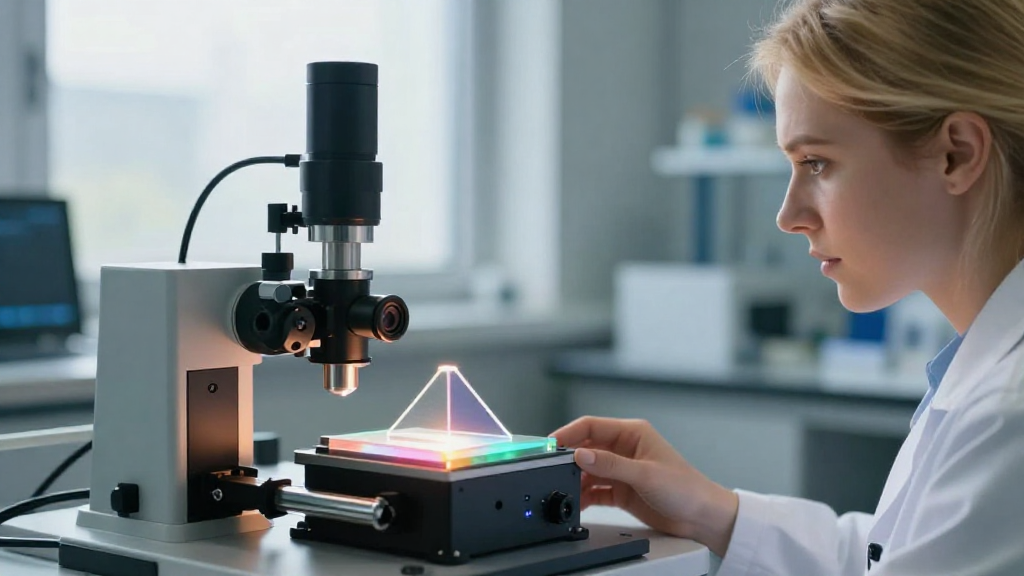
Beam transmission is a crucial concept in various fields, including telecommunications, optics, and material science.
This article will explore the methods and techniques used to measure beam transmission, ensuring a clear understanding of its importance and applications.
What Is Beam Transmission?
Beam transmission refers to the process by which a beam of light, microwave, or other electromagnetic waves passes through a medium.
This concept is fundamental in the study of materials and optical components because it helps quantify how much of the beam is able to penetrate through or be affected by a substance.
Various factors, such as wavelength, medium properties, and incident angle, can influence beam transmission.
Why Is Measuring Beam Transmission Important?
Understanding how to measure beam transmission is vital for several reasons:
- Optical Quality Assessment: In optics, the transmission characteristics can indicate the quality of materials used.
- Telecommunications Efficiency: Measurement of beam transmission is essential in telecommunications for optimizing signal strength and quality.
- Material Science: In evaluating new materials, understanding their transmission properties can help in developing better manufacturing processes.
When measuring beam transmission, researchers and engineers can better design systems that utilize optical and electromagnetic technology.
How Do We Measure Beam Transmission?
The measurement of beam transmission can be accomplished using several techniques. Here are some of the most commonly used methods:
1. Using a Beam Profiler
A beam profiler is an instrument designed to measure the spatial distribution and intensity of a beam.
These profilers can provide precise data on the beam’s profile and help assess transmission by analyzing how much light reaches a detector after passing through a medium.
- Steps:
- Position a beam profiler before and after the medium.
- Measure the intensity levels at various points.
- Compare the values to determine beam transmission.
2. Optical Power Meters
Optical power meters are used extensively for measuring the power of light beams in optical fibers and other systems.
They can also determine beam transmission by measuring the intensity of a beam before and after it exits a material.
- Steps:
- Measure the input power of the beam with the meter.
- Measure the output power after transmission through the material.
- Calculate transmission efficiency using the formula:
[
\text{Transmission (\%)} = \left( \frac{\text{Output Power}}{\text{Input Power}} \right) \times 100
]
3. Spectrophotometry
Spectrophotometry is a technique that specializes in measuring the amount of light that a sample absorbs or transmits at different wavelengths.
This method is particularly useful when analyzing materials that exhibit varying transmission properties across different wavelengths.
- Steps:
- Utilize a spectrophotometer to analyze a beam passing through the sample.
- Collect data on absorbed and transmitted light across the spectrum.
- Use this data to evaluate overall beam transmission as a function of wavelength.
4. Interferometry
Interferometry involves splitting a beam of light into two paths and then recombining them to produce an interference pattern.
By altering one path (for instance, by passing through a medium), it becomes possible to measure the effect on beam transmission.
- Steps:
- Create a split beam using a beam splitter.
- Pass one part through a sample.
- Analyze the interference pattern to infer characteristics of the beam transmission.
Factors Affecting Beam Transmission
When measuring beam transmission, several factors can significantly influence the results. Some of these include:
-
Material Properties: Different materials have unique refractive indices, absorption coefficients, and scattering properties that can affect transmission.
-
Wavelength of Light: Beam transmission can vary significantly depending on the wavelength of light utilized during the measurement process.
-
Angle of Incidence: The angle at which the beam strikes the material surface can impact the amount of transmission.
-
Beam Divergence: Wider beams may experience different transmission characteristics compared to more focused beams.
Understanding these factors can help in accurately measuring beam transmission and making informed decisions based on those measurements.
Applications of Beam Transmission Measurements
Beam transmission measurements find applications in various industries:
1. Telecommunications
In telecommunications, beam transmission measurements are essential to optimize fiber optics systems.
These measurements help ensure signal strength and clarity through precise data readings.
2. Material Development
Researchers use beam transmission to characterize new materials.
This characterization aids in developing products with specific optical properties, such as anti-reflective coatings or filters.
3. Lighting Design
In architectural and industrial lighting design, bearing in mind beam transmission is crucial for ensuring optimal illumination.
Utilizing materials that enhance transmission can improve efficiency and reduce energy costs.
4. Scientific Research
In scientific research, measuring beam transmission allows for deeper exploration of materials, biological specimens, and more.
This ability can lead to discovering new phenomena and applications in various scientific fields.
Conclusion
In summary, beam transmission is an essential parameter in many technological and scientific applications.
By utilizing techniques such as beam profilers, optical power meters, spectrophotometry, and interferometry, accurate measurements can be achieved.
Understanding the factors influencing beam transmission also allows scientists and engineers to assess materials effectively.
As technology continues to advance, the measurement of beam transmission will remain vital in developing innovative solutions in optics, telecommunications, and many other fields.
By mastering these techniques, professionals can ensure high-quality results and enhance the effectiveness of their systems and products.
In conclusion, the importance of accurately measuring beam transmission cannot be overstated.
It lays the groundwork for advancements in technology, materials science, and understanding light behavior through different mediums.