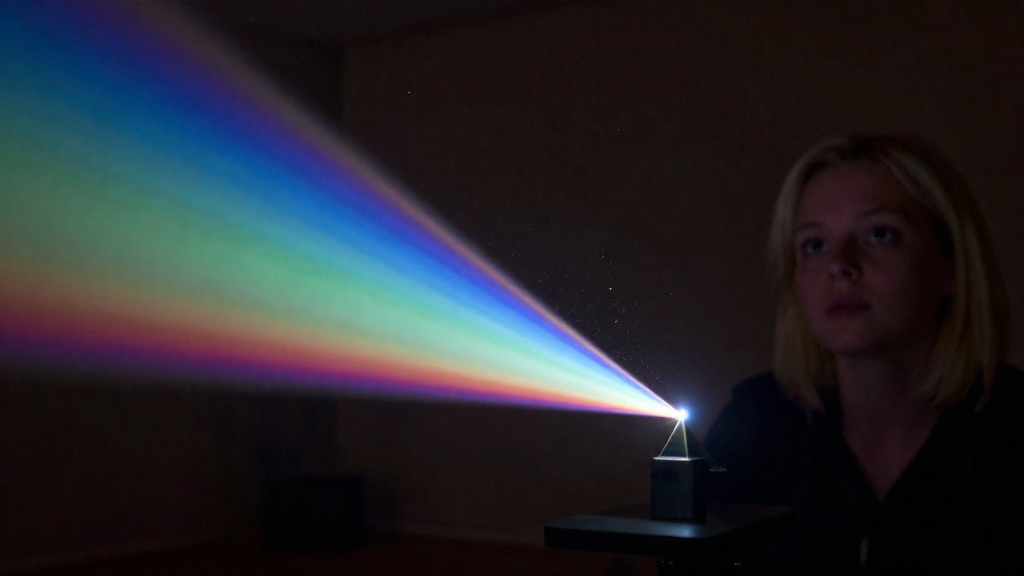
In the world of optics, understanding the concept of coherent light is crucial, particularly when discussing its role in a beam coherent light.
But what does that mean?
Let’s explore the essential elements that define coherent light and why it is significant in various applications.
What Defines Coherent Light?
Coherent light refers to light waves that are in phase and have a constant phase difference.
This implies that:
- The waves oscillate at the same frequency.
- Their crests and troughs align perfectly over time.
Coherent light is essential for producing clear, precise images and patterns, a quality that is fundamental for applications such as lasers and holography.
What is a Beam of Coherent Light?
A beam coherent light is a directed flow of coherent light waves.
In practical terms, this means:
- Laser beams are the most common form of coherent light.
- The photons in these beams share the same frequency and phase relationship.
When coherence is maintained, light can travel long distances without dispersing, which is why beam coherent light has specialized uses in various fields.
Why is Coherent Light Important?
Understanding the importance of coherent light helps illuminate its applications in technology and science.
Here are some key factors that highlight its significance:
-
Interference Patterns: Coherent light generates interference patterns, essential in experiments like the double-slit experiment, which showcases wave-particle duality.
-
Holography: Coherent light is vital for creating holograms, where the light’s phase and amplitude are recorded to produce three-dimensional images.
-
Optical Communication: In fiber optics, coherent light enables efficient data transmission over long distances.
-
Precision Measurement: Coherent light improves measurement accuracy in scientific instruments, such as interferometers, utilized in various fields from metrology to astronomy.
How Does Coherent Light Differ from Incoherent Light?
To comprehend the concept of beam coherent light, it’s equally important to compare it with incoherent light.
Here’s how they differ:
-
Phase: While coherent light maintains a fixed phase relationship, incoherent light consists of waves that are out of phase.
-
Frequency: Coherent light typically has a single wavelength (monochromatic), while incoherent light contains multiple wavelengths.
-
Applications: Coherent light is used in high-precision applications, whereas incoherent light suffices in general lighting scenarios.
Where Is Coherent Light Found?
Beam coherent light is prominently found in various technical and natural phenomena.
Here are some notable sources and uses:
-
Lasers: The most prevalent source of coherent light. Their applications range from cutting materials to medical procedures and entertainment.
-
LEDs: Although standard LEDs emit incoherent light, specially designed LED arrays can produce coherent-like conditions for specific tasks.
-
Astronomy: In telescopes, coherent light helps in improving image clarity by enhancing resolution.
-
Microscopy: Coherent light is essential in techniques such as phase-contrast microscopy, allowing scientists to observe transparent specimens without staining.
How is Coherent Light Generated?
Generating beam coherent light often involves specific techniques that produce and maintain light coherence.
Here are some common methods:
-
Lasers: They generate coherent light through stimulated emission of radiation, where atoms are excited to a higher energy state and then release photons together.
-
Interferometry: This uses beams of coherent light to measure displacements and changes in refractive index with extreme precision.
-
Optical Cavities: These are arrangements of mirrors designed to stabilize and produce coherent light by reflecting it multiple times within a confined space.
What Are the Applications of Coherent Light?
The applications of beam coherent light are vast and varied. Here’s a breakdown of its key uses:
1. Medical Applications
-
Laser Surgery: Coherent light is often used in surgery to cut or coagulate tissue with minimal damage to surrounding areas.
-
Optical Coherence Tomography: This imaging technique uses coherent light to capture high-resolution images of internal body structures.
2. Industrial Applications
-
Laser Cutting and Welding: Coherent laser beams provide precision in cutting metal and other materials.
-
Material Processing: The focused energy of coherent light is utilized in processes like engraving and surface modification.
3. Telecommunication
- Fiber Optic Communication: Coherent light allows for high-speed data transfer over long distances without significant loss, making it a backbone of modern communication.
4. Scientific Research
-
Quantum Mechanics Experiments: Coherent light is fundamental in testing theories of quantum mechanics, particularly in exploring wave-particle duality.
-
Metrology: Precision measurements in length, time, and frequency often depend on the properties of coherent light.
Conclusion: The Future of Coherent Light
Understanding and harnessing beam coherent light has led to transformative advances across multiple disciplines.
From healthcare to communications, coherent light enables innovations that shape our future.
With continuous research and development, the potential uses of coherent light are bound to expand, enhancing both our technological capabilities and scientific understanding.
In essence, beam coherent light not only illuminates our understanding of optics but also ensures that we remain at the forefront of technological progress in the 21st century.