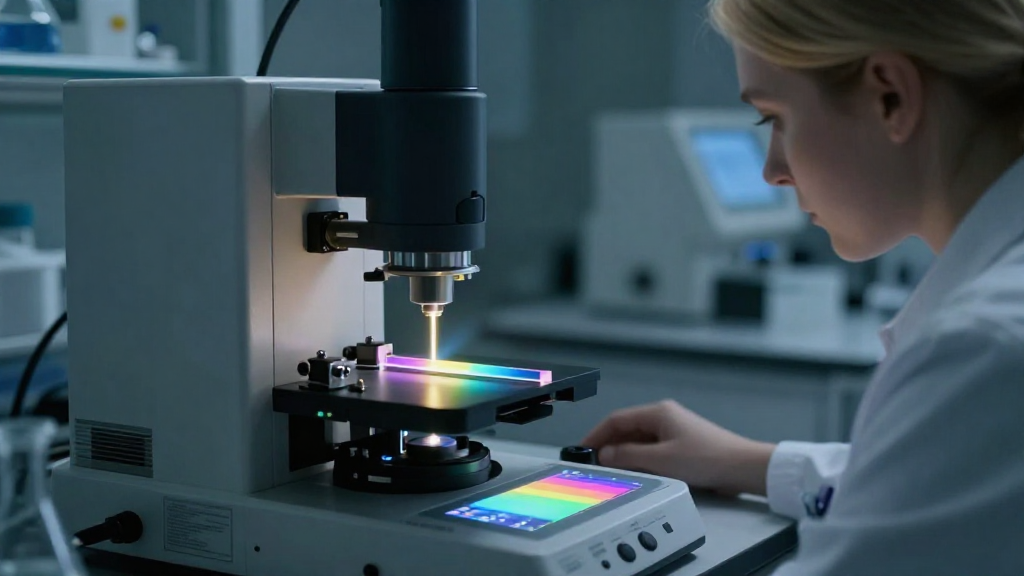
Beam wavelength is a fundamental characteristic of waves, particularly in the fields of optics and communications.
Understanding how beam wavelength is measured provides valuable insights into various applications, from fiber optics to laser technologies.
What Is Beam Wavelength?
Beam wavelength refers to the distance between successive peaks of a wave, such as light or radio waves.
This measurement is crucial in determining the wave’s energy, frequency, and how it interacts with matter.
In practical terms, beam wavelength can be defined as:
- The distance between two consecutive crests or troughs of a wave
- The physical representation of the frequency of the wave
In laser technologies, for example, the beam wavelength affects how the laser interacts with materials, influencing absorption, reflection, and transmission.
Why Is Beam Wavelength Important?
Understanding beam wavelength is crucial for several reasons:
-
Communication Systems: In telecommunications, different wavelengths can carry different signals, allowing multiplexing and improving bandwidth.
-
Optical Devices: Instruments like microscopes and telescopes rely on precise beam wavelengths to magnify and resolve images.
-
Medical Applications: Devices such as lasers used in surgery need specific wavelengths to target tissues effectively without causing damage.
-
Environmental Monitoring: Remote sensing technologies utilize beam wavelengths to detect pollutants and monitor changes in the environment.
Given its importance across multiple sectors, accurately measuring beam wavelength is essential.
How Do You Measure Beam Wavelength?
Several techniques exist for measuring beam wavelength, including:
-
Spectrometry:
– This method employs devices known as spectrometers, which can analyze light over a range of wavelengths.
– By dispersing light into its components, a spectrometer can identify the wavelengths present in a beam. -
Interferometry:
– This technique uses the interference patterns created when two waves overlap.
– By analyzing these patterns, one can derive the wavelength of the beam. -
Grating Measurement:
– Diffraction gratings can separate different wavelengths of light based on their angle of incidence.
– By measuring the angles at which light is diffracted, one can calculate the beam wavelength using the grating equation.
Briefly, the interferometric method is often preferred for its precision, while spectrometric techniques offer speed and ease of use.
What Are the Tools for Beam Wavelength Measurement?
Some common tools for measuring beam wavelength include:
-
Spectrometers: These devices visualize the beam spectrum, allowing for accurate wavelength readings.
-
Optical Interferometers: Instruments such as Michelson and Fabry-Pérot interferometers are widely used to determine wavelength with high precision.
-
Wavelength Meters: These specialized devices measure the wavelength of light emitted from lasers or other optical sources.
How to Choose the Right Tool?
When selecting a tool for measuring beam wavelength, consider:
-
Accuracy: Different applications require varying levels of precision. High-accuracy instruments are needed for laboratory settings.
-
Wavelength Range: Ensure the tool can operate effectively across the various wavelengths of interest.
-
Budget: Higher precision often comes at a higher cost, so balance your needs with available resources.
What Factors Affect Beam Wavelength Measurement?
Several factors may influence the measurement of beam wavelength, including:
-
Environmental Conditions: Changes in temperature, pressure, or humidity can affect the measurements.
-
Equipment Calibration: Regular calibration of measuring tools is essential to ensure accurate readings.
-
Material Properties: The medium through which a beam travels can alter its wavelength due to phase shifts and refraction.
Understanding these factors can help in achieving more reliable measurements.
Can Beam Wavelength Be Manipulated?
Yes, beam wavelength can be altered for various applications.
Such manipulation can be essential for engineering applications, including:
-
Adjusting Laser Outputs: Tuning laser wavelengths can optimize their performance for specific applications, such as spectroscopy or communications.
-
Optical Filters: These devices selectively absorb and transmit specific wavelengths, allowing for wavelength manipulation in scientific experiments.
-
Modulators: Electro-optic and acousto-optic modulators can change the wavelength based on electrical or acoustic signals.
By controlling beam wavelength, scientists and engineers can tailor systems to meet specific performance criteria.
Conclusion: The Importance of Accurate Beam Wavelength Measurement
Accurate beam wavelength measurement is crucial across various fields, including telecommunications, medicine, and environmental monitoring.
Utilizing methods such as spectrometry and interferometry, professionals can gather precise data necessary for advancing technology and applications.
By understanding not only how beam wavelength is measured but also the tools and factors affecting these measurements, individuals and organizations can enhance their research and operational capabilities.
The significance of beam wavelength extends far beyond its basic definition, influencing how we communicate, interact with technology, and understand the natural world.
In summary, knowledge of beam wavelength and its measurement techniques is vital for scientists, engineers, and professionals involved in innovative research and development, making it a key area worth exploring further.