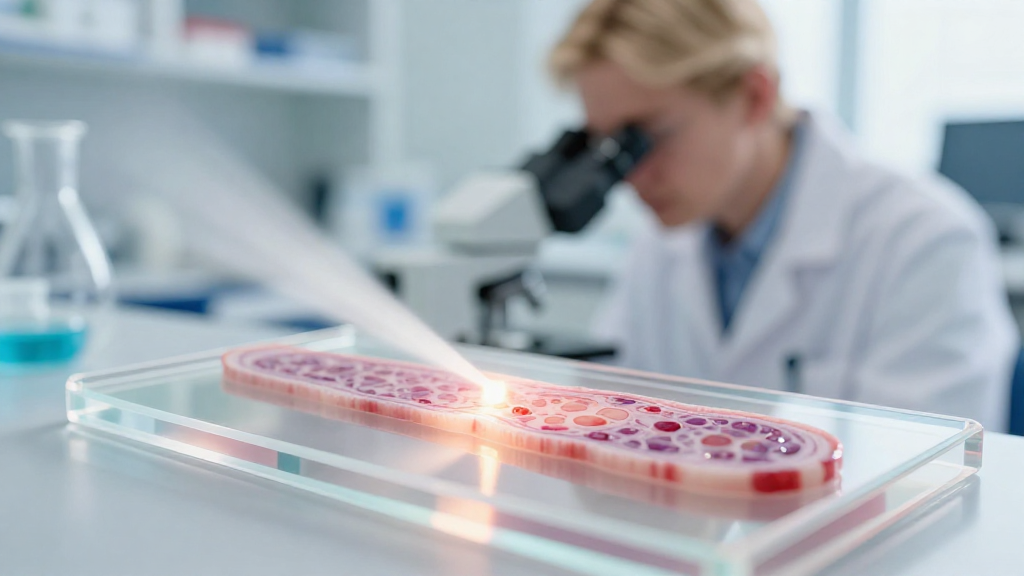
Understanding beam interaction in tissues is crucial for various fields, including medicine, biology, and engineering. This article delves into the mechanisms of beam interaction in tissues, examining the effects and implications for medical applications.
What Are Beams in the Context of Tissues?
In biological studies, beams typically refer to forms of energy, such as light, ultrasound, or radiation, that can penetrate human tissues.
These beams have various properties, including:
- Wavelength: Determines the penetration depth and interaction with tissues.
- Frequency: Influences the energy of the beam.
- Intensity: Affects the extent of tissue response.
How Is Beam Interaction in Tissues Measured?
The measurement of beam interaction in tissues involves complex techniques and sophisticated instruments. Depending on the type of beam, methods may differ significantly.
-
Optical Beams:
– Utilize spectrophotometry to analyze light absorption and scattering.
– Employ techniques such as fluorescence microscopy for real-time observation. -
Ultrasound Beams:
– Use echography to measure the reflection and refraction of sound waves.
– Analyze tissue elasticity through elastography. -
Radiation Beams:
– Include dosimetry for measuring absorbed radiation in tissues.
– Utilize imaging techniques such as CT and MRI to visualize interaction effects.
Measuring these interactions provides valuable data for understanding how specific types of beams affect human tissue at a cellular and molecular level.
Why Does Beam Interaction in Tissues Matter?
Understanding beam interaction in tissues has numerous applications, particularly in medicine and diagnostics. The implications are significant in various areas:
1. Medical Imaging
Beam interaction is fundamental in medical imaging techniques, such as:
- X-rays: Rely on beam interaction to create images of internal structures.
- MRI: Employs magnetic fields and radio waves to visualize soft tissues.
- Ultrasound: Uses sound waves to produce detailed images of organs.
These methods help clinicians diagnose conditions effectively and monitor treatment progress.
2. Therapeutic Applications
Different therapies utilize beam interaction in tissues to target diseases—most notably:
- Radiation Therapy: Leverages high-energy beams to destroy cancer cells by damaging their DNA.
- Laser Surgery: Uses focused light beams to cut or coagulate tissue.
- Phototherapy: Utilizes light wavelengths to treat skin conditions and enhance healing.
3. Research and Development
In research contexts, understanding how beams interact helps develop new technologies, such as:
- Targeted Drug Delivery Systems: Combining imaging with beam interaction can enhance drug delivery processes.
- Biomedical Devices: Innovations like photonic sensors can monitor physiological changes in real-time through beam interactions.
What Factors Affect Beam Interaction in Tissues?
Several factors influence how beams interact with human tissues, including:
1. Tissue Composition
The type of tissue—such as muscle, fat, or bone—influences the interaction significantly. For example:
- Density: Denser tissues absorb more radiation, impacting imaging effectiveness.
- Water Content: Water-rich tissues scatter light differently than drier tissues.
2. Beam Characteristics
The properties of the beam itself can shape its interaction with tissues:
- Wavelength and Frequency: Different tissues present varying absorption rates depending on the beam’s wavelength.
- Power and Intensity: Higher-intensity beams may cause thermal effects or cellular damage.
3. Angle of Incidence
The angle at which a beam hits tissue can alter the interaction outcome:
- Normal Incidence: Optimal for imaging and therapeutic purposes.
- Oblique Angles: Can lead to increased scattering and refraction, making it less effective.
How Does Beam Interaction in Tissues Work Mechanically?
Beam interaction in tissues involves several mechanical phenomena, such as:
1. Absorption
When beams encounter tissue, certain wavelengths or frequencies are absorbed, leading to:
- Heating effects for thermal therapies.
- Enhanced signal for imaging when the contrast is improved.
2. Scattering
Scattering occurs when the beam changes direction due to interactions with tissue components.
This can result in:
- Specular Scattering: Reflecting smoothly if the tissue surface is smooth.
- Diffuse Scattering: Occurring in rougher tissues, affecting image clarity.
3. Reflection
Part of the beam may reflect off tissue boundaries, which can provide diagnostic information but can also limit penetration.
- This behavior is crucial in technologies such as ultrasound imaging.
4. Transmission
Some portions of the beam can transmit through the tissue, crucial for imaging and therapeutic applications.
This feature is leveraged in techniques like:
- Endoscopy: Where light transmission through tissues enables visualization of internal structures.
How Can We Enhance Beam Interaction in Tissues?
To improve the effectiveness of beam interaction in tissues, consider the following strategies:
1. Optimizing Beam Parameters
- Choosing the Right Wavelength: Selecting wavelengths that tissue absorbs well can enhance treatment effectiveness.
- Adjusting Intensity: Carefully tuning the intensity based on tissue type can minimize damage while maximizing therapeutic outcomes.
2. Using Contrast Agents
In imaging, contrast agents can improve visibility by selectively enhancing absorption or scattering, especially in X-ray and MRI techniques.
3. Advanced Algorithms and Techniques
Employing sophisticated algorithms during imaging can improve the interpretation of scattered and absorbed light, leading to improved diagnostic capabilities.
4. Personalizing Treatment Plans
Understanding individual tissue responses can help formulate personalized therapy plans that optimize beam interaction in tissues for maximum efficacy.
Conclusion
Understanding beam interaction in tissues is essential for advancements in medical imaging, therapeutic applications, and research.
By delving into the various factors that affect beam interactions, and employing strategies to enhance these interactions, the medical field can achieve more effective diagnostic and therapeutic outcomes.
This understanding not only leads to better patient care but also propels scientific innovation, paving the way for future breakthroughs in the biomedical field.