The right flash can make indoor portraits, events, and everyday snapshots look brighter and more polished without requiring a complicated lighting setup. For beginners, the best choice balances simple controls, reliable compatibility, useful power, and a price that leaves room to learn.
This roundup compares 10 camera flashes for beginners, including compact on-camera options and more capable wireless speedlights. Use the guide below to narrow the list by camera system, shooting style, power needs, and portability.
Best 10 Camera Flashes for Beginners Picks for 2026
Best Budget Manual Starter

- GN33 output for basic illumination
- Manual, S1, and S2 modes
- Includes stand, pouch, and color filters
Best For: Learning manual flash on single-contact hot shoes
Best Compact Hybrid Light

- Flash, focus assist, and video light in one
- Rechargeable battery with up to 550 flashes
- Bi-color 2500K–6500K LED lighting
Best For: Compact stills, video, and low-light shooting
Best Wireless Learning Platform

- GN60 output for powerful illumination
- Built-in 2.4G wireless transmission
- Supports future Godox multi-light setups
Best For: Beginners building an expandable manual-lighting system
Best Pocket Manual Flash
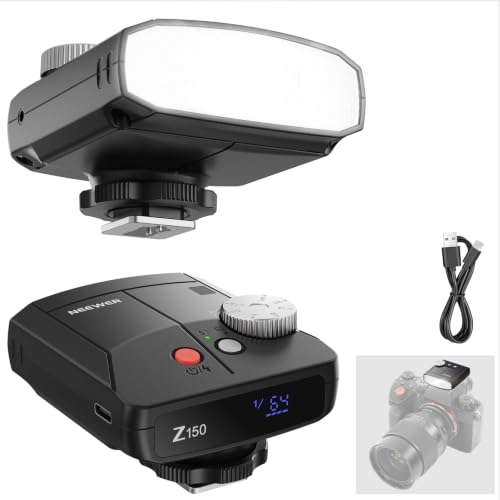
- 20Ws output with GN15 guide number
- Lightweight 3.6-ounce design
- Manual-only operation with S1/S2 slave modes
Best For: Beginners wanting a tiny, rechargeable manual flash
Best Ultra-Light Mini Flash

- Ultra-light 0.07-pound body
- GN8 output with 97+ CRI
- USB-C charging and 500-plus flashes per charge
Best For: Beginners wanting a tiny rechargeable fill flash
Best Complete Manual Kit

- GN33 output with eight power levels
- Includes stand, pouch, and 12 color filters
- Manual, S1, and S2 shooting modes
Best For: Beginners wanting accessories for portraits and product shots
Best Compact Option
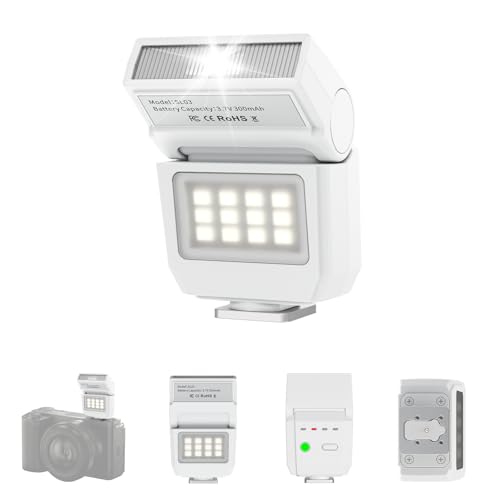
- Portable manual flash with four brightness levels
- 90-degree head supports nearby bounce lighting
- Rechargeable and includes an A-to-C cable
Best For: Portable close-range portraits and casual indoor shooting
Best All-Around Manual Flash – Godox TT600 with Diffuser
For photographers comparing camera flashes for beginners, the Godox TT600 offers a useful combination of power, bounce flexibility, and wireless expansion. Its GN60 output, large LCD, included diffuser, and broad standard-hot-shoe compatibility make it a capable starting point for learning manual flash.
Best For: Beginners who want a powerful manual flash for portraits, events, bounce lighting, and future off-camera setups.
Pros:
- GN60 output and consistent 5600K color temperature across the power range.
- Built-in Godox 2.4G wireless X system supports up to five groups and 32 channels.
- Tilts from -7° to 90° and rotates 360° for flexible bounce lighting.
- Includes a dedicated diffuser, mini stand, storage bag, and rapid 0.1–2.6-second recycling.
Cons:
- Requires four AA batteries, which are not included.
- On-camera HSS requires a compatible Godox wireless trigger sold separately.
- Compatibility exclusions apply to some Canon and Fujifilm models.
The TT600 is a strong value for beginners ready to move beyond basic pop-up flash. It is manual rather than TTL-focused, but its power and Godox-system compatibility leave room to develop more advanced lighting techniques.
Best Budget Manual Starter – PHOTOOLEX FK300 Speedlite
The PHOTOOLEX FK300 is a straightforward option for beginners exploring camera flashes without needing TTL automation. It offers manual, S1, and S2 optical slave modes, adjustable output, and useful accessories for practicing direct or multi-flash lighting.
Best For: Beginners who want an affordable, simple manual flash for single-contact hot-shoe cameras.
Pros:
- GN33 output provides stable illumination for basic shooting.
- Offers 22 power levels from 1/1 to 1/128.
- S1 and S2 optical slave modes support simple multi-flash setups.
- Includes a pouch, stand, 12 color filters, and a 24-month warranty.
Cons:
- Does not support TTL or camera-menu control.
- No wireless radio system is built in.
- Compatibility depends on a single-contact hot shoe.
This flash keeps the controls uncomplicated, which can be helpful when learning exposure and light direction manually. Its lower GN33 rating and lack of TTL or radio wireless features make it better suited to foundational practice than advanced automated workflows.
Best Compact Hybrid Light – ULANZI F16R Speedlite
Among camera flashes for beginners, the ULANZI F16R stands out for combining flash, focus assist, and continuous lighting in one compact unit. Its rechargeable battery, included diffuser, and adjustable bi-color LED make it useful for casual photos, video, and low-light shooting.
Best For: Beginners who need a small, rechargeable light for flash photography, focus assistance, and video.
Pros:
- Three functions combine flash, focus-assist light, and continuous video lighting.
- Built-in 1200mAh battery provides up to 550 full-power flashes and USB-C charging.
- Bi-color 2500K–6500K lighting has stepless brightness control and CRI 96.
- 90° tilt and included diffuser support direct or softer bounce-style lighting.
Cons:
- GN16 output is less powerful than larger speedlights.
- Uses a single-pin hot shoe and has listed camera compatibility limitations.
- Warranty is listed as one month.
The F16R is especially approachable if you want one lightweight accessory for both stills and video. Its modest flash output favors nearby subjects and everyday scenes, while the rechargeable design avoids carrying AA batteries.
Best Wireless Learning Platform – Godox TT600 Speedlite
The Godox TT600 is a practical choice for beginners who want to learn manual flash while building toward off-camera lighting. Its GN60 output, built-in 2.4G system, and compatibility with Godox triggers provide a clear upgrade path from a single on-camera unit to multi-light setups.
Best For: Beginners planning to practice manual flash now and expand into Godox wireless lighting later.
Pros:
- GN60 guide number delivers strong illumination for portraits and longer distances.
- Built-in 2.4G wireless transmission offers up to 100 meters of stated range.
- Supports remote control, HSS, and additional functions with compatible Godox triggers.
- Recycles in approximately 0.1–2.6 seconds and provides about 230 full-power flashes.
Cons:
- Requires four AA batteries, which are not included.
- Cannot provide HSS when used directly on the camera hot shoe.
- TTL wireless trigger is sold separately for expanded functionality.
This TT600 balances accessible manual controls with a capable wireless ecosystem. It is a particularly sensible pick for beginners who expect to add triggers or additional Godox lights, though its most advanced functions require extra equipment.
Best Pocket Manual Flash – NEEWER Z150 Mini Flash
For beginners comparing camera flashes for beginners, the NEEWER Z150 is a compact, straightforward option for cameras with a standard single-contact hot shoe. It offers manual power control, optical slave modes, and a lightweight design, but it does not provide TTL, HSS, or automatic exposure.
Best For: Beginners who want an inexpensive, pocket-sized manual flash for fill light and everyday photography.
Pros:
- Compact 3.6-ounce design is easy to carry.
- 20Ws output with GN15 performance and adjustable power from 1/64 to full.
- Supports S1 and S2 optical slave modes for simple off-camera triggering.
- Built-in rechargeable 1200mAh battery provides up to 640 full-power flashes.
Cons:
- No TTL, HSS, camera-menu control, or automatic flash exposure.
- Requires mechanical shutter mode on compatible Fujifilm and other mirrorless cameras.
- Compatibility depends on a standard center-contact hot shoe; maximum sync speed is 1/200 second.
The Z150 makes sense if you are comfortable setting flash power manually and mainly need portable fill light. Confirm your exact camera model and hot-shoe type before ordering.
Best Wireless Starter Speedlite – Godox TT520II Manual Speedlite
The Godox TT520II is a practical choice among camera flashes for beginners who want more reach and basic wireless flexibility. It uses manual controls, offers three operating modes, and includes a transmitter, diffuser, filters, stand, and carrying bag.
Best For: Beginners using Canon, Nikon, Sony, Olympus, Pentax, or Fujifilm cameras who want a full-size manual speedlite with wireless triggering.
Pros:
- GN33 output provides more power than the included mini flashes.
- 433MHz wireless transmission and 16 channels support remote triggering.
- Offers M, S1, and S2 modes with eight power levels from 1/128 to full.
- Includes a transmitter, diffuser, filters, mini stand, and protective bag.
Cons:
- Manual exposure control means there is no listed TTL automation.
- Compatibility should be checked for the specific camera model.
- It is larger and less pocketable than the mini flash alternatives.
Choose the TT520II if you value higher output and an included wireless setup kit over the smallest possible size. Its manual controls are useful for learning flash fundamentals, while S1 and S2 modes add basic off-camera options.
Best Ultra-Light Mini Flash – ULANZI SL01 Mini Flash
The ULANZI SL01 is one of the simplest camera flashes for beginners who prioritize portability. Its single-contact design, four manual power levels, USB-C charging, and built-in battery make it convenient for basic portraits, still life, and documentary shots, provided your camera is compatible.
Best For: Beginners who need an ultra-light rechargeable flash for modest fill-light duties and casual shooting.
Pros:
- Ultra-compact 0.07-pound design is easy to keep on a camera bag.
- GN8 output, 6500K color temperature, and 97+ CRI support consistent illumination and color reproduction.
- Built-in 250mAh battery delivers more than 500 full-power flashes per charge.
- USB-C charging takes about 60 minutes and supports use while charging.
Cons:
- No TTL or automatic operation; brightness is limited to four manual levels.
- Lower GN8 output is better suited to close-range fill than powerful bounce lighting.
- Charger and cable are not included, and compatibility depends on a single-contact hot shoe.
The SL01 is appealing when size and convenience matter more than power. Check the extensive compatibility list carefully, especially for Sony, Canon, and Fujifilm models with hot-shoe restrictions.
Best Manual Starter – NEEWER TT560 Speedlite
For beginners comparing camera flashes for beginners, the NEEWER TT560 is a straightforward manual speedlite with broad camera compatibility, adjustable output, and a tilting, rotating head. It requires you to set flash power yourself and does not provide TTL, HSS, automatic exposure, or camera-menu control.
Best For: Beginners learning manual flash, bounce lighting, and basic off-camera setups.
Pros:
- Eight manual power levels from 1/128 to full power.
- GN38 output, with a head that tilts 0°–90° and rotates 0°–270°.
- S1/S2 optical slave modes and PC sync support off-camera lighting.
- Uses four AA batteries and includes power-saving and overheating protection.
Cons:
- No TTL, HSS, automatic exposure, or camera-menu control.
- Compatibility depends on a standard center-contact hot shoe; some listed camera models are excluded.
- Fujifilm and other mirrorless cameras must use mechanical shutter mode.
The TT560 is a capable, affordable learning tool if you are comfortable adjusting exposure manually. Confirm your camera’s hot-shoe and shutter requirements before ordering.
Best Complete Manual Kit – PHOTOOLEX FK300 Speedlite
The PHOTOOLEX FK300 is a practical option for beginners choosing camera flashes for beginners because it combines manual controls with a stand, pouch, and color filters. Its universal single-contact hot shoe supports many camera brands, but exposure and flash power must be managed manually.
Best For: New photographers who want a ready-to-use manual flash kit for portraits, products, and events.
Pros:
- GN33 output and eight power levels from 1/128 to full power.
- Manual, S1, and S2 modes support direct and optical slave operation.
- Includes a protective pouch, flash stand, and 12 color filters.
- Offers 5600K color and a 24-month warranty.
Cons:
- No TTL or automatic exposure control is specified.
- The listed version is “No Trigger,” so it does not include a separate radio trigger.
- It is not water resistant.
Choose the FK300 if the included accessories and universal single-contact mount are more valuable to you than automated exposure. It is especially appealing for experimenting with simple multi-light arrangements.
Best Compact Option – Ulanzi SL03 Mini Flash
For beginners seeking camera flashes for beginners in a smaller format, the Ulanzi SL03 offers a compact manual design with four brightness settings, a 90-degree adjustable head, and a fill-light function. It has no TTL or automatic operation, so you will need to set the flash manually.
Best For: Beginners who prioritize portability for close-range portraits and casual indoor photography.
Pros:
- Compact design with four brightness levels from 1/1 to 1/8.
- 90-degree flash-angle adjustment supports bounce lighting from nearby ceilings or walls.
- Added fill-light function provides a constant auxiliary focusing light.
- Rechargeable design includes an A-to-C charging cable.
Cons:
- No TTL or automatic exposure control.
- Limited GN8 output is intended more for close-up use than longer-range lighting.
- Requires a single-contact hot shoe, and several Sony, Canon, and Fujifilm models are excluded.
The SL03 is a convenient travel-friendly choice when size matters and your subjects are relatively close. Check the exact compatibility list and use mechanical shutter mode when required by your mirrorless camera.
How We Picked These Camera Flashes for Beginners
We focused on beginner-friendly flashes with straightforward controls, practical mounting options, and features that support gradual skill development. The selection includes manual speedlights, compact mini flashes, and models with wireless triggering or built-in receivers. Because compatibility varies, we also considered support for common camera brands and whether each flash is best suited to on-camera use, off-camera lighting, casual snapshots, or more demanding indoor photography.
Specifications such as guide number, recycle performance, battery capacity, trigger type, and physical size help indicate where each model fits. A higher guide number generally means more available light, but real-world results also depend on modifiers, distance, ISO, aperture, and the camera’s ability to control the flash.
Quick Comparison
| Type | Best For | What to Prioritize |
|---|---|---|
| Full-size manual speedlight | Learning flash photography | Power, tilt/swivel head, clear controls |
| Wireless speedlight | Off-camera portraits and events | Trigger compatibility, range, receiver support |
| Compact mini flash | Travel and casual snapshots | Size, charging, simple operation |
| Continuous-light hybrid | Mixed photo and video use | Light modes, battery life, mounting |
Key Buying Factors for Camera Flashes for Beginners
Compatibility and Triggering
Check both the hot-shoe fit and the triggering system before buying. A flash may mount physically on several cameras but still lack automatic exposure support. Many affordable models are manual-only, which can be excellent for learning but requires adjusting flash power, aperture, ISO, or distance yourself. For wireless use, verify that the transmitter and receiver operate on the same system and frequency.
Power and Coverage
Guide number is a useful comparison point, but it is not a complete performance rating. More powerful flashes provide greater flexibility when bouncing light or using a diffuser. Smaller units are easier to carry and often adequate for close subjects, restaurants, travel, and fill light outdoors.
Head Movement and Control
A tilting or swiveling head lets you bounce light from a wall or ceiling for softer results. Manual power levels, zoom control, and S1/S2 optical slave modes can make a basic flash much more versatile. Beginners should favor controls that are easy to read and adjust quickly.
Power Source and Recycle Time
AA-powered flashes are easy to replenish with spare rechargeable batteries, while built-in batteries can reduce bulk and simplify charging. Consider how many shots you expect to take, how quickly you need the flash to recycle, and whether replacement power is readily available.
Who Should Buy Which Camera Flashes for Beginners?
Choose a full-size manual speedlight if you want the most room to practice bounce flash, exposure, and off-camera techniques. A wireless model is the better choice for portraits, product photography, or anyone planning to place the flash away from the camera. Pick a mini flash if portability matters more than maximum output and you mainly need occasional fill light. A hybrid flash with continuous illumination suits creators who alternate between still photography and video.
Before ordering, confirm your camera’s hot-shoe design, the flash’s supported trigger system, and whether automatic TTL exposure is required. If you are comfortable learning manual settings, an affordable manual flash can deliver excellent value; if you want faster setup, prioritize a model designed for your camera brand and wireless workflow.