Unstable venue power can put mixers, wireless systems, amplifiers, and other stage equipment at risk. The best stage power conditioners add surge protection, filtering, monitoring, or sequencing to help you run a more dependable setup.
This roundup compares 10 options ranging from compact portable units to rack-mounted conditioners with multiple outlets, voltage displays, and power sequencing.
Best 10 Stage Power Conditioners Picks for 2026
Rack-Mount Control
Pyle PCO875 Power Sequencer Conditioner

- 10 outlets with two front always-on connections
- 2000W capacity with surge and overload protection
- 1U rack design with LCD voltage display and USB port
Best For: Rack-based studio, stage, and home theater systems
High-Count Filtering
Radial Power-1 Power Conditioner

- Provides 11 outlets for connected equipment
- Includes noise filtering and surge protection
- Stainless-steel construction weighs 7.55 pounds
Best For: Multi-device stage, studio, and AV power setups
Voltage Safety
Furman SS-6B-PRO Surge Protector
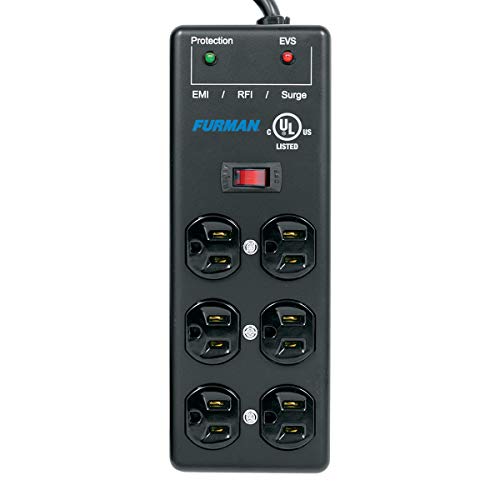
- Six protected outlets with 15A capacity
- EVS over- and under-voltage shutdown
- Steel housing, EMI/RFI filtration, and 15-foot cord
Best For: Portable stage and studio setups needing enhanced voltage protection
Three-Zone Sequencing
Monoprice Stage Right Power Conditioner
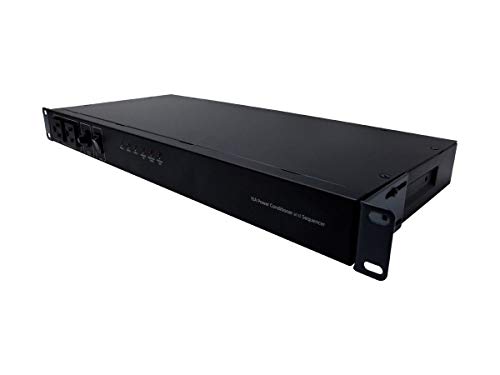
- Eight outlets arranged across three power zones
- 15A capacity with surge protection
- 1U metal rack-mount design for audio and AV systems
Best For: Rack-based systems needing zone-based power sequencing
Rack-Ready Protection

- Nine outlets for pro-audio and other gear
- Noise filtering with surge protection
- LED illumination and one USB port
Best For: Multi-device stage and studio power setups
Portable Audio Filtering

- Six outlets for professional audio equipment
- Audio filtration and 540-joule surge protection
- Nine-foot cable in a 3.1-pound design
Best For: Mobile and compact audio rigs
Hi-Fi Display Control

- Eight outlets with grouped switching
- LED display monitors overload and filtration
- 15A overvoltage protection with aluminum housing
Best For: Stationary hi-fi and home entertainment systems
Portable Protection

- Eight outlets with audio filtration
- 540-joule surge protection and status LEDs
- USB-A/USB-C charging and 9-foot cable
Best For: Portable stage and small studio rigs
Rack-Mount Monitoring

- Ten sockets in a 1U rack-mount design
- LCD real-time voltage monitoring
- Surge and overload protection with USB
Best For: Rack-based DJ and studio systems
High-Capacity Sequencing

- Ten sockets with sequential startup control
- LCD voltage display and eight-channel indicators
- AC noise filtering plus USB/Type-C charging
Best For: Larger rack-mounted audio systems
Rack-Mount Control – Pyle PCO875 Power Sequencer Conditioner
For stage power conditioners that combine rack integration with outlet capacity, the Pyle PCO875 offers 10 outlets, surge protection, and a digital voltage readout. Its 1U metal housing is suited to compact home theater, studio, and stage setups.
Best For: Rack-based audio, studio, and home theater systems needing multiple outlets and sequenced power control.
Pros:
- Provides 10 outlets: eight on the rear and two always-on outlets on the front.
- Supports up to 2000W and includes built-in spike, surge, overload, and noise-interference protection.
- Includes a digital LCD display, USB charging port, and one-button operation.
- Fits a single rack space with a rugged metal enclosure.
Cons:
- The 13A rating may provide less capacity than some 15A alternatives.
- Its feature set and rack format may be more than needed for a simple power block.
The PCO875 is a practical choice when a rack-mounted stage power conditioner needs outlet expansion, visible voltage information, and basic power protection in one unit.
High-Count Filtering – Radial Power-1 Power Conditioner
The Radial Power-1 is a straightforward option among stage power conditioners, offering 11 outlets with noise filtering and surge protection. It is designed for setups where several connected devices need centralized power management.
Best For: Stage, studio, and AV systems that prioritize a high outlet count with basic filtering and surge protection.
Pros:
- Offers 11 outlets for connecting multiple pieces of equipment.
- Combines noise filtering with surge protection.
- Uses a stainless-steel construction and weighs 7.55 pounds.
Cons:
- The supplied specifications do not list sequencing, voltage display, or USB charging.
- Its larger stated dimensions may require careful placement in a compact setup.
Choose the Power-1 if outlet capacity and basic power cleanup are more important than extra controls or display features.
Voltage Safety – Furman SS-6B-PRO Surge Protector
The Furman SS-6B-PRO is a compact power block for buyers comparing stage power conditioners with enhanced voltage protection. It has six protected outlets, EMI/RFI filtration, a built-in circuit breaker, and a 15-foot cord for flexible placement.
Best For: Stage and studio rigs that need rugged surge protection and automatic response to dangerous voltage conditions.
Pros:
- Extreme Voltage Shutdown cuts power during unsafe over- or under-voltage conditions and restores it when stable.
- Provides six outlets with standard surge suppression and EMI/RFI noise filtration.
- Heavy-duty steel construction supports demanding stage, studio, and AV use.
- The 15-foot cord helps reach distant wall outlets.
Cons:
- Six outlets offer less connection capacity than the 8-, 10-, and 11-outlet options in this roundup.
- It is a power block rather than a rack-mount conditioner.
The SS-6B-PRO stands out when voltage-event protection and a durable, portable form matter more than maximum outlet count or rack integration.
Three-Zone Sequencing – Monoprice Stage Right Power Conditioner
The Monoprice Stage Right combines an 8-outlet power conditioner with three power zones and a 15A rating. Its 1U rack-mount format makes it a useful option for organizing amplifiers, speakers, computers, and other stage or AV equipment.
Best For: Rack-based audio and AV systems that need zone-based power sequencing with a standard 15A capacity.
Pros:
- Provides eight outlets and three power zones for organized equipment startup.
- Offers 15A power handling and surge protection.
- Metal enclosure and 1U rack-mount design suit permanent equipment racks.
- Works with amplifiers, speakers, computers, home theater, and AV equipment.
Cons:
- The supplied notes do not specify a voltage display, USB port, or noise-filtering feature.
- Eight outlets provide fewer connections than the Radial Power-1 and Pyle PCO875.
For rack users who value separate power zones and 15A capacity, the Stage Right offers a focused alternative to conditioners built around displays or higher outlet counts.
Rack-Ready Protection – Radial Power-2
For stage power conditioners, the Radial Power-2 is a practical choice when you need centralized power for several professional devices. It provides nine outlets, surge protection, noise filtering, and LED illumination in a stainless-steel enclosure.
Best For: Stage and pro-audio setups that need multiple outlets and filtered, surge-protected power.
Pros:
- Nine outlets support multiple connected devices.
- Noise filtering and surge protection help safeguard connected equipment.
- LED illumination improves visibility in darker setups.
- Includes one USB port and a 15A maximum current rating.
Cons:
- At 12.4 pounds, it is relatively heavy for a power unit.
- The Type B plug is intended for North American outlets.
The Power-2 is best suited to users who value outlet capacity and a sturdy stainless-steel build over portability. Its two-year warranty adds useful reassurance for regular gigging or installation use.
Portable Audio Filtering – Black Lion Audio PG-P
Among stage power conditioners, the Black Lion Audio PG-P stands out for compact setups that still need audio filtration and surge protection. Its six outlets are paired with a long nine-foot power cable and a portable stainless-steel design.
Best For: Portable professional-audio rigs, small stages, and indoor setups where cable reach matters.
Pros:
- Six outlets accommodate essential audio equipment.
- Audio filtration is designed for professional-audio use.
- Nine-foot power cable provides flexible placement.
- Compact 3.1-pound design is easier to transport than heavier units.
Cons:
- Six outlets provide less capacity than larger conditioners.
- It does not list USB ports or LED illumination in the supplied specifications.
The PG-P is a sensible fit when portability and cable length are more important than maximum outlet count. Its 540-joule surge-protection rating and two-year warranty add practical value for mobile audio work.
Hi-Fi Display Control – AC Power Filter 8 Ways
For home-stage or entertainment applications, this eight-outlet power conditioner combines power filtering with a large LED display. The display indicates overload, phase status, and filtration status, while separate switches control groups of four outlets.
Best For: Hi-fi and home entertainment systems needing visible status information and grouped outlet control.
Pros:
- Eight outlets support multiple audio and video components.
- LED display shows overload, phase, and filtration information.
- 15A overvoltage protection helps protect connected equipment.
- Aluminum housing and flame-retardant outlet materials provide a durable construction.
Cons:
- The supplied notes do not specify the exact surge-energy rating.
- At 5.24 pounds, it is less portable than a compact power strip.
- The display’s phase indicator checks household power rather than filtering individual phases.
This model is most compelling for users who want at-a-glance monitoring and convenient grouped switching. Its feature set favors stationary hi-fi or entertainment installations over lightweight touring rigs.
Portable Protection – Black Lion Audio PG-P Plus
The Black Lion Audio PG-P Plus is a practical choice for stage power conditioners when portability, basic surge protection, and convenient charging are priorities. It provides eight outlets, audio filtration, a 540-joule surge rating, and a long 9-foot power cable in a compact enclosure.
Best For: Portable stage, rehearsal, and small studio setups needing multiple outlets and USB charging.
Pros:
- Eight outlets accommodate several electrical devices and audio components.
- Includes audio filtration and 540-joule surge protection.
- Offers USB-A and USB-C charging ports plus status LEDs.
- The 9-foot cable provides flexible placement on stage or in a studio.
Cons:
- It is a portable power strip rather than a rack-mounted sequencer.
- The supplied notes do not specify voltage monitoring or sequential switching.
Choose the PG-P Plus if straightforward, portable power distribution is more important than rack integration or advanced monitoring. Its compact format and charging ports make it especially convenient for mobile rigs.
Rack-Mount Monitoring – 2000W DJ Power Sequencer
For stage power conditioners that need rack integration and real-time monitoring, this 1U power sequencer combines ten sockets with a large LCD voltage display. Its 2000W design also includes surge and overload protection, making it suited to organized studio, DJ, and home-theater installations.
Best For: Rack-mounted audio, DJ, home-theater, and music-production systems needing voltage monitoring.
Pros:
- Provides ten sockets, including eight rear outlets and two always-on front outlets.
- Large LCD screen monitors voltage in real time.
- Includes surge, overload, and noise-related equipment protection features.
- Standard 1U metal rack housing saves installation space.
Cons:
- The listed power capacity is 2000W, which may limit larger systems.
- The supplied notes do not identify individual channel switching controls.
- Its international power interface may require attention to local plug compatibility.
This model is a sensible fit when rack space and visible voltage information matter. Its ten-outlet layout is flexible, while the 2000W rating should be matched carefully to the connected equipment.
High-Capacity Sequencing – ST-368 3300W Conditioner
The ST-368 targets larger audio and electronic setups that need high-capacity stage power conditioners with sequencing and status visibility. It combines ten universal sockets, AC noise filtering, USB and Type-C charging, an LCD voltage display, and an advertised maximum total output of 3000W.
Best For: Rack-mounted audio systems requiring high output, sequential startup, and channel-status monitoring.
Pros:
- Offers ten sockets, with eight rear outlets and two front normally open outlets.
- Sequential one-key startup helps manage connected equipment.
- Independent channel switches and eight-channel LED indicators improve control.
- Includes AC noise filtering, LCD voltage monitoring, USB, and Type-C charging.
Cons:
- The listing presents both 3300W in the title and a 3000W maximum total output in the specifications.
- The supplied notes limit each channel to 10A, so connected loads still require careful planning.
- Its 1U rack-mounted format is less suitable for compact portable setups.
The ST-368 stands out for systems where capacity, startup sequencing, and operational feedback are central requirements. Verify the intended load against the stated channel and total-output limits before installation.
How We Picked the Best Stage Power Conditioners
We focused on the features that matter in live audio and event setups: outlet count, current capacity, surge protection, noise filtering, power sequencing, voltage monitoring, rack compatibility, portability, and ease of use. We also included different formats and price points so the list works for small pedalboards, mobile DJs, rehearsal rigs, and larger rack systems.
A conditioner is not automatically a voltage regulator or an uninterruptible power supply. We treated those functions separately and considered whether each product is best suited to basic distribution, electrical-noise reduction, surge protection, or controlled startup.
Quick Comparison
| Best For | Look For | Useful Features |
|---|---|---|
| Portable rigs | Compact construction and simple connections | Surge protection, filtering, clear status indicators |
| Rack systems | 1U mounting and sufficient outlet capacity | Front-panel access, voltage display, sequencing |
| Large live setups | Higher amp and wattage ratings | Multiple zones, timed startup, overload protection |
| Noise-sensitive audio | Effective EMI/RFI filtering | Clean power delivery and robust grounding |
Key Buying Factors for Stage Power Conditioners
Capacity and Outlet Layout
Check the total current rating before connecting amplifiers or multiple powered devices. Count both the number and location of outlets; front outlets can be convenient for temporary connections, while rear outlets keep permanent rack wiring tidy. Avoid treating the maximum wattage as a recommendation to operate continuously at the limit.
Protection and Filtering
Surge protection helps defend equipment against voltage spikes, while EMI/RFI filtering can reduce certain types of electrical interference. Look for clear protection-status indicators and a properly grounded venue circuit. A conditioner cannot correct every wiring fault or replace safe electrical practices.
Sequencing and Monitoring
Power sequencing turns connected equipment on and off in stages, reducing startup surges and loud speaker pops. It is especially useful for larger PA and studio-style racks. Voltage displays can help identify questionable venue power, but they should be treated as a status tool rather than precision diagnostic equipment.
Rack Mounting and Portability
Choose a rack unit when your equipment lives in a case and benefits from organized cabling. Portable conditioners are better for mobile performers who need fast setup and minimal weight. Confirm depth, mounting hardware, cable length, and whether the unit is compatible with your rack or power distribution plan.
Who Should Buy Which Stage Power Conditioners?
Choose a compact portable model for small mobile rigs, pedalboards, or compact DJ systems. Select a basic power block when you mainly need extra outlets and surge protection near the stage. Rack-mounted conditioners with voltage displays suit permanent or semi-permanent audio racks, while sequencer models are the better choice for systems with several powered devices that should start up in a controlled order.
For demanding professional setups, prioritize verified current capacity, strong protection features, dependable construction, and compatibility with the venue’s electrical system over the highest outlet count alone.