Reliable power is essential when your rack holds mixers, wireless systems, amplifiers, processors, and other equipment that must perform under pressure. The best rack power conditioners for live sound can organize connections, reduce surge risk, and make power-up routines more manageable.
This roundup compares 10 rack-mount options with different outlet layouts, current ratings, sequencing features, voltage displays, and stage-friendly controls so you can match your power setup to your rig.
Best 10 Rack Power Conditioners for Live Sound Picks for 2026
Best for Noise-Conscious Rigs

- Nine outlets with noise filtering
- Surge protection and LED illumination
- One USB port; 15A, 120V design
Best For: Live sound racks needing cleaner, protected power
Best for High Outlet Capacity
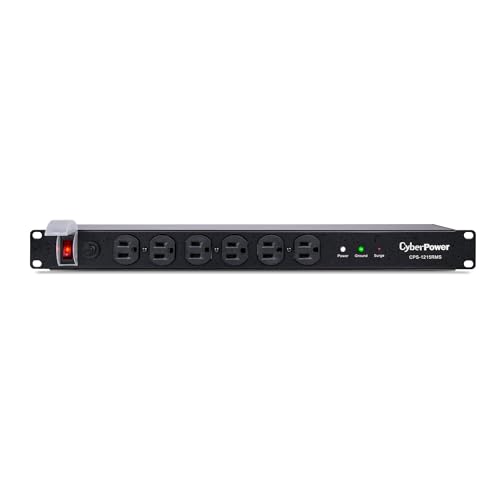
- Twelve NEMA 5-15R outlets
- 15-foot power cord and 1800-joule rating
- Vertical or horizontal 1U mounting
Best For: Busy racks requiring many connections and flexible installation
Best for Maximum Radial Outlet Count

- Eleven outlets for equipment-heavy racks
- Noise filtering and surge protection
- Stainless-steel construction
Best For: Live sound racks needing extra Radial outlet capacity
Best for Compact 1U Rack Installations
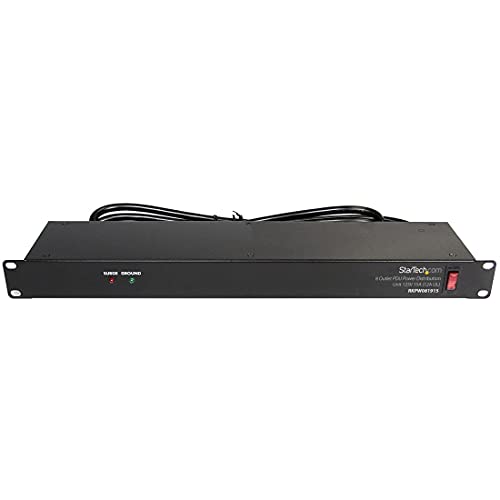
- Eight outlets in a 1U rack design
- Surge protection and circuit breaker
- LED status indicators and 6-foot cord
Best For: Compact 19-inch and mobile equipment racks
High-Capacity Rack Control

- 14 outlets with 12 switched and 2 unswitched
- 2-stage power-up and power-down system
- 2U rack mount with LED display and XLR lamp connectors
Best For: Large 120V live sound racks needing outlet capacity and staged power
Voltage Monitoring and Zone Control

- 10 protected outlets in 3 surge-protected zones
- 15A rating with LED voltage display
- Pullout light helps with dark rack access
Best For: Audio racks needing voltage visibility and zone-based surge protection
Flexible Sequenced Power Management
FMUSER 10-Outlet Power Sequencer

- Sequenced startup and shutdown for audio equipment
- Eight rear outlets have independent switches
- 110V–240V input with voltage display and 3000W output
Best For: Sound and stage systems needing flexible sequenced power control
Best Sequenced Protection

- Eight sequenced and two always-on outlets
- EMI/RFI filtering with spike protection
- 1U rack design with LCD voltage display
Best For: Live rigs needing controlled startup and power monitoring
Best High-Capacity Control

- 20A and 2000W listed capacity
- Eight independently controlled sequenced outlets
- Bypass mode and external remote switch
Best For: Complex audio racks needing detailed power management
Best Lightweight Option

- 10 outlets in a compact 1U chassis
- USB port and digital LCD readout
- 13A, 2000W listed power with surge protection
Best For: Smaller stage, studio, and home theater racks
Best for Noise-Conscious Rigs – Radial Power-2
The Radial Power-2 is a strong choice among rack power conditioners for live sound when you want noise filtering, surge protection, and straightforward rack power distribution. It provides nine outlets, a 15A rating, LED illumination, and one USB port for compatible devices.
Best For: Live sound racks that need noise filtering, surge protection, and a mix of pro-audio and USB power.
Pros:
- Noise filtering and surge protection support cleaner, safer power.
- Nine outlets provide useful capacity for rack and peripheral equipment.
- LED illumination helps with visibility in dark setups.
- Includes one USB port and a 2-year warranty.
Cons:
- At 12.4 pounds, it is relatively heavy for a rack power unit.
- The listed 120V, 15A design is intended for North American power systems.
The Power-2 stands out when power quality and practical stage visibility matter more than maximizing outlet count. Its stainless-steel enclosure and included warranty add useful durability and support for touring or installed audio rigs.
Best for High Outlet Capacity – CyberPower CPS1215RMS
CyberPower CPS1215RMS Surge Protector | 120V/15A, 12 Outlets, 15 ft Power Cord, 1U Rackmount
Check Price On AmazonThe CyberPower CPS1215RMS is a practical option among rack power conditioners for live sound when your priority is outlet capacity and flexible rack installation. Its 1U design offers 12 NEMA 5-15R outlets, a 15-foot input cord, and 1800 joules of surge protection.
Best For: Larger live sound or equipment racks that need many outlets and flexible horizontal or vertical mounting.
Pros:
- Twelve outlets provide more connection capacity than the other listed units.
- The 15-foot cord helps reach distant power sources.
- Supports vertical or horizontal rackmount installation.
- Metal housing and a cord retention tray suit demanding installations.
Cons:
- It does not list noise filtering or USB ports in the supplied specifications.
- Its 120V/15A configuration is designed for North American power systems.
Choose the CPS1215RMS when a busy rack needs abundant outlets and installation flexibility. It is especially well suited to fixed equipment rooms, network closets, and larger live sound setups where cord reach matters.
Best for Maximum Radial Outlet Count – Radial Power-1
The Radial Power-1 is a useful pick among rack power conditioners for live sound if you want Radial’s noise-filtering and surge-protection approach with 11 outlets. It is built from stainless steel and provides more outlets than the Power-2, making it suitable for equipment-heavy racks.
Best For: Live sound racks that need 11 outlets and power conditioning features in a stainless-steel enclosure.
Pros:
- Eleven outlets accommodate a substantial equipment setup.
- Noise filtering helps address unwanted power-related interference.
- Surge protection adds a layer of equipment protection.
- Stainless-steel construction supports a durable rack installation.
Cons:
- The supplied notes do not specify voltage, amperage, USB connectivity, or warranty details.
- Its listed dimensions are relatively large at 23 by 10.25 by 4 inches.
The Power-1 is the more outlet-focused Radial option in this group. It makes the most sense when 11 connections and core conditioning features are more important than detailed connectivity extras or a lighter overall unit.
Best for Compact 1U Rack Installations – StarTech RKPW081915
The StarTech RKPW081915 is a practical choice among rack power conditioners for live sound when you need a compact 1U power strip with eight outlets, surge protection, and a built-in circuit breaker. Its 6-foot cord helps keep a rack mobile while LED indicators show ground and surge status.
Best For: Compact 19-inch racks, mobile setups, and equipment installations that need simple power control and protection.
Pros:
- Eight NEMA 5-15 outlets fit many compact rack systems.
- 1U horizontal mounting works with 19-inch server racks 4 inches or deeper.
- Built-in circuit breaker, reset switch, and surge protection add practical safeguards.
- LED ground and surge indicators improve at-a-glance monitoring.
Cons:
- It has fewer outlets than the Radial and CyberPower options listed here.
- The supplied notes do not identify noise filtering.
- Its 6-foot cord may offer less reach than the CyberPower’s 15-foot cord.
The StarTech unit is a sensible fit for smaller or mobile racks where 1U space, simple controls, and a manageable cord are priorities. It delivers useful protection features without requiring a larger power-distribution footprint.
High-Capacity Rack Control – Black Lion Audio PG-2
The Black Lion Audio PG-2 is a 2U rack-mount option for anyone comparing rack power conditioners for live sound. Its 14 outlets, front and rear connections, staged power control, and front-panel display make it suited to organized rack-based audio setups.
Best For: Live sound racks and audio systems needing multiple outlets and controlled startup and shutdown.
Pros:
- Provides 14 total outlets, including 12 switched and 2 unswitched outlets.
- Uses a 2-stage power-up and power-down system.
- Includes 3-pin XLR lamp connectors and a front-panel LED display.
- Fits a 2U rack-mount form factor.
Cons:
- Requires 2U of rack space.
- Its listed input voltage is 120V AC, limiting suitability for other electrical systems.
Choose the PG-2 when outlet capacity and staged power management are priorities. It is a practical fit for larger 120V audio racks that benefit from front-and-rear access.
Voltage Monitoring and Zone Control – Soundavo PMX-3300
The Soundavo PMX-3300 combines power conditioning, surge protection, and rack-friendly monitoring for users choosing rack power conditioners for live sound. Its 10 protected outlets, three surge-protected zones, LED voltmeter, and pullout light support practical equipment management.
Best For: Audio racks that need visible voltage monitoring, surge protection, and convenient access in dark spaces.
Pros:
- Offers 10 protected outlets across 3 surge-protected zones.
- Supports a 15A maximum current rating.
- Includes an LED voltage display for monitoring power levels.
- Features a pullout light for rack access in dark areas.
Cons:
- Provides fewer outlets than some higher-capacity rack conditioners.
- The listed warranty is 1 year.
The PMX-3300 is a sensible choice when monitoring and access features matter as much as basic outlet protection. Its three-zone layout can help organize connected equipment within a 15A setup.
Flexible Sequenced Power Management – FMUSER 10-Outlet Power Sequencer
The FMUSER 10-Outlet Power Sequencer is designed for users evaluating rack power conditioners for live sound who want sequenced startup and independent outlet control. It also includes voltage monitoring and supports a broad 110V–240V input range for sound, DJ, stage, and home theater equipment.
Best For: Audio and stage systems needing sequenced power, independent rear controls, and broad voltage monitoring.
Pros:
- Sequences power on and off to help reduce startup impact on amplifiers and speakers.
- Provides eight rear sequence outlets with independent power switches.
- Supports 110V–240V input and up to 3000W total output power.
- Includes a real-time voltage monitoring display.
Cons:
- The supplied notes do not specify the exact rack height or outlet arrangement for all 10 outlets.
- Independent controls may require more setup attention than a basic rack power strip.
This model stands out for flexible power management rather than simply maximizing outlet count. It is worth considering for systems where staged startup, individual control, and input-voltage visibility are central requirements.
Best Sequenced Protection – Sound Town STPS-1028
For rack power conditioners for live sound, the Sound Town STPS-1028 combines sequenced startup, surge protection, interference filtering, and real-time voltage monitoring in a 1U rack-mountable unit. Its outlet layout is suited to rigs that need controlled power-up and a couple of always-on connections.
Best For: Live sound and studio setups needing sequenced outlets, voltage monitoring, and front-panel control.
Pros:
- Eight sequenced outlets help control startup for connected equipment.
- Two always-on outlets and a USB charging port add practical flexibility.
- Built-in spike protection and EMI/RFI filtering support cleaner, more stable power.
- Front LCD displays real-time power information.
Cons:
- Its maximum capacity is listed as 15 amps, which may not suit higher-demand systems.
- Sequenced outlet management may be more functionality than simple setups require.
The STPS-1028 is a well-equipped choice when controlled power sequencing and monitoring matter as much as basic surge protection. The 1U format also helps conserve rack space.
Best High-Capacity Control – MICNAUX 20A Rack Sequencer
Among rack power conditioners for live sound, this MICNAUX model stands out with a listed 20-amp, 2000-watt capacity, eight independent controls, and remote-switch support. It is designed for users who want detailed outlet management and voltage visibility in a metal rack-mount chassis.
Best For: Larger audio racks requiring independent outlet control, remote operation, and a higher listed power rating.
Pros:
- Eight rear sequenced outlets have dedicated switches and front indicators.
- Two always-on front outlets provide convenient access for continuously powered devices.
- LCD voltage monitoring, bypass mode, and an external dry-contact switch add operational flexibility.
- Listed 20-amp, 2000-watt capacity and 110–230V compatibility support varied installations.
Cons:
- The greater control set may be unnecessary for basic home or small-rig use.
- Its 20-amp rating should be matched carefully to the venue’s wiring and available circuit.
With independent switching and remote-control options, this MICNAUX conditioner is aimed at more involved installations. Its high listed capacity and bypass mode make it particularly adaptable for managed audio systems.
Best Lightweight Option – Pyle PCO875 Power Sequencer
The Pyle PCO875 is a practical pick for rack power conditioners for live sound when you want a compact 1U controller with 10 outlets, a USB port, and a digital readout. Its 13-amp, 2000-watt design combines basic sequencing and surge protection in a relatively light chassis.
Best For: Home theater, studio, and smaller stage racks that value a lightweight 1U form factor and simple operation.
Pros:
- Provides eight rear outlets plus two front always-on outlets.
- Built-in spike, surge, overload, and noise-interference protection helps safeguard connected equipment.
- Digital LCD readout and USB charging port add useful front-panel features.
- At about 6 pounds, it is lighter than many rack-mounted power units.
Cons:
- The listed 13-amp rating is lower than the 20-amp rating of some comparable units.
- The notes describe one-button operation, so it may offer less outlet-level control than multi-switch sequencers.
- Its one-year warranty is shorter than the two-year warranty listed for the MICNAUX model.
The PCO875 focuses on straightforward rack integration and convenient monitoring rather than extensive control features. It is a sensible fit for users who need basic protected power in a lightweight 1U package.
How We Picked the Best Rack Power Conditioners for Live Sound
We focused on rack-mount power products suited to mobile rigs, installed systems, studios, houses of worship, and small venues. Our comparison considers outlet count and placement, rated amperage, surge protection, power sequencing, voltage monitoring, front-panel access, rack compatibility, cord length, and practical ease of use.
Because “power conditioner” can describe anything from a basic rack PDU to a sequencer with monitoring, we separated simple distribution features from controls that can materially improve an audio system’s workflow. A conditioner cannot correct every wiring or utility problem, so proper grounding, load management, and venue-safe electrical practices remain essential.
Quick Comparison
- Basic distribution and surge protection: Look for straightforward rack PDUs when you mainly need organized outlets and a master switch.
- Voltage visibility: Models with LED meters or digital readouts help you spot unusual incoming voltage before powering sensitive equipment.
- Power sequencing: Sequencers turn connected devices on or off in stages, which can reduce turn-on thumps and simplify larger systems.
- Independent control: Individually switched outlets or zones offer more flexibility, but they may require a more deliberate operating routine.
Key Buying Factors for Rack Power Conditioners for Live Sound
Current Capacity and Load Planning
Check the unit’s amperage and wattage limits against the combined draw of your equipment. Do not assume every rack device can safely power amplifiers or high-current loads merely because it fits a standard rack. Leave headroom, especially for systems with powered speakers, amplifiers, lighting, or multiple wireless chargers.
Outlets, Zones, and Sequencing
Count the plugs you actually use, including wall-wart adapters and spare connections. Rear outlets keep cables tidy, while front outlets can help with temporary connections. Sequenced zones are useful when mixers, processors, amplifiers, and other devices need a predictable startup and shutdown order.
Monitoring and Protection
A voltage display is valuable for live work because it provides an immediate indication of incoming power. Surge protection adds another layer of defense, but it is not a substitute for a properly wired circuit, a quality power distribution system, or an uninterruptible power supply when battery backup is required.
Rack Fit and Stage Practicality
Confirm the height, depth, mounting hardware, cord length, and outlet orientation before buying. A front-panel light, pullout lamp, clear labeling, and a robust master switch can make a significant difference in dark venues and fast changeovers.
Who Should Buy Which Rack Power Conditioners for Live Sound?
Choose a compact rack PDU or basic conditioner if your priority is tidy distribution for a small mixer, wireless rack, or processor setup. Select a model with voltage monitoring when you regularly work in unfamiliar venues and want a quick visual check of incoming power. A sequencer is the better choice for larger installations or rigs where controlled startup and shutdown matter. If you need separate control over multiple groups of equipment, prioritize independent outlets or zones. For amplifier-heavy systems, verify the electrical requirements with the manufacturer and venue electrician rather than relying on a conditioner’s outlet count alone.