The right subwoofer can reveal low-end problems your monitors cannot, from muddy kick drums to bass that disappears on smaller speakers. For a home studio, however, more output is not always better: accurate integration, adjustable crossover controls, and room-friendly placement matter just as much.
We’ve gathered 10 options spanning purpose-built studio subwoofers and versatile powered models. Use the guide below to compare their strengths and choose bass extension that supports better mixing without overwhelming your workspace.
Best 10 Subwoofers for Home Studios Picks for 2026
Balanced Low-End Control

- 8-inch bass-reflex design with 22Hz–150Hz response
- 150-watt amplifier for substantial low-end output
- Adjustable filters and phase switch for integration
Best For: Home-studio recording and live-music monitoring
Flexible Studio Extension

- 10-inch woofer reaches down to 28Hz
- Downward-facing design allows flexible placement
- Crossover, phase, volume, and bypass controls
Best For: Studio recording with ADAM T-Series monitors
Desktop-Friendly Connectivity

- 8-inch driver with up to 200 watts of output
- TRS, RCA, and Bluetooth inputs
- Desktop remote includes volume and sub bypass
Best For: Desktop home studios using Mackie CR monitors
Deep, App-Tuned Bass

- 12-inch driver reaches down to 20Hz
- 325 watts RMS with over 820 watts peak power
- App provides presets and in-room tuning controls
Best For: Compact rooms needing deep bass and app-based control
Compact Studio Bass
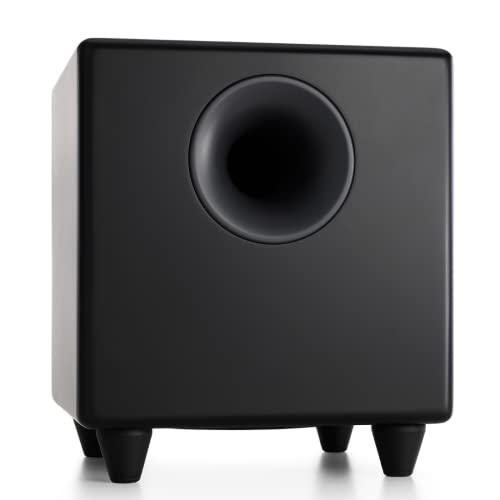
- 250-watt powered 8-inch subwoofer
- Down-firing design for deep bass
- Sleep mode and optional wireless adapter support
Best For: Compact home studios and multimedia setups
High-Output Room Filler

- 12-inch front-firing copper-spun woofer
- 400 watts of dynamic amplifier power
- Low-pass crossover, phase, line, and LFE controls
Best For: Large home theater or studio listening rooms
Space-Saving Bass Control
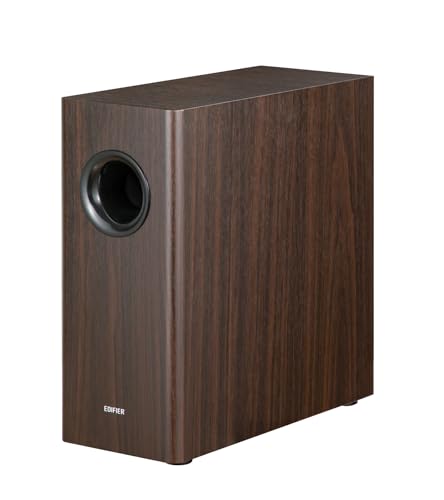
- 70W RMS power with 35Hz bass extension
- Adjustable crossover and phase controls
- Compact cabinet with included RCA cables
Best For: Desktop and bookshelf-speaker systems
Powerful Studio Bass
Rockville Rock Shaker 10-inch Powered Subwoofer

- 300W RMS and 600W peak output
- Adjustable volume, crossover, and phase
- RCA and high-level speaker connections
Best For: High-output studio and home theater setups
Deep Bass Detail
Klipsch R-100SW 10-inch Powered Subwoofer

- 32Hz–120Hz listed frequency response
- 300W peak all-digital amplifier
- RCA/LFE input with phase and crossover controls
Best For: Detailed low-end monitoring and multi-purpose systems
Compact Bass Solution
Sony SA-CS9M2 10-inch Active Subwoofer
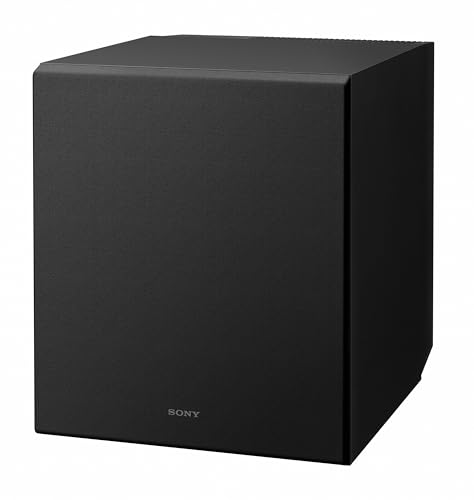
- 10-inch active design with 230W maximum output
- Bass-reflex ducts support low-frequency reproduction
- Shelf or floor mounting for flexible placement
Best For: Compact home studios and tight installation spaces
Balanced Low-End Control – Yamaha HS8S
The Yamaha HS8S is a practical choice for home studios that need extended low-end monitoring. Its 8-inch bass-reflex design, 150-watt amplifier, and 22Hz–150Hz response provide substantial bass coverage, while adjustable filtering and phase controls help integrate it with a monitoring setup.
Best For: Home-studio recording and live-music monitoring setups using wired XLR connections.
Pros:
- 8-inch driver with a 22Hz–150Hz frequency response
- Powerful 150-watt amplifier
- Adjustable low-cut and high-cut controls from 80Hz to 120Hz
- Phase switch helps with system integration
Cons:
- Large, heavy floor-standing cabinet at 33.6 pounds
- Wired connectivity rather than a wireless studio setup
- Controls may require more manual adjustment than app-based alternatives
For producers seeking controlled bass extension from a familiar studio-monitor brand, the HS8S offers useful crossover and phase adjustments in a substantial cabinet. It is best suited to a permanent monitoring position rather than a highly portable setup.
Flexible Studio Extension – ADAM Audio T10S
The ADAM Audio T10S is a compact active option for home studios that want clearer insight into low frequencies. Its 10-inch downward-facing woofer, adjustable crossover, phase rotation, and dedicated volume control make it easier to tailor the subwoofer to the room and monitor arrangement.
Best For: Studio recording setups, especially systems built around ADAM Audio T5V or T7V monitors.
Pros:
- 10-inch woofer with a 28Hz low-frequency specification
- Downward-facing woofer offers placement flexibility
- Adjustable crossover, phase rotation, and volume controls
- Subwoofer bypass connection supports quick mix comparisons
Cons:
- Wired RCA connectivity only
- Its controls require manual setup rather than wireless communication
- Designed specifically to complement ADAM T-Series monitors
The T10S stands out when placement flexibility and fast subwoofer bypass are priorities. Its calibration controls are useful for home studios, particularly when paired with compatible ADAM monitors.
Desktop-Friendly Connectivity – Mackie CR8SBT
The Mackie CR8SBT adds bass to compact home-studio and desktop monitoring systems without giving up convenient control. It connects to CR Series monitors through TRS or RCA, includes Bluetooth input, and comes with a desktop remote for volume adjustment and subwoofer bypass.
Best For: Desktop setups using Mackie CR Series monitors, computers, smartphones, or tablets.
Pros:
- 8-inch driver with 200 watts of maximum output power
- TRS, RCA, and Bluetooth connectivity
- Desktop remote provides volume and subwoofer-bypass control
- Adjustable crossover helps blend the sub with monitors
Cons:
- Specified frequency response begins at 40Hz
- Best-matched to Mackie CR Series monitors
- Heavy desktop-oriented cabinet at 32.4 pounds
For a home studio that doubles as a desktop listening space, the CR8SBT offers an appealing mix of wired monitor connections, Bluetooth playback, and remote control. Its straightforward crossover makes it easier to add bass without reaching behind the cabinet.
Deep, App-Tuned Bass – SVS SB-1000 Pro
SVS SB-1000 Pro Subwoofer (Black Ash) | 12-in Driver, 325 Watt RMS, Sealed Cabinet
Check Price On AmazonThe SVS SB-1000 Pro is a sealed subwoofer for home studios and listening systems that need deep, powerful bass in a relatively compact cabinet. Its 12-inch driver, 325-watt RMS amplifier, 20Hz frequency specification, and smartphone control app provide substantial output with convenient tuning options.
Best For: Compact rooms and hybrid studio or surround systems that benefit from deep bass and app-based adjustment.
Pros:
- 12-inch high-excursion driver with a 20Hz frequency specification
- 325 watts RMS and more than 820 watts peak power
- Smartphone app supports volume, presets, and in-room tuning
- Sealed, rigidly braced MDF cabinet is designed to reduce resonance
Cons:
- More oriented toward general stereo or surround systems than dedicated nearfield monitors
- Wireless control depends on Bluetooth-enabled devices and the app
- Its high-output design may be more than a small home studio requires
The SB-1000 Pro is the strongest choice here for deep, room-filling bass and convenient digital tuning. Its compact sealed enclosure helps it fit into smaller spaces, while the app makes setup and adjustments easier from the listening position.
Compact Studio Bass – Audioengine S8
The Audioengine S8 is a practical option for subwoofers for home studios where placement flexibility matters. Its powered 8-inch design delivers up to 250 watts, while the down-firing driver is intended to produce deep bass from a relatively compact enclosure.
Best For: Home studios, desktop audio setups, gaming, and compact home theater systems that need substantial bass without a large subwoofer.
Pros:
- 250-watt powered output and an 8-inch woofer.
- Compact, floor-standing design supports easier positioning.
- Down-firing driver produces deep, resonant bass.
- Sleep mode helps reduce power use when inactive.
Cons:
- Wired RCA connectivity is the primary connection method.
- Wireless operation requires the separate Audioengine W3 adapter kit.
- Its 30-pound weight may make frequent repositioning less convenient.
The S8 balances strong output with a manageable footprint, making it a versatile addition to a home studio or multimedia system. Consider it when you want powerful low end and flexible placement in one powered unit.
High-Output Room Filler – Klipsch R-12SW
The Klipsch R-12SW is a high-output choice among subwoofers for home studios, particularly for larger listening spaces that also handle movie playback. Its 12-inch front-firing woofer and digital amplifier provide up to 400 watts of dynamic power, with controls for crossover and phase adjustment.
Best For: Larger home theater or studio listening rooms where strong, room-filling bass is a priority.
Pros:
- Large 12-inch copper-spun front-firing woofer.
- All-digital amplifier delivers 400 watts of dynamic power.
- Low-pass crossover and phase controls support system integration.
- Line and LFE inputs work with many receivers.
Cons:
- The 20-by-20-by-17.75-inch cabinet requires substantial floor space.
- It uses wired connectivity with no wireless communication technology.
- Its listed use is primarily home theater rather than compact desktop setups.
The R-12SW emphasizes scale and output over compactness. Its larger driver and adjustable controls make it a strong candidate for a dedicated room, provided you have enough space and a compatible receiver or source.
Space-Saving Bass Control – Edifier T5s Powered Subwoofer
The Edifier T5s is a compact powered option for subwoofers for home studios, offering an 8-inch long-throw woofer, 70 watts RMS, and bass extension to 35Hz. Its adjustable low-pass filter and phase selector make it easier to blend with active speakers or a stereo system.
Best For: Desktop and bookshelf-speaker setups that need controlled bass, flexible RCA connections, and a space-saving cabinet.
Pros:
- 8-inch woofer provides bass down to a listed 35Hz.
- Adjustable 30Hz–160Hz low-pass filter and 0°/180° phase selector.
- Compact MDF cabinet with front-firing driver and right-firing port.
- Includes 3.5mm-to-RCA and RCA cables for setup flexibility.
Cons:
- 70 watts RMS is less output than the larger models in this roundup.
- Connections are wired RCA; wireless audio is not supported.
- Series connection without a sub output requires main speakers with line input.
The T5s is well suited to nearfield systems where cabinet size and integration controls matter more than maximum volume. Its auto-standby feature and included cables also make it a straightforward plug-and-play choice.
Powerful Studio Bass – Rockville Rock Shaker 10-inch Powered Subwoofer
The Rockville Rock Shaker is a practical pick among subwoofers for home studios when you want adjustable, room-filling low end for music, movies, or gaming. Its 10-inch woofer, built-in Class-D amplifier, and wired RCA connectivity make it adaptable to a variety of setups.
Best For: Home studios and entertainment systems needing powerful, customizable bass with flexible wired connections.
Pros:
- 10-inch woofer with 300W RMS and 600W peak output
- Volume, crossover, and phase controls support detailed setup adjustments
- RCA and high-level speaker inputs and outputs accommodate different systems
- MDF enclosure with a detachable foam grille offers a durable, finished appearance
Cons:
- Large floor-standing cabinet may require substantial placement space
- Wired connectivity only; no wireless communication technology
- Frequency-response information supplied is listed as 200Hz, which offers limited detail about the deepest bass range
The Rock Shaker stands out for its high output and broad connection options. It is worth considering if your studio or home theater has room for a sizable cabinet and you want hands-on control over the bass integration.
Deep Bass Detail – Klipsch R-100SW 10-inch Powered Subwoofer
The Klipsch R-100SW is a strong option among subwoofers for home studios when defined low-frequency extension and straightforward controls matter. Its front-firing 10-inch woofer reaches down to a listed 32Hz and pairs with an all-digital amplifier for music, movies, and gaming systems.
Best For: Home studios and multi-purpose listening spaces that want deep bass with simple RCA/LFE integration.
Pros:
- 10-inch front-firing spun-copper IMG woofer
- 32Hz–120Hz frequency response at -3dB
- Volume, low-pass crossover, and 0/180-degree phase controls
- Line-level LFE RCA inputs support broad receiver compatibility
Cons:
- At 26 pounds, it is relatively substantial to move
- Connectivity is wired through RCA rather than wireless
- Its floor-standing cabinet may not suit very compact workspaces
The R-100SW offers a balanced feature set for users who want measurable low-end extension and familiar setup controls. Its RCA/LFE inputs make it especially practical when connecting to a compatible receiver or studio-oriented playback chain.
Compact Bass Solution – Sony SA-CS9M2 10-inch Active Subwoofer
The Sony SA-CS9M2 is a practical choice among subwoofers for home studios where compact installation and controlled bass are priorities. Its active 10-inch design uses bass-reflex ducts to support low-frequency reproduction while helping suppress unwanted noise and vibration.
Best For: Smaller home studios and entertainment systems that need an easy-to-place active subwoofer.
Pros:
- 10-inch active subwoofer delivers powerful bass
- Bass-reflex ducts are designed to improve low-frequency reproduction
- Vibration suppression supports tighter, more accurate bass
- Suitable for shelf or floor mounting and installation in tight spots
Cons:
- Listed maximum output is 230 watts, lower than the Rockville option
- Supplied connectivity details identify a coaxial connection without broader input specifications
- Its 18.7-inch depth may still require careful placement despite the compact positioning claim
The SA-CS9M2 focuses on straightforward placement and bass control rather than extensive connection options. It makes the most sense for a smaller studio or home entertainment setup where vibration management and installation flexibility are important.
How We Picked These Subwoofers for Home Studios
We focused on models that can add useful low-frequency extension to a nearfield monitoring setup, while also considering practical concerns such as cabinet size, amplifier power, connection flexibility, crossover adjustment, and room suitability. The list includes dedicated studio subwoofers from Yamaha, ADAM Audio, and Mackie, along with consumer-oriented models that may work well in studios doubling as music-listening or home-theater spaces.
Because specifications and room behavior vary, wattage and driver size should not be treated as direct measures of accuracy. A well-integrated 8-inch sub can be more useful in a small room than a powerful 12-inch model.
Quick Comparison
| Best For | Recommended Options |
|---|---|
| Studio-focused monitoring | Yamaha HS8, ADAM Audio T10S, Mackie CR8SBT |
| Compact home studios | Edifier T5s, Audioengine S8 |
| Deeper, higher-output bass | SVS SB-1000 Pro, Klipsch R-12SW |
| Budget home-theater crossover | Rockville Rock Shaker, Klipsch R-100SW, Sony SA-CS9M2 |
Key Buying Factors for Subwoofers for Home Studios
Integration and Crossover Control
Look for adjustable crossover and level controls so the sub can blend with your monitors instead of creating a separate, boomy bass layer. Studio-specific models are often designed with monitor integration in mind, while consumer subwoofers may prioritize impact over neutrality.
Room Size and Placement
Small rooms commonly exaggerate bass, especially near walls and corners. Compact sealed designs can be easier to manage, but any subwoofer may require experimentation with placement and level. Leave enough ventilation around the cabinet and avoid placing it where desk vibrations can color what you hear.
Connections and Workflow
Confirm that the inputs and outputs match your audio interface, monitor controller, and speakers. Some models offer professional balanced connections; others use RCA or speaker-level connections. Bluetooth is convenient for casual listening but should not replace a dependable wired monitoring path.
Output Versus Accuracy
Choose enough headroom for clean playback at your normal working level, not simply the largest driver available. Excess output can make a small room harder to calibrate and may encourage decisions that do not translate to other systems.
Who Should Buy Which Subwoofers for Home Studios?
Choose a studio-focused model if mixing accuracy is the priority and you already use compatible nearfield monitors. Yamaha, ADAM Audio, and Mackie are the most natural starting points for a coherent monitoring system.
Choose a compact powered subwoofer if space is limited or your room also serves as a general listening area. The Edifier and Audioengine options offer a less imposing footprint, though you should verify connection compatibility.
Choose a larger consumer subwoofer if you want substantial bass for both music production and entertainment. SVS and Klipsch models can deliver greater low-end impact, but take extra care with placement, crossover, and calibration before trusting them for critical mixing.