The best cassette recorders for musicians make it easy to capture song ideas, rehearse away from a computer, and give performances a characterful tape workflow. The right model depends on whether you need portability, overdub-friendly connections, digital conversion, or simple voice-and-instrument recording.
Our roundup includes dual cassette decks, portable recorders, and compact tape players with microphones, auxiliary inputs, USB-C, SD, or MP3 conversion. Use the buying guide below to match features with your creative setup.
Best 10 Cassette Recorders for Musicians Picks for 2026
Studio Transfer Choice
TEAC W-1200B Dual Cassette Deck

- Dual decks support recording, playback, dubbing, and parallel recording.
- USB output enables up to 48kHz/16-bit computer archiving.
- Mic mixing, pitch control, counters, and remote included.
Best For: Home studios and cassette archiving
Portable MP3 Recorder

- Converts tapes to MP3 on an included 16GB SD card.
- Built-in microphone records ideas directly to digital storage.
- Rechargeable, lightweight design includes earphones and USB-C cable.
Best For: Mobile songwriting notes and tape conversion
Connectivity Workhorse
QFX RETRO-39BT Shoebox Recorder

- Records USB audio directly onto cassette tape.
- Routes cassette, Bluetooth, FM, mic, or line-in audio to USB.
- Portable handle, built-in speaker, and AC/battery power.
Best For: USB-to-tape experiments and portable use
Compact Tape Converter
SEMIER Small Cassette Recorder

- Converts tapes to MP3 on SD card or through USB and Audacity.
- Records via microphone to cassette, SD card, or computer.
- Lightweight design offers LCD, USB-C power, and AA-battery support.
Best For: Portable Type I tape conversion and practice ideas
Best One-Touch Recorder

- One-touch cassette recording
- Automatic level control
- Aux input and microphone options
Best For: Musicians wanting simple, flexible analog recording
Best Portable Cassette Recorder

- One-touch recording
- Free-standing and external microphone support
- AUX, headphones, and AC/DC operation
Best For: Casual musical ideas, lessons, and portable tape use
Best Battery-and-USB-C Option

- Built-in speaker and microphone
- AA battery or USB-C power
- 3.5 mm headphone output
Best For: Portable practice recordings and nostalgic tape playback
Simple Starter
Compact Coby Cassette Recorder

- Plays and records cassette tapes
- Built-in microphone for quick captures
- Battery or AC powered with headphone and aux connections
Best For: Musicians seeking simple, portable voice and idea recording
Flexible Input Pick
Deluxe Products Cassette Recorder

- Records through an external or built-in microphone
- Can record aux audio to cassette
- Includes AC adapter, microphone, and aux cable
Best For: Musicians needing microphone and device-based recording options
Hands-Free Choice
Coby Cassette Recorder with Standing Mic
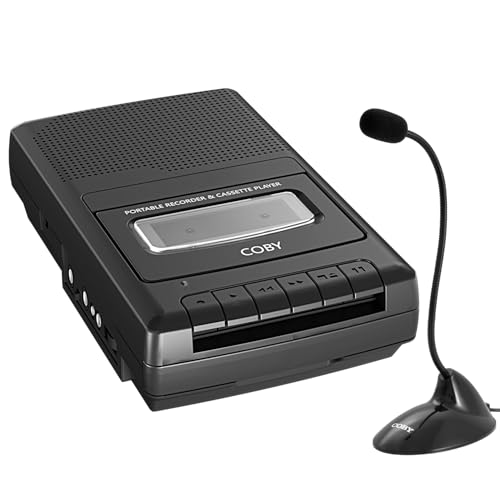
- Includes a detachable tabletop microphone
- Offers speaker, headphone, and aux listening
- Runs on batteries or AC power
Best For: Musicians wanting hands-free tabletop recording
Studio Transfer Choice – TEAC W-1200B Dual Cassette Deck
TEAC W-1200B Dual Cassette Deck with Recorder with USB Pitch Control Karaoke-Mic-in and Remote
Check Price On AmazonFor musicians seeking cassette recorders for musicians with flexible studio connectivity, the TEAC W-1200B combines two independent cassette decks, recording controls, microphone mixing, and USB computer output. It is especially useful when you want to work with tapes while also archiving recordings digitally.
Best For: Home studios, tape duplication, cassette archiving, and musicians who need a full-size deck with computer connectivity.
Pros:
- Records and plays on both independent cassette decks, with one-touch dubbing and parallel recording.
- USB output supports CD-quality digital recording to a PC or Mac at up to 48kHz/16-bit PCM.
- Includes microphone mixing, 12% pitch control, A-B repeat, Type I and Type II record/play support, and Type IV playback.
- Provides practical workflow features such as four-second record muting, return-to-zero, counters, and remote control.
Cons:
- Its dual-deck design is better suited to a stationary setup than portable recording.
- USB output is intended for digital recording to a computer rather than standalone file storage.
The W-1200B is the most studio-oriented option here, offering the broadest tape-handling and routing features. Choose it if reliable dubbing, microphone mixing, pitch adjustment, and cassette-to-computer transfers matter more than portability.
Portable MP3 Recorder – KLIM K7 Cassette Player
The KLIM K7 is a compact choice for cassette recorders for musicians who want simple tape playback and portable digital recording. Its built-in microphone can capture thoughts, meetings, or spontaneous music sessions, while the included 16GB card stores MP3 files without requiring a separate recording app.
Best For: Mobile songwriting notes, quick voice or idea capture, casual cassette listening, and basic tape-to-MP3 conversion.
Pros:
- Converts cassette tapes to MP3 files stored on the included 16GB SD card.
- Built-in microphone, speaker, and SD recording support make it useful for quick musical sketches.
- Rechargeable 1000mAh battery charges in about two hours and supports portable use.
- Includes earphones, USB-C cable, SD card, SD card reader, and a five-year assurance.
Cons:
- It does not record new audio onto cassette tapes.
- Its built-in microphone and speaker are geared toward convenience rather than a full studio recording setup.
The K7 makes sense when portability and straightforward MP3 storage are priorities. It is a handy idea recorder and tape converter, but musicians wanting to create cassette-based recordings should consider a model that explicitly records to tape.
Connectivity Workhorse – QFX RETRO-39BT Shoebox Recorder
For musicians comparing cassette recorders for musicians, the QFX RETRO-39BT stands out for its broad input and playback options. It can record digital audio from USB to cassette, route cassette, Bluetooth, FM radio, microphone, or line-in audio to USB, and operate from AC power or batteries.
Best For: Portable rehearsal spaces, simple cassette overdub experiments, USB-to-tape recording, and users who want Bluetooth and radio playback in one device.
Pros:
- Records digital audio from a USB drive directly onto cassette tape.
- Supports recording from cassette, Bluetooth, FM radio, microphone, or line-in to USB.
- Offers external microphone support, line-in/out connections, Bluetooth playback, and a built-in 3.5-inch speaker.
- Swivel handle and AC or four-C-battery operation make it practical for portable use.
Cons:
- The supplied notes do not specify advanced tape-deck controls such as pitch adjustment or noise reduction.
- Four C batteries are required for battery operation but are not included.
- Its 1.7-pound portable format may be less suitable than a full-size deck for detailed studio work.
The RETRO-39BT is a versatile, accessible recorder for musicians who value connectivity and quick cassette experiments. Its USB-to-cassette function is particularly useful for moving digital backing material onto tape, while the multiple inputs broaden its everyday usefulness.
Compact Tape Converter – SEMIER Small Cassette Recorder
The SEMIER recorder is a practical option among cassette recorders for musicians who want a small tape player with both recording and conversion features. It records through its built-in microphone, saves audio to an SD card, and can transfer cassette audio to a computer through USB using the included Audacity software.
Best For: Portable practice ideas, Type I cassette conversion, SD-card recording, and musicians who want USB-C or battery power.
Pros:
- Converts cassette audio to MP3 on the included 16GB SD card or through USB to a computer.
- Records through the built-in microphone to cassette, SD card, or computer as supported by the device.
- Compact 6.3-by-3.9-by-1.2-inch design weighs 0.52 pounds and includes an LCD.
- Offers a built-in 2W speaker, headphone jack, USB-C power, and four-AA-battery operation.
Cons:
- Supports Type I tapes but not Type IV or metal tapes.
- Its built-in microphone and 2W speaker are intended for convenience rather than advanced studio capture.
- Computer conversion requires using the included Audacity software and a USB connection.
The SEMIER is a strong fit for musicians who want a lightweight recorder and converter without committing to a larger deck. Its Type I limitation is important, but the combination of SD recording, USB transfer, and dual power options makes it flexible for everyday use.
Best One-Touch Recorder – Jensen MCR-100
For musicians seeking cassette recorders for musicians, the Jensen MCR-100 offers straightforward one-touch recording, a built-in condenser microphone, and automatic level control. Its auxiliary input also connects smartphones, tablets, and other audio sources, making it a flexible option for capturing ideas or playing back tapes.
Best For: Musicians who want simple portable recording with auxiliary-source flexibility.
Pros:
- One-touch recording simplifies capturing musical ideas and voice notes.
- Automatic level control helps maintain consistent recording volume.
- Includes a built-in microphone, external microphone jack, headphone jack, and retractable handle.
- Auxiliary input supports smartphones, tablets, and other audio sources.
Cons:
- The built-in microphone operates in mono.
- The included warranty is limited to 90 days.
- Its shoebox-style design is less compact than a pocket recorder.
The MCR-100 is a practical choice for musicians who value uncomplicated controls and multiple recording inputs. It is especially useful for rehearsals, demos, spoken notes, and analog playback rather than detailed multitrack production.
Best Portable Cassette Recorder – Proscan PRC124AMZ
PROSCAN Cassette Player & Recorder with Microphone, Headphone Jack, Aux in, Black
Check Price On AmazonThe Proscan PRC124AMZ is a sensible pick among cassette recorders for musicians who want a portable analog player and recorder with uncomplicated controls. It combines one-touch recording with a standing microphone, external microphone jack, headphone output, and AUX input.
Best For: Musicians and students who need a lightweight recorder for basic practice notes, interviews, or playback.
Pros:
- One-touch recording makes quick captures convenient.
- Automatic level control is designed to support clear, consistent recordings.
- Includes both a free-standing microphone and external microphone jack.
- Carry handle, headphone jack, AUX input, and AC/DC operation add flexibility.
Cons:
- It weighs about 1.74 pounds, so it is portable but not ultra-light.
- The supplied details describe analog operation rather than digital recording features.
- Its plastic construction may feel basic compared with more specialized audio equipment.
The Proscan focuses on accessible cassette recording instead of advanced music-production controls. It suits musicians who want to preserve quick ideas or use tapes casually, with the added convenience of external audio and microphone connections.
Best Battery-and-USB-C Option – Reshow 237A
The Reshow 237A brings a compact, retro-focused approach to cassette recorders for musicians. It plays tapes through a built-in speaker, records voice or musical ideas through its built-in microphone, and runs from two AA batteries or a USB-C cable for convenient home or travel use.
Best For: Musicians who want a simple tape recorder for practice snippets, voice memos, and portable listening.
Pros:
- Built-in microphone records ideas directly onto cassette tape.
- Built-in speaker supports shared listening, while the 3.5 mm jack enables private playback.
- Dual power options include two AA batteries or USB-C.
- Simple controls and a distinctive grey-white retro design are easy to use.
Cons:
- AA batteries are not included.
- The supplied details do not mention an auxiliary input or external microphone jack.
- Its built-in microphone is intended for straightforward recording rather than advanced studio capture.
The Reshow 237A is appealing for musicians who prefer tactile, immediate cassette recording and need flexible power options. Its built-in speaker and portable design make it well suited to rehearsals, rough demos, travel, and preserving spontaneous ideas.
Simple Starter – Compact Coby Cassette Recorder
For shoppers comparing cassette recorders for musicians, the Coby CVR-22 is a straightforward option for playing tapes and capturing basic audio. Its built-in microphone, headphone jack, aux input, and battery-or-AC operation make it practical for voice notes, rehearsal ideas, and casual listening.
Best For: Musicians who want an uncomplicated portable recorder for quick voice or song ideas.
Pros:
- Combines cassette playback and recording in one compact unit.
- Built-in microphone supports self-contained recording without extra equipment.
- Runs on four C batteries or AC power for flexible use.
- Includes headphone and aux connections for private or external listening.
Cons:
- Uses a built-in microphone rather than offering a supplied tabletop microphone.
- Its simple design is aimed at basic recording rather than advanced studio control.
The CVR-22 is a sensible entry-level pick when ease of use and portability matter more than extensive recording features. Large, clearly labeled controls also make it approachable for everyday users.
Flexible Input Pick – Deluxe Products Cassette Recorder
Among cassette recorders for musicians, the Deluxe Products DP-CASR-101 stands out for its included external microphone and aux cable. It can record to cassette from the microphone or from a compatible smartphone, laptop, or tablet with a headphone output.
Best For: Musicians who want to capture sound through either a microphone or an auxiliary device.
Pros:
- Includes an external microphone for recording voice or music demonstrations.
- Aux-in cable enables recording from compatible phones, laptops, and tablets.
- Built-in speaker supports convenient cassette playback.
- Includes an AC adapter and carrying handle for home or portable use.
Cons:
- Four C batteries are required for battery operation but are not included.
- Aux recording requires a source device with a headphone-out jack.
- The feature set remains focused on basic cassette recording and playback.
This model is a versatile choice for musicians who want more than a built-in microphone. The included accessories and auxiliary recording path make it useful for transferring or creating simple cassette-based material.
Hands-Free Choice – Coby Cassette Recorder with Standing Mic
For musicians evaluating cassette recorders for musicians, the Coby CVR42BK adds a detachable standing microphone for hands-free tabletop recording. It also offers cassette playback, a built-in speaker, headphone output, aux input, and battery-or-AC power in a familiar shoebox-style design.
Best For: Musicians who prefer a tabletop microphone for rehearsals, demonstrations, or spoken notes.
Pros:
- Detachable standing microphone supports hands-free recording.
- Built-in speaker, headphone jack, and aux input provide flexible listening options.
- Operates with four C batteries or AC power.
- Large Play, Stop, Record, Rewind, and Fast Forward buttons simplify operation.
Cons:
- It is a mono/stereo portable recorder rather than a multitrack music system.
- Its 1.8-pound weight is higher than the listed weight of some compact alternatives.
The CVR42BK is appealing when a musician wants a more deliberate recording setup than a built-in microphone provides. Its tabletop mic and accessible controls suit quick home projects, practice sessions, and straightforward tape recording.
How We Picked the Best Cassette Recorders for Musicians
We grouped these Cassette Recorders for Musicians by the jobs they are most likely to handle: capturing song sketches, recording rehearsals, digitizing older tapes, practicing on the move, and creating lo-fi demos. We prioritized useful recording controls, input flexibility, monitoring options, portability, and straightforward operation. Because cassette hardware varies widely, we also considered whether each format is better suited to musical production, casual recording, or tape playback.
Quick Comparison
- Best for a home setup: A full-size dual cassette deck offers stable operation, easier tape management, and useful connections.
- Best for portable ideas: Compact shoebox-style players with built-in microphones are convenient for rehearsals, lyrics, and riffs.
- Best for digitizing tapes: Models with USB-C, USB, SD-card, or MP3 conversion simplify transfers to a computer or memory card.
- Best for simple voice recording: One-touch portable recorders with built-in microphones keep the process quick.
Key Buying Factors for Cassette Recorders for Musicians
Recording Inputs and Monitoring
Check whether the recorder accepts an external microphone, auxiliary source, or instrument-level signal. A built-in microphone is useful for quick ideas, but an auxiliary input can provide cleaner recordings from a mixer, keyboard, or playback device. A headphone jack helps you monitor without disturbing others.
Tape Control and Recording Features
Look for dependable play, record, rewind, fast-forward, and pause controls. Automatic level control is common on basic portable units, while more advanced decks may offer pitch control or microphone inputs. If you plan to layer parts, verify that the model actually supports the recording workflow you need; many inexpensive players record only a single live source.
Portability and Power
Battery operation is valuable for rehearsals, field recordings, and travel. AC power is preferable for extended sessions at home. Consider handle design, speaker placement, chassis size, and whether the controls are easy to operate while holding the unit.
Digital Conversion and Connections
USB, USB-C, and SD-card features can make it easier to archive cassette recordings, but conversion quality and included software may vary. Treat these features as convenience tools rather than substitutes for a dedicated audio interface when maximum fidelity matters.
Who Should Buy Which Cassette Recorders for Musicians?
Choose a full-size deck if you want a more permanent home recording or playback station with broader connectivity. Choose a compact shoebox recorder if speed and portability matter more than studio-style control. Choose a digital-conversion model if your priority is moving old tapes to a computer or SD card. Choose a basic one-touch recorder for lessons, lyric ideas, interviews, or casual rehearsal notes. Musicians seeking multitrack production, precise level control, or reliable stereo recording should also consider a modern audio interface alongside a cassette recorder.