A dependable USB Wi-Fi adapter can give a desktop or laptop faster wireless performance without replacing its internal network hardware. The right model can also improve range, reduce connection issues, and add newer wireless standards to an older Windows PC.
We compare 10 Wi-Fi adapters for Windows across speed, wireless generation, antenna design, USB connectivity, Bluetooth support, and everyday compatibility so you can choose the best fit for your setup.
Best 10 Wifi Adapters for Windows Picks for 2026
Best Value Wi-Fi 5 Pick
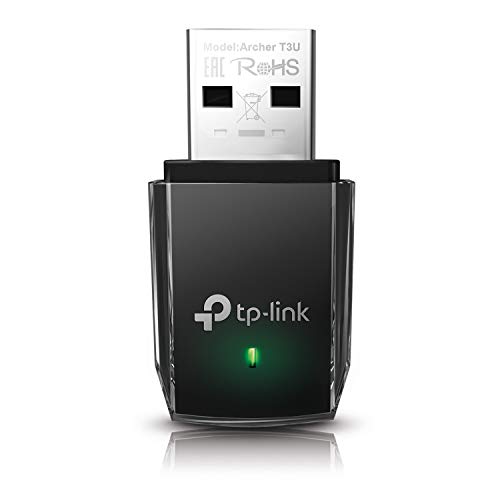
- AC1300 dual-band Wi-Fi
- USB 3.0 compact design
- Supports Windows 7 through 11
Best For: Affordable, portable Windows upgrades
Best Wi-Fi 7 Upgrade

- Wi-Fi 7 speeds up to 6.5Gbps
- Tri-band with 6GHz support
- Adjustable antenna and cradle
Best For: Windows 11 power users
Best Long-Range Budget Option

- Dual-band AC1300 connectivity
- Two external 5dBi antennas
- Supports Windows 7 through 11
Best For: Budget-minded users needing stronger reception
Best Wi-Fi 6 Balance

- AX1800 speeds up to 1.8Gbps
- Dual-band Wi-Fi 6 support
- Flippable high-gain antenna
Best For: Windows 10 and 11 desktop upgrades
Best Long-Range Performance
BrosTrend AX1800 USB WiFi 6 Adapter

- Up to 1,800 Mbps dual-band speeds
- Two 5 dBi antennas improve reception
- Includes USB 3.0 extension cable
Best For: Windows 10/11 PCs needing stronger range
Best Budget Range Upgrade
TP-Link AC600 USB WiFi Adapter

- Dual-band speeds up to 600 Mbps
- Adjustable 5 dBi high-gain antenna
- Supports Windows XP through Windows 11
Best For: Older Windows PCs needing affordable WiFi
Best High-Gain Pick
Tenda AX900 WiFi 6 USB Adapter

- 6dBi omnidirectional antenna
- Built-in Windows drivers
- AP mode supports up to eight devices
Best For: Improving reception on Windows desktops and laptops
Best Performance Upgrade
TP-Link Archer TX20U Plus AX1800

- AX1800 dual-band WiFi 6
- USB 3.0 one-meter cable
- WPA3, MU-MIMO, and OFDMA support
Best For: High-throughput Windows 10 and 11 setups
Best Compact Value
Tenda AX900 Compact USB Adapter

- Compact WiFi 6 design
- Up to 900 Mbps dual-band rating
- Built-in Windows setup file
Best For: Short-range everyday wireless use on Windows PCs
Best Value Wi-Fi 5 Pick – TP-Link Archer T3U
The TP-Link Archer T3U is a practical choice among wifi adapters for windows when you need a compact dual-band upgrade for a desktop or laptop. It supports up to AC1300 speeds, uses USB 3.0, and works with Windows 11, 10, 8.1, 8, 7, and XP.
Best For: Windows users who want an affordable, portable dual-band adapter with broad OS compatibility.
Pros:
- Dual-band AC1300 connectivity supports 2.4GHz and 5GHz networks.
- USB 3.0 interface is designed for faster data transfer than USB 2.0.
- Compact design and MU-MIMO support help suit everyday portable use.
- Supports a wide range of Windows versions and select macOS versions.
Cons:
- Its listed macOS support ends at version 10.14.
- It does not offer newer Wi-Fi 6 or Wi-Fi 7 capabilities.
Choose the Archer T3U if compatibility, portability, and sensible AC1300 performance matter more than the latest wireless standard.
Best Wi-Fi 7 Upgrade – NETGEAR Nighthawk A9000
The NETGEAR Nighthawk A9000 is a high-end option among wifi adapters for windows, bringing Wi-Fi 7 connectivity to compatible Windows 11 computers through USB 3.0. Its tri-band BE6500 design adds 6GHz support and includes an adjustable external antenna with a cradle.
Best For: Windows 11 users seeking the fastest listed adapter for demanding gaming, streaming, and video calls.
Pros:
- Wi-Fi 7 tri-band performance is rated up to 6.5Gbps.
- Supports 2.4GHz, 5GHz, and 6GHz bands for flexible connectivity.
- Flippable high-gain antenna and included cradle help optimize reception.
- Works with existing Wi-Fi routers, mesh systems, and ISP equipment.
Cons:
- Compatibility is limited to Windows 11.
- Actual speeds vary with the router, connected devices, and internet plan.
- It requires a USB 3.0 port for the intended performance.
The A9000 makes the most sense for a modern Windows 11 system and network that can take advantage of Wi-Fi 7 and the 6GHz band.
Best Long-Range Budget Option – Nineplus AC1300 Adapter
The Nineplus AC1300 is a budget-focused choice among wifi adapters for windows, pairing dual-band wireless with two external 5dBi antennas. It supports Windows 11, 10, 8.1, 8, 7, and XP and connects through USB 3.0 for desktop or laptop use.
Best For: Windows users who need an inexpensive adapter with external antennas for improved reception over distance.
Pros:
- AC1300 dual-band speeds reach up to 867Mbps on 5GHz and 400Mbps on 2.4GHz.
- Two 5dBi high-gain antennas are designed to improve signal reception.
- USB 3.0 supports faster transfers and remains backward compatible with USB 2.0.
- Includes installation media and offers stated online setup support.
Cons:
- It does not support macOS, Chromebook, or Linux.
- Windows 7 requires manual driver installation.
- Setup may require downloading drivers if automatic detection fails.
This Nineplus model is a sensible fit for older Windows PCs or rooms where external antennas are more useful than a miniature dongle design.
Best Wi-Fi 6 Balance – NETGEAR Nighthawk A7500
The NETGEAR Nighthawk A7500 offers a balanced Wi-Fi 6 upgrade for Windows 10 and 11 computers. This USB 3.0 adapter supports dual-band AX1800 speeds up to 1.8Gbps and uses a flippable high-gain antenna to help improve reception across the room.
Best For: Windows 10 or 11 desktop users who want a stable Wi-Fi 6 connection without replacing an internal network card.
Pros:
- Wi-Fi 6 dual-band performance is rated up to 1.8Gbps.
- Smart dual-band connectivity helps balance the 2.4GHz and 5GHz bands.
- Flippable high-gain antenna is designed for stronger range.
- Supports WPA3 and works with routers, mesh systems, and ISPs.
Cons:
- Compatibility is limited to Windows 10 and Windows 11.
- It requires USB 3.0 for the intended high-speed performance.
- It lacks the 6GHz band available on newer Wi-Fi 7 adapters.
The A7500 is a strong middle-ground choice when you want newer Wi-Fi 6 features and external-antenna flexibility without moving to Wi-Fi 7.
Best Compact 2-in-1 Pick – TP-Link AX900 Nano WiFi 6 Adapter
If you want one of the most discreet WiFi adapters for Windows, the TP-Link Archer TX10UB Nano combines WiFi 6 and Bluetooth 5.3 in a tiny USB 2.0 design. It supports Windows 10 and 11, includes pre-loaded drivers, and offers up to 900 Mbps across its dual bands.
Best For: Windows desktop users who want a compact WiFi upgrade with built-in Bluetooth connectivity.
Pros:
- Combines dual-band WiFi 6 with Bluetooth 5.3 in one adapter
- Supports up to 287 Mbps on 2.4 GHz and 600 Mbps on 5 GHz
- Includes WPA3 security, OFDMA, and MU-MIMO support
- Nearly invisible nano design with pre-loaded drivers
Cons:
- USB 2.0 interface may limit performance compared with USB 3.0 adapters
- Bluetooth functionality is intended for PC use and may require disabling internal wireless functions
The TX10UB Nano is a practical choice when desk space and simplicity matter. Its speed is below larger AX1800 adapters, but its combination of WiFi and Bluetooth makes it especially versatile for everyday Windows setups.
Best Long-Range Performance – BrosTrend AX1800 USB WiFi 6 Adapter
Among WiFi adapters for Windows, the BrosTrend AX1800 stands out for users who need stronger reception away from the router. Its two 5 dBi external antennas, USB 3.0 connection, and included 3.3-foot extension cable help you position the adapter for a better signal.
Best For: Windows 10 and 11 desktops located several rooms or floors from the router, especially for streaming, gaming, and video calls.
Pros:
- Offers up to 1,201 Mbps on 5 GHz and 574 Mbps on 2.4 GHz
- Two high-gain antennas support stronger reception through walls and floors
- USB 3.0 and extension cable allow flexible placement
- Supports OFDMA, MU-MIMO, and WPA3
Cons:
- Supports Windows 10 and 11 only
- Linux is not supported
- Larger desktop-style design is less portable than a nano adapter
This is the strongest performance-focused option in the group. The external antennas and positioning flexibility make it a better fit for difficult signal environments, though its operating-system limits and larger footprint should be considered before buying.
Best Budget Range Upgrade – TP-Link AC600 USB WiFi Adapter
The TP-Link Archer T2U Plus is a straightforward choice for shoppers comparing WiFi adapters for Windows on a budget. Its dual-band AC600 connection, adjustable high-gain antenna, and broad Windows compatibility make it useful for upgrading older desktops and laptops.
Best For: Older Windows PCs that need a simple dual-band connection and improved reception without WiFi 6 requirements.
Pros:
- Supports up to 433 Mbps on 5 GHz and 200 Mbps on 2.4 GHz
- Adjustable 5 dBi antenna can be aimed toward the router
- Works with Windows 11, 10, 8.1, 8, 7, and XP
- Supports both 2.4 GHz and 5 GHz bands
Cons:
- Uses older 802.11ac technology rather than WiFi 6
- Driver download may be required for installation
- Listed speeds are lower than the newer adapters in this roundup
The Archer T2U Plus is best when compatibility and affordability matter more than maximum speed. Its adjustable antenna can help with reception, while the broad Windows support makes it a sensible upgrade for aging systems.
Best High-Gain Pick – Tenda AX900 WiFi 6 USB Adapter
If you need wifi adapters for windows with stronger reception than a typical internal antenna, the Tenda U11 Pro combines WiFi 6 performance with a large 6dBi omnidirectional antenna. It supports Windows 7, 10, and 11 and includes built-in drivers for a simpler setup.
Best For: Windows desktop or laptop users who want improved signal reception, dual-band connectivity, and support for streaming, gaming, or video calls.
Pros:
- WiFi 6 AX900 speeds support 4K streaming, gaming, and video conferencing.
- 6dBi omnidirectional antenna is designed for stronger, more stable reception.
- Built-in drivers support plug-and-connect installation on Windows 7, 10, and 11.
- Supports AP mode for sharing a PC’s connection with up to eight devices on 5GHz.
Cons:
- Uses a USB 2.0 interface.
- Windows-focused compatibility does not list macOS or Linux support.
- The tall antenna design may be less convenient for highly portable setups.
The U11 Pro is a practical choice when reception and coverage matter more than compact size. Its high-gain antenna and Windows compatibility make it especially useful for desktops placed away from the router.
Best Performance Upgrade – TP-Link Archer TX20U Plus AX1800
Among wifi adapters for windows, the TP-Link Archer TX20U Plus stands out for its AX1800 rating, USB 3.0 connection, and adjustable high-gain antenna. It supports Windows 10 and 11 and is designed for demanding downloads, streaming, and gaming.
Best For: Windows 10 and 11 desktop or laptop users with a WiFi 6 router who want higher available throughput and flexible antenna placement.
Pros:
- AX1800 dual-band speeds reach up to 1201 Mbps on 5GHz and 574 Mbps on 2.4GHz.
- USB 3.0 cable and adjustable antenna allow more flexible placement.
- Supports WPA3 security, MU-MIMO, and OFDMA for modern networks.
- One-meter cable can help position the adapter for improved reception.
Cons:
- Compatible only with Windows 10 and 11; macOS and Linux are not supported.
- Actual speeds depend on the connected router and network conditions.
- A WiFi 6 or newer router is recommended to make the most of its capabilities.
The Archer TX20U Plus is the strongest performance-oriented option in this group, particularly for users already equipped with a WiFi 6 router. Its broader feature set comes with narrower operating-system compatibility.
Best Compact Value – Tenda AX900 Compact USB Adapter
The compact Tenda U11 is a straightforward option among wifi adapters for windows. Its dual-band WiFi 6 connection supports up to 900 Mbps combined speeds, while the built-in setup file helps Windows 7, 10, and 11 users get connected without a separate driver download.
Best For: Windows desktop and laptop users who want a small, affordable-style WiFi 6 adapter for everyday browsing, streaming, and gaming near the router.
Pros:
- WiFi 6 dual-band connection reaches up to 600 Mbps on 5GHz and 286 Mbps on 2.4GHz.
- Compact design suits desktops and laptops.
- Built-in drivers simplify installation on Windows 7, 10, and 11.
- Can receive WiFi and transmit a shared connection through AP functionality.
Cons:
- Recommended placement is within 30 feet of the router for the strongest signal.
- Uses USB 2.0.
- Not compatible with macOS, Linux, Windows 8/8.1, or Windows XP.
The U11 makes sense when you want a compact Windows-compatible adapter without the larger external antenna of the U11 Pro. It is best suited to relatively short-range connections and everyday wireless use.
How We Picked the Best Wifi Adapters for Windows
We focused on USB adapters that offer practical compatibility with Windows PCs, useful dual-band performance, and clear advantages for different budgets and network setups. The selection includes affordable Wi-Fi 5 models, newer Wi-Fi 6 options, and a Wi-Fi 7 adapter for users with modern routers and demanding workloads.
We also considered advertised wireless speeds, antenna configuration, USB connection type, physical size, Bluetooth availability, and suitability for desktops versus portable systems. Actual performance depends on your router, internet plan, distance, interference, Windows drivers, and USB port.
Quick Comparison
| Best For | Recommended Type | What to Look For |
|---|---|---|
| Basic browsing and streaming | AC600 or AC1300 | Dual-band support and dependable Windows drivers |
| Gaming and busy home networks | Wi-Fi 6 AX1800 | USB 3.0, external antennas, and strong 5 GHz performance |
| Compact laptop use | Nano Wi-Fi 6 | Small design, low protrusion, and easy setup |
| New Wi-Fi 7 networks | Wi-Fi 7 USB adapter | Compatible router, modern Windows support, and sufficient USB bandwidth |
Key Buying Factors for Wi-Fi Adapters for Windows
Wireless Standard and Speed
Wi-Fi 5 adapters remain suitable for everyday browsing, video calls, and streaming. Wi-Fi 6 models are generally better for crowded networks and multiple connected devices, while Wi-Fi 7 makes the most sense when your router and home network already support the newer standard. Advertised speeds are theoretical combined rates, not guaranteed internet speeds.
Antennas and Range
External or high-gain antennas can help desktop users position the adapter for a cleaner signal, especially when the PC is under a desk or far from the router. Compact nano adapters are easier to carry but may sacrifice some range and signal flexibility.
USB Port and Placement
USB 3.0 is preferable for faster adapters because it provides more bandwidth than USB 2.0. A short extension cable can move the adapter away from metal cases and improve reception. Check available clearance if the PC sits against a wall or inside a tight workspace.
Drivers and Bluetooth
Before buying, confirm Windows version support and check whether current drivers are available from the manufacturer. Some adapters also add Bluetooth, which can free a desktop from needing a separate Bluetooth dongle.
Who Should Buy Which Wifi Adapters for Windows?
Choose an affordable AC600 or AC1300 model for basic connectivity, older routers, and modest internet plans. Pick a Wi-Fi 6 AX900 adapter for a compact upgrade or an AX1800 model with external antennas when range, gaming, downloads, and several active devices matter more. A Wi-Fi 7 adapter is best for forward-looking buyers who already own a compatible router and want the highest potential wireless throughput.
For most desktop users, prioritize external antennas, USB 3.0, and stable Windows drivers over the largest number printed on the box. Laptop users who value portability should favor a low-profile nano design, while users replacing both wireless and Bluetooth functionality should choose a model that includes Bluetooth support.