The best compact samplers make it easier to capture sounds, build beats, and perform without carrying a full studio setup. This roundup compares portable samplers, grooveboxes, controllers, and hybrid music-making tools for different workflows and budgets.
From dedicated sample engines to compact workstations and performance-focused devices, these picks cover quick beat creation, detailed sound design, live effects, and computer-based production.
Best 10 Compact Samplers Picks for 2026
Best Portable MPC Sampler

- Standalone battery-powered design with speaker and microphone
- 16 MPC pads and fast sample-chopping workflow
- Built-in kits, effects, and USB-C audio/MIDI
Best For: Portable beatmaking and approachable MPC-style sampling
Best Compact Rhythm Sampler Alternative

- TR-808, TR-909, and TR-606 drum sounds
- TB-303 bass with hands-on 16-step sequencing
- USB-C audio/MIDI and performance-focused rhythm tools
Best For: Portable electronic rhythms, bass lines, and acid-style jams
Best Compact Granular Sampler

- Four parallel stereo tracks with creative processing chains
- Granular engine with up to 128 grains and a four-second buffer
- Scenes, macros, and flexible modulation for performance
Best For: Experimental textures, granular sound design, and live manipulation
Best Compact Synth for Sample-Based Setups

- SH-101-inspired micro polysynth design
- Expressive basses, leads, and wave manipulation
- Onboard sequencing with hands-on controls
Best For: Adding synth parts and sequences beside a compact sampler
Best Standalone Pick
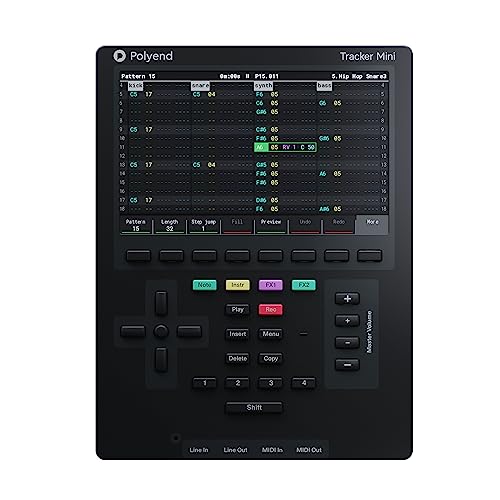
- Standalone portable audio workstation
- 4,000 preloaded samples included
- Wavetable and granular synthesis
Best For: Mobile producers seeking an all-in-one sampler workstation
Best Performance Sampler

- 17 velocity-sensitive RGB pads
- 16 GB storage and 32-voice polyphony
- Portable power and extensive effects
Best For: Live beatmakers and hands-on sample performers
Best Budget Pad Controller

- Eight velocity-sensitive backlit pads
- SD card and USB MIDI connectivity
- Lightweight 0.45 kg design
Best For: Simple sample triggering and compact MIDI setups
Best Pocket Sampler

- Built-in mic for fast sample capture
- Chop, step sample, and resample workflows
- Granular controls plus chromatic playback
Best For: Portable sound design and hands-on sampling
Best Sampler Controller

- 25 mini keys and eight MPC pads
- Assignable knobs, display, and DAW controls
- Includes instruments and production software
Best For: Computer-based sample triggering and beat making
Best Live Sampler Control

- 64 RGB pads for clip and sample launching
- Nine faders for mixer and device control
- Drum and Note modes for Ableton Live
Best For: Ableton Live clip-based performances
Best Portable MPC Sampler – MPC Sample
The Akai Professional MPC Sample is one of the most approachable compact samplers for beatmakers who want the familiar MPC workflow in a portable, standalone format. Its battery, speaker, microphone, built-in effects, and microSD storage make it practical for creating without a computer.
Best For: Beginners, beatmakers, finger drummers, DAWless creators, and producers who want portable sampling with sequencing and effects.
Pros:
- Standalone, rechargeable-battery operation with built-in speaker and microphone
- 16 MPC pads, color display, sample chopping, timestretching, and resampling
- More than 100 factory kits plus four internal effects processors and 60 effect types
- USB-C audio/MIDI, MIDI connectivity, line I/O, and microSD storage
Cons:
- MIDI DIN connection requires a separate 1/8-inch-to-DIN adapter
- Its 2.4-inch display may feel compact for detailed editing
For shoppers seeking compact samplers that can move from an idea to a finished groove without a DAW, the MPC Sample is a particularly flexible choice. It emphasizes speed and accessibility while retaining enough connectivity and effects for studio or live use.
Best Compact Rhythm Sampler Alternative – AIRA Compact T-8
The Roland AIRA Compact T-8 is a pocket-sized rhythm and bass machine rather than a traditional sample recorder. For compact samplers shoppers who mainly want fast pattern creation, it combines TR-808, TR-909, and TR-606 drum sounds with TB-303-style bass and hands-on sequencing.
Best For: Beginners, electronic musicians, acid-jam enthusiasts, and performers who prioritize drums, bass, and immediate pattern programming.
Pros:
- Authentic Roland-inspired TR drum and TB-303 bass sounds using ACB technology
- Classic 16-step TR-REC sequencing with up to 64 user patterns and 32 steps per pattern
- Probability, sub-step, last-step, velocity, fills, and pattern-shift tools support expressive rhythms
- USB-C audio/MIDI plus audio, MIDI, sync, and AIRA Link connectivity
Cons:
- It is a rhythm and bass machine, not a general-purpose audio sampler
- Its compact workflow is focused more on pattern performance than detailed sample editing
The T-8 is a strong fit when “sampling” is being considered broadly as part of a compact music-making setup, but buyers needing microphone recording, sample chopping, or granular manipulation should look elsewhere. Its strength is immediate, hands-on rhythm creation.
Best Compact Granular Sampler – S4 Sculpting Sampler
The S4 Sculpting Sampler is designed for sound transformation rather than simple loop playback. Among compact samplers, it stands out with four parallel stereo tracks, granular processing, modulation, scenes, macros, and a deep chain of creative audio devices for evolving textures and live performance.
Best For: Experimental producers, sound designers, texture-focused performers, and musicians who want granular sampling with extensive modulation.
Pros:
- Four parallel stereo tracks with Material, Granular, Filter, Color, and Space processing
- Granular engine offers up to 128 grains, a four-second buffer, and detailed movement controls
- Supports real-time recording, overdub, sound-on-sound loops, varispeed, and external processing
- Scenes, macros, four modulators per track, and performance-oriented master controls
Cons:
- Its deep sound-design feature set may be less immediate for beginners
- The supplied notes identify an auxiliary connector but do not specify broader I/O details
The S4 is the most specialized option here for turning recordings into shifting, atmospheric material. It makes sense for buyers who value granular exploration, modulation, and live manipulation more than a conventional pad-based beatmaking workflow.
Best Compact Synth for Sample-Based Setups – AIRA Compact S-1 Tweak Synth
Roland AIRA Compact S-1 Tweak Synth | Ultra-Portable Micro Polysynth. Advanced Tools
Check Price On AmazonThe Roland AIRA Compact S-1 Tweak Synth is not a sampler, but it can complement compact samplers with basses, leads, and sequenced synth parts. Its SH-101-inspired character, wave manipulation, hands-on controls, and portable format make it useful for adding original sounds around sampled material.
Best For: Producers who want a small polysynth to pair with a sampler, especially for basses, leads, sequencing, and experimental electronic parts.
Pros:
- Portable micro polysynth inspired by the Roland SH-101
- Provides snappy basses, expressive leads, and futuristic wave-manipulation options
- Includes onboard sequencing and performance features for hands-on creation
- Designed to suit both beginners and experienced synth explorers
Cons:
- It does not replace a dedicated sampler for recording and manipulating external audio
- The supplied notes do not detail its audio, MIDI, or storage connections
Choose the S-1 as a companion rather than a primary sampling device. It is a practical addition to a compact sampler setup when the goal is to add playable synth tones, evolving sequences, and Roland-inspired character.
Best Standalone Pick – Polyend Tracker Mini
The Polyend Tracker Mini is a strong choice among compact samplers for producers who want a portable, standalone workstation rather than a pad-only controller. It combines sample playback with wavetable and granular synthesis, and includes 4,000 preloaded samples for getting started quickly.
Best For: Mobile producers who want an all-in-one tracker-style workstation with extensive onboard sound resources.
Pros:
- Standalone design with portable construction
- Includes 4,000 preloaded samples
- Supports wavetable and granular synthesis
- Includes USB and microSD-to-USB-A connectivity accessories
Cons:
- Its tracker-based workstation approach may take time to learn
- At 2.7 pounds, it is not the lightest option in this group
The Tracker Mini stands out when sound design flexibility and standalone operation matter more than a simple trigger-pad workflow. Its included sample library and synthesis features give it room to grow beyond basic sample playback.
Best Performance Sampler – Roland SP-404MKII
The Roland SP-404MKII is one of the most capable compact samplers for performance-focused beatmaking. Its 17 velocity-sensitive RGB pads, fast workflow, onboard effects, and flexible power options make it suitable for creating and manipulating samples away from a traditional studio setup.
Best For: Beatmakers and live performers who want expressive pads, deep sample editing, sequencing, and effects in a portable unit.
Pros:
- 17 velocity-sensitive RGB pads with low-latency response
- 16 GB internal storage, 32-voice polyphony, and 160 samples per project
- Extensive effects including Vinyl Simulator, DJFX Looper, and Lo-fi options
- Can run from USB-C, six AA batteries, a mobile battery, or an AC adapter
Cons:
- Its broad feature set may be more than beginners need
- Listed weight and dimensions are greater than some ultra-compact samplers
The SP-404MKII is the most complete performance-oriented option here. It balances fast editing and sequencing with a substantial effects collection, making it especially compelling for hands-on beat creation and live resampling.
Best Budget Pad Controller – Akai MPX8
The Akai Professional MPX8 is a straightforward option for shoppers seeking compact samplers with a small footprint and essential pad triggering. It loads 16-bit mono WAV files from an SD or SDHC card, while USB MIDI and standard MIDI connections let it control software or external gear.
Best For: Beginners, mobile setups, and musicians who need an inexpensive eight-pad sample trigger with MIDI control.
Pros:
- Eight backlit, velocity- and pressure-sensitive pads
- Very light at 0.45 kg and only 1.2 inches high
- Supports SD/SDHC sample loading and USB MIDI
- Includes balanced outputs and a headphone output
Cons:
- Internal playback is limited to 16-bit mono WAV samples
- Maximum sample assignment is 30 MB
- Sample editing requires the PC or Mac kit editor
The MPX8 is best viewed as a compact sample pad and MIDI controller rather than a full production workstation. Its low weight, simple layout, and broad connectivity make it practical for triggering sounds in small live or studio rigs.
Best Pocket Sampler – Roland AIRA Compact P-6
The Roland AIRA Compact P-6 is a strong choice for musicians seeking compact samplers with serious sound-design depth. Its built-in microphone, chopping, step sampling, resampling, chromatic playback, and granular controls support everything from quick field captures to detailed loop creation.
Best For: Portable sample creation, experimental sound design, and performers who want an onboard keyboard and hands-on controls.
Pros:
- Built-in microphone enables quick sample capture without external equipment.
- Chop, step sampling, resampling, and chromatic polyphonic playback offer flexible workflows.
- Granular parameters, filters, and envelopes provide detailed sound shaping.
- USB-C connectivity and included P-6 Sample Tool software support computer-based editing and transfers.
Cons:
- Its small onboard keyboard and compact size may not suit players who prefer a larger performance interface.
- The extensive granular controls may require a learning period for beginners.
With a pocket-friendly 7.44-inch width and a 10.72-ounce weight, the P-6 is built for mobile production. It is the most self-contained option here for capturing and transforming samples without relying on a separate controller.
Best Sampler Controller – Akai MPK Mini IV
The Akai Professional MPK Mini IV is a compact MIDI controller rather than a standalone sampler, but it fits sampler-based setups that need pads, keys, and software control. Its 25 velocity-sensitive mini keys, eight MPC pads, assignable knobs, display, and DAW integration make it a versatile companion for triggering samples and building beats.
Best For: Producers who want compact samplers or computer-based sample instruments controlled from one portable keyboard-and-pad unit.
Pros:
- Combines 25 velocity-sensitive keys with eight velocity- and pressure-sensitive MPC pads.
- Eight assignable knobs, a full-color screen, and push/turn encoder provide hands-on control.
- Chord, Scale, and Arpeggiator modes can speed up beat making and musical idea generation.
- Includes software instruments, Ableton Live Lite 12, a Splice trial, and learning resources.
Cons:
- It requires a computer or compatible mobile setup and is not a standalone sampler.
- The mini keys may be less suitable for players who need a full-size keyboard.
USB-C connectivity, MIDI Out, and support for Mac, Windows, and mobile setups make the MPK Mini IV easy to add to a portable production rig. Choose it when sample triggering and DAW control matter more than recording samples directly into the hardware.
Best Live Sampler Control – Akai APC Mini MK2
The Akai Professional APC Mini MK2 is a compact Ableton Live controller for launching loops, vocals, and melodic samples in performance. Its 8×8 RGB pad matrix, nine faders, and dedicated Drum and Note modes make it especially useful for clip-based sampling workflows in the studio or onstage.
Best For: Ableton Live users who need compact samplers complemented by reliable clip launching, mixer control, and live sample performance.
Pros:
- Sixty-four RGB pads provide clear visual feedback for launching clips and samples.
- Eight assignable faders plus a master fader support hands-on mixer and device control.
- Drum mode integrates with Ableton Drum Rack, while Note mode includes Smart Scale View.
- USB-powered plug-and-play design needs no batteries or power adapter.
Cons:
- It is designed around Ableton Live and does not function as a standalone sampler.
- Its USB connection and software-focused workflow may be less useful for hardware-only setups.
The APC Mini MK2 is a practical choice when sampling means arranging and performing clips inside Ableton Live. Its compact 9.48-by-8.28-inch footprint keeps the control surface portable while still providing a full 8×8 launch grid and dedicated fader control.
How We Picked These Compact Samplers
We focused on portability, sampling capability, sequencing flexibility, hands-on control, connectivity, and suitability for real-world beatmaking or performance. The selection includes standalone instruments, compact grooveboxes, sample pads, and MIDI controllers because “sampler” workflows vary widely. Some devices are designed to capture and manipulate audio directly, while others control software or complement a larger setup.
We also considered how quickly each product supports a useful workflow. A compact device should offer practical access to recording, triggering, editing, sequencing, or effects without creating unnecessary menu diving.
Quick Comparison
| Best For | Look For |
|---|---|
| Standalone beatmaking | Built-in sequencing, sampling, storage, and battery or flexible power options |
| Live performance | Responsive pads, pattern switching, effects, and reliable audio output |
| Sound design | Granular processing, modulation, resampling, and detailed sample editing |
| Computer-based production | USB MIDI, DAW integration, and dependable controller mapping |
| Portable practice | Small footprint, simple controls, and low setup time |
Key Buying Factors for Compact Samplers
Sampling and Storage
Check whether the device records through a microphone, line input, USB, or another source. Sample memory and transfer options matter if you plan to build a large library, while quick resampling is especially useful for live sets and experimental sound design.
Sequencing and Performance Controls
Look at track count, pattern length, timing tools, automation, and note or pad sensitivity. A compact sampler can be powerful but still feel limiting if its sequencing system does not match your style.
Connectivity and Workflow
USB, MIDI, audio inputs, headphone outputs, and synchronization options determine how easily the unit fits into a larger rig. Controllers generally depend on a computer or external sound source, whereas standalone products can be more immediate away from a desk.
Size, Power, and Durability
For travel, consider weight, battery operation, charging, storage protection, and the accessibility of important controls. A slightly larger unit may be worthwhile if it provides better pads, a clearer display, or more comfortable editing.
Who Should Buy Which Compact Samplers?
Choose a standalone sampler or workstation if you want to create complete ideas without a computer. Performance-oriented musicians should prioritize fast triggering, effects, pattern control, and dependable outputs. Producers focused on unusual textures should look for granular processing, modulation, resampling, and polyphonic sample playback.
If you already produce in a DAW, a compact pad or keyboard controller may be the most efficient choice. Pad controllers suit drum programming and clip launching, while a small keyboard is better for melodies, chords, and instrument plugins. For beginners, prioritize an intuitive layout and a workflow you will use regularly over the longest feature list.