The best samplers for home studios make it easier to turn field recordings, drum hits, vocals, and loops into complete musical ideas. The right choice depends on whether you prioritize hands-on beatmaking, deep sound design, portability, or computer-based production.
We compare 10 standout options across hardware and software, covering beginner-friendly instruments, compact performance samplers, grooveboxes, and flexible studio tools.
Best 10 Samplers for Home Studios Picks for 2026
Portable MPC Sampling

- Standalone battery-powered sampler with speaker and microphone
- 16 pads, chopping tools, timestretching, and onboard effects
- USB-C, MIDI, and microSD support for flexible setups
Best For: Portable beatmaking and beginner-friendly MPC sampling
Touchscreen Tabletop Studio
Blackbox Compact Sampling Studio

- Touchscreen interface for recording, editing, and sequencing
- Creates songs without a computer
- Connects with synths, drum machines, and other hardware
Best For: Compact tabletop production and computer-free workflows
Performance Beatmaking

- 17 velocity-sensitive RGB pads and OLED waveform editing
- Advanced chopping, sequencing, resampling, and effects
- Flexible USB-C, battery, mobile-battery, and AC power
Best For: Performance-focused sampling and expressive beatmaking
Controller-Based Sampling

- 25 velocity-sensitive mini keys and eight MPC-style pads
- Eight knobs, pitch/modulation joystick, and arpeggiator
- Includes MPC Beats, instruments, and sound content
Best For: Computer-based home studios using DAWs and virtual instruments
Portable Creativity

- Built-in mic for quick sample capture
- Chopping, step sampling, and resampling tools
- Granular controls with USB-C software integration
Best For: Portable sample creation and hands-on sound design
Complete Production Hub
- Audio recording and MIDI support
- Multitrack production on Mac and Windows
- Designed for PC and laptop workflows
Best For: Computer-based home-studio recording and production
Deep Sound Sculpting

- Four parallel stereo sampling tracks
- Granular engine with up to 128 grains
- Scenes, macros, modulation, and performance effects
Best For: Experimental sound design and live sample manipulation
Reggae Groove Workstation

- 400+ handcrafted sounds
- Synced loops and synth engines
- Eight remixable tracks and dub siren
Best For: Reggae, dub, and bass-focused home production
Performance Sampling Hub

- 29 DSP effects
- Built-in mic and battery power
- Pads, sequencer, and computer imports
Best For: Hands-on beatmaking and portable performances
Beginner-Friendly Portable Sampler
CASIO SXC-1 Standalone Sampler

- 16-track step sequencer
- 64GB storage and 15-minute sampling
- Built-in mic, USB audio, and app imports
Best For: Beginners making and arranging songs on the go
Portable MPC Sampling – Akai MPC Sample
For producers seeking samplers for home studios, the Akai MPC Sample is a compact standalone option with a familiar MPC workflow. Its battery, speaker, microphone, pads, effects, and microSD storage support sampling and beatmaking without requiring a computer.
Best For: Beginners, beatmakers, finger drummers, and DAWless creators who want a portable all-in-one sampler.
Pros:
- Standalone, battery-powered operation with built-in speaker and microphone
- 16 MPC pads, color display, sample chopping, timestretching, and resampling
- Four internal effects processors with 60 effect types
- USB-C audio/MIDI, MIDI connectivity, and microSD storage support
Cons:
- MIDI DIN connection requires an adapter, which is not included
- Its compact controls and 2.4-inch display may feel limited for complex arrangements
The MPC Sample stands out when portability and immediate hands-on beatmaking matter most. It can also connect with a broader MPC setup, making it a flexible entry point for home-studio sampling.
Touchscreen Tabletop Studio – Blackbox Compact Sampling Studio
The Blackbox Compact Sampling Studio is a focused choice for samplers for home studios when you want computer-free recording, editing, and sequencing in a small tabletop unit. Its touchscreen workflow also supports integration with synths, drum machines, and other hardware.
Best For: Hardware-focused producers who want a compact touchscreen sampler and sequencer for tabletop setups.
Pros:
- Records, edits, and sequences through a touchscreen interface
- Supports computer-free song creation
- Can integrate synths, drum machines, and other devices
- Includes USB connectivity, MIDI adapters, microSD card, and power accessories
Cons:
- The compact interface may not suit users who prefer full-size physical controls
- Its workflow is centered on touchscreen operation
Blackbox makes a strong case for a minimalist hardware studio. Choose it if a fast, touchscreen-led workflow and external gear integration are more important to you than extensive onboard physical controls.
Performance Beatmaking – Roland SP-404MKII
For samplers for home studios that also need live-performance potential, the Roland SP-404MKII combines rapid sampling, sequencing, and effects with expressive pads. Its OLED waveform display, internal storage, and multiple power options make it suitable for both studio sessions and portable beatmaking.
Best For: Performance-oriented beatmakers and producers who want fast sample manipulation, resampling, and effects.
Pros:
- 17 velocity-sensitive RGB pads and an OLED display for visual editing
- Includes auto-chop, BPM detection, pitch shifting, envelopes, and resampling
- 32-voice polyphony, 160 samples per project, and 16 internal projects
- Offers USB-C, AA battery, mobile-battery, and AC power options
Cons:
- Its extensive performance features may require a learning period
- At 2.6 pounds, it is less lightweight than some compact controllers
The SP-404MKII is a strong fit for producers who value tactile performance and fast creative manipulation. Its broad effects collection and flexible power options make it especially useful for sample-based home-studio work that may move onto a stage.
Controller-Based Sampling – Akai MPK Mini MK3
Unlike standalone samplers for home studios, the Akai MPK Mini MK3 is a USB MIDI controller designed to operate with a computer and DAW. It gives producers mini keys, MPC-style pads, knobs, an arpeggiator, and included software for triggering and shaping samples inside compatible music-production setups.
Best For: Home-studio producers who use a computer-based DAW and want an affordable controller for samples, virtual instruments, and beats.
Pros:
- 25 velocity-sensitive mini keys and eight backlit MPC-style pads
- Eight assignable knobs plus pitch and modulation control
- Built-in arpeggiator with adjustable resolution, range, and modes
- Includes MPC Beats, virtual instruments, sound content, and software support
Cons:
- It is not a standalone sampler and requires a USB-compatible computer or device
- Mini keys may be less suitable for players who prefer full-size keyboards
The MPK Mini MK3 is best viewed as the computer-based option in this roundup. It is a practical way to control sample libraries, plugins, and DAW instruments when you want a compact setup rather than an independent sampling workstation.
Portable Creativity – Roland AIRA Compact P-6
The Roland AIRA Compact P-6 is a strong choice among samplers for home studios when compact size and hands-on sound design matter. It includes a built-in microphone for quick recording, sample chopping, step sampling, chromatic playback, and internal resampling for building custom loops.
Best For: Home producers who want a portable sampler for capturing sounds, shaping samples, and creating loops without needing extensive external equipment.
Pros:
- Built-in microphone supports quick sample capture.
- Chop, step-sampling, chromatic, and polyphonic playback offer flexible sample creation and performance.
- Granular controls, dedicated filters, and envelopes provide detailed sound shaping.
- USB-C connectivity and P-6 Sample Tool software support sample import, export, and editing.
Cons:
- Its compact onboard controls may be less convenient for highly complex arrangements.
- Advanced software editing requires a macOS or Windows computer.
The P-6 balances portability with substantial sampling depth, making it particularly appealing for producers who want immediate sound capture and experimental processing in a small format.
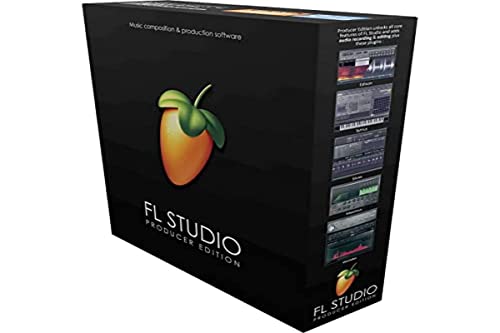
Complete Production Hub – FL Studio 20 Producer Edition
FL Studio 20 Producer Edition is a software-based option for samplers for home studios, combining audio recording with MIDI and multitrack production on compatible Mac and Windows computers. It is designed for producers who want sampling and recording inside a broader digital music workstation.
Best For: Home-studio users who prefer computer-based production with audio recording, MIDI support, and multitrack workflows.
Pros:
- Supports audio recording and MIDI multitrack recording.
- Compatible with Windows 7, 8, 10 or later and macOS 10.11 or later.
- Works with PCs and laptops for an integrated computer-based setup.
Cons:
- It is software rather than a dedicated hardware sampler.
- Requires a compatible computer for installation and use.
Choose FL Studio 20 Producer Edition if your sampling needs are part of a larger DAW workflow. It is less suited to standalone, hands-on sampling but more appropriate for producers who want recording and MIDI production in one computer-based environment.
Deep Sound Sculpting – S4 Sculpting Sampler
The S4 Sculpting Sampler is built for advanced sound transformation, making it a compelling option among samplers for home studios. Its four parallel stereo tracks combine recording, granular processing, filtering, distortion, modulation, scenes, macros, and spatial effects for detailed composition and live performance.
Best For: Sound designers and performers who want extensive granular processing, evolving textures, modulation, and multi-track sample manipulation.
Pros:
- Four parallel stereo tracks support layered sample-based workflows.
- Granular processing offers up to 128 grains with detailed control over pitch, movement, size, and distribution.
- Each track includes Material, Granular, Filter, Color, and Space processing stages.
- Scenes, macros, and four assignable modulators per track support expressive performance control.
Cons:
- Its extensive feature set may require more time to learn than a simpler sampler.
- The 850 g, 11.02-by-7.09-by-3.54-inch design is less pocketable than compact sampler options.
The S4 is the most sound-design-focused choice in this selection. Its combination of parallel stereo tracks, granular tools, modulation, and performance-oriented scene controls makes it well suited to evolving textures and experimental studio work.
Reggae Groove Workstation – EP-40 RIDDIM Reggae Sampler
For home studios focused on rhythm, bass, and quick arrangement, the teenage engineering EP-40 RIDDIM is a compact sampler and sequencer built around reggae-inspired sounds. It combines synced loops, more than 400 handcrafted sounds, synth engines, a dub siren, and eight remixable tracks.
Best For: Producers who want a focused reggae and dub songwriting tool with integrated sampling and sequencing.
Pros:
- Includes more than 400 handcrafted sounds and a reggae sound library.
- Combines synced loops with bass and lead synth engines.
- Offers a dub siren and eight remixable tracks from top producers.
Cons:
- The specialized reggae-focused sound set may be less versatile for other genres.
- The plastic body may not feel as substantial as heavier studio hardware.
The EP-40 RIDDIM is a particularly focused choice among samplers for home studios. Its workflow favors immediate beat-making and remixing, especially when reggae, dub, and bass-driven production are central to your setup.
Performance Sampling Hub – Roland SP-404A Sampler
The Roland SP-404A is a flexible option for samplers for home studios, with battery operation, a built-in microphone, 12 trigger pads, and hands-on effects. It also supports computer audio imports, pattern sequencing, and a bundled SD card with additional samples and one-shots.
Best For: Beatmakers and performers who want portable sampling, pad-based triggering, and extensive real-time effects.
Pros:
- Includes 29 DSP effects, covering filters, delays, voice effects, subsonic processing, and looping.
- Supports sampling through the built-in mic and battery-powered operation.
- Provides 12 trigger pads, a Sub Pad, quantized sequencing, and shuffle.
- Imports audio from a computer through free Mac and Windows software.
Cons:
- The TR-8 sequencing integration requires TR-8 system version 1.50 or later.
- Its 2.6-pound weight and larger dimensions make it less compact than pocket-sized samplers.
With broad effects, multiple input options, and performance-oriented controls, the SP-404A suits producers who want sampling to be an active part of beat creation. Its portability also makes it useful beyond a fixed home-studio desk.
Beginner-Friendly Portable Sampler – CASIO SXC-1 Standalone Sampler
CASIO Portable STANDALONE Sampler SXC-1 Sampler for Beginners to Make and Play Songs Easily
Check Price On AmazonThe CASIO SXC-1 is a compact standalone sampler for beginners building a home studio around simple song creation. It offers built-in and external recording, USB audio, 64GB of storage, 16 simultaneous sounds, and a 16-track step sequencer in a battery-powered design.
Best For: Beginners who want an approachable portable sampler for recording, arranging, and playing short musical ideas.
Pros:
- Records through its built-in microphone, external analog input, or USB audio.
- Provides up to 15 minutes of sampling time and 64GB of built-in storage.
- Supports 16 tracks, 16 steps, and one to eight segments in the sequencer.
- Imports WAV, FLAC, and MP3 files through the CASIO Sampler App.
Cons:
- The 3.5 mm stereo mini connections are less suitable for professional balanced studio routing.
- It has a single tone bank with 16 tones, despite offering 80 banks overall.
- The included startup guide may not be in English.
The SXC-1 stands out for its small size, straightforward standalone operation, and broad file support. It is a practical entry point for samplers for home studios, particularly when portability and easy song sketching matter more than extensive hardware connectivity.
How We Picked the Best Samplers for Home Studios
We evaluated each sampler for workflow, sound-shaping capability, sequencing, connectivity, portability, and suitability for a home production setup. We also considered how easily each option supports common tasks such as chopping loops, creating beats, resampling effects, arranging patterns, and performing without extensive menu diving.
The list includes dedicated hardware samplers, compact grooveboxes, a MIDI controller that complements software sampling, and a full digital audio workstation. Because home studios vary widely, the goal is not to identify one universal winner but to match different tools with different creative approaches and budgets.
Quick Comparison
| Best For | Recommended Pick | Why It Stands Out |
|---|---|---|
| All-around beatmaking | Akai Professional MPC Sample Portable Sampler | Hands-on sampling and sequencing in a familiar MPC-style workflow |
| Compact standalone production | Blackbox Compact Sampling Studio | Small footprint with focused sampling and arrangement features |
| Live performance and effects | Roland SP-404MKII | Fast resampling, performance controls, and extensive effects |
| Software-based production | FL Studio 20 Producer Edition | Full computer-based sequencing, editing, and mixing environment |
| Portable experimentation | Roland AIRA Compact P-6 | Travel-friendly sampling with a compact performance-oriented design |
| Beginner-friendly exploration | CASIO SXC-1 | Simple standalone approach for learning sampling fundamentals |
Key Buying Factors for Samplers for Home Studios
Workflow and Controls
Consider whether you prefer pads, knobs, a touchscreen, a computer mouse, or a combination of controls. Hardware samplers are often more immediate for beatmaking and performance, while software usually offers deeper editing and arrangement capabilities.
Standalone or Computer-Based Operation
Standalone units can reduce setup time and encourage focused, hands-on sessions. Software and MIDI-controller combinations are generally better when you already work primarily in a DAW or need detailed editing, plug-ins, and large project arrangements.
Sampling and Sound-Design Features
Look for the functions you will actually use: time stretching, slicing, granular processing, polyphonic sampling, modulation, resampling, effects, and pattern sequencing. More features are not automatically better if they slow down your creative process.
Storage, Connectivity, and Portability
Check internal storage, sample-transfer methods, audio inputs and outputs, MIDI, USB, and power requirements. Compact battery-powered models suit mobile work, while larger units may offer better connectivity for microphones, instruments, and external gear.
Budget and Learning Curve
Allow room for accessories such as headphones, cables, memory cards, or a computer. Beginners may benefit from a simpler interface, whereas experienced producers may prefer advanced modulation, granular tools, or performance effects.
Who Should Buy Which Samplers for Home Studios?
Choose the MPC Sample Portable Sampler if you want a versatile, hardware-centered beatmaking workflow. The Blackbox is a strong fit for producers who need a compact sampling studio, while the SP-404MKII or SP-404A suits performers who value resampling and expressive effects.
The Roland P-6 and teenage engineering EP–40 are appealing for portable, characterful experimentation and loop-based performance. S4 is better suited to users specifically interested in granular processing, modulation, and stereo sampling. FL Studio 20 is the practical choice for producers who want a complete computer-based production environment, especially when paired with a capable MIDI controller such as the Akai MPK Mini MK3.
Finally, the CASIO SXC-1 makes sense for beginners seeking a straightforward introduction to sampling. Before buying, decide where you want the sampler to fit: at the center of your studio, beside your computer, or in a portable performance setup. That decision will usually matter more than the longest feature list.