The best compact audio equalizers give you more control over bass, mids, treble, and system balance without requiring a full-size processor or complicated installation. This roundup covers compact options for car audio, home stereo, recording, streaming, and DJ-style setups.
Before buying, compare band count, inputs and outputs, signal level, mounting format, and the controls your system actually needs. A small equalizer can make a noticeable difference when it matches the rest of your audio chain.
Best 10 Compact Audio Equalizers Picks for 2026
Car Tune-Up Choice
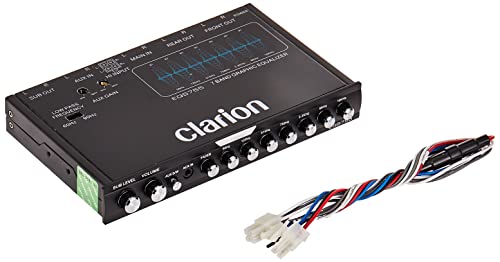
- Seven-band car audio control
- Six-channel 8V RCA outputs
- Front 3.5mm and rear RCA aux inputs
Best For: Compact vehicle systems with subwoofer control
Desktop Hi-Fi Pick

- Four-band tone control
- Passive bypass mode
- Compact 5 x 3.5-inch chassis
Best For: Home and desktop listening setups
High-Output Car Pick
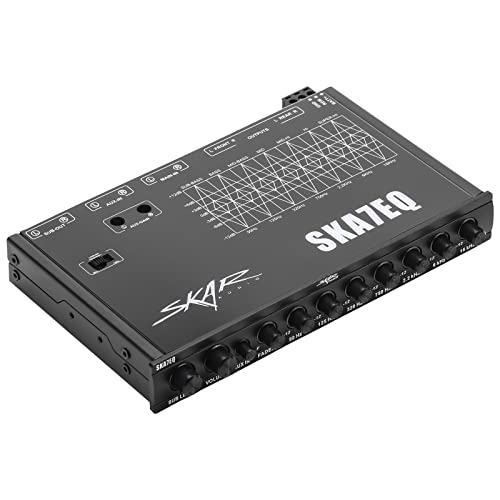
- Seven-band ±12dB adjustment
- Up to 7V RCA output
- Includes mounting brackets and hardware
Best For: RCA-equipped car audio systems
Professional Rack Choice

- 15 bands per stereo channel
- Low-cut and bypass switches
- XLR and 1/4-inch TRS connections
Best For: Live, studio, DJ, and rack-based systems
Best Half-Din Car Control

- Four adjustable EQ bands
- Front, rear, and subwoofer outputs
- Compact half-Din chassis
Best For: Car audio systems needing dedicated subwoofer and fader controls
Best Compact Two-Channel Desktop Option

- Seven-band ±12dB adjustment
- 3.5mm interface with microphone support
- Dual-channel aluminum-alloy design
Best For: Recording, streaming, podcasting, and headphone setups
Best Multi-Output Car System

- Seven-band ±12dB graphic EQ
- Four inputs and six outputs
- Dedicated subwoofer level and frequency controls
Best For: Multi-amplifier car audio installations
Best Home Stereo Pick

- Seven-band control from -6dB to +6dB
- XLR and RCA input/output flexibility
- Compact aluminum housing with low stated distortion
Best For: Home stereo systems needing balanced and RCA connectivity
Best for Factory-Radio Upgrades

- Seven bands with ±12dB adjustment
- Built-in high-level input converter
- Six RCA outputs with subwoofer control
Best For: Space-limited car-audio amplifier upgrades
Best for Multi-Channel Car Audio

- Seven-band control with ±12dB range
- Front, rear, and subwoofer RCA outputs
- Two stereo inputs plus auxiliary gain and fader
Best For: 12V car systems with multiple amplified channels
Car Tune-Up Choice – Clarion EQS755
The Clarion EQS755 is a compact car-focused option for shoppers comparing compact audio equalizers. Its 1/2-DIN chassis combines seven-band adjustment with front and rear auxiliary inputs, high-level speaker inputs, and dedicated front, rear, and subwoofer outputs.
Best For: Car audio systems needing flexible signal routing, subwoofer control, and a compact 1/2-DIN installation.
Pros:
- Seven adjustable bands from 50Hz to 16kHz.
- Provides six-channel, 8-volt RCA outputs for front, rear, and subwoofer connections.
- Includes a front 3.5mm auxiliary input, rear RCA auxiliary input, and high-level inputs.
- Built-in low-pass filtering, fader control, and ground-loop isolation add setup flexibility.
Cons:
- Its 1/2-DIN chassis is designed specifically for vehicle installations.
- The low-pass filter offers only 60Hz or 90Hz selections.
- Blue illumination may not match every dashboard.
With extensive car-audio connectivity in a one-inch-high chassis, the EQS755 is a practical pick when compact size and system integration matter more than home-audio flexibility.
Desktop Hi-Fi Pick – Schiit Loki Mini+
The Schiit Loki Mini+ offers a streamlined approach to compact audio equalizers for home listening. Its four tone bands cover bass, low midrange, upper midrange, and treble, while passive bypass lets you compare the adjusted and unaltered signal.
Best For: Desktop and home audio listeners who want simple tone shaping with a transparent bypass option.
Pros:
- Four bands at 20Hz, 400Hz, 2kHz, and 8kHz.
- Provides up to ±12dB adjustment at the bass and treble bands.
- Includes a 100% passive bypass setting.
- Uses LC filtering designed for very low hiss.
Cons:
- Offers fewer bands than the car-focused and rack-mount options here.
- The included power adapter is intended for 115VAC countries.
- Its inductors may pick up hum near other electronics.
The Loki Mini+ is a focused, compact solution for listeners who want broad tonal adjustments without a complicated control layout. Placement may require care if hum occurs.
High-Output Car Pick – Skar Audio SKA7EQ
The Skar Audio SKA7EQ is a compact car-oriented equalizer for shoppers who want seven-band control and high-voltage preamp outputs. It supports main and auxiliary RCA inputs, variable auxiliary gain, and front, rear, and subwoofer outputs in a 1/2-DIN format.
Best For: Car audio upgrades needing adjustable EQ, high-voltage RCA output, and dedicated subwoofer-level control.
Pros:
- Seven fully adjustable bands with ±12dB control.
- High-voltage RCA outputs reach a stated maximum of 7V.
- Includes selectable main and auxiliary RCA inputs with variable aux gain.
- Offers fader control, variable subwoofer level, and a 60Hz/120Hz low-pass switch.
Cons:
- The 1/2-DIN design is intended for vehicle installations.
- Its listed dimensions are larger than the compact chassis description may suggest.
- It requires installation hardware and system wiring rather than simple plug-in use.
For a vehicle system built around multiple RCA zones, the SKA7EQ combines useful routing controls with strong output capability. The included brackets and hardware help support installation.
Professional Rack Choice – EQ-215S 15-Band EQ
The EQ-215S is a professional-format alternative among compact audio equalizers, using a 1U rack-mount chassis for home audio, DJ, studio, and live applications. Dual stereo channels provide 15 bands each, plus low-cut and bypass controls for noise management and system checks.
Best For: Rack-based audio installations, studios, live systems, and DJ setups requiring extensive dual-channel adjustment.
Pros:
- Provides 15 adjustable bands on each stereo channel.
- Offers ±12dB per-band control with selectable ±6dB to ±12dB gain and decay ranges.
- Low-cut filtering helps attenuate wind noise, floor rumble, and electrical hum.
- Supports XLR balanced and 1/4-inch TRS unbalanced inputs and outputs.
Cons:
- At nearly 19 inches wide, it is less compact than desktop or car equalizers.
- It requires a corded 110V AC power source.
- Its 1U rack-mount design may be excessive for basic home listening.
The EQ-215S makes the most sense when detailed, dual-channel control and professional connections outweigh portability. Its bypass and low-cut switches are especially useful during setup and troubleshooting.
Best Half-Din Car Control – Planet Audio PEQ10
The Planet Audio PEQ10 is a practical pick for drivers seeking compact audio equalizers with dedicated front, rear, and subwoofer control. Its half-Din chassis includes four adjustable EQ bands, a variable subwoofer filter, fader, gain, and phase controls.
Best For: Car audio installations that need compact, hands-on control over multiple outputs and a subwoofer.
Pros:
- Four adjustable bands at 75Hz, 200Hz, 2kHz, and 20kHz
- Front, rear, and subwoofer outputs with dedicated subwoofer level control
- Variable 45Hz–180Hz subwoofer filter and phase selector
- Half-Din design with night illumination
Cons:
- Offers four EQ bands rather than the seven bands found on some alternatives
- Designed for car audio installations, not a general-purpose desktop setup
With its compact form factor and broad connection options, the PEQ10 is well suited to straightforward vehicle upgrades. The included one-year parts-and-labor warranty adds useful support for an installed component.
Best Compact Two-Channel Desktop Option – 7 Band Sound Equalizer
This seven-band unit is a flexible choice among compact audio equalizers for recording, streaming, podcasting, and headphone use. It supports dual-channel operation, ±12dB EQ adjustment, and a 3.5mm interface in a freestanding aluminum-alloy enclosure.
Best For: Desktop users who want adjustable sound for two-channel recording, streaming, calls, or headphone listening.
Pros:
- Seven EQ bands spanning 60Hz to 15kHz
- ±12dB control range for each equalization band
- 3.5mm input and headphone-compatible output with microphone support
- Operates from a 5V–12V DC supply
Cons:
- Freestanding design does not specify a rack or vehicle mounting format
- Power is supplied through DC input rather than described as battery-powered operation
The broad seven-band layout gives you more detailed tonal adjustment than a basic four-band model. Its dual-channel design and headphone circuitry make it especially adaptable for small desktop audio setups.
Best Multi-Output Car System – Stetsom EQX764
The Stetsom EQX764 is built for more involved car audio systems that need compact audio equalizers with extensive routing. It combines seven-band graphic adjustment with four inputs, six outputs, dedicated subwoofer controls, and up to 10 VRMS of line-driver output.
Best For: Multi-amplifier car audio installations requiring separate front, rear, and subwoofer signal management.
Pros:
- Seven EQ bands from 50Hz to 16kHz with ±12dB adjustment
- Four input channels and six output channels
- Dedicated subwoofer level and frequency controls
- Up to 10 VRMS output to help drive amplifiers and avoid noise
Cons:
- More inputs and controls may be unnecessary for simple systems
- Its car-audio-focused design requires a suitable installation
For system builders connecting multiple sources and amplifiers, the EQX764 offers significantly more routing flexibility than a basic preamp equalizer. Blue-lit controls and front/rear fader adjustment also support easier tuning during use.
Best Home Stereo Pick – Douk Audio T7
The Douk Audio T7 is a practical choice among compact audio equalizers for home stereo systems, amplifiers, and computer speakers. Its seven adjustable bands, balanced XLR connectivity, and RCA connections make it useful for correcting speaker or room-related tonal issues. Note that it does not include a volume control.
Best For: Home listeners who want precise tonal adjustment with XLR and RCA system compatibility.
Pros:
- Seven frequency bands with a -6dB to +6dB adjustment range.
- Provides both XLR and RCA inputs and outputs simultaneously.
- Reports a signal-to-noise ratio above 104dB and distortion as low as 0.003%.
- Compact aluminum-alloy housing helps resist interference.
Cons:
- No volume control knob; it outputs at the rated level.
- Its frequency bands are intended for home audio rather than vehicle-specific controls.
The T7 stands out when balanced connections and straightforward seven-band control matter most. It is a focused preamp-style equalizer for listeners who already manage volume elsewhere in their system.
Best for Factory-Radio Upgrades – Timpano TPT-EQ7
The Timpano TPT-EQ7 is one of the more installation-friendly compact audio equalizers for car systems, especially when space is limited. It combines seven-band adjustment with a built-in high-level input converter, subwoofer control, crossover functions, and six-channel RCA output.
Best For: Car-audio installations adding amplifiers to a factory radio or working in a tight mounting location.
Pros:
- Seven adjustable bands with a broad plus-or-minus 12dB range.
- Built-in speaker-wire-to-RCA converter supports factory-radio integration.
- Offers subwoofer level control, crossover functionality, and six-channel output.
- Slim 7.25-inch by 1-inch profile suits space-constrained installations.
Cons:
- Designed for 10V car-audio systems rather than home stereo setups.
- Uses analog RCA connectivity and requires a corded electrical power source.
With high-level input support and multiple RCA outputs, the TPT-EQ7 is geared toward system expansion rather than simple desktop listening. Its slim form factor is a strong advantage for custom vehicle installations.
Best for Multi-Channel Car Audio – Taramps TEQ 7.4
The Taramps TEQ 7.4 is a compact audio equalizer built for 12V car systems that need separate front, rear, and subwoofer outputs. Its seven-band graphic controls, two stereo inputs, auxiliary gain, and fader control provide a practical way to shape a multi-channel vehicle setup.
Best For: Car-audio users managing front, rear, and subwoofer channels from a compact RCA equalizer.
Pros:
- Seven-band graphic equalizer with adjustments from -12dB to +12dB.
- Two RCA stereo inputs and three stereo outputs for front, rear, and subwoofer channels.
- Wide stated 6Hz-55kHz frequency response and signal-to-noise ratio above 100dB.
- Blue lighting adds a visible styling element to the installation.
Cons:
- Requires a 12V system and suitable DC power installation.
- Should be mounted in a ventilated, accessible location and away from speakers.
- RCA-only connectivity may not suit systems requiring balanced inputs or outputs.
The TEQ 7.4 is best matched with car systems that benefit from dedicated channel routing and strong adjustment range. Its compact enclosure helps placement, but installation should follow the ventilation and vibration guidance.
How We Picked These Compact Audio Equalizers
We selected models across the main use cases for Compact Audio Equalizers: car installations, home stereo systems, recording and streaming setups, and professional or DJ-style racks. We considered the number of EQ bands, input and output flexibility, line-level performance, installation format, control layout, and features such as auxiliary inputs, fader controls, subwoofer crossover, high-voltage outputs, and balanced connections.
Because these products serve different systems, the most expensive or feature-rich option is not automatically the best choice. Compatibility and intended use matter more than the number of sliders alone.
Quick Comparison
| Use case | What to prioritize | Best-fitting features |
|---|---|---|
| Car audio | Installation and signal control | Half-DIN size, RCA and high-level inputs, multiple outputs, line driver |
| Home stereo | Clean integration | RCA or XLR connectivity, simple controls, low noise |
| Recording or streaming | Flexible routing | Two-channel operation, accessible input/output connections, precise adjustment |
| DJ or rack systems | Broad tonal control | More EQ bands, dual-channel operation, rack-mount construction |
Key Buying Factors for Compact Audio Equalizers
Band Count and Frequency Coverage
More bands allow finer adjustments, but they also require more setup time. A four-band equalizer can be sufficient for basic tone shaping, while seven- or 15-band designs offer more precise control over room, speaker, or vehicle acoustics.
Inputs, Outputs, and Compatibility
Check whether the equalizer uses RCA, 3.5mm auxiliary, XLR, or high-level speaker inputs. Car models may include several RCA outputs, fader control, or subwoofer routing. Home and studio users should confirm that the connectors and signal levels match their amplifier, receiver, interface, or powered speakers.
Signal Level and Noise
High-voltage line drivers can help provide a stronger signal to compatible amplifiers, but they do not fix poor grounding or incorrectly set gain. Look for adjustable output levels, sensible gain controls, and a layout that keeps power and signal wiring properly separated.
Size and Installation
Measure the available space before ordering. Half-DIN car units are designed for compact dashboards, while rack-mount models need suitable equipment space. Home units may be easier to place but can still require room behind the chassis for cables and ventilation.
Who Should Buy Which Compact Audio Equalizers?
Choose a compact car equalizer with multiple RCA outputs, auxiliary connectivity, and high-level input support if you are upgrading a factory or aftermarket vehicle system. Models with subwoofer controls or a line driver are particularly useful in multi-amplifier builds.
For a home stereo or desktop system, prioritize clean RCA or balanced XLR connections, straightforward controls, and a compact footprint. A simpler four-band unit may be the better choice when you want quick tone adjustment rather than extensive tuning.
Recording, streaming, and DJ users should focus on dual-channel operation, dependable input and output routing, and enough frequency bands for the type of correction they plan to make. Whichever model you choose, set gains conservatively, make small EQ changes, and confirm the equalizer’s signal path before increasing volume.