An audio interface with onboard DSP can handle monitoring, effects, routing, and mic processing before the signal reaches your computer. That makes it useful for recording vocals and instruments, live streaming, podcasting, and hybrid setups where low latency matters.
This roundup compares 10 options ranging from compact USB interfaces and creator-focused mixers to expandable studio units. Consider your inputs, software ecosystem, connectivity, and preferred workflow before choosing.
Best 10 Audio Interface with Onboard Dsp Picks for 2026
Versatile Studio Starter

- 32-bit/192kHz USB-C audio with 2-in/2-out connectivity
- DSP monitoring includes reverb, channel strip, and amp effects
- Two combo inputs, MIDI I/O, and cross-platform support
Best For: Home recording and low-latency monitoring with two inputs
Streaming Control Center
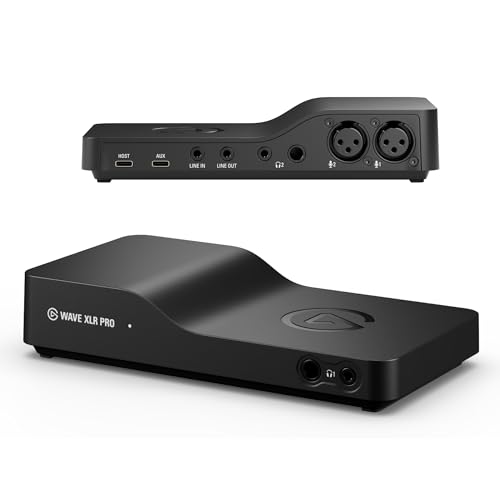
- Two XLR inputs with up to 80dB of gain each
- DSP effects, VST processing, and Clipguard 2.0
- Dual USB-C and up to five independent hardware mixes
Best For: Streamers and podcasters needing advanced routing
Expandable DSP Mixer

- 18x22 interface with analog, S/PDIF, and optical connectivity
- Six independent mix buses with onboard effects
- OLED metering and CueMix 5 control for Mac, PC, and iOS
Best For: Larger project studios and multi-mix monitoring
Smart Mobile Workflow
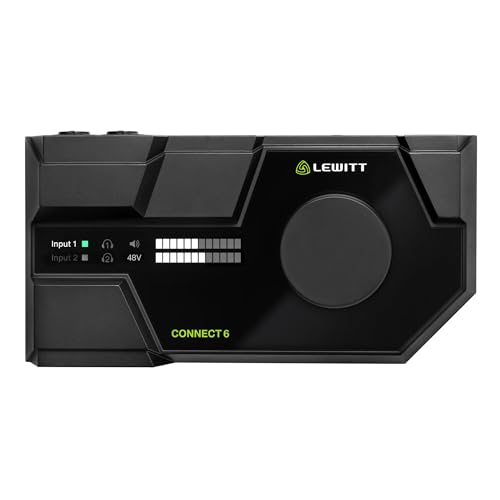
- 72dB-gain preamps with low-noise -133dBV EIN performance
- DSP effects include compression, EQ, expansion, and maximization
- Auto Setup, virtual channels, mixer, and loopback support
Best For: Mobile creators and streamlined DSP production
Portable High-Fidelity Pick

- Two combo inputs with phantom power and Hi-Z support
- 24-bit/192kHz recording over USB-C
- Zero-latency direct monitoring
Best For: Portable home recording and mobile creators
Professional DSP Recording Choice

- UAD-2 DUO Core onboard processing
- Unison preamp and amp modeling
- Includes Heritage Edition UAD plugins
Best For: Windows studios tracking through UAD effects
Streaming DSP Control Pick

- DSP mic chain with EQ and compression
- Dual USB supports up to eight channels
- Designed for streaming and dual-PC workflows
Best For: Streamers, podcasters, and gaming creators
Best for Streamlined Voice Processing

- 80dB gain for a wide range of XLR microphones
- Onboard voice effects and VST signal-chain support
- Touch controls with LED level feedback
Best For: Streamers, podcasters, and voice creators
Best for Bluetooth-Enabled Mixing

- Four-channel mixer with 16-bit DSP processing
- Bluetooth, USB, flash, and MP3 playback options
- 48V phantom power and three-band channel EQ
Best For: Live mixing, karaoke, and DJ-style setups
Versatile Studio Starter – Yamaha URX22C
The Yamaha URX22C is a practical audio interface with onboard DSP for recording, monitoring, and basic effects processing. It combines two Class-A D-PRE combo inputs, MIDI I/O, 32-bit/192kHz support, and latency-free DSP monitoring in a durable metal enclosure.
Best For: Home studios, vocalists, guitarists, and creators who need two inputs with built-in monitoring effects.
Pros:
- Two XLR/TRS inputs with +48V phantom power and one Hi-Z input.
- Latency-free DSP monitoring with reverb, channel strip, and guitar amp effects.
- Supports Windows, macOS, and iOS, with MIDI I/O included.
- Includes Cubase AI, Steinberg Plus, and dspMixFx software.
Cons:
- Its 2-in/2-out design is less suitable for larger recording setups.
- The supplied warranty coverage is limited to one year and has regional conditions.
Choose the URX22C if you want a compact, rugged interface with strong recording specifications and useful onboard effects for low-latency monitoring.
Streaming Control Center – Elgato Wave XLR Pro
The Elgato Wave XLR Pro is an audio interface with onboard DSP built around flexible streaming and production workflows. It offers two XLR inputs with up to 80dB of gain, DSP and VST processing, dual USB-C connections, and multiple independent hardware mixes.
Best For: Streamers, podcasters, and creators managing multiple computers, consoles, microphones, and monitoring mixes.
Pros:
- Provides up to 80dB of gain for each of two XLR microphones.
- Runs DSP effects and VST plug-ins in one signal chain.
- Dual USB-C supports connection to a second PC, console, or phone.
- Offers up to five independent hardware mixes and flexible Wave Link routing.
Cons:
- Wave Link requires Windows 11 or an Apple Silicon Mac.
- Its feature set is focused on XLR microphones and streaming workflows rather than broad studio I/O.
The Wave XLR Pro stands out when routing flexibility and hands-on mix control matter more than traditional multi-input studio connectivity.
Expandable DSP Mixer – MOTU UltraLite-mk5
MOTU UltraLite-mk5 18x22 USB Audio Interface 3 for Mac, Windows and iOS with mixing and effects
Check Price On AmazonThe MOTU UltraLite-mk5 is an audio interface with onboard DSP designed for larger routing and monitoring demands. Its 18×22 architecture supports multiple analog, digital, and optical connections, while CueMix 5 provides DSP mixing, effects, metering, and separate mixes for output pairs.
Best For: Project studios, live performers, and producers who need extensive I/O and several independent monitor mixes.
Pros:
- Offers 18 inputs and 22 outputs with analog, S/PDIF, and optical I/O.
- Supports six separate mix buses with input, computer, and output routing.
- Onboard reverb, parametric EQ, and dynamics processing support monitor mixes.
- Includes a detailed OLED meter display and CueMix 5 control for Mac, PC, and iOS.
Cons:
- It is more complex and potentially excessive for a simple two-channel setup.
- The listed frequency-response specification is 96kHz, despite support for sample rates up to 192kHz.
For users who need serious routing flexibility, multiple mixes, and broad expansion options, the UltraLite-mk5 is the most capable studio-oriented choice in this group.
Smart Mobile Workflow – LEWITT Connect 6
The LEWITT Connect 6 is an audio interface with onboard DSP that emphasizes automatic setup, flexible connectivity, and software-based routing. It combines studio-grade preamps with 72dB of gain, onboard dynamics and EQ, DSP virtual channels, a mixer, and loopback support.
Best For: Mobile creators, streamers, and musicians who want guided setup, built-in processing, and broad device integration.
Pros:
- Provides up to 72dB of gain with a stated -133dBV EIN noise performance.
- Includes expander, compressor, four-band EQ, and maximizer DSP effects.
- Auto Setup helps find suitable operating settings automatically.
- Supports Windows, Mac, iOS, and Android integration through its control software.
Cons:
- Maximum sample rate is 96kHz, lower than some competing interfaces in this roundup.
- The supplied details do not specify the full analog input and output configuration.
The Connect 6 is a strong fit for users who value simplified setup and DSP-assisted production across computers and mobile devices.
Portable High-Fidelity Pick – Q2 Alloy Red
If you want an audio interface with onboard DSP for straightforward recording, note that this compact Q2 model focuses on plug-and-play connectivity and direct monitoring rather than onboard effects processing. It offers two combo inputs, 24-bit/192kHz conversion, USB-C bus power, and compatibility with computers and mobile devices.
Best For: Home recordists, singers, guitarists, and mobile creators who prioritize portable, high-resolution recording.
Pros:
- Two XLR/TRS combo inputs with 48V phantom power and Hi-Z support.
- 24-bit/192kHz recording for high-fidelity capture.
- USB-C bus power, class-compliant operation, and no required drivers.
- Direct monitoring provides zero-latency tracking, with a built-in 3.5mm headphone jack.
Cons:
- The supplied notes do not identify onboard DSP effects or processing.
- It has two input channels, which may limit larger recording setups.
The Q2 Alloy Red is a practical, portable interface for clean two-channel recording. Choose it when simplicity and direct monitoring matter more than built-in DSP plugin processing.
Professional DSP Recording Choice – Apollo Twin X Duo USB
For buyers specifically seeking an audio interface with onboard DSP, the Apollo Twin X Duo USB is the most directly aligned option here. Its UAD-2 DUO Core processing supports near-zero-latency tracking through UAD compressors, EQs, tape machines, preamps, and guitar amp plugins, while Unison technology models classic preamp and amp hardware.
Best For: Windows-based producers, vocalists, guitarists, and engineers who want UAD processing while tracking.
Pros:
- Built-in UAD-2 DUO Core DSP for near-zero-latency plugin tracking.
- Unison technology supports modeled tube and transformer-based preamps, amps, and stompboxes.
- 24-bit/192kHz conversion and USB 3 connectivity.
- Includes a Heritage Edition bundle with compressors, preamp, EQ, and reverb plugins.
Cons:
- The supplied notes specify Windows compatibility rather than broad operating-system support.
- Its DSP workflow centers on UAD Powered PlugIns and compatible DAWs.
The Apollo Twin X Duo USB is the strongest fit for low-latency, processed monitoring and recording. Its included UAD software and Unison preamps add substantial value for users building a serious desktop studio.
Streaming DSP Control Pick – BEACN Studio
The BEACN Studio is an audio interface with onboard DSP designed around microphone control, streaming, and multi-device workflows. Its DSP chain includes EQ, compression, expander/gate, noise suppression, and low-frequency enhancement, while dual USB technology routes clean digital audio between computers, consoles, and phones.
Best For: Streamers, podcasters, gamers, and creators managing microphone processing across dual-PC or console setups.
Pros:
- Onboard DSP provides EQ, compression, gating, noise suppression, and enhancement tools.
- Ultra-low-noise XLR microphone preamp with USB-C connectivity.
- Dual USB technology supports up to eight channels between computers, consoles, and phones.
- BEACN software offers routing, mixer control, profiles, and remote app assignments.
Cons:
- The feature set is oriented toward streaming, gaming, and podcasting rather than multi-input music recording.
- The supplied notes do not specify a maximum sample rate or bit depth.
- Advanced control depends on the BEACN software ecosystem.
BEACN Studio stands out when onboard voice processing and flexible digital routing are more important than traditional studio I/O. It is particularly compelling for creators working with more than one computer or source device.
Best for Streamlined Voice Processing – Wave XLR MK.2
The Elgato Wave XLR MK.2 is a focused audio interface with onboard DSP for creators who want microphone gain, voice effects, monitoring, and routing in one compact setup. Its 80dB gain range suits a broad selection of XLR microphones, while the Wave Link software helps manage signal routing and processing.
Best For: Streamers, podcasters, and voice-focused creators using an XLR microphone with a computer.
Pros:
- 80dB of gain can accommodate many XLR microphones.
- Onboard voice enhancer, compressor, EQ, and other effects support real-time processing.
- Touch controls, LED feedback, and touch mute make level management convenient.
- Ultra-low-latency monitoring supports detailed listening while recording or streaming.
Cons:
- Requires Windows 11 or Apple Silicon Mac for Wave Link software.
- Provides one XLR audio input and two channels, making it less suited to multi-microphone setups.
The Wave XLR MK.2 is a strong choice when simple control and integrated voice processing matter more than numerous physical inputs. Its computer-focused workflow and Wave Link integration make it particularly practical for single-voice production.
Best for Flexible Mobile Creation – MAONO P2 Hybrid
The MAONO P2 Hybrid is an audio interface with onboard DSP-oriented creator tools, dual XLR inputs, and hybrid connectivity for computers and mobile devices. It is designed for recording, streaming, and music workflows that may move between a PC, phone, iPad, or camera.
Best For: Mobile creators, podcasters, streamers, and musicians who need dual-mic input and flexible device connections.
Pros:
- Dual USB ports support simultaneous computer and phone or iPad connections.
- Dual XLR inputs capture microphones and instruments at up to 24-bit/192kHz.
- Loopback and Stream Mode help combine voice, instruments, backing tracks, and desktop audio.
- Independent mute and monitoring controls simplify live recording and streaming.
Cons:
- The feature set may require learning the included ProStudio 2 software for advanced routing and effects.
- Its broad device compatibility may be more than needed for a simple single-computer recording setup.
Choose the P2 Hybrid when connection flexibility is a priority. Its dual XLR design, loopback workflow, and support for mobile devices make it a versatile option for creators who record and broadcast in different environments.
Best for Bluetooth-Enabled Mixing – Pyle PMXU43BT.5
The Pyle PMXU43BT.5 is a compact four-channel mixer with a 16-bit DSP processor, USB playback and recording, Bluetooth streaming, and 48V phantom power. It is better suited to live mixing, karaoke, DJ-style playback, and basic studio or streaming applications than to a minimal desktop interface setup.
Best For: Live performers, karaoke users, DJs, and creators who want physical mixing controls with Bluetooth and USB playback.
Pros:
- Four-channel layout includes XLR and unbalanced 1/4-inch inputs.
- 48V phantom power supports compatible condenser microphones.
- Bluetooth, USB, flash-reader, and MP3 functions add playback flexibility.
- Three-band EQ, LED peak indicators, and a rugged steel chassis support hands-on operation.
Cons:
- Its 16-bit DSP processor is less advanced on paper than higher-resolution recording interfaces.
- The mixer-style design and multiple playback features may be excessive for straightforward voice recording.
- A corded power source limits portability compared with bus-powered interfaces.
The PMXU43BT.5 makes sense for users who want a physical console for combining microphones, instruments, and wireless playback. Consider it primarily as a versatile mixer with DSP rather than a streamlined modern USB recording interface.
How We Picked the Best Audio Interface with Onboard Dsp
We focused on interfaces that provide meaningful onboard processing or DSP-assisted mixing, rather than simply offering basic USB audio conversion. The selection covers compact two-channel models, creator-oriented interfaces with dedicated mic chains, multi-input studio systems, and flexible mixer-style devices.
We also considered input and output counts, microphone preamps, phantom power, monitoring controls, operating-system compatibility, software support, portability, and the type of user each model is designed to serve. Because DSP features vary widely, check the manufacturer’s current software and hardware specifications before buying.
Quick Comparison
- For compact recording: Choose a 2-in/2-out interface with combo inputs and direct monitoring.
- For streaming and spoken word: Look for a dedicated DSP mic chain, easy mute controls, and fast routing.
- For larger studio setups: Prioritize multiple analog inputs, line outputs, ADAT or other expansion, and a capable mixer.
- For Apple mobile workflows: Confirm iOS compatibility, power requirements, and the necessary cable or adapter.
- For high-end production: Compare converter specifications, driver stability, bundled plug-ins, and the strength of the control software.
Key Buying Factors for an Audio Interface with Onboard Dsp
DSP Effects and Monitoring
Determine what the onboard processor actually does. Some units offer compression, equalization, reverb, amp simulation, or vocal effects for near-zero-latency monitoring. Others primarily provide digital routing and mixer control. Verify whether effects are available during recording, only during monitoring, or through a proprietary application.
Inputs, Outputs, and Expansion
Count the sources you will connect at the same time. Two combo inputs suit a singer-songwriter, while a band or production room may need several mic preamps, line outputs, headphone feeds, and digital expansion. Balanced outputs are especially useful for powered monitors and longer cable runs.
Connection and Compatibility
USB-C does not automatically mean bus-powered or mobile-ready. Check the interface’s power supply, computer requirements, driver support, and compatibility with macOS, Windows, iOS, or iPadOS. Dual-computer and mobile workflows may require more specialized routing.
Workflow and Software
A powerful interface is only useful if its mixer is easy to operate. Look for physical controls for input gain, headphone volume, monitor level, and mute functions, plus software that makes routing understandable. Bundled DAW or plug-in licenses can add value, but do not substitute for reliable hardware and drivers.
Who Should Buy Which Audio Interface with Onboard Dsp?
Home recordists should prioritize clean preamps, direct monitoring, and enough I/O for their usual instruments. Streamers and podcasters will benefit most from simple DSP mic processing, quick monitor control, and flexible routing. Musicians using several sources should favor higher channel counts and multiple headphone or monitor outputs. Mobile creators need a compact interface with confirmed phone or tablet compatibility. Professional and project studios should invest in stable drivers, expansion options, high-quality conversion, and a mixer that can manage complex sessions.