Headphone amplifiers with balanced output can deliver more power, lower noise, and greater connection flexibility for demanding headphones and IEMs. The right model depends on whether you need a desktop DAC/amp, a dedicated amplifier, a tube design, or a compact USB-C solution.
We’ve selected 10 options across those categories, including models with 4.4mm, XLR, 6.35mm, and balanced TRS connections. Use the guide below to compare features and choose an amplifier that matches your headphones, source equipment, and listening setup.
Best 10 Headphone Amplifiers with Balanced Output Picks for 2026
High-Power Choice

- Up to 4600mW+4600mW balanced output at 32Ω
- Discrete Class AB amplification
- 5V or 12V PD power options
Best For: Demanding planar and high-impedance headphones
Feature-Rich Desktop Hub
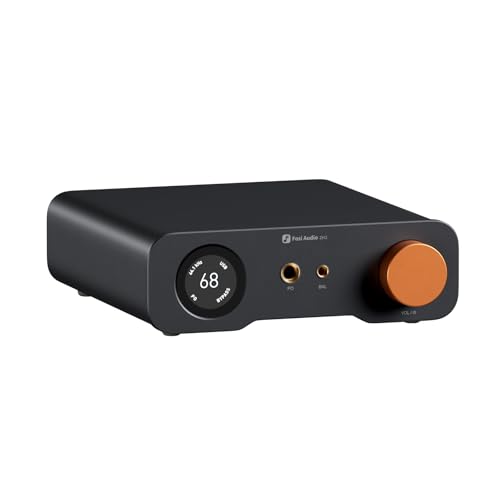
- 2570mW×2 from the 4.4mm balanced output
- DAC, headphone amp, and preamp in one
- USB, optical, coaxial, RCA, and XLR connectivity
Best For: Flexible desktop Hi-Fi and speaker systems
Gaming and DSP Pick

- 1000mW×2 balanced output at 32Ω
- 10-band PEQ with independent L/R tuning
- Plug-and-play support for PC, PS5, and Switch
Best For: Gaming, voice chat, and customizable desktop audio
Tube-Style Enthusiast Pick

- Up to 4000mW balanced high-gain output
- 4.4mm, 4-pin XLR, and 6.35mm outputs
- Dual ECC83 tubes for warm, rich sound
Best For: Tube-oriented Hi-Fi headphone and preamp systems
Versatile Desktop Hub

- 4.4mm balanced output with up to 2100mW power
- High-resolution DAC supports PCM 384kHz/32-bit and DSD256
- USB-C, optical, coaxial, Bluetooth, and mic connectivity
Best For: Desktop music and gaming setups needing broad connectivity
Precision Balanced Power

- 4-pin XLR and 4.4mm balanced outputs
- 0.3µV noise and 146dB dynamic range
- Preamp function, gain control, and 12V trigger
Best For: Dedicated hi-fi systems and demanding headphones
High-Output Class A Choice
FiiO CLASS A Desktop Amplifier

- Up to 4000mW+4000mW balanced output at 32 ohms
- 5-level gain plus independent bass and treble controls
- 4.4mm and 4-pin XLR headphone outputs with analog inputs
Best For: Powerful analog hi-fi listening with adjustable tone
Best Overall
TOPPING DX5 II DAC & Headphone Amp

- 4.4mm balanced output and powerful quad-channel amplification
- PCM768kHz/32-bit and DSD512 support
- LDAC Bluetooth, PEQ, preamp mode, and 12V trigger
Best For: Feature-rich desktop headphone and speaker systems
Best for Multi-Listener Monitoring
Pyle PHA40 4-Channel Headphone Amp

- Supports four simultaneous headphone connections
- Independent volume control for every listener
- Compact unit with 1/4-inch TRS input and outputs
Best For: Studio monitoring and shared headphone listening
Best Portable Pick

- 4.4mm balanced and 3.5mm headphone outputs
- PCM384kHz/32-bit and DSD256 decoding
- Up to 170mW per channel at 32 ohms
Best For: Portable balanced listening from USB-C devices
High-Power Choice – FiiO GIGAS 1
For listeners seeking headphone amplifiers with balanced output, the FiiO JadeAudio GIGAS 1 focuses on high-current drive in a compact desktop design. Its Class AB discrete amplification, 4.4mm balanced output, and 5V or 12V USB-C PD power options make it especially suitable for demanding headphones.
Best For: Planar magnetic and high-impedance headphones, plus desktop users who want flexible analog connectivity.
Pros:
- Up to 4600mW+4600mW through the 4.4mm balanced output at 32Ω.
- Discrete Class AB output stage is designed for strong current capability and control.
- Accepts RCA and 3.5mm inputs and includes both balanced and single-ended outputs.
- 5V USB power supports everyday use, while 12V PD enables greater output capability.
Cons:
- It is an amplifier rather than an all-in-one DAC, so your source must provide analog audio.
- The highest output capability requires compatible USB-C PD power.
The GIGAS 1 is a practical pick when power and connection flexibility matter more than built-in digital processing. Its microphone pass-through on the 3.5mm output also adds usefulness for compatible headsets and multimedia setups.
Feature-Rich Desktop Hub – Fosi Audio ZH3
The Fosi Audio ZH3 combines a DAC, headphone amplifier, and preamp for users comparing headphone amplifiers with balanced output as part of a complete desktop system. Its 4.4mm balanced output, extensive digital inputs, EQ, and XLR/RCA outputs give it broad system-building potential.
Best For: Desktop listeners who want one unit for headphones, active speakers, digital sources, and preamp duties.
Pros:
- 4.4mm balanced output provides up to 2570mW×2 at 32Ω.
- Supports PCM up to 768kHz/32-bit and DSD512 through its AKM4493SEQ and XMOS XU316 platform.
- Includes USB, optical, coaxial, and RCA inputs, plus 4.4mm, 6.35mm, RCA, and XLR outputs.
- Offers three gain levels, bass and treble EQ, six filters, and two swappable op-amps.
Cons:
- EQ adjustments apply only to the headphone output.
- RCA and XLR output levels differ significantly, so system matching requires attention.
The ZH3 is the most versatile option here for a mixed desktop setup. It offers substantial balanced headphone power while also functioning as a high-resolution DAC and preamp, though its many settings may be more than a simple headphone-only system needs.
Gaming and DSP Pick – TOPPING DX1 II
For gamers and PC users shopping for headphone amplifiers with balanced output, the TOPPING DX1 II adds a fully balanced 4.4mm amplifier to a compact DAC and DSP platform. Its 10-band PEQ, console support, and headset microphone compatibility make it more adaptable than a basic desktop amp.
Best For: PC, PS5, and Nintendo Switch users who want balanced headphone drive, customizable EQ, and voice-chat support.
Pros:
- Fully balanced architecture delivers up to 1000mW×2 at 32Ω through the 4.4mm output.
- 10-band PEQ supports adjustable frequency, gain, bandwidth, and independent left/right tuning.
- UAC 1.0 and 2.0 modes support PC, Mac, PS5, and Nintendo Switch use.
- 3.5mm TRRS supports compatible gaming headsets with microphone input.
Cons:
- Its maximum supply voltage is 5V, so it is less power-flexible than models with higher-voltage options.
- Some advanced PEQ functions require TOPPING Tune software.
The DX1 II stands out when gaming features are as important as headphone amplification. Optical I/O, RCA and 4.4mm line outputs, low noise for sensitive IEMs, and included remote control extend its usefulness beyond a straightforward gaming DAC.
Tube-Style Enthusiast Pick – AMPAPA H1 Balanced Tube Amp
The AMPAPA H1 brings a warmer, richer presentation to the category of headphone amplifiers with balanced output. Its Class A output stage, dual ECC83 tubes, and 4.4mm and 4-pin XLR connections make it a compelling choice for listeners who want tube character alongside substantial headphone power.
Best For: Hi-Fi listeners with multiple full-size headphones who want tube tone, balanced connections, and preamp integration.
Pros:
- Balanced high-gain output delivers up to 4000mW and supports headphones rated from 16Ω to 600Ω.
- Provides 4.4mm, 4-pin XLR, and 6.35mm headphone outputs.
- Dual ECC83 tubes offer a warm, rich sound profile and support future tube rolling.
- Includes RCA and TRS I/O, preamp modes, three gain levels, and a 12V trigger.
Cons:
- Tube operation may be less suitable for listeners seeking a strictly neutral presentation.
- Its larger feature set and tube hardware are more involved than a simple solid-state amp.
The H1 is aimed at enthusiasts who value tonal character and system expansion as much as output power. With selectable HP, Line, and HP+Line modes plus preamp outputs for active speakers or power amps, it can serve as the center of a more elaborate Hi-Fi setup.
Versatile Desktop Hub – Fosi Audio K7
The Fosi Audio K7 is a practical choice for listeners seeking headphone amplifiers with balanced output in a desktop music and gaming setup. Its 4.4mm balanced output, up to 2100mW of power, high-resolution DAC support, and broad input selection make it suitable for headphones, powered speakers, and multiple source devices.
Best For: Desktop listeners and gamers who want one compact DAC amp for high-impedance headphones, PC or console audio, speakers, and Bluetooth sources.
Pros:
- 4.4mm balanced, 3.5mm, and RCA outputs support flexible desktop connections.
- Supports PCM up to 384kHz/32-bit and DSD256 through its AK4493S DAC and XMOS processor.
- Offers USB-C, optical, coaxial, Bluetooth aptX HD/LL, and a 3.5mm microphone input.
- Adjustable EQ, Bypass mode, display, and physical controls are useful for gaming and music.
Cons:
- Its feature-rich design may be more than needed for a simple headphone-only system.
- The supplied notes do not specify separate power ratings for each output type.
The K7 stands out as an all-in-one desktop solution rather than a minimalist amplifier. Choose it if connectivity, gaming features, and a 4.4mm balanced output are priorities.
Precision Balanced Power – TOPPING L70 Full Balanced Amp
The TOPPING L70 is designed for buyers comparing headphone amplifiers with balanced output for a clean, powerful, low-noise system. Its fully balanced architecture, 4-pin XLR and 4.4mm outputs, high current capability, and preamp function make it a strong fit for both dedicated headphone listening and wider hi-fi integration.
Best For: Hi-fi users who need extremely low noise, substantial drive for demanding headphones, and flexible connections to power amplifiers or active speakers.
Pros:
- Provides 4-pin XLR, 4.4mm balanced, 6.35mm, and 3.5mm outputs.
- NFCA amplification is specified with 0.3µV noise and a 146dB dynamic range.
- Up to 52Vpp balanced output and 1.4A peak current support high-impedance and low-sensitivity headphones.
- Includes dual gain, volume memory for up to eight output scenarios, preamp operation, and a 12V trigger.
Cons:
- Its advanced controls and system-integration features may be unnecessary for casual listeners.
- The supplied notes do not mention a built-in DAC or digital inputs.
The L70 favors measured performance and system flexibility over extra source features. It is especially compelling when balanced headphone drive, low noise, and preamp functionality matter most.
High-Output Class A Choice – FiiO CLASS A Desktop Amplifier
The FiiO CLASS A is a compelling option among headphone amplifiers with balanced output for listeners who want substantial power and hands-on tonal adjustment. Its fully balanced circuit can deliver up to 4000mW+4000mW at 32 ohms, while five gain levels and independent bass and treble controls help accommodate different headphones and preferences.
Best For: Enthusiasts seeking a powerful desktop amplifier with a warm Class A presentation, extensive analog connectivity, and built-in tone controls.
Pros:
- Fully balanced architecture offers up to 4000mW+4000mW balanced output at 32 ohms.
- Three headphone outputs include 6.35mm, 4.4mm, and 4-pin XLR.
- Five gain levels and ±10dB bass and treble adjustment support varied headphones and listening styles.
- Accepts 3.5mm, RCA, 4.4mm balanced, and XLR balanced inputs, with RCA and XLR outputs for system integration.
Cons:
- Its Class A design and 60W toroidal transformer suggest a substantial desktop component rather than a portable solution.
- The supplied notes do not list digital inputs or an integrated DAC.
The CLASS A is aimed at listeners who value output headroom and adjustable sound more than a streamlined feature set. Its balanced connections and high power make it well suited to a dedicated analog hi-fi setup.
Best Overall – TOPPING DX5 II DAC & Headphone Amp
For listeners building a serious desktop system, the TOPPING DX5 II is a versatile choice among headphone amplifiers with balanced output. Its 4.4mm balanced connection, powerful X-Hybrid amplifier, extensive digital inputs, Bluetooth support, and preamp mode make it suitable for headphones, IEMs, and active-speaker setups.
Best For: Desktop listeners who want a feature-rich DAC and balanced headphone amplifier in one unit.
Pros:
- 4.4mm balanced output with a fully balanced quad-channel amplifier design.
- Supports high-resolution PCM up to 768kHz/32-bit and DSD512.
- Includes LDAC Bluetooth, USB, coaxial, and optical connectivity.
- 10-band PEQ, preamp mode, and 12V trigger support add system flexibility.
Cons:
- Its desktop-focused design is less portable than a dongle amplifier.
- The many settings and connection options may be more than basic users need.
The DX5 II stands out when you want balanced headphone output without giving up wireless playback, precise EQ, or compatibility with active speakers. It is a strong all-in-one centerpiece for a flexible desktop audio system.
Best for Multi-Listener Monitoring – Pyle PHA40 4-Channel Headphone Amp
The Pyle PHA40 is a compact distribution amplifier for sharing one stereo source with multiple listeners. It belongs on a shortlist of headphone amplifiers with balanced output when your priority is four simultaneous monitoring connections with separate volume controls, though its 1/4-inch TRS outputs are described in the supplied specifications rather than as a dedicated audiophile balanced architecture.
Best For: Small recording setups, rehearsals, and monitoring situations where four people need independent volume control.
Pros:
- Drives up to four pairs of headphones at the same time.
- Provides an independent rotary volume control for each channel.
- Compact design is suited to studio, stage, and portable use.
- Includes four 1/4-inch stereo TRS outputs and a 1/4-inch TRS input.
Cons:
- It is a multi-channel monitor splitter rather than a high-resolution DAC.
- Its plastic enclosure and corded-electric design limit portability.
- The supplied details do not specify digital inputs or high-resolution decoding.
The PHA40 makes the most sense for practical group monitoring rather than personal listening refinement. Its value is in channel count and individual level adjustment, especially for recording or performance workflows.
Best Portable Pick – Fosi Audio DS2 USB-C DAC Amp
The Fosi Audio DS2 is a pocket-sized USB-C DAC and headphone amplifier for phones, tablets, and computers. For listeners seeking headphone amplifiers with balanced output on the go, it combines a 4.4mm balanced jack with a 3.5mm output, high-resolution decoding, physical volume buttons, and broad device compatibility.
Best For: Mobile listeners who want balanced headphone connectivity from a compact USB-C dongle.
Pros:
- Offers both 4.4mm balanced and 3.5mm single-ended outputs.
- Supports PCM up to 32-bit/384kHz and DSD256.
- Delivers up to 170mW per channel at 32 ohms.
- Works with compatible iPhone, iPad, Android, Windows, Mac, and laptop devices.
Cons:
- Its USB-C connection makes it dependent on a compatible source or adapter.
- As a dongle amplifier, it is less suited to complex desktop system integration.
- The supplied notes do not mention Bluetooth or line-level preamp functionality.
The DS2 is an appealing choice when portability matters more than a full desktop feature set. Its dual outputs and high-resolution support give mobile users a straightforward path to balanced headphone listening.
How We Picked the Best Headphone Amplifiers with Balanced Output
We focused on models that provide a clearly identified balanced output and considered the connection formats, output power, gain options, noise performance, source compatibility, and overall practicality. The selection includes dedicated headphone amplifiers, DAC/amp combinations, desktop preamps, tube amplifiers, gaming-oriented units, and portable dongles.
Specifications such as power ratings can vary by impedance and connection type, so treat headline wattage as a comparison point rather than a guarantee of real-world performance. We also considered useful controls, including volume adjustment, tone controls, parametric EQ, Bluetooth, preamp outputs, and multiple digital inputs.
Quick Comparison
- Best for maximum desktop power: FiiO JadeAudio GIGAS 1 and the FiiO Class A desktop amplifier.
- Best for feature-rich listening: TOPPING DX5 II, with DAC functionality, Bluetooth, and PEQ.
- Best dedicated balanced amplifier: TOPPING L70, with XLR, 4.4mm, and 6.35mm outputs.
- Best for gaming and flexible desktop setups: TOPPING DX1 II or Fosi Audio K7.
- Best for portable use: Fosi Audio DS2.
- Best for multi-listener setups: The four-channel portable stereo headphone amplifier.
Key Buying Factors for Headphone Amplifiers with Balanced Output
Output Format and Compatibility
Check whether your headphones use a 4.4mm Pentaconn, 4-pin XLR, balanced ¼-inch TRS, or a proprietary cable. Balanced outputs are not automatically interchangeable with standard stereo connections, and adapters must be wired correctly. Never connect a balanced output to equipment that is not designed to accept it without confirming compatibility.
Power and Gain
High-impedance headphones and inefficient planar models may benefit from a powerful amplifier, while sensitive IEMs need low-noise operation and fine volume control. Multiple gain levels make it easier to use one amplifier with both demanding headphones and sensitive earphones.
DAC, Inputs, and System Role
A DAC/amp combo can simplify a computer or gaming setup, while a dedicated amplifier makes more sense if you already own a capable DAC. Compare USB, optical, RCA, and Bluetooth support, and decide whether you need a preamp output for powered speakers or another audio component.
Controls and Listening Features
Parametric EQ, bass and treble controls, channel balance, display options, and memory presets can be valuable for gaming and everyday listening. Tube models may appeal if you specifically want a different presentation, but solid-state designs typically offer lower noise and more predictable measurements.
Who Should Buy Which Headphone Amplifiers with Balanced Output?
Choose a powerful desktop model if you use demanding full-size headphones and want plenty of headroom. Pick a DAC/amp combo if you are building a compact computer or console station. A dedicated balanced amplifier is ideal when your existing DAC already meets your needs. Portable listeners should choose a USB-C dongle with balanced output, while multi-channel models suit shared listening or monitoring applications.