Clear speech can make or break an interview, whether you are filming with a phone, mirrorless camera, or a full video rig. The best lavalier microphone for interviews keeps the speaker’s voice close, consistent, and easier to understand than a built-in mic.
This roundup compares 10 wired and wireless options across compatibility, noise control, portability, and value, so you can choose a setup that fits your recording workflow.
Best 10 Lavalier Microphone for Interviews Picks for 2026
Best Wireless Pick

- Two transmitters for two-person interviews
- Noise cancellation and automatic limiting
- 300 m range with up to 11.5-hour operation
Best For: Mobile interview recording and outdoor content
Best Audio Protection
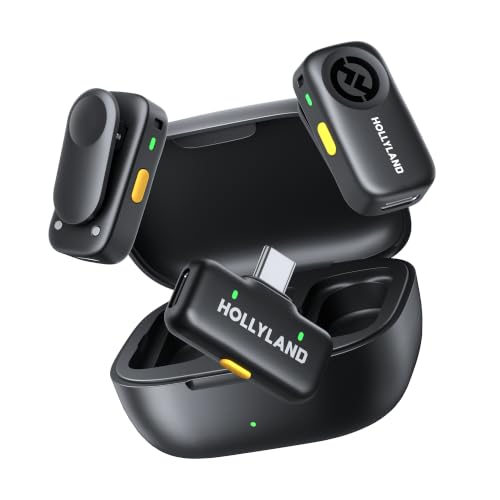
- AI noise cancellation with three levels
- Auto-Limit and -6 dB Safety Track
- Charging case provides up to 42 hours
Best For: Noisy locations and unpredictable interview audio
Best Budget Wired Set

- Two clip-on microphones for interviews
- No batteries, charging, or app required
- Includes adapters, cables, windscreens, and pouch
Best For: Stationary two-person interviews on a budget
Best Replacement Lav

- Designed for DJI Mic 2 and DJI Mic
- Rotating connector supports flexible placement
- Compact, concealable unidirectional design
Best For: Existing DJI users needing a wired lav
Best Plug-and-Play Pick
Mini Mic Pro Wireless Lavalier

- USB-C and Lightning adapters included
- Two microphones for interview recording
- Wind protection and up to six-hour battery
Best For: Mobile interviews and creator content
Best Dual-Mic Value
Labstandard K9 Wireless Lavalier

- Two microphones for interviews and podcasts
- Lightning and USB-C device support
- Noise reduction with real-time synchronization
Best For: Two-person mobile interviews
Best Travel Kit
Mini Mic Pro with Charging Case

- Charging case stores the receiver
- Two microphones for interview use
- USB-C and Lightning compatibility
Best For: Portable phone-based interviews
Best All-in-One Phone Kit
MAYBESTA Wireless Mini Lavalier Mic

- USB-C and Lightning support in one receiver
- Automatic pairing with noise reduction and mute
- Includes two microphones for guest interviews
Best For: Mobile interviews and two-person recordings
Best Simple Two-Person Setup
KUKIHO 2-Pack Wireless Lavalier Mic

- Two microphones support simultaneous recording
- Plug-and-play operation without Bluetooth or apps
- Up to 4 hours of stated use and phone charging
Best For: Short two-person interviews and mobile podcasts
Best for Flexible Recording Modes
CZOCPOS 2-Pack Wireless Lavalier Mic

- Three modes include noise reduction, mute, and reverb
- Up to 98 feet of stated wireless transmission
- Up to 5 hours of stated use with two microphones
Best For: Flexible indoor and outdoor interview recording
Best Wireless Pick – DJI Mic Mini
For a flexible lavalier microphone for interviews, the DJI Mic Mini combines a discreet 10 g transmitter with wireless range, active noise cancellation, and a mobile receiver. Its two-transmitter setup is practical when recording conversations with two speakers.
Best For: Interviews, outdoor shoots, livestreams, and creators using iPhone, Android, PC, or tablet devices.
Pros:
- Two transmitters support interviews with two speakers.
- Strong noise cancellation and automatic limiting help maintain usable vocals.
- Up to 300 m transmission range and 11.5 hours of operating time suit mobile recording.
- USB-C receiver offers plug-and-play compatibility with many phones, computers, and tablets.
Cons:
- The receiver and transmitter setup is more involved than a basic wired microphone.
- Some Osmo Mobile devices require the first-generation DJI OM Multifunctional Module for direct connection.
The DJI Mic Mini is a strong all-around option when interview recording requires wireless freedom, portability, and protection against background noise.
Best Audio Protection – Hollyland LARK A2
The Hollyland LARK A2 is a capable lavalier microphone for interviews when clean speech matters in unpredictable environments. It combines 48 kHz/24-bit recording with adjustable AI noise cancellation, AI Auto-Limit, and a safety track for added protection against loud sounds.
Best For: Outdoor interviews, walk-and-talk videos, podcasts, and creators who want built-in recording safeguards.
Pros:
- Two transmitters make two-person interview recording straightforward.
- Three noise-cancellation levels help adapt to different surroundings.
- AI Auto-Limit and a -6 dB Safety Track help reduce clipping from sudden volume changes.
- The charging case extends total battery life to up to 42 hours.
Cons:
- Its 200 m wireless range is shorter than the DJI Mic Mini’s stated maximum range.
- AI voice tuning and some processing features rely on the HollyAudio app.
Choose the LARK A2 if you value audio protection and long total battery life, especially for interviews where background noise or unexpected volume spikes are concerns.
Best Budget Wired Set – PowerDeWise Dual Lavalier
For a simple, affordable lavalier microphone for interviews, this PowerDeWise set uses two wired clip-on microphones and requires no batteries, charging, or app. The dual design is made for recording two speakers at once through a compatible 3.5 mm input.
Best For: Two-person interviews, classroom recording, podcasts, and creators using cameras, laptops, or devices with a 3.5 mm jack.
Pros:
- Two microphones allow simultaneous recording of two speakers.
- Plug-and-play operation avoids batteries, charging, and app setup.
- Includes extension cables, a TRS adapter, foam windscreens, and a carrying pouch.
- Compatible with DSLR cameras, laptops, PCs, smartphones, and tablets using the appropriate connection.
Cons:
- The wired design limits movement compared with wireless systems.
- Devices such as iPhones may require a Lightning adapter.
- It depends on a 3.5 mm jack or a suitable adapter.
This set is a practical choice when reliability and low setup complexity matter more than wireless freedom, particularly for stationary interviews and teaching.
Best Replacement Lav – DJI Lavalier Microphone
The DJI Lavalier Microphone is a compact wired option for users who already own compatible DJI wireless equipment. As a lavalier microphone for interviews, it offers a concealable design, a unidirectional pickup pattern, and a rotating connector intended to make positioning and cable routing easier.
Best For: DJI Mic 2 and DJI Mic owners who need a discreet replacement or additional wired lavalier microphone.
Pros:
- Compatible with DJI Mic 2 and DJI Mic systems.
- Rotating design supports flexible recording and easier placement.
- Cable routing helps prevent accidental unplugging.
- Compact form is suitable for interviews, vlogs, livestreams, and streaming.
Cons:
- This is a single microphone rather than a two-microphone interview kit.
- It requires a compatible DJI receiver and uses a 3.5 mm TRS connector.
- Its usefulness is more limited if you do not already own compatible DJI equipment.
The DJI Lavalier Microphone makes the most sense as a tidy, compatible add-on for an existing DJI setup rather than as a complete standalone interview system.
Best Plug-and-Play Pick – Mini Mic Pro Wireless Lavalier
For creators who want a lavalier microphone for interviews that works with phones, tablets, or laptops without an app or Bluetooth setup, the Mini Mic Pro is a practical choice. It includes USB-C and Lightning adapters, two microphones, wind protection, and up to six hours of recording per charge.
Best For: Mobile interviews, TikTok, YouTube, voiceovers, and outdoor recording with iPhone or Android devices.
Pros:
- Plug-and-play compatibility with Lightning and USB-C devices.
- Two wireless lavalier microphones support interviews and dual-speaker recording.
- Includes foam and dead-cat wind protection for outdoor use.
- Allows simultaneous device charging while recording.
Cons:
- Battery life is limited to up to six hours per charge.
- The system uses a single channel.
- Compatibility and adapters should be checked before purchase.
The Mini Mic Pro stands out for its simple connection process and compact design. It is especially useful for interviewers who need a lightweight kit that can move between phones and recording locations quickly.
Best Dual-Mic Value – Labstandard K9 Wireless Lavalier
The Labstandard K9 is a versatile lavalier microphone for interviews with two wireless microphones and adapters for Lightning and USB-C devices. Its 2.4G transmission, stated low latency, noise-reduction chip, and real-time auto-sync are designed to keep speech aligned with video.
Best For: Two-person interviews, podcasts, vlogs, livestreams, and recordings made across iPhone, iPad, and USB-C devices.
Pros:
- Includes two wireless microphones for interview-style recording.
- Supports Lightning and USB-C devices with a rechargeable adapter.
- Offers noise reduction and real-time audio-video synchronization.
- Provides about six hours of battery life.
Cons:
- The product details list Bluetooth connectivity, while the system is described as using 2.4G transmission.
- Some functions may require consulting the included manual.
- The kit is primarily described for smartphone and tablet recording.
With two channels and broad mobile-device compatibility, the K9 is a sensible option when an interview setup needs separate microphones for two people. Its claimed low-latency synchronization may also reduce editing work.
Best Travel Kit – Mini Mic Pro with Charging Case
This Mini Mic Pro bundle is a convenient lavalier microphone for interviews when portability and storage matter. It includes two wireless microphones, a receiver, USB-C and Lightning compatibility, wind protection, and a charging case that stores the receiver.
Best For: Traveling interviewers and creators who want an organized wireless microphone kit for phone-based recording.
Pros:
- Charging case provides a compact way to store the receiver and microphones.
- Includes two lavalier microphones for interviews with another speaker.
- Works with compatible iPhone and Android devices through Lightning and USB-C connectors.
- Includes foam and dead-cat wind protection.
Cons:
- The receiver is housed in the charging box, so it must be removed before use.
- Battery life is rated at up to six hours per charge.
- The details specify a one-channel system.
The charging case makes this version easier to carry and less likely to lose small components. It is a strong fit for on-location interviews, provided you remember to take the receiver out of the case before recording.
Best All-in-One Phone Kit – MAYBESTA Wireless Mini Lavalier Mic
For creators seeking a lavalier microphone for interviews, the MAYBESTA wireless kit stands out for its dual USB-C and Lightning receiver. It pairs automatically, works with many phone cases, and includes two microphones for recording conversations with a guest.
Best For: Mobile interviews, vlogging, teaching, livestreaming, and two-person recordings across iPhone and Android devices.
Pros:
- One receiver supports both USB-C and Lightning phones without an adapter.
- Automatic pairing requires no Bluetooth menu or app.
- Noise reduction, windscreen, and mute function help manage common recording interruptions.
- Includes two microphones and offers a stated 18-month free replacement policy.
Cons:
- The listed battery information is limited, so exact runtime is not specified.
- Its single-channel specification may limit more advanced audio setups.
The MAYBESTA is a practical choice when compatibility and quick setup matter most. Its included two-mic configuration makes it especially useful for interviewer-and-guest videos.
Best Simple Two-Person Setup – KUKIHO 2-Pack Wireless Lavalier Mic
The KUKIHO 2-pack is a straightforward lavalier microphone for interviews when two people need to record at once. Its plug-and-play design avoids Bluetooth and app setup, while the included iOS port converter broadens device compatibility.
Best For: Two-person interviews, podcasts, vlogs, online meetings, teaching, and mobile video recording.
Pros:
- Includes two microphones for simultaneous recording.
- Automatic pairing works without Bluetooth or an application.
- Noise-reduction circuitry and windproof foam support clearer voice capture.
- Provides up to 4 hours of stated working time after 1.5 hours of charging.
Cons:
- The supplied specifications identify the main connector as USB-C, with iOS compatibility handled through a converter.
- The stated 66-foot range applies in unobstructed conditions.
- Battery life is shorter than some alternatives in this roundup.
Choose this KUKIHO kit if you want a compact, uncomplicated solution for interviews with a second speaker. The receiver’s phone-charging capability can also help during longer shoots.
Best for Flexible Recording Modes – CZOCPOS 2-Pack Wireless Lavalier Mic
The CZOCPOS 2-pack gives interviewers a flexible lavalier microphone for interviews with automatic pairing, broad device support, and selectable noise reduction, mute, and reverb modes. Its stated 98-foot transmission range is useful when the speaker and camera need more separation.
Best For: Indoor and outdoor interviews, two-person video shoots, podcasts, teaching, and content creation on phones or computers.
Pros:
- Includes two microphones for recording two users simultaneously.
- Supports USB-C devices and iOS devices through the included adapter.
- Offers noise reduction, one-click mute, and double-click reverb modes.
- Provides up to 5 hours of stated use and up to 98 feet of transmission range.
Cons:
- Android users may need to enable OTG before use.
- The connector setup still requires the included iOS adapter for compatible Apple devices.
- Reverb is not necessarily desirable for natural-sounding interviews.
This CZOCPOS model is a strong fit when you want more control than basic plug-and-play recording provides. Its longer stated range and mode switching make it versatile, though interviewers will generally want to keep noise reduction enabled and reverb off.
How We Picked the Best Lavalier Microphone for Interviews
We evaluated these microphones by focusing on the features that matter most in real interview recordings: voice clarity, connection reliability, device compatibility, battery life, noise reduction, setup time, and portability. We also considered whether each kit includes useful accessories such as transmitters, receivers, charging cases, clips, adapters, or multiple microphones.
Because interview setups vary widely, the list includes phone-first wireless kits, dual-microphone bundles, and dedicated lavalier components that can complement a camera or existing wireless system. Product claims such as “noise cancelling” should be treated as a starting point; placement and recording conditions still have a major effect on results.
Quick Comparison
| Best For | Look For | Typical Advantage |
|---|---|---|
| Solo phone interviews | Plug-and-play receiver | Fast setup and minimal equipment |
| Two-person interviews | Two transmitters | Records both speakers at once |
| Outdoor interviews | Noise reduction and wind protection | More intelligible speech in noisy spaces |
| Camera and phone workflows | Flexible receiver connections | Works across multiple devices |
| Travel creators | Small transmitters and charging case | Easy storage and transport |
Key Buying Factors for a Lavalier Microphone for Interviews
Compatibility and Connection Type
Check whether the receiver is designed for USB-C, Lightning, a camera input, or more than one connection standard. A microphone may be excellent but still unusable without the correct adapter. For phone recording, a direct plug-in receiver is usually the simplest option.
One or Two Speakers
For interviewer-and-guest recordings, choose a system with two transmitters or a dual lavalier set. A single transmitter is sufficient for solo presentations, walk-and-talk videos, and one-person voice recording.
Noise Control and Placement
Active or electronic noise reduction can help with traffic, fans, and room noise, but it may affect natural vocal detail. Clip the microphone near the upper chest, keep fabric from rubbing against it, and use a windscreen outdoors whenever possible.
Battery Life and Monitoring
Wireless microphones need enough runtime for the complete session, including setup and retakes. A charging case is useful for travel, while onboard recording or receiver monitoring can provide extra protection when a wireless connection is interrupted.
Range, Reliability, and Controls
Consider how far the speaker will move from the recording device. Simple mute, gain, and pairing controls reduce mistakes during interviews. For professional work, prioritize stable connections and backup recording options over the smallest possible design.
Who Should Buy Which Lavalier Microphone for Interviews?
Choose a compact phone-focused kit if you record social videos, street interviews, or quick podcasts and want the least complicated setup. Choose a two-transmitter system if you regularly interview guests or need both speakers captured separately. Choose a camera-compatible system if you switch between a phone and dedicated camera. Choose a wired or dedicated lavalier microphone when maximum simplicity, low cost, or compatibility with an existing recorder matters most.
Before buying, confirm the connector, included accessories, transmitter count, and return policy. The right Lavalier Microphone for Interviews is the one that matches your devices and recording habits while keeping speech clear in the environments where you actually work.