Clear dialogue can make the difference between a polished DSLR production and footage that feels amateur. The right lavalier microphone keeps voices intelligible while giving you more freedom to frame, move, and record.
We selected 10 wired and wireless options for different budgets and shooting styles, including dual-microphone systems, compact kits, and models designed for interviews, vlogging, and filmmaking.
Best 10 Lavalier Microphones for Dslr Cameras Picks for 2026
Premium Wireless Pick
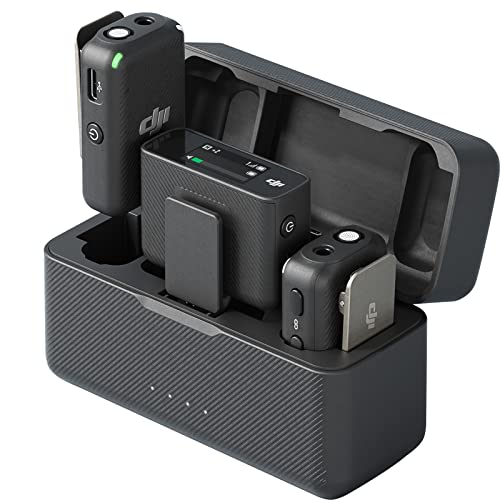
- Two transmitters with charging case
- 250m open-area transmission range
- Up to 14 hours of internal recording
Best For: Two-person interviews and mobile video production
Group Recording Choice
FULAIM X6 Pro Wireless Lavalier System

- Supports up to four transmitters
- 48kHz/24-bit audio with noise cancelling
- Includes camera and mobile adapters
Best For: Group interviews and presentations
Ultralight Long-Battery Pick

- 10g transmitters for discreet wear
- Up to 48 hours with charging case
- 400m claimed maximum transmission range
Best For: Long shoots and lightweight creator setups
Wired Two-Person Value

- Two wired lavalier microphones
- TRS, TRRS, and USB outputs
- 20-foot extension and headphone splitter
Best For: Two-person interviews and stationary recordings
Best Dual-Mic Kit
Movo WMX-1-DUO Wireless Lavalier System

- Two transmitters and two lavalier microphones
- Up to 200 feet of stated wireless range
- Includes camera and smartphone cables
Best For: Two-person interviews, teaching, and tutorials
Best Wired Camera Mic
Tikysky DSLR Shotgun Microphone

- Standard 3.5mm TRS camera connection
- Designed for close pickup up to 15 feet
- Includes windscreen and one AAA battery
Best For: Close interviews and vlogging with compatible cameras
Best Single Wireless Mic
Movo WMX-1 Wireless Lavalier System

- Single transmitter and lavalier microphone
- Up to 200 feet of stated wireless range
- Includes camera and smartphone cables
Best For: Solo presenters, vloggers, and mobile journalists
Premium Wireless Pick – DJI Mic
For creators seeking reliable lavalier microphones for DSLR cameras, the DJI Mic combines a two-transmitter setup with internal recording, long range, and a portable charging case. Its receiver connects through the included camera-oriented accessories, while the transmitters can record audio independently.
Best For: Interviews, vlogging, livestreaming, and two-person outdoor recordings.
Pros:
- Two pre-linked transmitters and a receiver store and charge in one case.
- Offers up to 250 meters of transmission range in open, unobstructed areas.
- Provides up to 14 hours of uncompressed 48kHz/24-bit internal recording.
- Includes a receiver OLED touchscreen for monitoring settings and battery information.
Cons:
- The advertised maximum range depends on open, unobstructed conditions.
- Its 15-hour total battery figure relies on the charging case.
The DJI Mic is a versatile premium option when you want wireless flexibility plus a backup recording path. Magnetic attachment and the compact case make it especially practical for mobile productions.
Group Recording Choice – FULAIM X6 Pro Wireless Lavalier System
The FULAIM X6 Pro stands out among lavalier microphones for DSLR cameras by supporting up to four transmitters at once. It includes a 3.5mm camera cable, adapters for iPhone and USB-C devices, and a charging case for multi-person recording sessions.
Best For: Group interviews, conferences, presentations, and productions with up to four speakers.
Pros:
- Supports four wireless transmitters simultaneously.
- Captures 48kHz/24-bit audio with intelligent noise cancelling.
- Includes a 3.5mm camera cable, USB-C adapter, and Lightning adapter.
- Receiver TFT screen and 3.5mm monitoring port show audio and connection information.
Cons:
- The larger four-transmitter system may be more equipment than solo creators need.
- The stated 328-foot range is a maximum wireless distance rather than a guaranteed indoor range.
For teams recording several people, the X6 Pro offers a useful combination of channel capacity, monitoring, and broad device compatibility. Its case also helps keep the complete kit organized and charged.
Ultralight Long-Battery Pick – DJI Mic Mini
The DJI Mic Mini is a compact choice for creators comparing lavalier microphones for DSLR cameras. Each transmitter weighs 10 grams, and the kit includes a receiver plus a 3.5mm TRS camera audio cable, making it suited to lightweight interviews, vlogs, and extended shoots.
Best For: Lightweight content creation, long interviews, outdoor recording, and DJI Osmo users.
Pros:
- Ultralight 10-gram transmitters are designed to be discreet and comfortable.
- Offers a claimed 400-meter maximum transmission range and up to 48 hours with the charging case.
- Provides 48kHz audio, two noise-cancellation levels, and automatic limiting to help prevent clipping.
- Connects directly with supported OsmoAudio ecosystem devices without a receiver.
Cons:
- Direct receiver-free connection is limited to supported DJI OsmoAudio devices.
- The 400-meter range is a maximum figure and can vary with the recording environment.
The Mic Mini is compelling when low weight and long battery life matter most. Its included receiver and camera cable preserve compatibility with conventional camera setups, while DJI ecosystem users gain an additional direct-connection option.
Wired Two-Person Value – Movo VersaLav-V2
For a straightforward wired solution, the Movo VersaLav-V2 is a practical alternative to wireless lavalier microphones for DSLR cameras. The kit includes two lapel microphones, a 20-foot extension, camera-compatible TRS output, and adapters for smartphones and computers.
Best For: Two-person interviews, podcasts, vlogs, and creators who prefer a battery-free wired setup.
Pros:
- Includes two lavalier microphones for recording two speakers.
- Provides TRS, TRRS, and USB output options for cameras, phones, and computers.
- Comes with a 20-foot extension cable and a splitter that supports two headphones.
- Includes multiple clips and windscreens, plus a one-year warranty and US-based support.
Cons:
- Wired operation limits movement compared with wireless systems.
- The two-mic splitter setup may require more cable management during shoots.
The VersaLav-V2 makes sense for budget-conscious or controlled recording environments where dependable wired connectivity is preferable. Its included adapters and monitoring splitter add flexibility without requiring wireless batteries.
Best Dual-Mic Kit – Movo WMX-1-DUO Wireless Lavalier System
For creators comparing lavalier microphones for DSLR cameras, the Movo WMX-1-DUO is a practical choice when you need two wireless microphones. It supports cameras, camcorders, smartphones, and tablets, with up to a stated 200-foot transmission range.
Best For: Interviews, teaching, tutorials, and two-person content where separate wireless lavalier microphones are useful.
Pros:
- Includes two transmitters and two lavalier microphones for dual-subject recording.
- Includes a camera-compatible 3.5mm TRS cable and a smartphone/tablet TRRS cable.
- Offers real-time headphone monitoring and adjustable microphone volume.
- Includes a hard case and a one-year warranty with US-based support.
Cons:
- Each unit uses two AAA batteries and is rated for up to six hours of operation.
- The wireless system operates on the 2.4GHz frequency spectrum, which may require appropriate setup in busy wireless environments.
Its dual-transmitter bundle makes this a particularly flexible option for interviews and lessons. The included cables also make it easier to switch between a DSLR camera and compatible mobile devices.
Best Wired Camera Mic – Tikysky DSLR Shotgun Microphone
If you are comparing lavalier microphones for DSLR cameras but prefer a simple on-camera setup, this wired shotgun microphone uses a standard 3.5mm TRS plug. It is designed for compatible cameras and is aimed at close interviews, vlogs, and other nearby recording situations.
Best For: Close-up interviews, camera-mounted vlogging, and short-distance recording with a DSLR or other compatible camera.
Pros:
- Uses a standard 3.5mm TRS connector for many compatible Canon, Nikon, Sony, and Panasonic cameras.
- Designed for close pickup within a stated effective range of up to 15 feet.
- Includes a windscreen and uses one AAA battery with a low-power indicator.
- Its super-cardioid pickup pattern is intended to help reduce background sound.
Cons:
- It is not a lavalier or wireless microphone; it is a wired on-camera shotgun mic.
- Not compatible with XLR, USB, mobile phones, tablets, or computers.
- Several camera models are specifically listed as incompatible, including Canon Rebel T5, T6, T7, R50, and Nikon D350.
This model is best treated as an alternative to a lavalier rather than a direct match. Check your camera’s 3.5mm input and the listed compatibility exclusions before buying, especially if you need a close-subject microphone for a DSLR.
Best Single Wireless Mic – Movo WMX-1 Wireless Lavalier System
The Movo WMX-1 is a compact option for shoppers seeking lavalier microphones for DSLR cameras without a dual-mic bundle. Its wireless transmitter and receiver support compatible cameras, camcorders, smartphones, and tablets, with a stated range of up to 200 feet.
Best For: Solo presenters, vloggers, filmmakers, and mobile journalists who need one wireless lavalier microphone.
Pros:
- Includes one transmitter, one receiver, and one lavalier microphone.
- Provides a stated wireless transmission range of up to 200 feet on the 2.4GHz spectrum.
- Offers real-time headphone monitoring and adjustable microphone volume.
- Includes camera and smartphone cables, a hard case, and a one-year warranty.
Cons:
- Only one transmitter and lavalier microphone are included, so it is less suited to two-person recording.
- Each unit requires two AAA batteries and is rated for up to six hours of operation.
- Compatibility depends on the connected device’s appropriate 3.5mm input and cable type.
Compared with the DUO version, this package is simpler and more focused on single-subject recording. It is a sensible starting point for creators who want wireless placement flexibility without paying for a second transmitter.
Best Portable Wireless Pick – Movo WMX-2 Wireless Camera Microphone
The Movo WMX-2 is a practical choice for creators seeking lavalier microphones for DSLR cameras without a bulky setup. Its 2.4GHz wireless connection, built-in omnidirectional transmitter microphone, and included receiver work with Canon, Sony, Nikon, and other compatible cameras.
Best For: Vloggers, filmmakers, and mobile creators who want a compact wireless system with extended range.
Pros:
- Wireless range reaches up to 328 feet with Adaptive Frequency Hopping.
- Up to 7 hours of battery life plus an additional charge from the case.
- Includes receiver, lavalier microphone, windmuffs, counterweight, pouch, and USB-C cable.
Cons:
- Uses a single-channel system.
- Camera connection relies on a 3.5mm jack.
The WMX-2 stands out when portability and long wireless range matter. Its charging case and included accessories make it well suited to all-day video sessions, provided your camera supports the required 3.5mm connection.
Best Long-Battery Option – Movo Wireless Mini Camera Microphone
The Movo Wireless Mini is a streamlined option for shoppers comparing lavalier microphones for DSLR cameras. Its all-in-one transmitter and lavalier design connects to cameras or recorders with a 3.5mm input, while selectable noise reduction and one-touch muting provide useful recording controls.
Best For: DSLR and mirrorless users who prioritize long battery life in a lightweight wireless microphone.
Pros:
- Runs for up to 10 hours on a charge.
- Provides a stable 2.4GHz signal up to 164 feet.
- Includes selectable noise canceling, mute control, and a battery indicator light.
Cons:
- Its stated wireless range is shorter than some alternatives.
- Requires a compatible 3.5mm camera or recorder input.
With its 10-hour runtime and compact design, the Wireless Mini is a sensible fit for extended shoots. It offers straightforward controls and broad 3.5mm compatibility, though its range is better suited to closer subject-to-camera work.
Best Dual-Mic System – Movo NanoMic Wireless Lavalier Microphone
The Movo NanoMic is designed for camera users who need two transmitters from their lavalier microphones for DSLR cameras setup. It connects directly to cameras with a standard 3.5mm TRS input and combines 16-bit/48kHz recording, noise reduction, and anti-clipping technology in a small wireless system.
Best For: Interviews, two-person videos, and run-and-gun productions using DSLR, mirrorless, or camcorder cameras.
Pros:
- Includes two wireless transmitters for recording two speakers.
- Offers 20Hz–20kHz frequency response and over 80dB signal-to-noise ratio.
- Provides three noise-cancellation levels and built-in anti-clipping technology.
- Delivers up to 6 hours per charge, with up to 30 additional hours from the case.
Cons:
- Requires a camera with a standard 3.5mm TRS microphone input.
- Individual transmitter runtime is shorter than the Wireless Mini’s stated battery life.
The NanoMic is the strongest match here for interviews and multi-person recordings because it includes two transmitters. Its charging case, long stated range, and audio protection features add flexibility for fast-moving shoots.
How We Picked the Best Lavalier Microphones for Dslr Cameras
We focused on the features that matter most when recording directly with a DSLR or mirrorless camera: camera compatibility, connection type, wireless stability, battery life, range, microphone count, monitoring options, and portability. We also considered whether each system suits solo creators, interviews, small productions, or multi-person recordings.
Because camera inputs and accessories vary, check the included cable and connector before buying. Most DSLR cameras use a 3.5mm TRS microphone input, while phones commonly require TRRS or USB-C adapters.
Quick Comparison
| Best For | Recommended Type | What to Prioritize |
|---|---|---|
| Solo vlogging | Compact wireless mic | Low weight, simple controls, charging case |
| Two-person interviews | Dual-transmitter wireless system | Two transmitters, independent channels, long battery life |
| Budget recording | Wired lavalier set | Compatible plug, cable length, included splitter |
| Outdoor filmmaking | Wireless system with wind protection | Stable range, noise reduction, windscreens |
Key Buying Factors for Lavalier Microphones for Dslr Cameras
Wired or Wireless Connection
Wired lavaliers are affordable, lightweight, and easy to use, but the cable can restrict movement and create handling noise. Wireless systems offer a cleaner setup and greater freedom, though they require charging and introduce additional pairing and interference considerations.
Camera Compatibility
Confirm that the receiver or microphone uses the correct 3.5mm TRS connection for your camera. Some kits are marketed for phones and need an adapter before they work properly with a DSLR. A system with gain controls or adjustable output can also help match different camera inputs.
Single or Dual Transmitters
A single transmitter is usually enough for solo content. Choose two transmitters for interviews, presentations, or conversations where both speakers need consistent audio. Independent channels are useful because they let you adjust or edit each voice separately.
Range, Battery, and Monitoring
Long advertised range is helpful, but walls, crowds, and radio interference can reduce real-world performance. Prioritize dependable connection, practical battery life, and a charging case if you record frequently. Headphone monitoring, when supported by the camera or receiver, makes it easier to catch clipping, dropouts, or clothing noise during a shoot.
Noise Control and Wind Protection
Noise cancellation can improve speech in busy environments, but it cannot replace good microphone placement. Clip the lavalier near the speaker’s upper chest, keep fabric from rubbing against it, and use the included windscreen outdoors.
Who Should Buy Which Lavalier Microphones for Dslr Cameras?
Choose a wired set if you want the lowest cost, minimal setup, and dependable recording for seated videos. Choose a compact wireless model for vlogging, travel, and fast solo shoots. Choose a dual wireless kit for interviews or two-person content. If you regularly work outdoors or at longer distances, prioritize a system with strong range, stable transmission, wind protection, and enough battery capacity for a full production day.