The best document cameras for beginners make it simple to show worksheets, books, artwork, small objects, and handwritten notes on a larger screen. The right model can also double as a webcam for online lessons and meetings.
Our roundup focuses on straightforward USB setup, useful image quality, flexible positioning, and features that help new users present clearly without a steep learning curve.
Best 10 Document Cameras for Beginners Picks for 2026
Best for High-Resolution Lessons
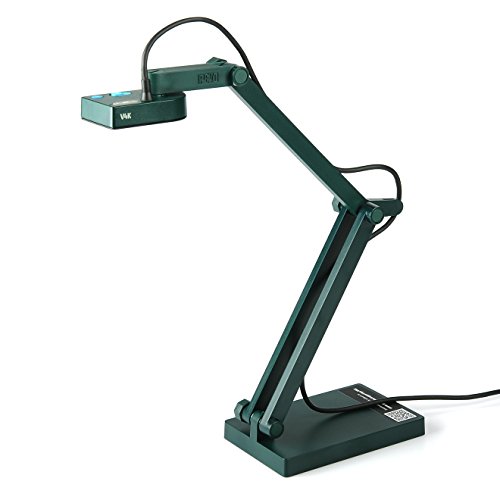
- 8MP capture up to 3264 x 2448 pixels
- Up to 30 fps in Full HD
- Works with Mac, Windows, and Chromebook
Best For: Beginners who want sharp images and flexible computer compatibility
Best Plug-and-Play Pick

- Plug-and-play with Windows, macOS, Chrome OS, and Linux
- Full HD video with LED lights and microphone
- Flexible neck works with or without its base
Best For: First-time users who value simple setup and versatility
Best Feature-Rich Starter

- 8MP imaging with 30 fps streaming
- Autofocus, macro mode, LED, and anti-glare sheet
- Includes annotation and recording software
Best For: Beginners who want extensive controls and presentation tools
Best Portable Smart-Pointing Camera

- 8MP Sony Exmor R sensor
- Portable 269 g design for letter-size materials
- Includes OKIOPoint AI visual-pointer tracking
Best For: Teachers who want portability and interactive demonstrations
Simple Manual-Focus Pick

- Manual focus with up to 1080p/30fps video
- 360-degree rotation and 20.4-inch height
- Foldable design with built-in microphone
Best For: Basic tutoring, video calls, and demonstrations on a computer
Balanced Classroom Choice
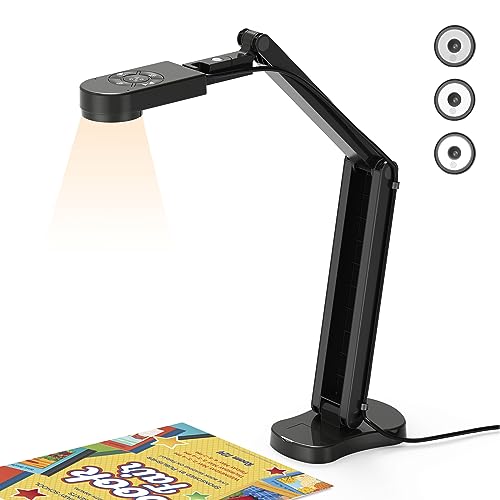
- 8MP output up to 2448p at 30fps
- Three-level LED lighting and dual microphones
- Foldable A3-size capture area with autofocus
Best For: Classroom presentations and larger documents
High-Resolution Teaching Pick

- 10MP lens with 2160p15 and 1080p30 modes
- Auto or fixed focus with smooth zoom
- Foldable A3-size design and adjustable LED light
Best For: Online teaching, art classes, and detailed demonstrations
Best Compact Pick

- 3-in-1 document camera, visualizer, and webcam
- Foldable multi-jointed design saves desk space
- Three LED levels and five exposure settings
Best For: Beginners needing a compact teaching and webcam camera
Best Large-Format Pick

- Covers documents up to A3 size
- 2448P resolution with one-button autofocus
- Folds for storage and transport
Best For: Beginners presenting large worksheets and classroom materials
Best Webcam Combo

- Combines document camera and webcam functions
- Flexible arm supports varied viewing angles
- A3 coverage with 1944P/5MP video
Best For: Remote teaching and video conferencing with large materials
Best for High-Resolution Lessons – IPEVO V4K
The IPEVO V4K is a strong choice for beginners seeking document cameras for beginners with sharp image quality and smooth live demonstrations. Its 8MP sensor, fast autofocus, and compatibility with Mac, Windows, and Chromebook systems make it flexible for teaching, conferencing, and remote learning.
Best For: Beginners who prioritize high-resolution image capture and cross-platform compatibility.
Pros:
- 8MP capture supports images up to 3264 x 2448 pixels.
- Streams at up to 30 fps in Full HD for responsive video.
- Fast autofocus and a Sony CMOS sensor help with changing materials and dimmer environments.
- Multi-jointed stand and compatibility with Mac, PC, and Chromebook systems.
Cons:
- Full-resolution streaming is limited to up to 15 fps.
- Recommended computer specifications are relatively demanding for lag-free Full HD streaming.
- The maximum shooting area is 13.46 x 10.04 inches.
The V4K is a practical beginner option when clarity matters most. It offers excellent resolution and broad software compatibility, though users should check their computer specifications before buying.
Best Plug-and-Play Pick – HUE HD Pro
The HUE HD Pro is an approachable option for anyone comparing document cameras for beginners. It offers plug-and-play setup, Full HD video, built-in lighting and microphone support, and compatibility with Windows, macOS, Chrome OS, and Linux camera apps.
Best For: First-time users who want simple setup for classrooms, tutoring, and video calls.
Pros:
- Plug-and-play operation works with major computer camera apps.
- Full HD 1080p streaming includes built-in LED lights and a noise-reduction microphone.
- Flexible neck can be used with or without the included base.
- Manual focus ranges from 1 cm to infinity and can support close-up demonstrations.
Cons:
- Manual focus requires adjustment when switching between subjects.
- The optional HUE Intuition software is limited to Windows and macOS.
- Its 1080p resolution is lower than the 8MP models in this roundup.
The HD Pro keeps the learning curve low and adds useful features for teaching and conferencing. Choose it over a higher-resolution model if straightforward operation and broad operating-system support are the priorities.
Best Feature-Rich Starter – INSWAN INS-1
The INSWAN INS-1 gives beginners a broad set of controls without requiring separate accessories. As one of the more feature-rich document cameras for beginners, it combines 8MP imaging, autofocus, built-in lighting, an anti-glare sheet, and bundled software for annotations and recordings.
Best For: New users who want strong image quality plus built-in presentation and adjustment tools.
Pros:
- 8MP Sony camera captures up to 3264 x 2448 pixels and streams at 30 fps.
- Autofocus, macro capability, LED lighting, and seven-segment brightness control support varied demonstrations.
- Bundled INSWAN Documate software includes annotation, digital zoom, snapshots, and video recording.
- Works with Windows, Mac, Chromebook, and compatible iPad devices.
Cons:
- The included USB-A cable may require an adapter for devices without USB-A ports.
- Some listed compatibility depends on specific operating-system versions.
- Its maximum viewing size is 14.72 x 11 inches, so larger materials may not fit fully.
The INS-1 is a capable all-around choice for beginners who expect to annotate, record, and adjust images regularly. Its combination of autofocus and software tools makes it easier to grow into than a basic camera.
Best Portable Smart-Pointing Camera – OKIOCAM S-4K
The OKIOCAM S-4K is designed for beginners who need portability without giving up detail. It combines an 8MP Sony Exmor R sensor with a compact body, simple button controls, and OKIOPoint AI tracking for interactive demonstrations on compatible computers and displays.
Best For: Teachers and presenters who want a portable camera with smart pointer and software features.
Pros:
- 8MP capture reaches up to 3264 x 2448 pixels with enhanced low-light performance.
- Up to 30 fps Full HD streaming helps keep live demonstrations smooth.
- OKIOPoint can zoom in and follow the visual pointer through OKIOCAM Live software.
- Compact 269 g design captures letter-size materials in landscape orientation.
Cons:
- Maximum-resolution streaming drops to up to 15 fps.
- Some of the interactive features depend on the OKIOCAM Live software.
- The camera uses a USB 2.0 interface.
The S-4K stands out for compact setups and engaging presentations. It is a good beginner-friendly fit when portability and interactive software matter as much as image resolution.
Simple Manual-Focus Pick – Foldable USB Document Camera
For shoppers comparing document cameras for beginners, this model offers a straightforward USB setup with manual focus, a built-in microphone, and a flexible design for everyday demonstrations. It can capture up to 1080p video at 30 fps and works with Windows PCs, Macs, and Chromebooks.
Best For: Beginners who want a foldable camera for online tutoring, video calls, home schooling, and basic document or object demonstrations.
Pros:
- Manual focus helps maintain a deliberately selected level of image clarity.
- Flexible arm rotates up to 360 degrees and reaches 20.4 inches for varied shooting angles.
- Foldable embedded design is easier to store and carry.
- Includes a USB-C cable and supports common platforms such as Zoom and Google Meet.
Cons:
- Manual focus requires adjustment by the user rather than automatic focusing.
- It must connect to a computer and is not compatible with iPads, mobile phones, or other portable devices.
- Its effective still resolution is 2MP.
This is a practical entry-level choice if you value flexible positioning and compact storage over higher-resolution imaging. The computer-only connection requirement is the main compatibility point to verify before buying.
Balanced Classroom Choice – THUSTAR 8MP 4K Visualizer
This THUSTAR model is a strong option for beginners who want more resolution and classroom-friendly controls without a complicated installation process. It supports up to 2448p live output at 30 fps, includes adjustable LED lighting, and works with Windows, macOS, and Chrome OS.
Best For: Teachers and new presenters who need to show A3-size documents, 2D materials, or 3D objects in classrooms and online meetings.
Pros:
- 8MP imaging supports high-definition video and up to 2448p output at 30 fps.
- Three brightness levels and 14 LED ring-light beads help in difficult lighting.
- Autofocus can be triggered with a focus button, while macro focus reaches approximately 3.94 inches.
- Foldable, multi-joint construction covers an A3-size area and includes dual microphones.
Cons:
- Its USB 2.0 interface may be less convenient than newer high-speed connections.
- Brightness, image reversal, and other adjustments require manual control.
With lighting, autofocus, image reversal, and broad software compatibility, this is a versatile starting point for classroom use. It is especially appealing when you regularly need to capture larger pages or objects under changing room light.
High-Resolution Teaching Pick – TreasLin 10MP USB Camera
For beginners who want a higher-resolution option, this TreasLin document camera combines a 10MP lens with automatic or fixed-focus modes, LED control, and smooth zoom. Its plug-and-play design supports Windows PCs, Macs, Chromebooks, and popular meeting or streaming software.
Best For: Online teachers, art instructors, and presenters who want to display textbooks, artwork, and 3D objects with a broad A3-size capture area.
Pros:
- 10MP lens supports high-resolution capture, including 2160p15 and 1080p30 modes.
- Auto-focus and fixed-focus options provide flexibility for different presentation tasks.
- Multi-angle rotating arm and foldable design support 2D and 3D demonstrations while saving storage space.
- Includes image reversal, zoom, LED controls, and a USB 2.0 hub that supports compatible peripherals.
Cons:
- The highest listed 2160p mode is limited to 15 fps.
- It uses a USB 3.0 Type-B hardware interface, so cable or port compatibility should be checked.
- The listed warranty is one year.
This model suits beginners who expect to grow into more advanced teaching or presentation setups. Its 10MP sensor and extensive controls are useful for detailed materials, although users should confirm the connection requirements and preferred frame rate.
Best Compact Pick – Manual-Focus 1944P Doc Camera
For beginners comparing document cameras for beginners, this compact THUSTAND model offers a straightforward USB setup with useful controls for teaching, demonstrations, and video calls. Its foldable, multi-jointed design captures both 2D and 3D objects, while manual focus and adjustable lighting provide more control when conditions vary.
Best For: Beginners who want one compact camera for documents, objects, remote teaching, and webcam use.
Pros:
- Works as a document camera, visualizer, and PC webcam.
- Supports up to 1944P output and 30 fps.
- Includes three LED brightness levels and five exposure settings.
- Compatible with Windows, Mac, Chromebooks, Zoom, and Google Meet.
Cons:
- Focus is primarily manual, so beginners may need to adjust it themselves.
- Uses USB 2.0 connectivity rather than HDMI.
This is a practical starter option if desk space matters and you want physical buttons for lighting and image inversion. The manual-focus design offers precision, but users seeking fully automatic operation may prefer an autofocus model.
Best Large-Format Pick – 8MP A3 Autofocus Camera
This PAKOTOO model is a strong choice for beginners who need to show full worksheets, books, or other large materials. It covers up to A3 paper, includes autofocus and button-based image reversal, and folds down for easier storage and transport.
Best For: Teachers and learners who need A3-size coverage with simple physical controls.
Pros:
- Captures an area up to 16.5 by 11.6 inches.
- Offers 2448P resolution with one-button autofocus.
- Foldable, multi-joint structure supports multiple viewing angles.
- Includes three brightness levels and ten exposure adjustments.
Cons:
- It is not plug and play; users must select USB Camera in the computer system.
- Does not support zoom or HDMI, and it is not compatible with iPad.
- Its USB cable is relatively short at 4.9 feet.
The large capture area and autofocus make this a beginner-friendly option for classroom documents, although the required camera selection adds one setup step. Choose it when A3 coverage is more important than HDMI or iPad support.
Best Webcam Combo – A3 Autofocus Teaching Camera
For beginners looking for document cameras for beginners that also handle online meetings, this PAKOTOO camera combines document viewing with webcam functionality. Its flexible hose structure, A3 coverage, autofocus, and adjustable fill light make it useful for remote teaching and demonstrations.
Best For: Remote instructors and beginners who want a flexible A3 document camera that doubles as a webcam.
Pros:
- Functions as a document camera, webcam, and presentation camera.
- Flexible structure can be positioned at different angles.
- Supports A3-size materials and autofocus.
- Provides 1944P/5MP imaging at up to 30 fps with three LED levels.
Cons:
- It is not plug and play; users must select USB Camera in the computer system.
- Does not include HDMI connectivity.
- Uses USB 2.0 and may require manual image-inversion adjustments.
This model fits beginners who want one camera for classroom documents and video calls. Its adjustable arm and lighting improve flexibility, while the extra USB-camera selection step is the main setup consideration.
How We Picked the Best Document Cameras for Beginners
We focused on features that matter most when setting up a document camera for the first time: plug-and-play USB connectivity, compatibility with common operating systems, practical camera resolution, adjustable lighting, and a flexible stand. We also considered whether each model can handle typical classroom materials, including A4 and A3 pages, books, worksheets, crafts, and demonstrations.
Extra attention went to usability. Autofocus can save time during live lessons, while manual focus may be preferable for users who want precise control. Built-in microphones, image rotation, folding designs, and webcam compatibility can also make a camera more versatile, but they should not outweigh basic reliability and ease of operation.
Quick Comparison
| Feature | What to look for | Why it matters |
|---|---|---|
| Resolution | 8MP or 10MP, with 4K support on some models | Produces sharper text, diagrams, and close-up demonstrations |
| Focus | Autofocus or accessible manual focus | Helps keep changing materials readable |
| Lighting | Built-in LED lighting with adjustable levels | Reduces shadows in dim classrooms or home offices |
| Coverage | A4 or A3-size capture area | Determines whether full pages and larger projects fit in frame |
| Connection | USB compatibility for Windows, Mac, or Chromebook | Simplifies setup with common teaching and conferencing software |
Key Buying Factors for Document Cameras for Beginners
Image Quality and Focus
Resolution affects how clearly small print and fine details appear, but lens performance and lighting matter just as much. Choose autofocus if you frequently switch between pages and objects. Manual focus can be useful for controlled demonstrations, especially when the camera remains at one height.
Size, Reach, and Positioning
Check the advertised viewing area before buying. An A3-capable camera offers more room for textbooks, art projects, and larger diagrams than an A4-only model. A folding arm is convenient for storage, while a head that tilts or rotates helps frame materials without moving the entire unit.
Software and Microphone Features
Most USB cameras work through standard webcam settings, but compatibility can vary by operating system and app. Confirm support for your computer and preferred video platform. A built-in microphone is helpful for basic remote teaching, although a dedicated headset or microphone may deliver clearer audio.
Lighting and Controls
LED lights are valuable when overhead lighting creates glare or shadows. Look for adjustable brightness and simple controls. Image inversion or rotation can be useful when demonstrating writing, transparencies, or objects from unusual angles.
Who Should Buy Which Document Cameras for Beginners?
Choose a compact, plug-and-play model if you need a simple camera for occasional homework help, online meetings, or basic document sharing. Teachers who present books, worksheets, and art projects should prioritize a wide A3 capture area, adjustable lighting, and a flexible stand. Users who move between live lessons and video calls may prefer a model with webcam functionality and a built-in microphone.
If sharp text and detailed demonstrations are your priority, look for an 8MP or 10MP camera and strong focus controls. For frequent travel or limited desk space, a foldable design is more practical than a larger fixed setup. Before ordering, verify the included cable, operating-system support, required software, and the seller’s current specifications.