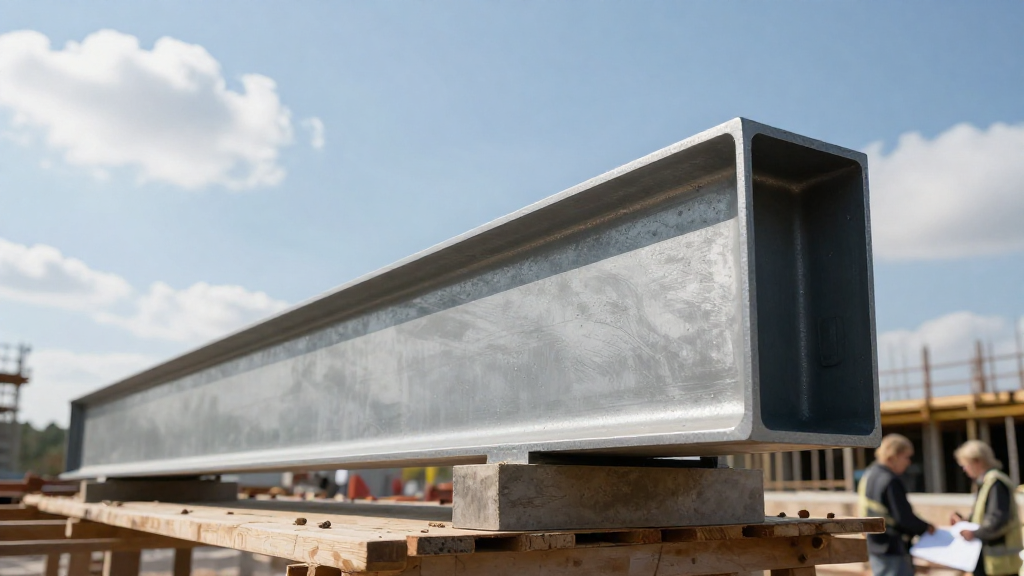
Beam camber refers to the slight upward curve intentionally designed into beams to counteract the deflection caused by loads.
This engineering concept is vital for both structural integrity and aesthetics in construction projects.
In this article, we’ll explore the definition of beam camber, its advantages, common applications, and how best to implement it in your designs.
What Is Beam Camber Exactly?
Beam camber is the intentional arching of a structural beam.
This slight curvature creates an upward deflection that counterbalances the downward load the beam encounters.
When loads are applied – such as the weight of flooring, roofing, or furnishings – beams tend to shift downward due to the bending moment.
Beam camber helps maintain the level of the structure, preventing sagging and ensuring the beam remains as close to its original elevation as possible.
This design feature is crucial in both residential and commercial construction.
Why Should You Use Beam Camber?
What Are the Benefits of Beam Camber?
- Structural Integrity
The primary purpose of beam camber is to ensure structural stability.
By adjusting the curvature of the beam, engineers can minimize the effects of deflection under weight.
- Enhanced Aesthetics
A level ceiling and straight lines contribute to the overall visual appeal of a structure.
Beam camber ensures that beams look good while performing their job.
- Cost-Effectiveness
Designing beams with camber can reduce the need for additional support structures.
This ultimately results in savings on materials and labor costs.
- Improved Load Distribution
Beam camber promotes a more efficient distribution of loads.
This prevents excessive stress on certain parts of the beam, prolonging its life.
- Prevention of Cracks and Deformations
Cambering helps maintain a more desirable stress distribution within the beam, lowering the chances of cracks or material fatigue over time.
Who Can Benefit from Beam Camber?
Beam camber can be advantageous in several scenarios:
-
Residential Builders: Achieving a level ceiling for aesthetics.
-
Commercial Contractors: Meeting strict building codes requiring specific load capacities.
-
Architects and Engineers: Enhancing the design without compromising on safety or durability.
Where Is Beam Camber Commonly Used?
- Homes and Residential Buildings
In residential construction, beam camber is often employed in floor systems and roof frames.
It helps maintain the intended height and appearance across open spaces.
- Commercial Structures
Large commercial buildings often use cambered beams in their framework and roofing systems.
Large spans may require additional support, and an appropriately cambered beam can alleviate stresses effectively.
- Bridges and Overpasses
Engineering applications like bridges rely heavily on camber to maintain both structural integrity and aesthetic appeal.
An arch can help manage varying weights such as passing vehicles or environmental loads like wind and snow.
How Do You Implement Beam Camber in Construction?
What Factors Should You Consider?
Implementing beam camber requires a systematic process. Here are the steps to ensure a successful integration:
- Assessment of Load Requirements
Determine the type and magnitude of loads the beam will support.
Knowing the load requirements helps define how much camber is necessary.
- Structural Analysis
Run a structural analysis to determine the most appropriate beam size and camber.
Engineering software can simulate different load scenarios.
- Selection of Beam Material
Different materials exhibit varying properties under stress.
Steel, timber, or reinforced concrete can all be cambered, but their deflection characteristics differ.
- Design Considerations
In designing your camber, remember that too much camber can cause unnatural shapes.
Ensure that the curvature is appropriate for the intended application.
- Construction Techniques
During construction, specialized techniques such as pre-cambering, or using jacks to create the camber in place, may be employed.
How Can You Measure Beam Camber?
Measuring the effectiveness of beam camber is crucial to ensuring it meets design standards.
- Tape Measure and Level
Simple measuring devices can quickly check the height of the beam at various points to ensure that it’s within the desired camber range.
- Digital Measuring Tools
Digital levels and laser measuring systems provide accurate measurements to determine the effectiveness of the camber.
- Load Testing
Consider conducting load tests to measure how well the beam performs under real-world conditions.
What Are Some Common Misconceptions About Beam Camber?
- It’s Only for Large Projects
Many believe that beam camber is only essential in large commercial or industrial projects.
However, it’s just as vital in smaller constructions to maintain aesthetic appeal and structural integrity.
- More Camber Is Always Better
While a certain level of camber is beneficial, excessive camber can lead to unusual profiles and additional stress on the supporting structure.
- Beam Camber is Optional
Some may overlook the importance of camber, thinking it’s an optional element.
However, in many applications, it’s essential for safety and functionality.
Conclusion
In summary, beam camber is a critical aspect of modern construction.
It provides numerous benefits, such as enhancing structural integrity, improving aesthetics, and prolonging the life of beams by managing stress effectively.
Understanding why and how to use beam camber can significantly impact the success of any construction project.
Whether you are a builder, architect, or engineer, implementing beam camber is an investment in both safety and design excellence.