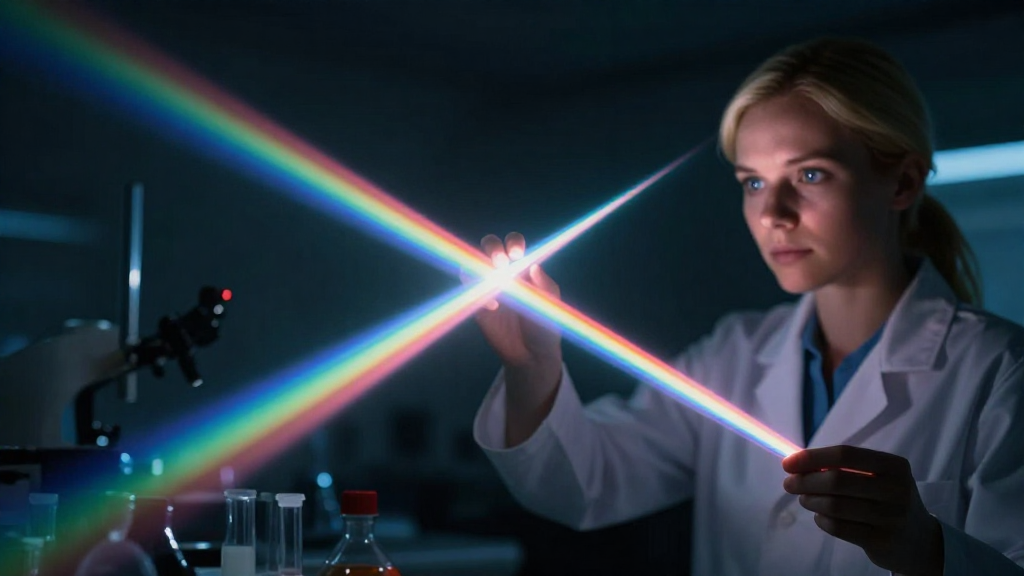
Beam coherence is a fundamental concept in optics that plays a crucial role in various applications, from lasers to imaging systems.
In this article, we will explore the principles of beam coherence, its significance, varying types, and how it impacts different fields of science and technology.
What Does Beam Coherence Mean?
Beam coherence refers to a characteristic of light that describes how well the light waves maintain a consistent phase relationship over time and space.
In simple terms, a coherent beam of light has waves that are synchronized in phase, meaning their peaks and troughs align.
This property is pivotal for applications that require precise control over light, such as interferometry and holography.
Why Is Beam Coherence Important?
Understanding beam coherence is essential for several reasons:
-
Quality of Optical Systems:
– Coherent beams produce clearer images in optical devices.
– Non-coherent beams often lead to blurred images. -
Interference:
– Coherence is vital for interference patterns in experiments.
– It allows for precise measurements in scientific studies. -
Laser Applications:
– Lasers are designed to produce coherent beams.
– This property makes lasers crucial in telecommunications and surgery. -
Quantum Mechanics:
– Coherence is a fundamental aspect in quantum optics.
– It leads to various phenomena such as entanglement.
What Types of Coherence Are There?
There are usually two main types of coherence that define the behavior of light beams: temporal coherence and spatial coherence.
Each has different implications and applications in various fields.
1. What Is Temporal Coherence?
Temporal coherence refers to the correlation of the phase of light waves at a single point in space over time.
This can be understood with the following points:
- The longer the duration for which a light source maintains a constant phase, the higher its temporal coherence.
- Monochromatic light, like that emitted from a laser, has high temporal coherence.
- White light, on the other hand, has a broad spectrum and is typically less temporally coherent due to the variation in phase of its different wavelengths over time.
2. What Is Spatial Coherence?
Spatial coherence deals with the correlation of phases across different points in space at a given instant. Here’s how it works:
- A light source with high spatial coherence is capable of producing uniform beams that maintain a consistent phase over large areas.
- Lasers are great examples of sources with high spatial coherence.
- In contrast, LED lights exhibit low spatial coherence, resulting in more scattered and dispersed light.
How Is Coherence Measured?
Measuring beam coherence can be complex and typically involves two primary methods:
-
Fringe Visibility:
– This technique analyzes the contrast of interference fringes produced by superimposing two coherent light beams.
– Higher contrast indicates higher coherence. -
Coherence Length:
– Coherence length measures how far a light wave can propagate while still maintaining coherence.
– It is particularly important in applications like optical coherence tomography.
What Are the Applications of Beam Coherence?
The concept of coherence in light beams has significant ramifications across various fields.
Here are some key applications where beam coherence plays a vital role:
-
Interferometry:
– Used in measuring small distances and determining the refractive index of materials.
– Coherent light is essential for creating interference patterns. -
Laser Communication:
– Allows for high-speed data transmission using coherent light waves.
– Laser beams maintain coherence over long distances. -
Holography:
– Relies on coherent beams to record and reconstruct light fields.
– Creates three-dimensional images from interference patterns. -
Astronomy:
– Coherent light sources improve the resolution of telescopes through adaptive optics.
– Helps in correcting the distortion caused by the Earth’s atmosphere. -
Medical Imaging:
– Optical coherence tomography uses coherent light for non-invasive imaging.
– Provides high-resolution images of biological tissues.
How Does Beam Coherence Affect Technology?
Beam coherence significantly affects technological advancements, especially in optics and light manipulation.
Consider the following impacts:
- Precision in imaging and measurement enhances product quality in manufacturing.
- In telecommunications, coherent beams increase bandwidth and reliability in data transmission.
- Medical technologies thrive on coherence for accurate diagnostics and treatment, marking improvements in patient outcomes.
What Are the Challenges with Coherence?
While coherence offers significant benefits, there are also challenges associated with it that need consideration:
-
Maintaining Coherence:
– Environmental factors such as temperature fluctuations can cause loss of coherence.
– Techniques must be implemented to stabilize conditions. -
Limited Coherence in Natural Light:
– Natural light sources typically provide low coherence, which can limit their applications in advanced optical systems. -
Complexity in Measurement:
– Measuring coherence in certain environments can be technically challenging, requiring specific equipment and conditions.
Conclusion: The Significance of Beam Coherence
In summary, beam coherence is a vital property that defines how light behaves and interacts with materials.
Understanding both temporal and spatial coherence allows scientists and engineers to devise technologies that harness the full potential of coherent light.
From intricate optical systems to everyday devices, coherence plays a pivotal role in enhancing performance and accuracy.
The implications of beam coherence in scientific research, communication, and medicine reveal the profound ways light influences our world.
By recognizing the importance of coherence, we embrace the future of advanced optical technologies and their transformative potential in various fields.