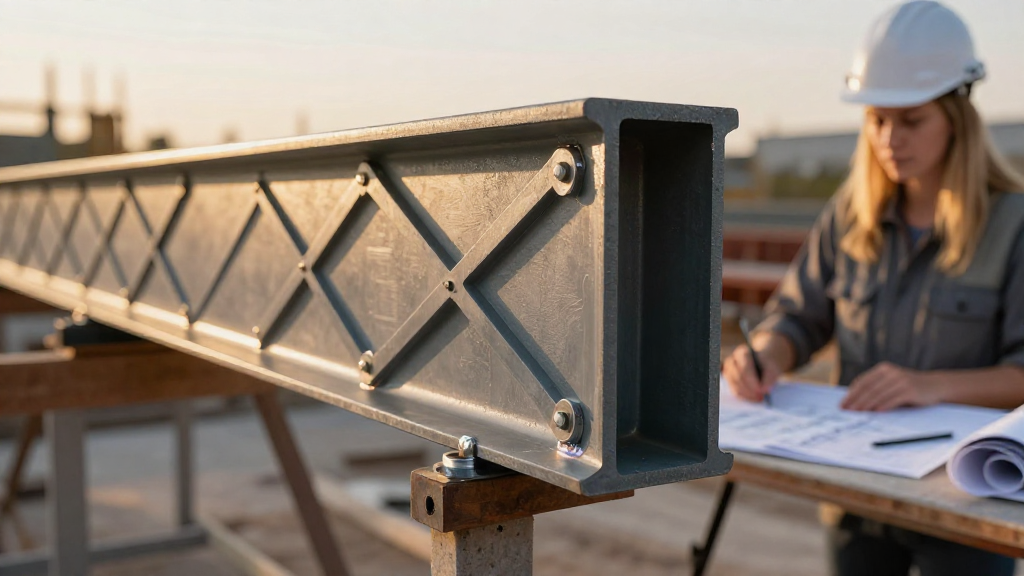
Beam cross bracing is an essential technique in structural engineering that enhances the stability and load-bearing capacity of various structures.
Understanding how beam cross bracing works and its benefits is crucial for architects, engineers, and builders who aim to ensure safety and durability in construction.
What is Beam Cross Bracing?
Beam cross bracing refers to the use of diagonal elements, typically made of steel or wood, installed between beams to provide lateral support.
This system helps to resist lateral forces such as wind, seismic activity, and other dynamic loads.
Why is Beam Cross Bracing Important?
Beam cross bracing serves several critical functions in structural performance:
- Increased Stability: By distributing loads more evenly, beam cross bracing reduces the risk of structural failure.
- Enhanced Load Capacity: Cross braces help beams support larger weights without bending or buckling.
- Improved Energy Absorption: In the event of an earthquake or other external force, cross bracing helps absorb and dissipate energy.
- Reduction of Deflection: Cross bracing minimizes the amount of deformation in beams when subjected to loads.
By understanding these important points, builders can make informed decisions about their projects.
How Does Beam Cross Bracing Work?
Beam cross bracing utilizes a system of diagonal supports that connect beams in a manner that enhances structural integrity.
Key Mechanics of Cross Bracing:
-
Diagonal Placement: Diagonal braces connect the top and bottom beams at angles that help increase stiffness.
-
Tension and Compression: The braces work under tension and compression to counteract lateral forces effectively.
-
Triangular Configuration: The triangular shape created by the braces provides optimal strength and stability.
Benefits of Beam Cross Bracing
When integrated into a structure, beam cross bracing offers numerous benefits:
-
Enhanced Durability: Braced structures can withstand harsh environmental conditions.
-
Greater Design Flexibility: Engineers can utilize beam cross bracing in various designs, from residential to commercial properties.
-
Cost-Effective Solution: Investing in beam cross bracing can save money by preventing costly repairs from structural failures.
What Types of Beam Cross Bracing Are Commonly Used?
Different types of beam cross bracing can be employed depending on the structure’s needs.
Common methods include:
- X-Bracing:
- Forms an ‘X’ shape between beams.
- Provides exceptional stability against lateral loads.
- K-Bracing:
- Utilizes a ‘K’ shape configuration.
- Offers a balance between weight and resistance.
- V-Bracing:
- Forms a ‘V’ with the apex facing downwards.
- Ideal for short spans with limited cross-sectional area.
- Diagonal Bracing:
- Simple diagonal supports that connect at an angle to the beam.
- Useful in smaller structures where added weight is a concern.
What Are the Application Areas of Beam Cross Bracing?
Beam cross bracing can be applied in various construction scenarios:
-
Buildings: Essential in high-rise buildings where stability is vital.
-
Bridges: Enhances the load-bearing ability of bridge spans.
-
Industrial Structures: Utilized in warehouses and factories to support heavy equipment.
-
Towers: Ensures tall structures can withstand wind pressure.
How Do You Design Beam Cross Bracing?
Designing an effective beam cross bracing system involves several key considerations:
-
Load Requirements:
– Understand the expected loads (both live and dead) on the structure. -
Material Selection:
– Choose appropriate materials for the braces considering strength and weight. -
Configuration:
– Select the type of bracing based on the structural shape and needs. -
Connection Points:
– Ensure secure and proper connections to the beams for maximum effectiveness.
What Are the Challenges of Beam Cross Bracing?
While beam cross bracing offers significant benefits, several challenges must be addressed:
- Design Complexity:
-
Incorporating cross bracing may complicate the design process.
-
Material Costs:
-
High-quality materials can increase initial expenses.
-
Space Constraints:
- Limited space can make it difficult to install certain types of cross bracing.
Are There Alternatives to Beam Cross Bracing?
Although beam cross bracing is highly effective, alternative methods can also bolster structural integrity:
-
Shear Walls:
– Solid wall structures that resist lateral forces. -
Moment-Resisting Frames:
– Specialized frames that manage loads through bending. -
Hybrid Systems:
– A combination of cross bracing and other methods for enhanced performance.
Conclusion: The Role of Beam Cross Bracing in Structural Reliability
In summary, beam cross bracing significantly improves beam performance by enhancing stability, load capacity, and durability.
Understanding its mechanics enables builders to create safer and more robust structures, lending peace of mind to architects and clients alike.
With various types and applications, beam cross bracing offers flexibility and effectiveness that can cater to different structural needs.
Incorporating beam cross bracing into construction designs is not just a choice, but a crucial component in achieving structural integrity and resilience.
Investing in this technique pays off in the long run with reduced maintenance costs and increased longevity of the structure.
By choosing to use beam cross bracing or its appropriate alternatives, builders can ensure their projects stand the test of time.