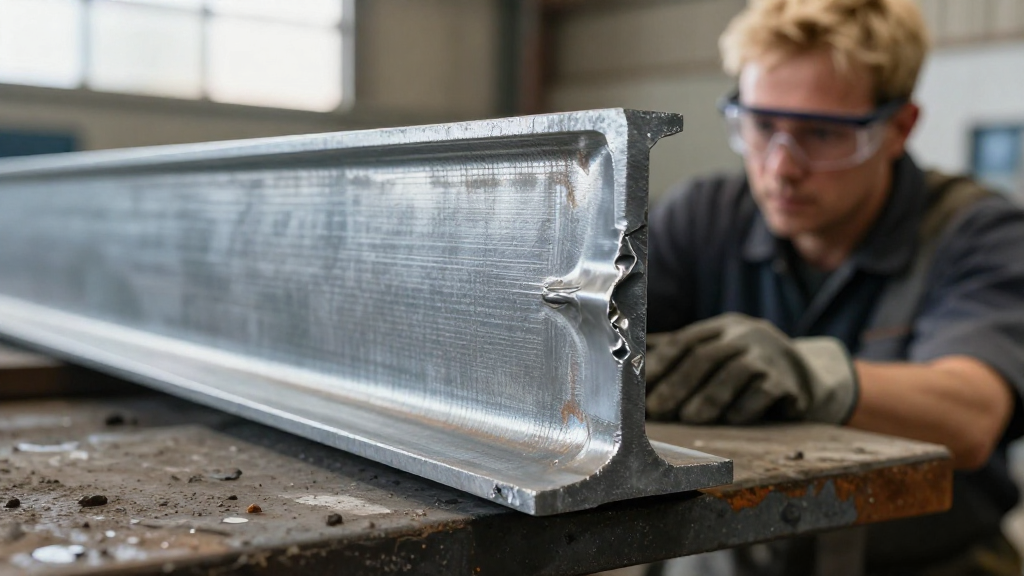
Beam flange local buckling refers to a structural failure mechanism that occurs in the flanges of a beam under compression. This phenomenon is particularly important in civil and structural engineering as it can significantly affect the load-bearing capacity of beams. In this article, we will explore the concept of local buckling of beam flanges, its causes, effects, and preventive measures.
What Causes Beam Flange Local Buckling?
Beam flange local buckling typically occurs when the compression flange of a beam is subjected to excessive loads. The following factors can contribute to this condition:
-
Material Properties
The yield strength and modulus of elasticity of the beam material play crucial roles. For instance, low-strength materials are more prone to buckling. -
Beam Geometry
The thickness of the flange and web, the overall depth of the beam, and the cross-sectional shape significantly influence local buckling susceptibility.
Thinner flanges can buckle more easily under compressive forces. -
Loading Conditions
Concentrated loads or eccentric loading can lead to uneven stress distribution, increasing the risk of local buckling.
Lateral-torsional buckling can also occur if the beam is subject to bending moments. -
Boundary Conditions
The way a beam is supported or restrained can impact its stability. Fixed supports may help minimize local buckling compared to simply supported or free ends.
What Are the Effects of Local Buckling on Beam Performance?
Beam flange local buckling can have various detrimental effects on the structural performance of a beam, including:
-
Reduction in Load-Bearing Capacity
Local buckling can significantly decrease the effective cross-sectional area of a beam, leading to an overall reduction in its strength. -
Altered Load Distribution
As a beam begins to buckle, it may change how loads are transmitted through the structure, potentially affecting adjacent components. -
Increased Deflection
Local buckling can result in greater deflections under load, which may compromise structural integrity and serviceability. -
Failure Risk
In extreme cases, buckled flanges can lead to total failure of the beam, endangering safety and leading to costly repairs.
How Can Local Buckling Be Prevented?
Preventing beam flange local buckling is critical for ensuring the safety and longevity of structural elements. Here are some effective strategies:
-
Proper Design
Engineers should carefully consider the following in the design phase:
– Adequate flange thickness to minimize buckling risk based on the expected loads.
– Geometry that provides sufficient strength and stiffness. -
Material Selection
Choosing high-strength materials can enhance stability and payload capabilities.
Considerations should include the material’s yield stress and ductility. -
Stiffening Elements
Implementing stiffeners or additional bracing can provide extra support to the flanges, reducing local buckling susceptibility.
This is particularly important in long spans or where high loads are expected. -
Load Management
Reducing concentrated loads, ensuring proper load distribution, and utilizing adequate load transfer mechanisms can help maintain stability. -
Regular Inspections
Conducting routine inspections and maintaining structural integrity can help identify and mitigate potential buckling issues before they escalate.
What Are the Types of Buckling Relevant to Beam Flanges?
In addition to beam flange local buckling, several other types of buckling are essential to understand:
-
Overall Buckling
Overall buckling involves the entire beam losing its load-bearing capability, for example, due to lateral-torsional forces. -
Local Buckling in Plates
Similar to flange local buckling, this refers to how thin plates behave under compression and can help inform beam design. -
Web Buckling
While mainly concerned with the web of a beam, web buckling can contribute to overall structural failure, especially in I-beams.
How Do Building Codes Address Local Buckling?
Building codes and design standards often include specific provisions for addressing beam flange local buckling. Organizations, such as the American Institute of Steel Construction (AISC), provide guidelines that:
-
Specify Limit States
Design codes outline limit states for buckling, helping engineers understand how to avoid local buckling in various scenarios. -
Provide Design Equations
Standards often include equations and charts that assist in determining safe loading limits and proper cross-sectional properties necessary to resist buckling. -
Promote Best Practices
Guidance on design procedures and analysis techniques helps ensure structures meet performance demands and safety standards.
Why is Understanding Local Buckling Important?
Understanding beam flange local buckling is crucial for:
-
Safety
Anticipating buckling failures can enhance safety measures in design, construction, and maintenance. -
Structural Integrity
Knowledge of buckling behavior informs better design choices, contributing to the reliability and efficiency of structures. -
Regulatory Compliance
Familiarity with buckling principles ensures adherence to local and national codes, avoiding penalties and ensuring public safety.
Conclusion
In summary, beam flange local buckling is a significant consideration in structural engineering that can greatly impact the performance and safety of load-bearing beams. By understanding the causes, effects, and prevention strategies of local buckling, engineers can design and construct safer, more efficient structures. Regular monitoring and adherence to building codes ensure that structural components remain stable and functional throughout their lifespan.
Understanding the complexities surrounding local buckling is not just an academic exercise; it’s a vital aspect of responsible engineering practice that protects both lives and investments.