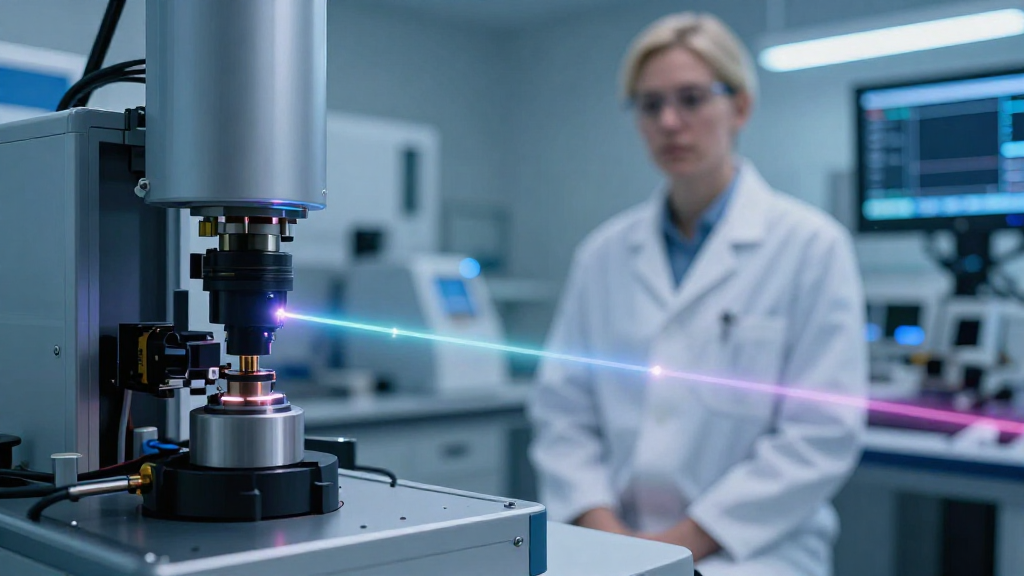
Beam intensity modulation is a fascinating technique utilized primarily in various fields of science and engineering, particularly in telecommunications.
This method enables the control of signal quality and transmission efficiency in advanced systems.
What Does Beam Intensity Modulation Mean?
Beam intensity modulation refers to the process of varying the intensity of laser or light beams in a controlled manner.
This modulation enables the transmission of information through changes in light intensity, similar to how sound waves convey audio through variations in air pressure.
In practical applications, this technique allows data to be encoded onto a beam of light, making it ideal for use in optical communications and imaging technologies.
Where Is Beam Intensity Modulation Used?
The applications of beam intensity modulation are vast and impact numerous industries.
Here are some key fields where this technology plays a significant role:
-
Telecommunications:
– In fiber-optic cables, beam intensity modulation allows data to be sent over long distances.
– Information is encoded in light pulses, enabling high-speed internet and telephone communication. -
Laser Printing:
– Laser printers utilize intensity modulation to produce high-quality images and text.
– The laser beam’s intensity is adjusted based on the image being printed, resulting in distinct shades and details. -
Optical Imaging:
– Medical imaging devices, such as optical coherence tomography (OCT), rely on beam intensity modulation to visualize internal structures in real-time.
– By adjusting the intensity of light, these devices can capture detailed images with high resolution. -
Remote Sensing:
– In environmental monitoring, beam intensity modulation helps to gather data from reflective surfaces, such as water bodies or the atmosphere.
– Sensors detect variations in light intensity to assess conditions like pollution levels or weather patterns. -
Laser Communication:
– Beams of light are rapidly modulated to transmit data wirelessly over distances.
– This technique is gaining attention as a potential solution for overcoming the limitations of traditional radio waves in data transmission.
How Does Beam Intensity Modulation Work?
Beam intensity modulation works primarily through two methodologies: analog modulation and digital modulation.
- Analog Modulation:
- In this method, the intensity of the light beam is varied continuously.
-
It is useful for applications requiring smooth transitions and detailed information, such as in audio transmission.
-
Digital Modulation:
- This approach involves encoding data as discrete changes in light intensity.
- Data is transmitted in binary form, offering greater reliability and efficiency in digital communications.
Both methods depend on specific technologies and components, including:
- Modulators: Devices that adjust the intensity of the light source.
- Laser Sources: High-quality lasers provide a stable beam for modulation.
- Detectors: Receiving devices interpret the modulated signal for further processing.
What Are the Benefits of Beam Intensity Modulation?
The advantages of beam intensity modulation make it an essential technique in modern communication and imaging systems. Here are some benefits:
-
High Data Transfer Rates:
– This method allows for rapid data transmission, reducing the time needed to send large files. -
Enhanced Signal Quality:
– By controlling light intensity, the risk of errors in data transmission is minimized.
– Clear signals lead to better outcomes in telecommunications and imaging. -
Scalability:
– Modulated beam techniques can be easily scaled for various applications, from small systems to larger, more complex networks. -
Reduced Interference:
– Because modulated light can operate at different wavelengths or frequencies, it experiences less interference compared to traditional radio signals.
What Challenges Are Associated with Beam Intensity Modulation?
Despite its many benefits, beam intensity modulation does come with challenges that need to be considered:
-
Environmental Factors:
– Changes in temperature, humidity, or obstacles can affect the quality of the signal transmitted through a modulated beam.
– Ensuring stable operation often requires additional technology to compensate for these variations. -
Complexity of Equipment:
– The technology needed for beam intensity modulation can be complex and costly.
– Specialized knowledge is required to design and operate systems effectively. -
Limited Range:
– While beam intensity modulation is suitable for fiber-optic applications, it might face limitations when used over extensive distances without repeaters.
– Signal loss over long distances can impact performance if not managed correctly.
How Is Beam Intensity Modulation Evolving?
As technology advances, the methods and applications of beam intensity modulation continue to evolve.
Recent innovations include:
- Improved Modulation Techniques:
-
New algorithms and digital signal processing methods enhance modulation efficiency and reliability.
-
Integration with Emerging Technologies:
-
Beam intensity modulation is being integrated with advancements like artificial intelligence and the Internet of Things (IoT) for smarter applications.
-
Terahertz Communication:
- Research is underway to utilize beam intensity modulation in terahertz (THz) frequencies, potentially increasing data transfer rates dramatically.
Conclusion: Why Understanding Beam Intensity Modulation Matters
In conclusion, beam intensity modulation is an essential technique that has numerous applications across various sectors.
Whether in telecommunications, medical imaging, or remote sensing, understanding how this technology works, its advantages, and its challenges can provide valuable insights for those engaged in related fields.
As the technology continues to evolve, staying informed about the advancements in beam intensity modulation will help professionals leverage these innovations to improve efficiency and performance in their respective industries.
With the ongoing pursuit of faster data transfer speeds and more efficient communication systems, beam intensity modulation will likely remain at the forefront of technological development.
By mastering this concept, practitioners can contribute significantly to the fields of technology, science, and even everyday communication.
In this article, we corelated with the target keyword “beam intensity modulation,” providing a comprehensive overview that serves to optimize for SEO while maintaining readability and engagement for the audience.