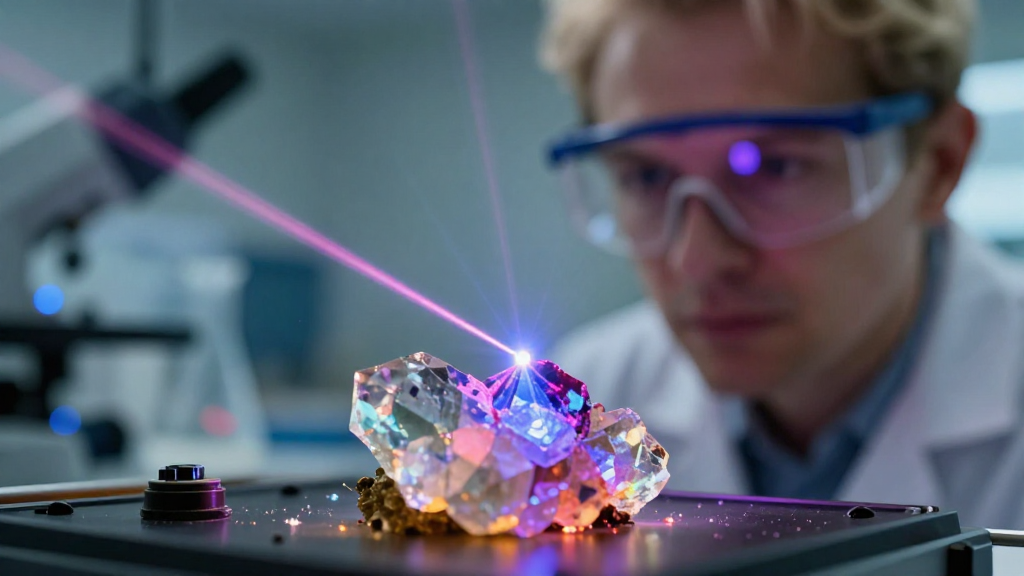
Understanding beam interaction with matter is critical in a range of scientific fields, including physics, chemistry, and materials science.
This article explores the fundamental principles of beam interaction with matter, examining how different types of beams interact with various material types and the implications of these interactions in practical applications.
What Are Beams and Their Types?
Before diving deeper, let’s clarify what we mean by “beams.”
Beams can be broadly classified into several categories based on their properties:
- Light Beams: Consist of photons; examples include lasers and LEDs.
- Particle Beams: Composed of charged or neutral particles, such as electrons, protons, or neutrons.
- Acoustic Beams: Composed of sound waves traversing through a medium.
Each type of beam interacts with matter differently, leading to various applications.
How Does Beam Interaction with Matter Occur?
Beam interaction with matter occurs through several mechanisms, including:
- Scattering: A beam may scatter off particles in matter, changing direction or energy.
- Absorption: Matter absorbs energy from the beam, generally leading to an increase in temperature or excitation of electrons.
- Transmission: Some beams pass through matter with minimal interaction, depending on the material’s properties.
- Reflection: A portion of the beam is reflected back from the surface of the matter.
What Factors Influence Beam Interaction with Matter?
Several factors contribute to how beams interact with matter:
- Wavelength: The wavelength of the beam influences its interaction.
- Shorter wavelengths (like X-rays) can penetrate matter more deeply than longer wavelengths (like visible light).
- Material Properties:
- Density, atomic number, and molecular structure affect how beams are absorbed, scattered, or transmitted.
- Beam Intensity: Higher intensity beams can lead to different interaction effects compared to low-intensity beams.
- Angle of Incidence: The angle at which a beam strikes a surface can significantly alter the interaction type, influencing scattering and reflection.
Understanding these factors is crucial for predicting the outcomes of beam interactions and optimizing applications in various fields.
How Do Different Types of Beams Interact with Matter?
How Do Light Beams Interact with Matter?
Light beams, particularly lasers, are crucial in numerous applications such as microscopy, laser cutting, and optical communication.
Key interactions include:
- Reflection: Smooth surfaces reflect light effectively, enabling applications in mirrors.
- Refraction: When light passes through different media, it bends, which is essential in lenses.
- Absorption: Pigments absorb specific wavelengths of light, leading to the perceived color of materials.
How Do Particle Beams Interact with Matter?
Particle beams like electron or proton beams are widely used in particle physics and materials science.
The interaction of these beams with matter can be defined by:
- Ionization: High-energy particle beams can ionize atoms in the material, potentially leading to nuclear reactions or the creation of free radicals.
- Elastic Scattering: When a particle beam collides with matter, it may bounce off without energy loss, providing information about the material’s structure.
- Inelastic Scattering: Particle beams can transfer energy to matter, leading to excitation and heat generation.
How Do Acoustic Beams Interact with Matter?
Acoustic beams (sound waves) are used in applications like medical ultrasonography and materials testing.
Their interactions include:
- Refraction: Similar to light, sound can bend when moving through different densities.
- Reflection and Transmission: Acoustic waves can reflect off surfaces or pass through materials, depending on acoustic impedance.
- Absorption: Some materials absorb sound energy, which can be harnessed in noise reduction technologies.
What Are the Real-World Applications of Beam Interaction with Matter?
How Is Beam Interaction Used in Medical Imaging?
In the realm of medical imaging, beam interaction with matter is pivotal.
Technologies such as:
- X-ray Imaging: X-rays penetrate soft tissues but are absorbed by denser structures, creating images of bones and organs.
- Ultrasound: Utilizes sound waves that reflect off tissues, offering real-time imaging without radiation exposure.
These imaging techniques rely heavily on understanding how beams interact with biological matter.
How Is Beam Interaction Applied in Material Science?
In material science, researchers analyze how different materials respond to various beams for applications such as:
- Characterization: Techniques like electron microscopy rely on beam interactions for detailed structural imaging.
- Modification: Laser beams can alter materials at a micro or nano-level, affecting properties like strength and electrical conduction.
How Is Beam Interaction Used in Industry?
In industry, beam interactions enable a variety of manufacturing and processing methods such as:
- Laser Cutting and Welding: High-intensity laser beams can cut through metals and plastics, providing precision that traditional methods lack.
- Material Testing: Non-destructive testing methods utilize beams to ensure the integrity and quality of materials, relying on how the beams interact with them.
Conclusion: Why Understanding Beam Interaction with Matter Is Essential
The study of beam interaction with matter provides valuable insights into science and technology.
From medical imaging to industrial applications, understanding how different beams interact with various materials allows researchers and practitioners to innovate and optimize processes.
The continued exploration of beam-matter interactions promises to advance several fields, paving the way for future technological breakthroughs.
Moreover, as advancements in beam technologies continue to evolve, the importance of understanding these interactions becomes even more crucial for continued progress across multiple disciplines.
By maintaining a strong foundation in understanding beam interactions, we can harness their potential for innovative solutions to complex challenges encountered in science and industry today.