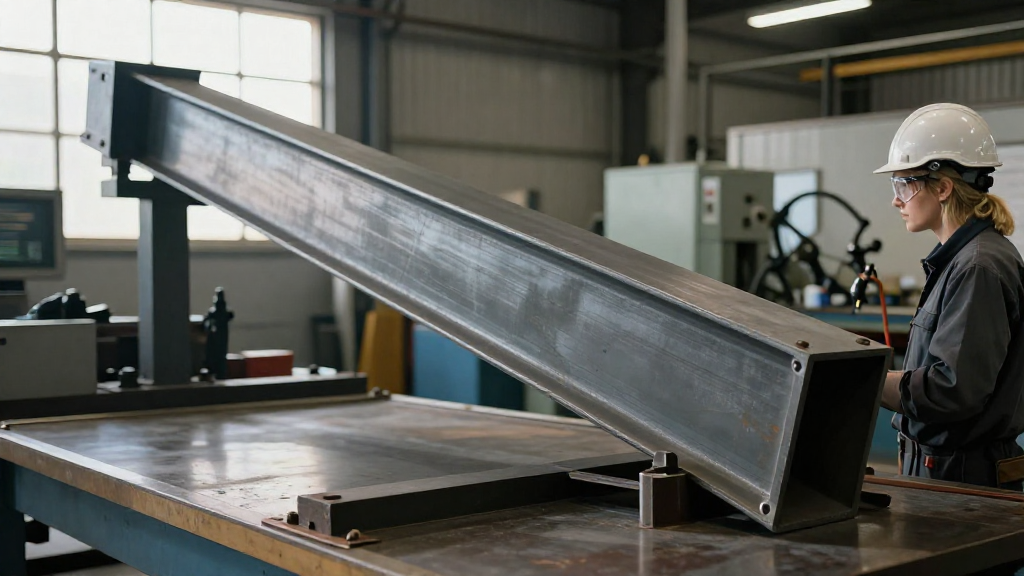
Understanding how beam lateral loads affect beams is crucial for structural engineers and architects alike. These lateral loads can significantly influence the integrity and performance of structural systems.
What Are Lateral Loads?
Lateral loads refer to forces acting horizontally on a structure.
These loads can result from various sources, including:
- Wind Pressure: Strong winds exert forces against buildings and other structures.
- Seismic Activity: Earthquakes can induce lateral forces due to ground movement.
- Structural Imbalance: Unequal loading from weights and usage can result in lateral stress.
When these loads act on beams, they can lead to critical structural challenges that must be addressed.
How Do Lateral Loads Affect Beams?
When it comes to beam lateral loads, the effects can be multifaceted.
Here are some key impacts of lateral loads on beams:
-
Bending Moments:
– Lateral loads induce bending moments in beams, which can lead to increased stress within the material.
– Depending on the magnitude and direction of the lateral load, the bending can lead to deflection, a crucial performance parameter. -
Shear Forces:
– Another direct effect of beam lateral load is the generation of shear forces.
– Shear forces can cause material failure if they exceed the shear capacity of the beam material. -
Deflection and Deformation:
– Beams subjected to significant lateral loads will experience deflection.
– Excessive deflection can hinder functionality and create safety concerns. -
Buckling Risk:
– Lateral loads can increase the risk of buckling in slender beams.
– Buckling occurs when a beam deforms under compressive stress, failing to align with its original shape. -
Material Fatigue:
– Continuous lateral loading can lead to fatigue in the material, decreasing its structural integrity over time.
– This is particularly concerning for materials like steel and reinforced concrete. -
Connection Failure:
– If lateral loads are not adequately accounted for, they can lead to failure at beam connections.
– This can be particularly hazardous in structures where multiple beams converge.
What are the Design Considerations for Lateral Loads on Beams?
Designing beams to resist lateral loads is an essential aspect of structural engineering.
Here are some important design considerations:
-
Material Selection:
– The choice of beam material can significantly influence performance under lateral loads.
– Steel, for instance, can perform well under tension and compression, making it ideal for resisting lateral loads. -
Beam Size and Shape:
– Larger and appropriately shaped beams provide better resistance to lateral forces.
– The moment of inertia and the section modulus are important factors in this regard. -
Bracing Systems:
– Incorporating bracing elements, such as cross-braces, can enhance stability and resistance against lateral loads.
– Bracing helps distribute forces more evenly throughout the structure. -
Connection Design:
– Secure and robust connections prevent failure points where lateral loads can lead to structural weakness.
– Engineers must carefully analyze how connections handle the forces introduced by lateral loading. -
Load Path:
– Understanding the load path is critical for anticipating how lateral loads affect the overall structure.
– A well-defined load path ensures that lateral forces are efficiently transmitted to the foundation.
How Can You Analyze Beam Lateral Load Effects?
Analyzing the effects of beam lateral load is essential for safe and effective design practices.
Here are commonly used methods for analysis:
-
Finite Element Analysis (FEA):
– FEA allows engineers to simulate how beams react to lateral loads under various conditions.
– This method can provide insights into stress distribution, deformation, and potential failure points. -
Moment-Curie Method:
– This traditional method helps calculate the maximum moments and shears on beams due to lateral loads.
– Engineers apply principles from static equilibrium to analyze forces. -
Structural Codes:
– Following established structural codes, such as the American Institute of Steel Construction (AISC) or the American Concrete Institute (ACI) guidelines, ensures that beams are designed to withstand expected lateral loads.
– Compliance with these codes improves both safety and reliability. -
Load Combinations:
– Understanding the combinations of loads (e.g., dead, live, wind) is vital for ensuring accurate analysis and design.
– Load combinations must reflect real-life scenarios to guarantee adequate performance.
Can Technology Help with Lateral Load Design?
In today’s engineering landscape, technology plays a vital role in understanding and designing for beam lateral load effects.
Here are two ways technology aids in this process:
-
Building Information Modeling (BIM):
– BIM software allows for the visualization and simulation of structures under lateral loads.
– This facilitates better design decisions and identifies potential issues early in the design process. -
Automation Tools:
– Automated design tools can calculate necessary specifications quickly while allowing for various lateral load scenarios.
– This increases design accuracy and reduces the time taken for thorough analysis.
How Can You Ensure Long-Term Performance of Beams Under Lateral Loads?
Ensuring long-term performance of beams under lateral loads requires ongoing attention:
-
Regular Inspections:
– Conducting regular inspections helps identify signs of stress, deflection, and wear over time.
– Early detection is critical for maintenance or structural improvements. -
Maintenance Programs:
– Establishing a maintenance program can keep beams in optimal condition and ensure they perform as designed.
– Addressing minor issues before they escalate is key. -
Retrofitting Strategies:
– In older structures, retrofitting may be necessary to enhance resistance to contemporary lateral load requirements.
– This can involve adding bracing, increasing beam size, or strengthening connections.
Conclusion
Understanding how beam lateral loads affect beams is essential for safety and longevity in construction.
With proper design considerations, analysis techniques, and technological advancements, engineers can mitigate the adverse effects of lateral loading.
Maintaining awareness of the unique challenges associated with lateral loads ensures structures remain resilient and functional over time.
As the industry evolves, ongoing education and adaptation to new methods and technologies will further enhance the performance and safety of beam systems under lateral loads.