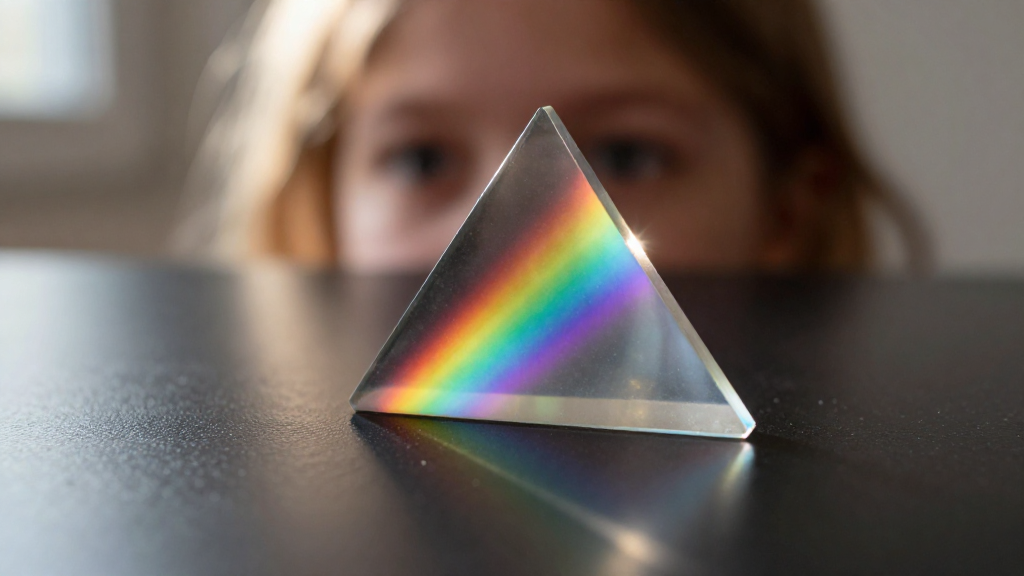
The optical path of a beam refers to the trajectory that light takes as it travels through different media. Understanding this concept is crucial for numerous applications in physics, engineering, and even photography.
What Exactly Is a Beam Optical Path?
The beam optical path can be defined as the integral journey of light as it propagates.
This pathway is determined by various factors, including:
- The medium it travels through (air, glass, water, etc.)
- The wavelength of the light
- The geometry and configuration of the optical elements involved (lenses, mirrors, fibers)
In optics, the concept of the optical path length (OPL) is vital, as it quantifies how far light effectively travels when passing through a medium.
How to Calculate the Optical Path Length?
Calculating the optical path is essential for designing optical systems.
The formula for determining the optical path length is:
[ \text{OPL} = n \times d ]
Where:
- OPL is the optical path length
- n is the refractive index of the medium
- d is the geometric distance the light travels
For example, if light travels through a medium with a refractive index of 1.5 for a distance of 2 meters, the optical path is:
[ \text{OPL} = 1.5 \times 2 = 3 \text{ meters} ]
This means that, effectively, the light has traveled a longer distance due to the properties of the medium.
Why Is the Beam Optical Path Important in Optics?
Understanding the beam optical path is crucial for numerous reasons, including:
- Designing Optical Instruments: Engineers need this knowledge to optimize lenses and mirrors for telescopes, microscopes, and cameras.
- Fiber Optics: The behavior of light in fiber optics heavily depends on the optical path, affecting signal quality and transmission distances.
- Interference Patterns: In physics, the optical path difference between beams helps to understand and predict interference patterns crucial for experiments.
- Image Formation: In imaging systems, the optical path determines how an image is formed and its clarity.
What Factors Affect the Optical Path of a Beam?
Several factors can influence the optical path of a beam:
-
Refractive Index: Different materials have different refractive indices, which can significantly change the optical path.
-
Wavelength of Light: As light travels through various media, different wavelengths will experience varying degrees of refraction.
-
Geometry of Optical Elements: Curved lenses can bend light in specific ways, affecting the overall path.
-
Surface Quality: Imperfections in lenses and mirrors can disrupt the path of light, leading to distortion and loss of focus.
How Does the Beam Optical Path Influence Light Behavior?
The beam optical path directly influences several aspects of light behavior, such as:
-
Refraction: The bending of light when transitioning between media.
-
Reflection: Changes in the direction of light upon hitting a reflective surface.
-
Diffraction: This occurs when light encounters obstacles or openings, which can affect the beam’s path.
-
Interference: Occurs when two or more beams overlap, leading to constructive or destructive interference based on their optical paths.
How Can You Visualize the Beam Optical Path?
Visualization is critical when trying to comprehend the beam optical path.
Here are some effective methods:
-
Ray Diagrams: These show the path of light as straight lines and help in understanding how the angle of incidence affects reflection and refraction.
-
Simulation Software: Tools like Zemax or OpticStudio allow for computer-aided design of complex optical systems, showing detailed beam paths.
-
Physical Experiments: Using lasers and lenses, you can physically observe how light travels through different materials and configurations.
What Are Some Practical Applications of the Beam Optical Path?
The implications of understanding the optical path of a beam extend into various industries:
-
Medical Imaging: Techniques like Optical Coherence Tomography (OCT) rely on precise optical paths to visualize internal structures of tissues.
-
Communications: Fiber optic technology uses well-calculated optical paths to transmit data over long distances without significant loss.
-
Laser Technology: From cutting materials to medical surgeries, understanding the optical path ensures accuracy and efficiency in laser applications.
-
Photography and Film: Knowledge of the optical paths of beams enables photographers to capture clear and vivid images.
Conclusion: Why Knowing the Beam Optical Path Matters
In summary, the optical path of a beam is much more than a theoretical concept; it is a foundational aspect of various fields.
Whether you are designing optical systems, transmitting data over fiber optics, or understanding light behavior, knowledge of the optical path is indispensable.
By grasping the factors that influence the optical path and its implications, one can achieve better results in scientific experiments, technological applications, and everyday scenarios involving light.
Embracing this knowledge opens doors to innovations and creative solutions in both professional and academic settings.