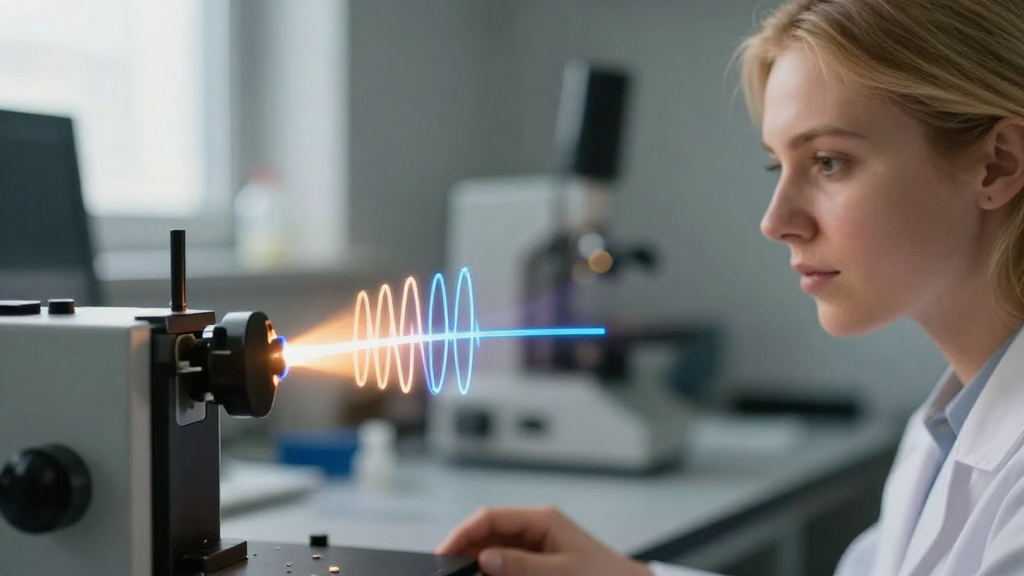
Beam polarization is a crucial concept in the field of optics that helps us understand the orientation of light waves.
In this article, we will explore what beam polarization is, how it occurs, its significance in various applications, and the different types of beam polarization.
What Causes Beam Polarization?
Beam polarization is caused by the oscillation of light waves, which can occur in various orientations.
- Electromagnetic Waves: Light is an electromagnetic wave, comprised of oscillating electric and magnetic fields.
- Orientation: The direction in which these electric fields oscillate defines the polarization of the beam.
- Interaction with Surfaces: When light interacts with certain materials, it can become polarized, such as when reflected off a surface or transmitted through a filter.
Examples of how beam polarization can occur:
– Reflection: When light reflects off a non-metallic surface, such as water or glass, the reflected light can become polarized.
– Transmission: Light can also become polarized when passing through specific filters designed to allow only certain orientations of light waves.
Why Is Beam Polarization Important?
Understanding beam polarization is essential for a number of reasons:
- Optical Devices: Many optical devices rely on polarized light for their functionality.
- Improved Contrast: In photography and imaging, polarized light can enhance contrast and reduce glare.
- Communication: Polarized light is used in fiber optics for effective data transmission and communication systems.
- Scientific Research: Many scientific instruments, including telescopes and microscopes, depend on beam polarization to provide accurate data.
What Are the Types of Beam Polarization?
There are primarily three types of beam polarization in optics:
1. Linear Polarization
In linear polarization, the electric field oscillates in a single direction.
- Features:
- The light waves are confined to a specific plane.
-
It can be achieved through reflection, refraction, or passing through a polarizing filter.
-
Applications: This type of polarization is commonly used in sunglasses to reduce glare from surfaces and in LCD screens.
2. Circular Polarization
Circular polarization occurs when the electric field vector rotates in a circular motion as the wave travels.
- Features:
-
The wave can be either right-handed or left-handed, depending on the direction of the rotation.
-
Applications: Circular polarization is utilized in 3D movie glasses and some types of radar systems for improved resolution.
3. Elliptical Polarization
Elliptical polarization is a generalized form of circular polarization, where the electric field traces out an ellipse.
- Features:
-
This type of polarization can be seen as a mix of linear and circular polarizations.
-
Applications: It is often studied in advanced optics and radar technology.
How Can Beam Polarization Be Measured?
Measuring beam polarization is vital in optics for various practical applications. Here are a few methods used to determine the degree and type of polarization:
- Polarimeters: Instruments designed specifically to measure the polarization state of light.
- Photo-detectors: Used to capture the intensity of light in various polarization states.
- Interferometry: This technique analyzes the interference patterns created by light waves of different polarizations.
What Are Some Common Applications of Beam Polarization?
Beam polarization finds extensive use in various fields, making it an essential concept in modern science and technology:
1. Photography and Videography
- Polarizing Filters: Photographers use polarizing filters to reduce reflections and enhance colors, improving image quality.
- Lens Technology: Polarization techniques are used to manufacture better camera lenses.
2. Display Technology
- LCD Screens: Liquid Crystal Displays rely on beam polarization to control the light passing through the screen, allowing for clearer images.
- E-Readers: E-ink displays also utilize polarized light to improve visibility under sunlight.
3. Communications
- Fiber Optics: Beam polarization maximizes data transmission efficiency.
- Polarization Division Multiplexing: This technology increases the capacity of optical networks by using different polarization states.
4. Astronomy
- Measurement of Cosmic Polarization: Astronomers study the polarization of light from celestial bodies to gain insights into cosmic events and structures.
- Polarimetric Studies: Instruments in telescopes utilize beam polarization to measure temperature and density in stars and galaxies.
5. Medical Imaging
- Polarized Light in Microscopy: Used to enhance contrast in images of biological tissues.
- Optical Coherence Tomography (OCT): A technique that benefits from beam polarization to provide detailed imaging.
What Are the Challenges with Beam Polarization?
Despite its advantageous applications, beam polarization poses some challenges:
- Environmental Sensitivity: The degree of polarization can vary based on environmental factors such as temperature, humidity, and atmospheric conditions.
- Material Limitations: Not all materials provide effective polarization, which can limit device efficiency.
- Complexity of Measurement: Accurately measuring polarization requires sophisticated equipment and techniques that might not be available universally.
Conclusion: The Significance of Understanding Beam Polarization
In conclusion, beam polarization is a fundamental concept in optics that offers valuable insights into the behavior of light waves.
Its implications range from enhancing our everyday experiences in photography and display technology to advancing scientific research and telecommunications.
Understanding the types of polarization and measuring techniques can lead to innovations in various fields.
As we continue to explore and apply the principles of beam polarization in optics, we can unlock further technological advancements that shape our world.
Whether you are a student, researcher, or professional in the field of optics, grasping the concept of beam polarization is instrumental for enhancing comprehension and application.