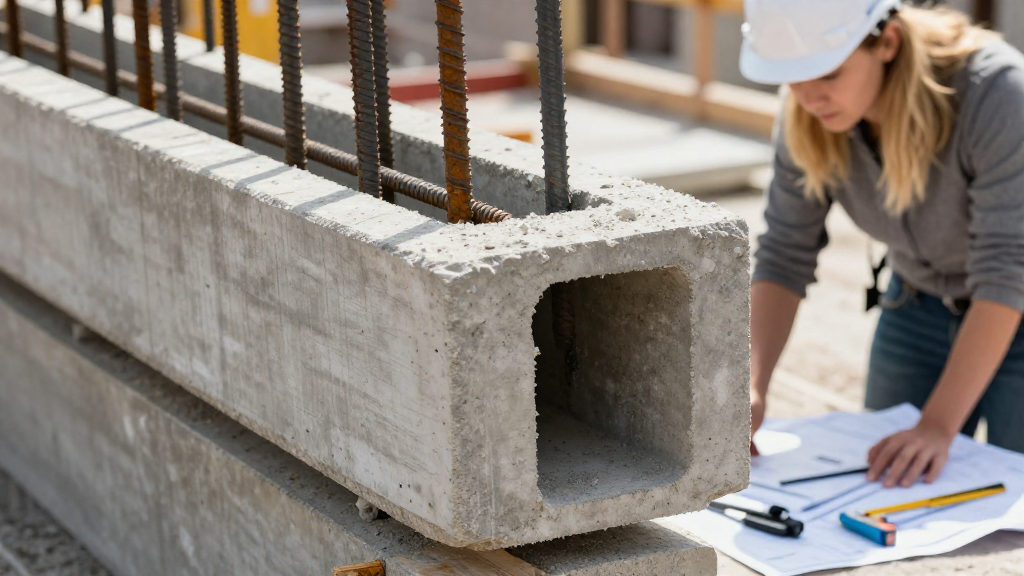
Beam reinforcement is a crucial aspect of structural engineering that ensures the stability and strength of buildings and infrastructure.
In this article, we will explore the fundamental concepts, materials used, benefits, and applications of beam reinforcement.
What is Beam Reinforcement?
Beam reinforcement refers to the process of strengthening a structural beam using various materials and techniques.
Reinforced beams are designed to withstand tensile, compressive, and shear forces which are critical during loads such as heavy traffic, environmental forces, and building occupancy.
The reinforcement typically consists of reinforcing bars (often known as rebar) or steel plates embedded within concrete beams to enhance their load-bearing capacity.
Why is Beam Reinforcement Important?
-
Increased Load Capacity:
– Beam reinforcement allows structures to hold greater loads safely. -
Improved Durability:
– It extends the lifespan of a structure by preventing cracking and failure under stress. -
Flexibility:
– Reinforced beams provide the ability to absorb and distribute loads more evenly across a structure, enhancing its overall stability. -
Resistance to Environmental Forces:
– Reinforced structures cope better with earthquakes, wind forces, and other external stressors.
How Does Beam Reinforcement Work?
Beam reinforcement primarily functions by integrating tensile strength within concrete beams that naturally possess high compressive strength but are weak in tension.
The following key concepts illustrate how beam reinforcement is effective:
1. Understanding the Materials
- Concrete:
-
While concrete is strong under compression, it has low tensile strength.
-
Reinforcing Bars (Rebar):
-
High-strength steel bars are used to handle tensile stresses.
-
Fiber Reinforcement:
-
Small fibers embedded in concrete impart additional tensile resistance and crack control.
-
Steel Plates:
- Often used for additional strength in specific applications.
2. The Reinforcement Process
- Design Phase:
-
Engineers calculate the loads that the beam will encounter.
-
Placement of Rebar:
-
Rebars are placed in specific patterns based on the calculated stresses, often in a grid or vertical/horizontal arrangement.
-
Pouring Concrete:
- Once the rebar is set, concrete is poured to encase the steel, creating a composite material that leverages both concrete and steel strengths.
3. Load Distribution
-
The combination of rebar and concrete works by distributing loads across the entire beam.
-
When the beam experiences bending due to the applied load:
- Compression occurs on the top side of the beam.
-
Tension occurs on the bottom side.
-
Reinforcing bars placed in the tension zone resist these tensile forces, while the concrete handles compressive forces above.
What are the Types of Beam Reinforcement?
There are various reinforcement methods depending on the joining and loading conditions of the beams. Below are common types:
-
Flexural Reinforcement:
– Ensures beams can resist bending moments. -
Shear Reinforcement:
– Added to prevent shear failure, typically through vertical stirrups. -
Lateral Support:
– Reinforces against buckling in slender beams. -
Pre-stressed Reinforcement:
– Involves tensioning cables before the application of load to improve performance.
What are the Benefits of Beam Reinforcement?
Beam reinforcement has numerous advantages that span cost effectiveness and structural integrity:
- Safety:
-
Provides structural redundancy that prevents sudden failures.
-
Cost-Effectiveness:
-
Although it may require upfront investment, it reduces maintenance costs over time.
-
Versatility:
-
Applicable to various structures including bridges, high-rises, and residential buildings.
-
Enhanced Performance:
- Reinforced beams can withstand both static and dynamic loads better than unreinforced ones.
Where is Beam Reinforcement Used?
Beam reinforcement finds applications in many areas of construction including:
- Residential Buildings:
-
For foundations, roof beams, and floor systems.
-
Commercial Structures:
-
In offices and shopping centers for enhanced load-bearing capacity.
-
Bridges:
-
Reinforced to manage heavy traffic loads and to withstand environmental impacts.
-
Industrial Buildings:
- Necessary for warehouses and factories that need larger open spaces.
How Do Engineers Optimize Beam Reinforcement?
Engineers utilize various techniques to ensure that beam reinforcement meets safety standards while minimizing material use.
-
Finite Element Analysis (FEA):
– A computational method that simulates how beams will perform under various conditions. -
Design Codes:
– Following standards set by organizations to ensure safety and reliability. -
Material Selection:
– Choosing high-strength, lightweight materials to optimize performance and maintain cost-efficiency. -
Regular Inspections:
– Monitoring for any wear and potential failures post-installation.
Conclusion: The Importance of Understanding Beam Reinforcement
In summary, understanding beam reinforcement is essential for anyone involved in structural engineering and construction.
From improving safety and durability to optimizing cost and performance, reinforced beams play a vital role in modern infrastructure.
By knowing the materials, processes, and benefits of beam reinforcement, engineers can create structures that are not only safe but also efficient and cost-effective.
As technology progresses, innovations in beam reinforcement will continue to enhance the design and functionality of our built environment.
Investing in proper beam reinforcement methods will ensure that our roads, bridges, and buildings stand the test of time.