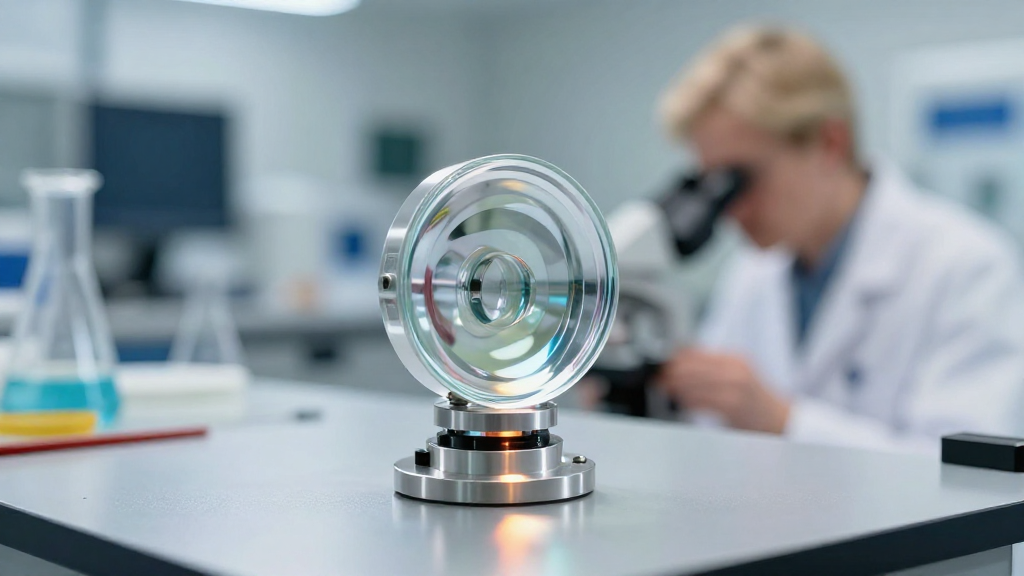
A beam shaping lens is a crucial optical component used to modify the profile of light beams for various applications.
What Does a Beam Shaping Lens Do?
A beam shaping lens is designed to convert an incoming light beam into a specific shape.
This modification can be essential for:
- Improving focus
- Enhancing uniformity
- Specialized applications in fields like laser technology and medical equipment
By manipulating the beam’s characteristics, these lenses allow for precise control of light transmission.
How Do Beam Shaping Lenses Work?
Understanding how a beam shaping lens operates involves some key concepts of optics.
Refraction and Reflection
The primary mechanism behind a beam shaping lens is refraction, which is the bending of light as it passes through different materials.
- Convex lenses focus light to a single point
- Concave lenses spread light out
Beam shaping lenses can use combinations of these lens types and sophisticated geometrical designs to achieve the desired beam profile.
Wavefront Engineering
Additionally, beam shaping lenses can manipulate the wavefronts of light.
A tailored wavefront can accomplish various tasks including:
- Creating Gaussian profiles
- Generating flat-top beams
This engineering ensures the light behaves in a specific manner once it exits the lens.
What Are the Types of Beam Shaping Lenses?
In the realm of beam shaping, several types of lenses can be utilized based on the needs of a given application.
1. Aspheric Lenses
Aspheric lenses are designed with a non-spherical surface that can reduce optical aberrations.
These lenses provide:
- Enhanced image clarity
- Better light efficiency
2. Diffractive Optical Elements (DOEs)
Diffractive optical elements utilize diffraction to manipulate light, often producing complex patterns.
They can be crafted to create:
- Various beam shapes
- Tailored intensity distributions
3. Cylindrical Lenses
Cylindrical lenses are used to shape light in one dimension.
This type of lens can focus a beam into a line, making it particularly useful in applications like laser cutting.
4. Fresnel Lenses
Fresnel lenses use a series of concentric rings to focus light.
They are lightweight and compact, making them ideal for:
- Solar concentrating systems
- Projectors
Where Are Beam Shaping Lenses Used?
Beam shaping lenses find applications across a wide range of industries.
1. Laser Applications
In laser technology, beam shaping lenses are critical for achieving the desired output power and focus.
Uses include:
- Industrial cutting and welding
- Medical procedures like laser surgery
2. Optical Systems
Beam shaping lenses are employed in various optical systems, including:
- Cameras
- Projectors
- Microscopes
3. Lighting Design
In lighting design, beam shaping lenses help to control light distribution.
This use ensures that lighting fixtures provide:
- Adequate illumination
- Aesthetic appeal
4. Telecommunications
In optical fiber communications, beam shaping lenses can enhance signal quality and transmission efficiency.
What Benefits Do Beam Shaping Lenses Offer?
The advantages of using a beam shaping lens are numerous and can significantly impact performance.
Key benefits include:
- Improved Light Control: Granting precise manipulation of the beam profile
- Reduced Aberrations: Eliminating distortions often associated with standard lenses
- Enhanced Uniformity: Providing consistent light distribution
By incorporating beam shaping lenses into systems, performance and efficiency can be significantly improved.
What Should You Consider When Choosing a Beam Shaping Lens?
Selecting the right beam shaping lens involves several considerations to align with specific applications.
1. Wavelength Compatibility
It’s essential to choose a lens compatible with the wavelength of light being used.
Many readings can change depending on the wavelength, affecting overall performance.
2. Intensity Distribution Requirements
Consider the intensity distribution your application demands.
Do you need a uniform output or a specific profile?
Deciding this will steer you toward the appropriate beam shaping lens type.
3. Size and Packaging
The size and mounting options for the lens are crucial.
Ensure the lens can fit into existing optical setups without requiring significant modifications.
4. Material Considerations
The choice of materials can influence light transmission and lens durability.
Common materials include:
- Glass: Offers high-quality optics
- Plastic: Lightweight and cost-effective
How to Maintain a Beam Shaping Lens?
To ensure longevity and optimal performance of a beam shaping lens, proper maintenance is essential.
1. Regular Cleaning
Contaminants and dust can impact performance.
- Use a microfiber cloth
- Employ suitable optical cleaning solutions
2. Proper Handling
Always handle lenses with care to avoid scratches or damage.
3. Storage Conditions
Store lenses in a climate-controlled environment to prevent degradation.
Ensure they are protected from harsh conditions where possible.
Conclusion: Why Invest in Beam Shaping Lenses?
In a world where precise optical performance is paramount, investing in a beam shaping lens can enhance the capabilities of many technologies.
From laser applications to telecommunications, these lenses facilitate improved light control and uniformity, making them indispensable in a variety of fields.
By understanding the importance, types, benefits, and maintenance of beam shaping lenses, professionals can better choose and utilize these optical components for their specific needs.
If you’re considering implementing beam shaping lenses in your projects, remember to evaluate your requirements carefully.
This investment could significantly improve the functionality and efficiency of your optical systems.