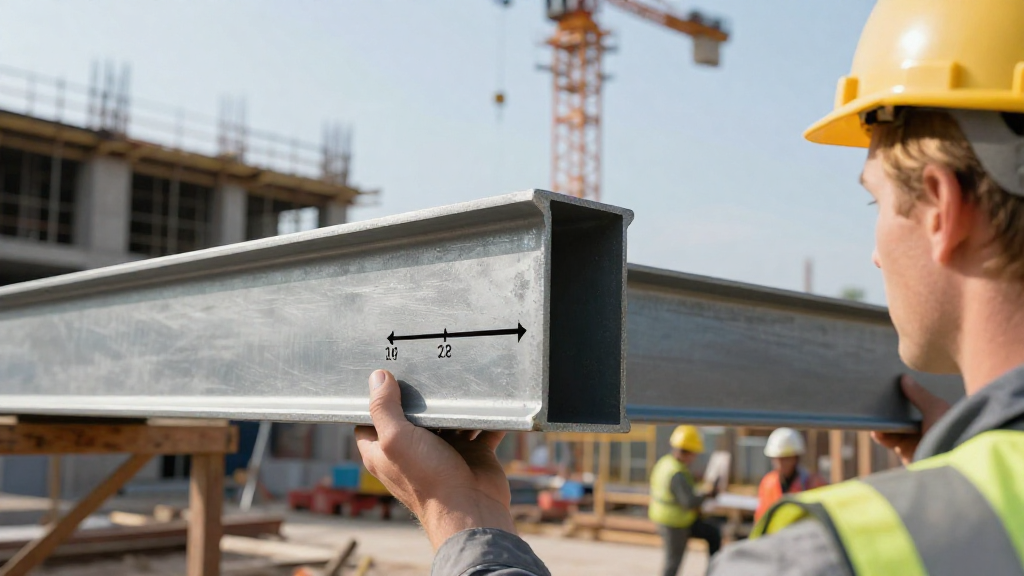
When designing structures, engineers often consider the beam span to depth ratio to ensure optimal performance and safety.
What Is Beam Span to Depth Ratio?
The beam span to depth ratio is a critical parameter in structural engineering.
It is defined as the relationship between the span of a beam (the distance between its supports) and its depth (the vertical dimension).
This ratio is essential for determining the structural integrity, flexibility, and overall performance of beams in various architectural applications.
How Is Beam Span to Depth Ratio Calculated?
To calculate the beam span to depth ratio, you can use this straightforward formula:
[ \text{Beam Span to Depth Ratio} = \frac{\text{Span of Beam}}{\text{Depth of Beam}} ]
Here’s a breakdown of the terms:
- Span of Beam: Measured in feet or meters, it is the distance between the supports.
- Depth of Beam: Also measured in feet or meters, it refers to the height of the beam from its bottom to its top.
For instance, if a beam spans 20 feet and has a depth of 2 feet, the calculation would look like this:
[ \text{Beam Span to Depth Ratio} = \frac{20}{2} = 10 ]
This means the ratio is 10:1.
What Is the Ideal Beam Span to Depth Ratio?
The ideal beam span to depth ratio varies depending on several factors, including:
- Material: Different materials (steel, wood, concrete) have varying properties that affect the ideal ratio.
- Load Conditions: Static vs. dynamic loads and their directions play a crucial role.
- Beam Type: The type of beam (I-beam, rectangular, T-beam) impacts the required depth for optimal performance.
What Are the Recommended Ratios for Different Materials?
Understanding the beam span to depth ratio can help ensure that the beam doesn’t deflect excessively or fail under load. Here are some general recommendations for different materials:
-
Wood Beams:
– For residential applications, a ratio of L/16 (where L is the span) is ideal.
– For floors with heavier loads, you might lower this to L/12. -
Steel Beams:
– A common ratio is L/18 for non-redundant beams.
– For beams with heavy loading, consider L/12 or even L/10. -
Concrete Beams:
– For simply supported beams, a ratio of L/12 is recommended.
– For continuous beams, use L/16 as a starting point.
Why Is Beam Span to Depth Ratio Important?
The beam span to depth ratio is significant for several reasons:
-
Load-Bearing Capacity: A proper ratio ensures that a beam can carry the expected loads without excessive deflection.
-
Deflection Control: This ratio helps control beam deflection, leading to a safer and more comfortable environment.
-
Material Efficiency: By optimizing the ratio, engineers can use materials more effectively, reducing costs while maintaining strength.
-
Aesthetic Considerations: Depending on the design requirements, the ratio may also influence the visual appeal of the structure.
Are There Guidelines to Follow for Beam Span to Depth Ratio?
Yes, there are various guidelines and codes engineered to help determine the beam span to depth ratio.
The American Institute of Steel Construction (AISC) and the American Concrete Institute (ACI) provide numerous resources.
Here are some guidelines to consider:
-
AISC Guidelines:
– Allow for up to L/360 for live loads to ensure deflection does not exceed acceptable limits. -
ACI Standards:
– Suggest a minimum ratio of 1:10 for beams under certain loading conditions. -
Local Building Codes:
– Always check local building codes as they may impose additional requirements based on environmental factors.
Can You Increase Beam Depth to Improve the Ratio?
Yes, increasing beam depth can improve the beam span to depth ratio.
Advantages of Increasing Beam Depth:
-
Increased Strength: A thicker beam can better withstand higher loads.
-
Reduced Deflection: Increased depth helps distribute loads more evenly, minimizing deflection.
-
Adaptability: Taller beams can better accommodate HVAC systems, plumbing, and electrical conduits.
Disadvantages of Increasing Beam Depth:
-
Aesthetic Issues: Thicker beams may not fit with the intended design of the space.
-
Cost Implications: More material leads to higher costs.
-
Weight: Heavier beams require stronger support structures.
What Happens If You Ignore the Beam Span to Depth Ratio?
Ignoring the beam span to depth ratio can lead to several significant issues:
-
Excessive Deflection: This can result in cracks in ceilings or walls, leading to costly repairs.
-
Structural Failure: A poorly designed beam may collapse under load, endangering lives and damaging property.
-
Legal Repercussions: You may face legal issues if a structure does not meet building codes or safety standards.
Conclusion: What Is the Ideal Beam Span to Depth Ratio?
Determining the ideal beam span to depth ratio is essential for the success and safety of structural design.
The relationship between span and depth is influenced by various factors including material, type of beam, and load conditions.
By understanding the guidelines, calculations, and effects of this ratio, engineers can ensure that buildings are both aesthetically pleasing and structurally sound.
In summary, always aim for a well-researched and calculated beam span to depth ratio to guarantee the safety and durability of your structures. Make sure to consult local codes and engineering standards to ensure compliance and optimal design.