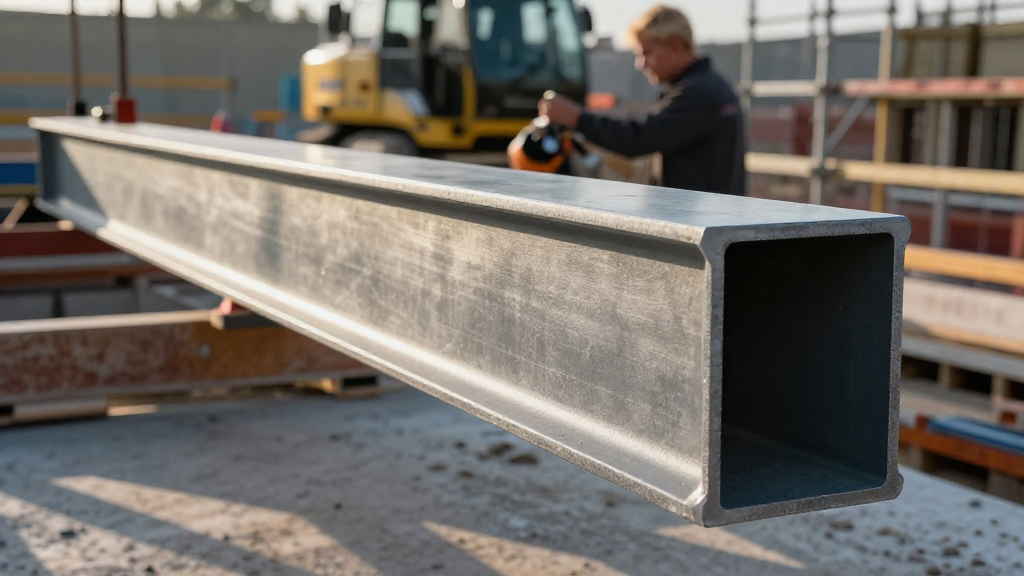
In the world of structural engineering, understanding the concept of beam stiffness vs strength is essential for designing safe and effective structures.
What is Beam Stiffness?
Beam stiffness is a measure of a beam’s resistance to deformation when subjected to an applied load.
It quantifies how much a beam will deflect under a given load.
Key factors influencing beam stiffness include:
- Material Type: Different materials exhibit varying stiffness properties.
- Beam Geometry: The shape and size of the beam significantly affect its stiffness.
- Support Conditions: How a beam is supported will determine its stiffness characteristics.
To calculate beam stiffness, engineers often use the formula:
[
\text{Stiffness} (k) = \frac{3EI}{L^3}
]
Where:
– ( E ) is the modulus of elasticity of the material
– ( I ) is the moment of inertia of the beam’s cross-section
– ( L ) is the length of the beam
Why is Beam Stiffness Important?
Understanding beam stiffness is crucial for several reasons, including:
- Structural Integrity: Ensures that the beam can support the intended loads without excessive deformation.
- Comfort: Minimizes deflection, which can affect the usability of a space (think of floors that bounce when walked on).
- Safety: A stiff beam reduces the risk of structural failure.
How Does Beam Strength Differ?
While beam stiffness focuses on a beam’s ability to resist deformation, beam strength pertains to its capacity to withstand maximum loads without failure.
Strength is usually characterized by:
- Yield Strength: The maximum stress a material can endure before it begins to deform plastically.
- Ultimate Strength: The maximum stress a material can withstand before it fails entirely.
To evaluate beam strength, engineers typically refer to parameters such as:
- Material Properties: Different materials have different yield and ultimate strengths.
- Cross-Sectional Area: A larger cross-section generally contributes to improved strength.
The formula for allowable loads can be simplified as:
[
\text{Load} (P) = \sigma \times A
]
Where:
– ( \sigma ) is the yield or ultimate strength of the material
– ( A ) is the cross-sectional area of the beam
Why is Beam Strength Relevant?
Knowing the strength of a beam is vital for multiple reasons:
- Load Capacity: It dictates how much weight a beam can safely carry.
- Design Parameters: Engineers must consider the strength to ensure that safety factors are met.
- Failure Prevention: Understanding strength helps prevent catastrophic failures.
What is the Relationship Between Beam Stiffness and Strength?
Beam stiffness vs strength can be interrelated but inherently represent different properties.
A beam can be stiff but not particularly strong or vice versa.
For example:
- A material like rubber may be very flexible (low stiffness) but can handle significant stress (high strength).
- Conversely, a carbon fiber beam can be very stiff but might also be prone to failure under excessive load despite its stiffness.
Balancing these two aspects is crucial in engineering.
The ideal beam design involves:
- Creating a structure that is stiff enough to avoid excessive deflection.
- Ensuring that it possesses adequate strength to support all expected loads.
Improper balance can lead to issues such as:
- Sway: a stiff but weak beam could sway excessively.
- Cracking: a strong but flexible beam could experience undesirable cracking under load.
How to Choose Between Stiffness and Strength?
When designing structures, what considerations govern the decision between beam stiffness and strength?
Here are important factors to consider:
-
Intended Use:
– Is the beam meant for a floor in a residential building, or is it part of a bridge?
– Different applications will have varying requirements for stiffness and strength. -
Load Types:
– Are the loads static (like furniture) or dynamic (like moving vehicles)?
– Dynamic loads often require greater considerations for stiffness. -
Material Selection:
– The choice of materials can affect both stiffness and strength.
– Consider materials like steel, aluminum, or reinforced concrete depending on requirements. -
Cost and Availability:
– Stronger materials may come at a premium, while an emphasis on stiffness with cheaper materials may compromise overall strength.
Conclusion: Why Understanding Beam Stiffness vs Strength Matters
In summary, grasping the concept of beam stiffness vs strength is fundamental for structural engineers and architects.
Stiffness refers to how much a beam resists deflection under load, while strength pertains to how much weight a beam can bear before failing.
Understanding the nuances of both properties:
- Assists in making informed engineering decisions.
- Ensures structural integrity and safety.
- Enhances design efficiency.
Incorporating both stiffness and strength into your design not only adheres to safety standards but also promotes longevity and reliability in structural applications.
Ultimately, a successful design harmonizes beam stiffness and strength to meet both the functional and aesthetic demands of any construction project. By mastering these concepts, engineers can create safe, durable, and practical structures that meet the needs of society.