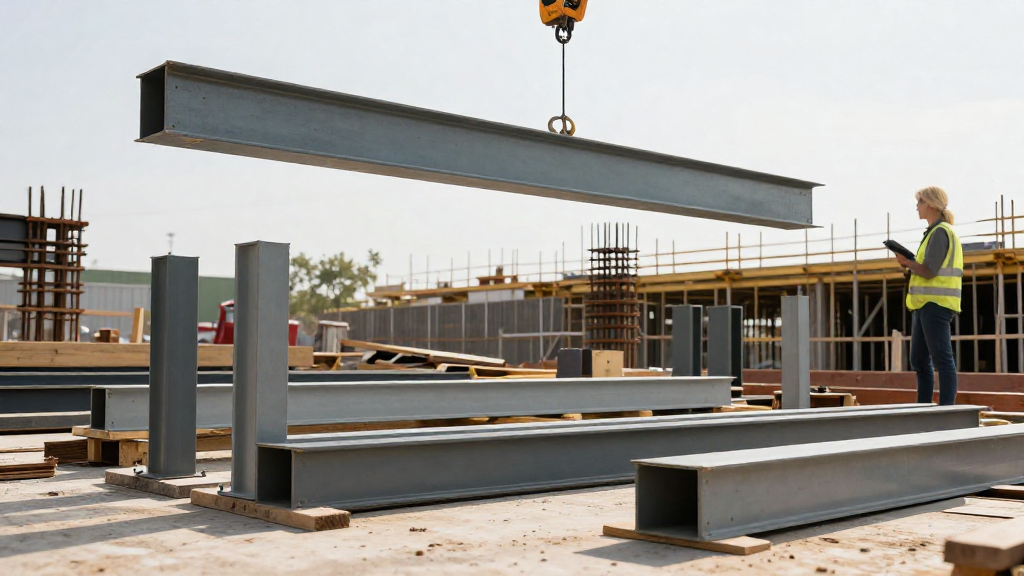
When designing structures, understanding the various beam support types is crucial.
In this article, we will explore the common types of beam supports, focusing on their characteristics and applications.
What Are Beam Support Types?
Beam support types refer to the various ways beams are held or supported in structural engineering.
These supports play a vital role in ensuring that beams can withstand loads and stresses without failing.
Beam supports can be classified into different categories based on how they allow beams to move or resist forces.
What Are the Different Categories of Beam Support Types?
Beam support types can be broadly categorized into three main groups:
1. Fixed Supports
2. Pinned Supports
3. Roller Supports
Each category serves a unique purpose in the construction and design of structures.
What Are Fixed Supports?
Fixed supports, also known as rigid supports, provide stability to a beam by resisting translation and rotation.
They are commonly used in structures that require a high degree of rigidity, such as bridges and tall buildings.
Characteristics of fixed supports include:
- Prevention of movement: They do not allow any horizontal or vertical movement.
- Moment resistance: Fixed supports can also resist bending moments.
- Material and design considerations: Often made of concrete or steel to enhance stability.
Due to these characteristics, fixed supports are essential in creating structures that endure significant forces without deformation.
What Are Pinned Supports?
Pinned supports allow beams to rotate while preventing lateral or vertical movement.
This flexibility is crucial in several applications, as buildings often need to adapt to changing loads and environmental conditions.
Features of pinned supports include:
- Rotational freedom: They permit rotation around the support point.
- Resistant to horizontal or vertical displacement: While they allow rotation, they prevent any actual movement along the beam axis.
- Common usage: Often used in trusses and frames where load redistribution is necessary.
Pinned supports are particularly effective in distributing loads evenly, making them a popular choice in construction.
What Are Roller Supports?
Roller supports allow beams to move vertically while preventing lateral movement.
This support type is essential for structures that need to accommodate expansion and contraction due to temperature changes.
Key attributes of roller supports include:
- Vertical movement: They permit movement along the vertical axis due to expansion or contraction.
- No moment resistance: Unlike fixed supports, they do not resist bending moments.
- Applications: Commonly used in bridges and other structures that may experience significant temperature variations.
The flexibility provided by roller supports is critical in maintaining the integrity of structures over time.
How Do Beam Support Types Impact Structural Integrity?
Understanding the various beam support types is vital for ensuring the structural integrity of buildings and bridges.
The choice of beam support directly affects the performance of the structure, including load distribution, stability, and susceptibility to failure.
Factors to consider include:
- Load types: Different supports behave uniquely under various loading conditions (e.g., static vs. dynamic).
- Material properties: The material used for a beam and its supports can influence how loads are transferred and resisted.
- Environmental conditions: Factors such as temperature fluctuations, wind loads, and seismic activity can significantly impact support selection.
By carefully selecting the appropriate support type, engineers can enhance the safety and durability of a structure.
What Are Some Other Beam Support Types?
In addition to fixed, pinned, and roller supports, there are other specialized beam support types, including:
-
Cantilever Supports:
– Beams supported at one end, floating at the other.
– Used in balconies and overhangs. -
Simply Supported Beams:
– A combination of pinned and roller supports.
– Allow for vertical movement at the roller support while being fixed at the pinned support. -
Foundation Supports:
– Used in direct contact with the ground or foundation.
– Essential for transfer of loads from the beam to the ground.
Understanding these additional beam support types is beneficial for specific structural applications.
How to Choose the Right Beam Support Type?
Selecting the appropriate beam support type involves considering several factors:
– Load conditions: Assess the type and magnitude of loads that will act on the beam.
– Structural requirements: Determine whether flexibility or rigidity is needed based on the application.
– Material compatibility: Ensure that the chosen support type can adequately function with the materials in use.
By accounting for these factors, you can make informed decisions regarding which beam support types best suit your engineering needs.
What Role Do Beam Support Types Play in Modern Construction?
In modern construction, the choice of beam support types significantly influences the functionality and safety of buildings and infrastructure.
Advancements in materials and engineering have introduced innovative support solutions that enhance adaptability and resilience.
Trends in beam support design include:
- Sustainability: Utilizing eco-friendly materials and designs that reduce material waste.
- Smart materials: Implementing materials that can adapt to their environment, alleviating stress on traditional supports.
- Cost-effectiveness: Enhancing structural efficiency while minimizing costs through optimized support systems.
As the industry evolves, understanding and implementing various beam support types will remain essential for innovative construction practices.
Final Thoughts on Beam Support Types
In summary, recognizing and understanding the common beam support types is crucial for engineers, architects, and construction professionals.
Fixed, pinned, roller, cantilever, and other specialized supports each serve specific purposes in ensuring structural integrity.
Choosing the right beam support types can lead to improved safety, longevity, and efficiency in construction and design.
By integrating the right supports into your projects, you can contribute to more resilient and adaptable structures that meet the demands of modern living.