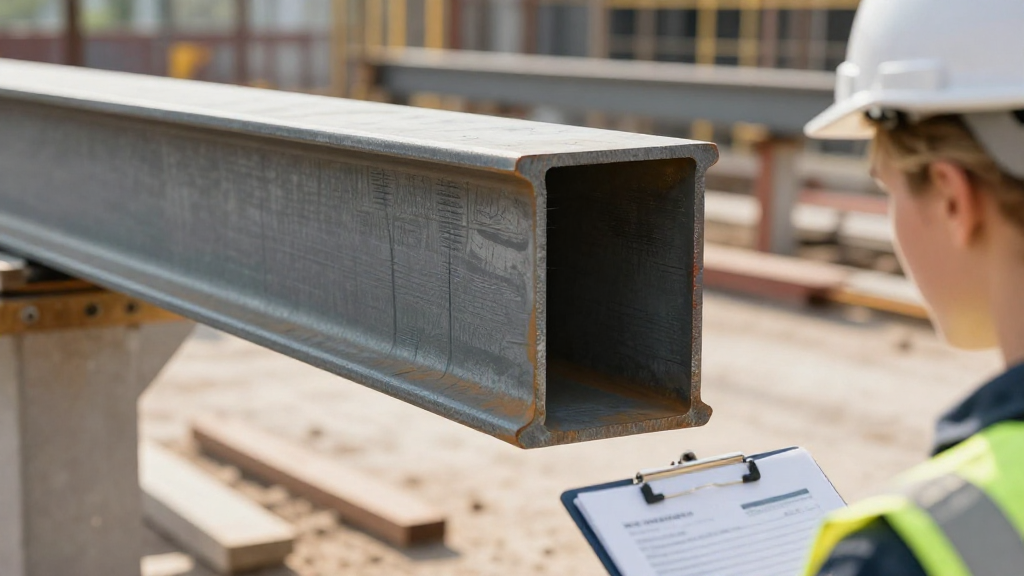
When it comes to structural engineering, understanding how beams handle tension and compression is crucial for designing safe and reliable buildings and structures.
What are Tension and Compression in Beams?
In engineering terms, tension refers to the pulling force acting on an object, causing it to elongate.
In contrast, compression involves a pushing force that leads to a reduction in length.
Beams are structural elements that bear loads.
They must effectively handle both tension and compression to maintain their integrity and stability.
How Do Beams Generate Bending Moments?
When beams are subjected to loads, they experience a bending moment that results in various stress regions.
-
Top Surface: Under compression when the beam bends downwards due to the load.
-
Bottom Surface: Under tension as the beam is stretched on this side.
This lens of tension and compression is crucial for understanding how beams function under different load conditions.
Why Is It Important for Beams to Manage Both Forces?
Failure to properly manage beam tension and compression can lead to catastrophic structural failures.
This is why engineers meticulously calculate the load capacities and the resultant forces acting on the beams during the design phase.
By using materials that adequately resist both tension and compression, engineers can ensure structural safety.
What Types of Beams Are Used in Construction?
Various types of beams are deployed in construction, and the choice often depends on their capability to handle tension and compression. Here are some common types:
-
I-Beams: Specifically designed to optimize strength and resist bending loads, I-beams have a cross-section resembling the letter “I.”
-
C-Beams: Also known as channel beams, these are used in applications where they will primarily experience shear and bending.
-
T-Beams: A hybrid of I-beams and concrete slabs, T-beams are commonly found in reinforced concrete structures.
-
Laminated Beams: Built by gluing together multiple layers of wood or other materials, these beams handle tension and compression remarkably well.
Selecting the right type of beam for a specific application is key for effective load distribution and overall structural integrity.
How Do Material Properties Influence Beam Tension and Compression?
Material properties play a significant role in the performance of a beam under tension and compression.
Here’s a list of essential factors to consider:
-
Tensile Strength: The maximum amount of tensile stress that a material can withstand before failure.
-
Compressive Strength: The ability of a material to resist compression without fracture.
-
Flexural Strength: This refers to the material’s ability to resist bending loads.
-
Ductility: This property allows materials to deform under tensile stress, helping to absorb energy before breaking.
By choosing materials with the appropriate mechanical properties, engineers can design beams that effectively handle tension and compression.
What Are the Common Failure Modes of Beams?
Beams can fail in several ways if they are unable to manage tension and compression properly. Here are some common failure modes:
-
Bending Failure: Occurs when the tensile side of the beam elongates beyond its capacity, leading to a break.
-
Crushing Failure: This happens when the compressive side buckles or crushes under load.
-
Shear Failure: High shear forces can lead to cracking or yielding in the material, failing the beam’s shear capacity.
-
Ultimate Failure: The final and often catastrophic failure can occur due to a combination of bending and shear forces, leading to a complete break.
Engineers must consider these failure modes when designing beams to ensure adequate safety margins under expected loading conditions.
How is Beam Tension and Compression Analyzed?
Analyzing beam tension and compression involves various engineering principles, including:
-
Static Analysis: Assessing loads in a state of rest, where all forces are balanced.
-
Dynamic Analysis: Evaluating how beams behave under changing forces or loads, such as seismic activity.
-
Finite Element Analysis (FEA): A computational method used to predict how structures respond to environmental effects.
-
Load Testing: Physically applying loads to beams to evaluate their strength and failure points.
These analytical methods help engineers ensure that beams can manage tension and compression effectively while ensuring safety.
What Factors Should be Considered During Beam Design?
When designing beams to handle tension and compression effectively, consider these key factors:
-
Load Type: Evaluate whether the load is static, dynamic, or a combination of both.
-
Support Conditions: Determine whether the beam will be simply supported, fixed, or continuous across several supports.
-
Span Length: Understand how the distance between supports affects the beam’s capability to handle tension and compression.
-
Material Selection: Choose materials based on tensile and compressive strengths, ductility, and other mechanical properties.
By keeping these factors in mind, engineers can design beams that are both safe and efficient.
Conclusion
Understanding how beams handle tension and compression is vital for anyone involved in structural engineering.
With the ability to bear loads effectively, beams can make the difference between a failing structure and one that stands the test of time.
By carefully analyzing materials, employing proper design techniques, and understanding the forces at play, engineers can create reliable structures that withstand the rigors of tension and compression.
As construction techniques continue to evolve, the principles governing beam tension and compression remain crucial for ensuring structural integrity and safety in our built environment.