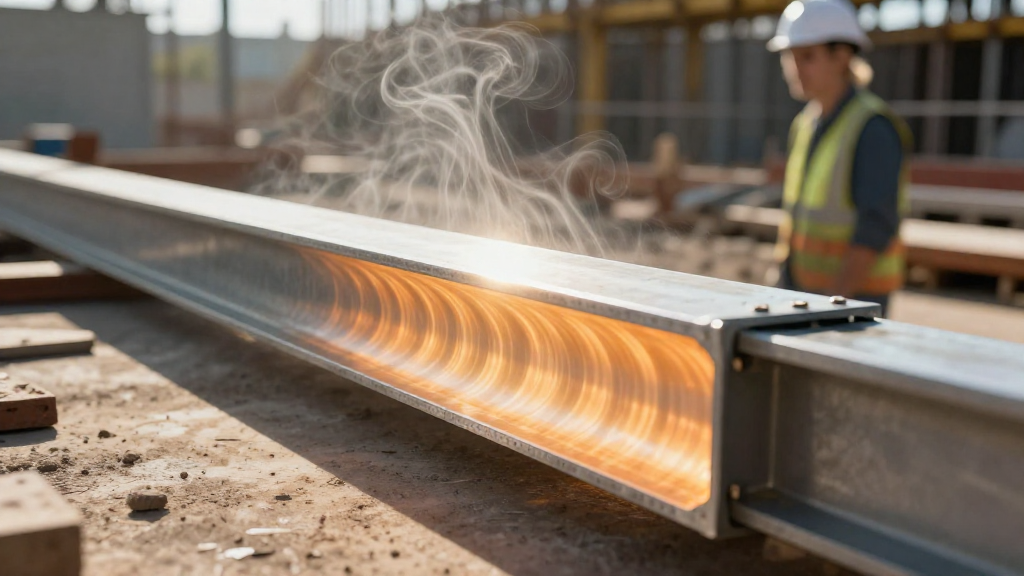
When a beam undergoes thermal expansion, various physical changes occur due to temperature fluctuations. Understanding these changes is vital in fields like construction, engineering, and materials science.
What Is Thermal Expansion in Beams?
Thermal expansion refers to the tendency of materials to change in size or volume when subjected to changes in temperature.
When temperatures rise, the particles in a solid object, such as a beam, vibrate more intensely, resulting in an increase in the object’s dimensions.
This phenomenon is crucial when designing structures and machinery since it can significantly impact performance and safety.
Why Is Understanding Beam Thermal Expansion Important?
The importance of understanding beam thermal expansion includes:
- Structural Integrity: Thermal expansion can affect the structural integrity of buildings and infrastructure.
- Material Selection: Knowing how different materials respond to temperature variations can guide material selection for specific applications.
- Design Considerations: Engineers must account for thermal expansion in their designs to avoid failures and maintain safety.
How Does Thermal Expansion Affect Different Types of Beams?
There are several types of beams, and their response to thermal expansion can vary:
-
Steel Beams:
– Steel has a linear thermal expansion coefficient, meaning it expands uniformly when heated. -
Wooden Beams:
– Wood reacts differently due to its anisotropic nature.
– It may expand more in one direction than another based on the grain orientation. -
Composite Beams:
– Composed of multiple materials, these beams may expand unevenly, leading to complex stresses. -
Concrete Beams:
– Concrete has a lower thermal expansion coefficient, but it can still crack if thermal expansion is not adequately managed.
What Are the Consequences of Excessive Thermal Expansion in Beams?
If not accounted for, excessive thermal expansion in beams can lead to several significant issues:
-
Buckling: Increased length and bending can result in buckling, compromising the beam’s strength.
-
Cracking: In materials like concrete or wood, rapid expansions can lead to cracks, creating structural weaknesses.
-
Joint Failure: Connections may loosen, resulting in instability and potential collapse.
-
Loss of Load-Bearing Capacity: As beams warp or bend due to thermal expansion, they may lose their ability to support intended loads.
What Are the Measurement and Calculation Techniques for Beam Thermal Expansion?
Understanding beam thermal expansion requires measuring changes accurately. Here are key techniques:
-
Thermal Expansion Coefficient: Each material has a specific thermal expansion coefficient, typically expressed in units such as mm/m·°C.
-
Thermal Length Change Calculation: The formula ΔL = L₀ * α * ΔT is used, where:
- ΔL = change in length
- L₀ = original length
- α = thermal expansion coefficient
-
ΔT = change in temperature
-
Experimental Methods: Using devices like dilatometers to measure changes directly as the temperature varies.
How Can Engineers Mitigate the Effects of Beam Thermal Expansion?
Engineers have several strategies available to manage beam thermal expansion effectively:
-
Expansion Joints: Incorporating flexible joints that can absorb thermal expansion without transferring stress to the beam.
-
Material Selection: Choosing materials with compatible thermal expansion properties to reduce differential expansion between components.
-
Design Modifications: Allowing for extra space or features in the design to accommodate expected thermal changes.
What Role Does Temperature Fluctuation Play in Beam Thermal Expansion?
Temperature fluctuations directly influence beam thermal expansion behavior.
Here’s how:
-
Gradual Changes: Slow temperature increases can allow materials to adapt more naturally.
-
Rapid Changes: Quick fluctuations can create stress concentrations, resulting in potential damage or failure.
-
Environmental Factors: Humidity and moisture levels can also influence the material’s response and may lead to unexpected behaviors in wood or composite beams.
What Are the Common Myths About Beam Thermal Expansion?
Several misconceptions surround beam thermal expansion; addressing them is essential for proper understanding:
- Myth: All materials expand equally.
-
Reality: Each material has a unique thermal expansion coefficient.
-
Myth: Only metals expand with heat.
-
Reality: All materials, including wood and concrete, experience thermal expansion, although the degree varies.
-
Myth: Thermal expansion leads to failure in all cases.
- Reality: When adequately designed and managed, thermal expansion can be accounted for without significant issues.
Conclusion: Why Is Awareness of Beam Thermal Expansion Crucial?
In summary, the phenomenon of beam thermal expansion is a critical consideration in design, construction, and maintenance.
Understanding how beams expand and contract can help prevent structural failures, ensuring the longevity and safety of engineered structures.
Final Thoughts
Awareness and careful planning can mitigate the effects of beam thermal expansion. By acknowledging the complexities of thermal behavior in materials, professionals can design safer, more resilient structures for a variety of applications.
Incorporating thermal expansion techniques into engineering practices will ultimately sustain the durability and effectiveness of beams in all environments.